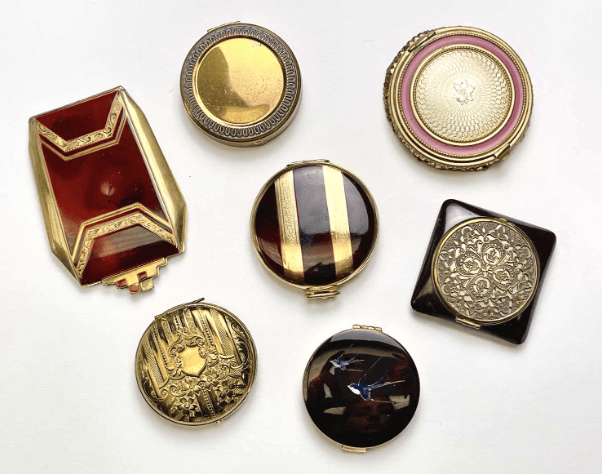
Powder compacts of the 1910s–1930s were not merely decorative accessories, instead they were genuine pieces of beauty engineering. At a time when loose face powder was messy, fragile, and confined to vanity tables, the compact introduced a new concept: portable beauty technology. It allowed women to carry their complexion with them, maintain a polished appearance throughout the day and participate in a modern regime of touch‑ups that reflected independence, mobility and sophistication.
Early compacts were marvels of miniature design. Crafted from metal, enamel, Bakelite, or sterling silver, they featured hinged lids, spring‑loaded clasps, built‑in mirrors, and engineered powder wells designed to hold compressed powder cakes. Some included clever innovations such as sifter screens, puff compartments, swivel mechanisms, or sliding trays that kept powder contained and accessible. These features transformed the compact into a functional device — a beauty tool disguised as jewelry.
Compacts also played a major role in shaping cosmetic culture. They encouraged women to apply makeup publicly, normalizing powdering the nose in cafés, theaters, and department stores. This shift was revolutionary: beauty was no longer a private ritual but a visible expression of modern femininity. Brands competed to create compacts that were not only practical but collectible, launching limited‑edition designs with Art Deco motifs, monograms and gemstone accents.
In beauty‑technology history, the powder compact stands as the first truly portable cosmetic device. It merged engineering with fashion, democratized daily glamour, and paved the way for every modern on‑the‑go beauty product — from lipstick tubes to cushion foundations. The compact is proof that even the smallest beauty tools can be technological milestones.
I’m Stacey Hobbs, thanks for reading Face by Stace! Until next time.
do you feel fabulous today?

