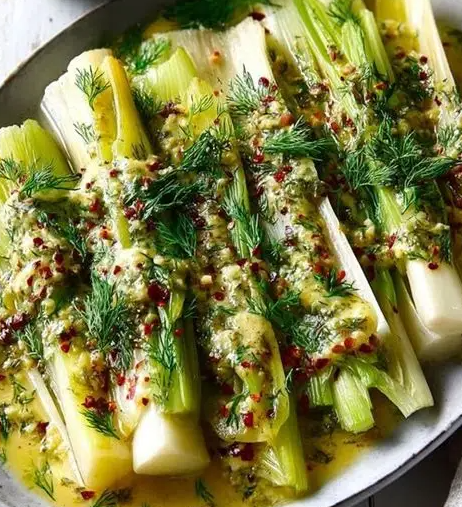
This dish is a bright, herb‑forward Roman vegetable dish built around leeks, fennel, celery leaf and a simple olive‑oil vinaigrette. The flavours are clean, aromatic and deeply Roman — earthy leeks lifted by fennel’s anise notes and celery leaf’s herbal sharpness. This is a minimalist, elegant interpretation of Roman herb cookery.
Prep 10 min Cook 20 min Serves 4
Ingredients
3 large leeks, halved lengthwise
2 tbsp olive oil
1 tsp mustard seeds
1 tsp fennel seeds
2 tbsp white wine or posca
2 tbsp fresh celery leaves
1 tbsp fresh dill or lovage
Pinch sea salt
Pinchred pepper flakes (optional)
Instructions
- Prepare the leeks
Clean and trim the leeks, keeping them halved lengthwise for elegant plating. - Sauté gently
Warm olive oil in a pan and sauté the leeks until tender and lightly golden. - Add Roman herbs
Sprinkle mustard seeds and fennel seeds into the pan, letting them bloom in the oil. - Deglaze
Pour in white wine (or posca) and simmer until reduced and aromatic. - Finish with greens
Top with celery leaves, dill, and a pinch of salt. Add red pepper flakes if desired.
Beauty Benefits
- Fennel: antioxidant‑rich, supports skin calmness
- Leeks: sulfur compounds for clarity
- Olive oil: glow‑boosting healthy fats
- Celery leaf: mineral‑rich, supports hydration
A gentle, skin‑supportive vegetable dish.
Health Benefits
- Anti‑inflammatory herbs
- High fibre
- Digestive support from fennel
- Heart‑healthy olive oil
- Naturally low‑glycemic
Substitutions (Historically Accurate)
- Fennel → lovage or dill
- Celery leaf → coriander leaf
- Vinegar → posca (vinegar diluted with water)
- Olive oil → herb‑infused oil
Storage
- Fridge: 2–3 days
- Reheat: warm gently or serve chilled
- Freezer: not recommended — leeks soften too much
History
Romans used herbs extensively — lovage, dill, fennel, coriander, celery leaf — to season vegetables. Leeks were one of the most consumed alliums in the empire, appearing in broths, porridges, braises and herb dishes. Fennel was both a culinary and medicinal plant, praised for digestion and flavour. This dish reflects Roman agricultural writing, where vegetables were prepared simply with herbs, oil and acidity, allowing their natural flavours to shine.
I’m Stacey Hobbs, thanks for reading Face by Stace! Until next time.
do you feel fabulous today?

