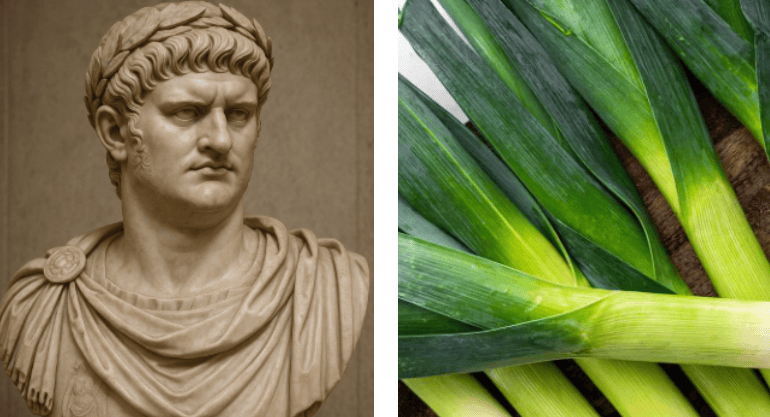
Leeks were more than a humble vegetable in Ancient Rome, they were a cultural staple, a medicinal ingredient and even a beauty ritual. Roman writers like Pliny the Elder describe leeks as one of the empire’s most‑used vegetables, added to broths, porridges, and herb‑oil braises. Their mild flavour made them essential in everyday cooking and Romans likely introduced them to Britain, where they later became symbolic in Welsh tradition.
No Roman is more famously tied to leeks than Emperor Nero. Pliny records that Nero consumed leeks for several days each month to strengthen and clarify his singing voice, earning him the nickname Porrophagus — “the Leek‑Eater.” This practice wasn’t just dietary; it was considered a vocal‑beauty regime. Romans believed leeks supported throat health, breath control and vocal clarity, making them one of the earliest documented beauty‑performance foods.
Roman medical texts also link leeks to complexion, digestion, and internal cleansing. While they didn’t know the science, modern research confirms leeks contain sulfur compounds and antioxidants that support skin clarity and reduce inflammation — aligning perfectly with Roman beauty logic.
From Apicius’ leek recipes to Nero’s vocal rituals, leeks held a unique place in Roman life. They were nourishing, medicinal and symbolically powerful
I’m Stacey Hobbs, thanks for reading Face by Stace! Until next time.
do you feel fabulous today?

