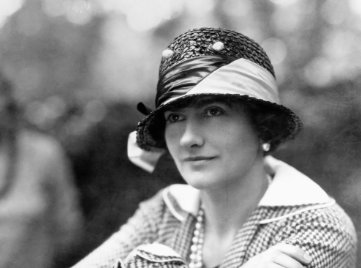
Gabrielle “Coco” Chanel’s beginnings were far removed from the glamour she later defined. Born in 1883 in Saumur, France, she spent her childhood in poverty, moving from place to place with her itinerant parents. Her father left, leaving Chanel’s mother to care for her kids. When her mother died, Chanel and her sisters were sent to the Aubazine orphanage, a stark Cistercian convent whose disciplined environment shaped her lifelong preference for simplicity, order and monochrome palettes. The nuns taught her to sew — a skill that would become the backbone of her future empire.
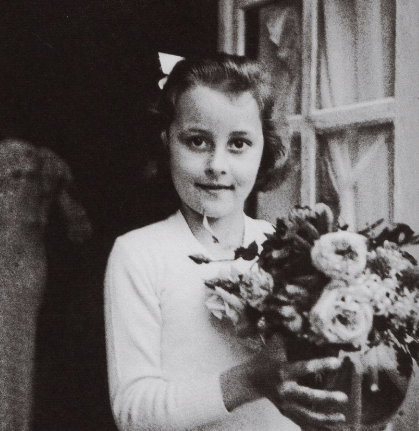
As a young woman, Chanel worked as a seamstress in Moulins, stitching hems and mending garments for local clients. In the evenings, she performed in small cafés and cabarets, singing lighthearted songs such as “Ko Ko Ri Ko” and “Qui qu’a vu Coco?” Her spirited performances earned her the nickname “Coco,” a stage name she embraced long before she became a designer. These cabaret years introduced her to the world of leisure, elegance and wealthy patrons — a world she would soon enter more fully.
Her life changed when she met Étienne Balsan, a wealthy textile heir who introduced her to the equestrian elite. In his circle, Chanel observed the relaxed menswear that would later inspire her own designs. But it was Englishman Arthur “Boy” Capel, Balsan’s friend and Chanel’s great love, who financed her first boutique in 1910. Capel believed in her talent, encouraged her independence and helped her transition from seamstress to designer.
Chanel’s beginnings were not glamorous — they were disciplined, improvised and shaped by survival. Yet every element of her early life became part of her look: the convent’s austerity, the cabaret’s confidence, the sewing room’s precision and the borrowed elegance of the men who opened the doors she would soon walk through on her own.
I’m Stacey Hobbs, thanks for reading Face by Stace! Until next time.
do you feel fabulous today?

