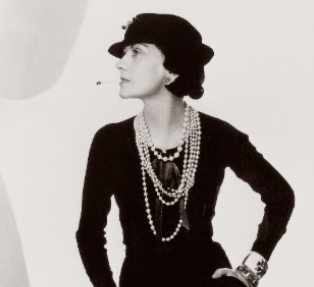
Chanel’s rise from orphanage seamstress to couture legend was not a solitary climb — it was financed, shaped and accelerated by two men whose influence defined her early career: Étienne Balsan and Arthur “Boy” Capel. Their support was not merely romantic; it was strategic, financial and deeply intertwined with Chanel’s transformation into a designer.
Étienne Balsan, a wealthy textile heir and former cavalry officer, was Chanel’s first gateway into elite society. Living on his estate at Royallieu, she observed the relaxed menswear worn by riders, hunters and aristocrats — clothing that would later inspire her signature jersey separates and tailored simplicity. Balsan provided her with space, materials and introductions. He offered her a room to sew hats, access to his social circle and the confidence to imagine a life beyond seamstress work. But Balsan did not fund a business; he opened a door.
The true financier — and the great love of her life — was Arthur “Boy” Capel. A self‑made English businessman with impeccable taste, Capel believed in Chanel’s talent with un-wavering conviction. In 1910, he financed her first boutique at 21 rue Cambon, covering rent, renovations and operating costs. He supported her expansion to Deauville and Biarritz, enabling her to hire staff, purchase fabrics and establish a recognizable brand. Capel’s influence extended beyond money: he refined her look, encouraged her independence and shaped her vision of elegance.
When Capel died in 1919, Chanel was devastated. She later said, “In losing Capel, I lost everything.” Yet his investment had already secured her future. Balsan opened the world to her; Capel built the foundation she would stand on forever.
I’m Stacey Hobbs, thanks for reading Face by Stace! Until next time.
do you feel fabulous today?

