In 1957, Cristóbal Balenciaga introduced a silhouette so radical that it split the fashion world in two: the sack dress. At a time when Dior’s cinched waists and sculpted hourglass shapes dominated global style, Balenciaga unveiled a garment with no waistline at all — a straight, fluid column that skimmed the body without defining it. Critics were stunned. Admirers were electrified. The sack dress was not just a new shape; it was a new philosophy.
Balenciaga’s intention was architectural. He wanted to free the body from artificial structure and allow fabric to create form independently. The sack dress floated away from the torso, creating volume without weight and movement without restriction. Its simplicity was deceptive: beneath the clean lines lay complex pattern‑cutting, hidden darts and structural engineering that allowed the dress to maintain its shape while remaining effortless to wear.
The silhouette challenged every beauty ideal of the 1950s. Instead of emphasizing curves, it emphasized presence. Instead of sculpting the body, it framed it. Women who wore the sack dress projected modernity, confidence and a refusal to conform to traditional expectations of femininity. It was fashion for the woman who defined herself — not for the woman defined by her waist.
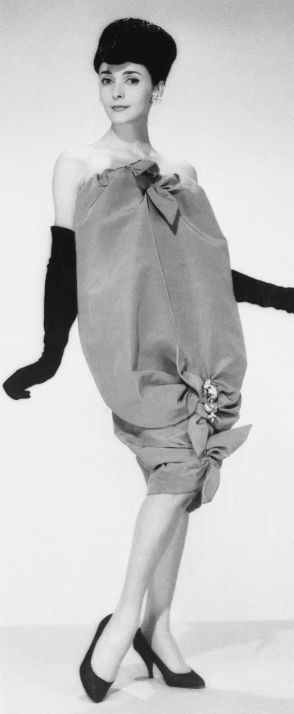
The press initially mocked it, calling it “the bag dress.” But within months, the silhouette spread across Europe and America, influencing ready‑to‑wear designers and inspiring future minimalists. The sack dress paved the way for the baby‑doll dress, the trapeze dress, and the cocoon shapes of the 1960s.
Balenciaga didn’t just design a dress in 1957. He detonated a revolution — one that proved the future of fashion belonged to freedom, structure, and the courage to defy the expected.

