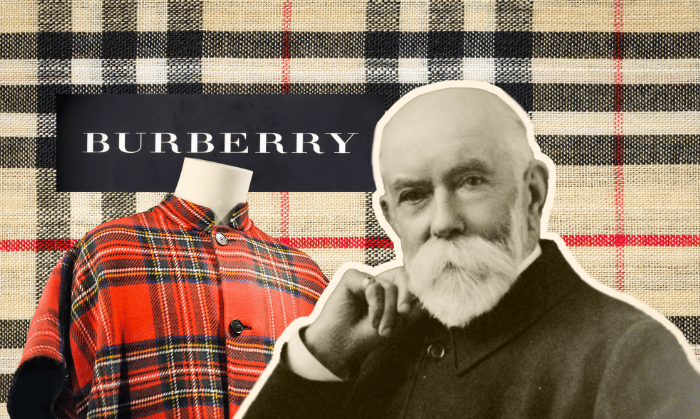
Burberry’s story begins not with glamour, but with weather. In 1856, Thomas Burberry founded his house on a simple idea: clothing should protect. His breakthrough came with gabardine, a tightly woven, weather‑resistant fabric that was breathable, durable and revolutionary. It transformed outerwear from heavy, impractical garments into modern tools of mobility.
Gabardine made Burberry indispensable. Explorers wore it to the Arctic. Aviators wore it into the clouds. Soldiers wore it into the trenches. By the First World War, Burberry had become the architect of British utility. The trench coat, designed for officers, combined practicality with unmistakable style: epaulettes, storm flaps, a belt for equipment, and a silhouette that balanced structure with ease. It was military engineering refined into elegance.
After the war, the trench coat moved from battlefield to city street. It became a symbol of British sophistication — functional, understated and quietly authoritative. Film noir adopted it. Fashion editors embraced it. Everyday Londoners relied on it. Burberry had created a garment that transcended class, gender, and era.
The house’s identity grew from this foundation: weather, protection, and British restraint. Even as Burberry expanded into ready‑to‑wear, accessories, and global branding, its core remained unchanged. Utility was not a trend; it was heritage.
Burberry didn’t just design outerwear. It engineered a national vibe, one that was built on practicality, discipline and the enduring allure of British utility chic.
I’m Stacey Hobbs, thanks for reading Face by Stace! Until next time.
do you feel fabulous today?

