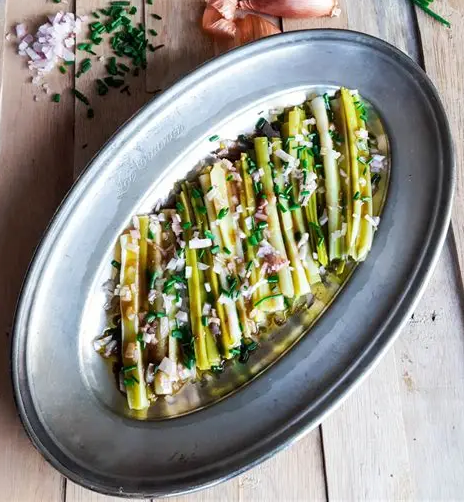
This dish is French elegance in its purest form — tender poached leeks dressed in a bright, aromatic Champagne vinaigrette that feels both rustic and refined. The leeks become silky and sweet, the vinaigrette adds sparkle and acidity, and the chives bring a fresh, herbaceous lift. It’s the kind of minimalist French plating that looks effortless yet impossibly chic: clean lines, glossy finish, soft greens and of luxury from the Champagne vinegar.
Prep 10 min Cook 15 min Serves 4
Ingredients
4 large leeks, trimmed (white + light green only)
2 tbsp Champagne vinegar
1 tbsp Dijon mustard
4 tbsp olive oil
1 tsp honey
1 tbsp chopped chives
to taste salt + white pepper
Instructions
- Prep the leeks
Trim leeks, keeping the white and light green parts. Slice lengthwise and rinse thoroughly to remove grit. - Poach
Simmer leeks gently in salted water for 10–12 minutes until tender but still holding shape. - Make the vinaigrette
Whisk Champagne vinegar, Dijon, honey, salt, and white pepper. Stream in olive oil until emulsified. - Dress
Place warm or cooled leeks on a plate and spoon vinaigrette generously over top. - Finish
Scatter chives and cracked pepper. Serve as a starter or elegant side.
Beauty Benefits
This dish is a beauty powerhouse — a skin‑supportive, glow‑enhancing starter disguised as French simplicity.
- Leeks:
- Rich in sulfur compounds that support detox pathways and clear congested skin
- High in prebiotic fibre, feeding the gut microbiome for gut‑skin harmony
- Gentle diuretic properties help reduce puffiness
- Champagne Vinegar:
- Contains polyphenols that help fight oxidative stress
- Brightens the complexion by supporting circulation
- Olive Oil:
- Packed with squalene + vitamin E for barrier repair and long‑lasting moisture
- Anti‑inflammatory, helping calm redness
- Chives:
- Rich in vitamin K for microcirculation
- Adds a subtle antioxidant boost
This is a beauty‑nutrition dish that aligns perfectly with your brand: elegant, refined, and secretly functional.
Health Benefits
- Prebiotic fiber for digestion + microbiome support
- Naturally low‑glycemic and light
- Anti‑inflammatory herbs and aromatics
- Healthy fats for hormone balance
- Gentle on digestion — ideal for sensitive stomachs
Substitutions
- Champagne vinegar → white wine vinegar (classic French swap)
- Dijon mustard → whole‑grain mustard (more texture)
- Olive oil → walnut oil (adds a nutty, French countryside note)
- Chives → tarragon or parsley (more aromatic or fresh)
- Honey → maple syrup (softer sweetness)
Storage
- Fridge: 2–3 days (store leeks and vinaigrette separately for best texture)
- Freezer: not recommended
- Make‑ahead: poach leeks up to 24 hours in advance; dress just before serving
History: Leeks with Champagne Vinaigrette
(Pardon Your French Inspired)
Leeks with Champagne Vinaigrette is a dish rooted in one of France’s oldest culinary pairings: poireaux vinaigrette, a classic bistro preparation dating back to the 19th century. In traditional French cooking, leeks were often poached and served cold or warm with a simple vinaigrette — a staple of Parisian brasseries, countryside kitchens, and home cooks who valued elegance through simplicity.
Leeks: A French Heritage Vegetable
Leeks have been cultivated in France since Roman times and became especially prominent in Northern regions like Normandy, Brittany and Picardy, where their mild sweetness and silky texture made them ideal for soups, braises and composed salads. By the 1800s, leeks were considered a “vegetable of the people” — affordable, abundant and versatile — yet they appeared frequently in aristocratic kitchens due to their refined flavour.
Poireaux vinaigrette emerged as a way to elevate this humble vegetable: soft‑poached leeks + a bright, acidic dressing = rustic elegance.
Champagne Vinaigrette: A Modern Luxury Twist
Traditional vinaigrettes used wine vinegar or mustard but the introduction of Champagne vinegar in the late 20th century brought a new level of refinement. Champagne vinegar is made from the same grapes used in Champagne production — primarily Chardonnay and Pinot Noir — giving it a delicate acidity and floral aroma.
It became popular among French chefs seeking lighter, more aromatic vinaigrettes that complemented delicate vegetables like leeks, asparagus and endive. Using Champagne vinegar instead of standard wine vinegar transforms a rustic dish into something unmistakably modern and luxurious.
I’m Stacey Hobbs, thanks for reading Face by Stace! Until next time.
do you feel fabulous today?

