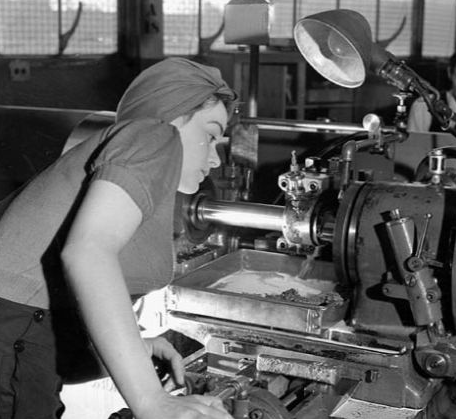
When Canadian women entered factories during WWII, they created a new kind of beauty — practical, protective and quietly powerful. These were the real Canadian Rosie Riveters, and their style reflected the demands of wartime work.
Factory uniforms were functional: coveralls, denim trousers, sturdy boots and protective gloves. Clothing had to withstand machinery, heat, oil, and long shifts. Yet women still found ways to express femininity within the rules.
Hair was pinned securely under turbans, bandanas or snoods to prevent accidents. These head coverings became iconic — bright colours, polka dots and floral prints added personality to industrial settings. Makeup was minimal but present: powder to reduce shine, a touch of rouge and lipstick when available. Even in factories, beauty offered confidence.
Safety shaped fashion. Jewellery was discouraged, sleeves were fitted and fabrics were durable. Many women altered their uniforms for comfort, adding darts, adjusting hems or personalizing collars.
Factory fashion wasn’t glamorous but it was revolutionary. It represented independence, strength and the merging of femininity with national duty. Canadian women proved that beauty could adapt — even thrive — in the most unexpected places.
I’m Stacey Hobbs, thanks for reading Face by Stace! Until next time.
do you feel fabulous today?

