Roasted Butternut Squash with Sage & Pine Nuts is a warm, rustic, Autumn dish that celebrates simplicity and seasonal flavour. Tender cubes of caramelised squash are tossed with fragrant garlic, crisped edges, and buttery toasted pine nuts, creating a beautiful balance of sweetness, richness and earthy depth. Fresh sage adds an aromatic lift, turning everyday ingredients into a refined, side dish that feels both comforting and elegant. Serve it warm on its own or spooned over grains for a nourishing, modern plate that fits seamlessly into Fall cooking.
Prep 10 min Cook 30 min Serves 4
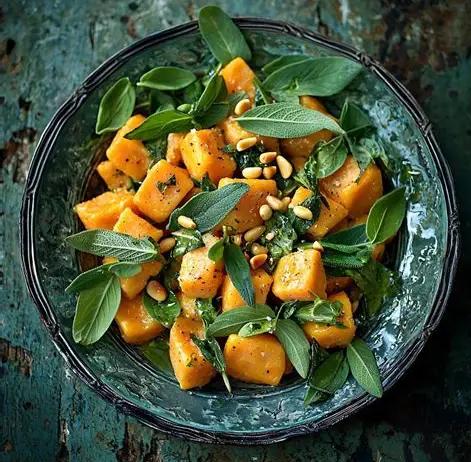
Ingredients
1 large butternut squash, cubed
3 tbsp olive oil
1 tsp sea salt
1/2 tsp black pepper
6–8 leaves fresh sage
1/3 cuppine nuts
2 cloves garlic, minced
Instructions
- Prep
Preheat oven to 400°F (200°C). Toss squash with olive oil, salt, pepper, and garlic. - Roast
Spread on a baking sheet and roast 25–30 minutes until caramelized. - Toast pine nuts
In a small pan, toast pine nuts over medium heat until golden. - Finish
Toss roasted squash with toasted pine nuts and torn sage leaves. - Serve
Serve warm as a side or over grains.
Beauty Benefits
- Butternut squash: Rich in beta‑carotene, supporting glow, smoother texture, and healthy cell turnover.
- Olive oil: Vitamin E and monounsaturated fats nourish the moisture barrier and help maintain elasticity.
- Garlic: Sulphur compounds support detox pathways and reduce inflammation linked to dullness.
- Pine nuts: Healthy fats and antioxidants help protect against environmental stress and support firmness.
- Sage: Naturally antimicrobial and anti‑inflammatory, supporting clarity and calmness.
Health Benefits
- Butternut squash provides fibre, vitamin C, potassium, and slow‑release carbohydrates for steady energy.
- Olive oil contributes heart‑healthy fats and anti‑inflammatory polyphenols.
- Garlic supports cardiovascular health and natural detoxification.
- Pine nuts add plant‑based protein, magnesium and healthy fats.
- Sage supports digestion and has natural antioxidant properties.
Substitutions
- Butternut squash → acorn squash, delicata squash or sweet potato.
- Pine nuts → almonds, walnuts, pecans or pumpkin seeds.
- Sage → thyme, rosemary or parsley.
- Olive oil → avocado oil or melted butter.
- Garlic → roasted garlic paste or garlic powder.
Storage
- Refrigerate for 3–4 days in an airtight container.
- Reheat at 350°F for 8–10 minutes to restore caramelisation.
- Avoid microwaving — it softens the texture and dulls the herbs.
- Not ideal for freezing due to texture changes.
History
Butternut squash has deep roots in Indigenous North American foodways, valued for its sweetness, versatility, and long storage life. Roasting squash is one of the oldest preparation methods, highlighting its natural sugars and velvety texture.
Sage has been used across cultures for centuries — from Mediterranean herbal medicine to early North American cooking — prized for its aroma and healing properties. Pine nuts bring a Mediterranean influence, historically used in Roman, Greek, and Middle Eastern cuisines for richness and texture.
Together, these ingredients create a dish that feels ancient yet modern: rustic, seasonal, and editorially elegant, blending Indigenous tradition with Mediterranean flavour profiles.
I’m Stacey Hobbs, thanks for reading Face by Stace! Until next time.
do you feel fabulous today?

