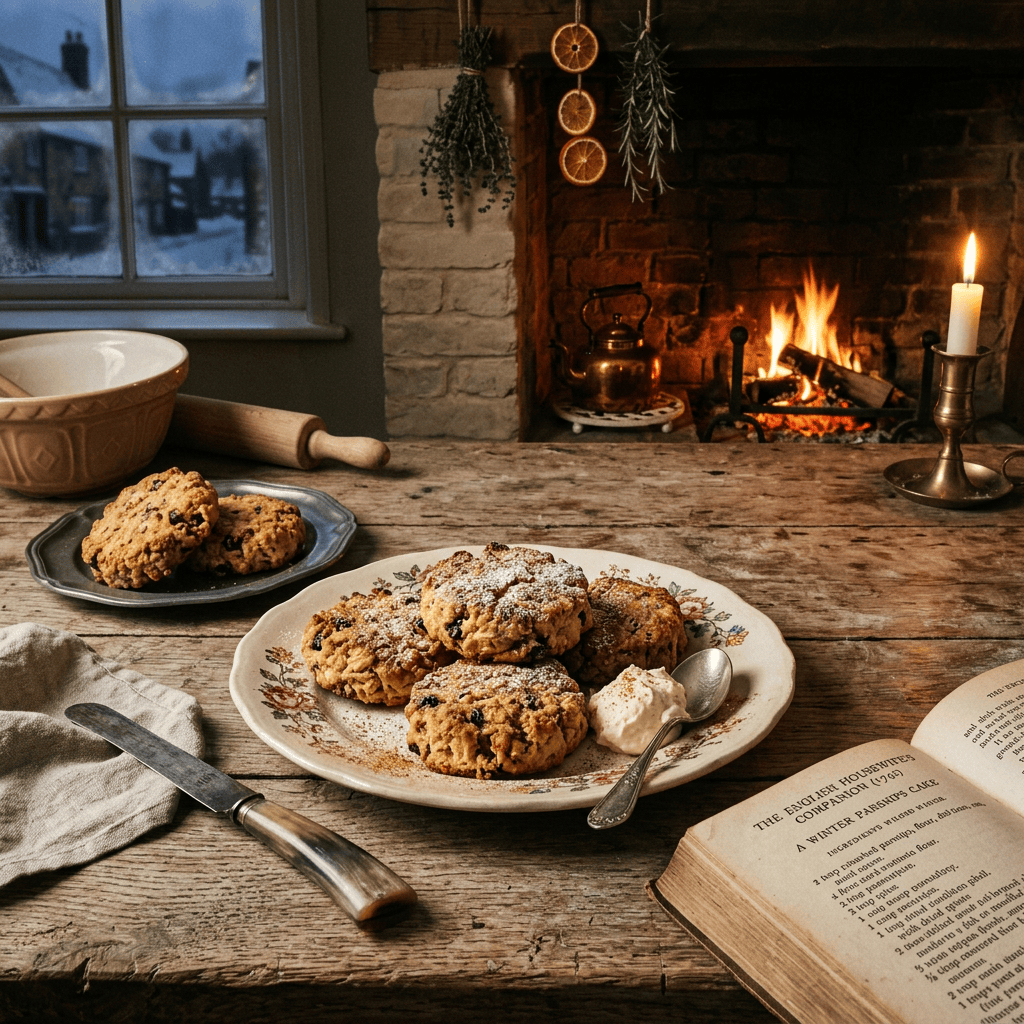
In the early 18th century, long before modern cookbooks and chefs, English households relied on handwritten recipe books to preserve their culinary knowledge. Among these treasures sits a humble yet striking dish: Parsnops Cakes, recorded around 1700 in an anonymous English receipt book. It’s a recipe that reveals how regular women cooked, improvised and nourished their families during long winters when fresh produce was scarce.
The method is simple but surprisingly refined. Ten parsnips are boiled until tender, then beaten smooth in a stone mortar — a technique that creates a velvety mash. Six eggs, with three whites removed, are whisked and enriched with a little cream before being folded into the warm parsnips. Sweetened to taste, the mixture is fried like small fritters, crisp at the edges and soft within. A warm sauce of melted butter, sugar, and either sack or rosewater finishes the dish, adding a touch of luxury that reflects the era’s fondness for fragrant, fortified flavours.
What makes this recipe compelling today is its blend of rustic practicality and gentle indulgence. Parsnips were a Winter staple, valued for their sweetness and reliability, yet this recipe transforms them into something celebratory — a reminder that early cooks found comfort and creativity even in the simplest ingredients.
By revisiting Parsnops Cakes, we reconnect with a forgotten culinary moment: a dish shaped by season, necessity, and the artistry of women whose recipes rarely made it into printed books. It’s a small piece of history worth bringing back to the table.
Documented 1700 Parsnip Cake Recipe (Exact Transcription)
Source: Anonymous Receipt Book, c. 1700
Archive: Folger Shakespeare Library
Verified transcription: Lost Kitchen Scrolls
To Make Parsnops Cakes Take 10 parsnops boyle ym tender & beat ym very small in a ston Morter & beat 6 eggs but leave out 3 whites when thay are well beaten mix a litle Cream with ym & put it both into ye beat parsnop & sweeten it to tast heat ye frying pan & frye ym as you doe ye litle fried fritters Make sauce for ym of melted butterr & sugar & a litle Sack or rose water.
This is the exact manuscript text, including period spelling (“ym,” “ye,” “parsnops”).
Contextual Manuscript Information
The 1701 recipe appears in a handwritten English household cookbook, now held at the Clark Library. It is part of a larger collection of culinary and medicinal recipes from the early 18th century.
The 1700 recipe comes from a digitized Folger Shakespeare Library manuscript, part of their early modern recipe book collection.
Both manuscripts are part of the broader category of 18th‑century English recipe books, which often contain hundreds of culinary and medical entries.
In 1700–1701:
- Recipes were written as short paragraphs
- They did not separate ingredients
- They did not list measurements
- They did not number steps
- They assumed the cook already knew the basics
So the “ingredients” and “instructions” are embedded inside the paragraph itself — that is the recipe.
I’m Stacey Hobbs, thanks for reading Face by Stace! Until next time.
do you feel fabulous today?

