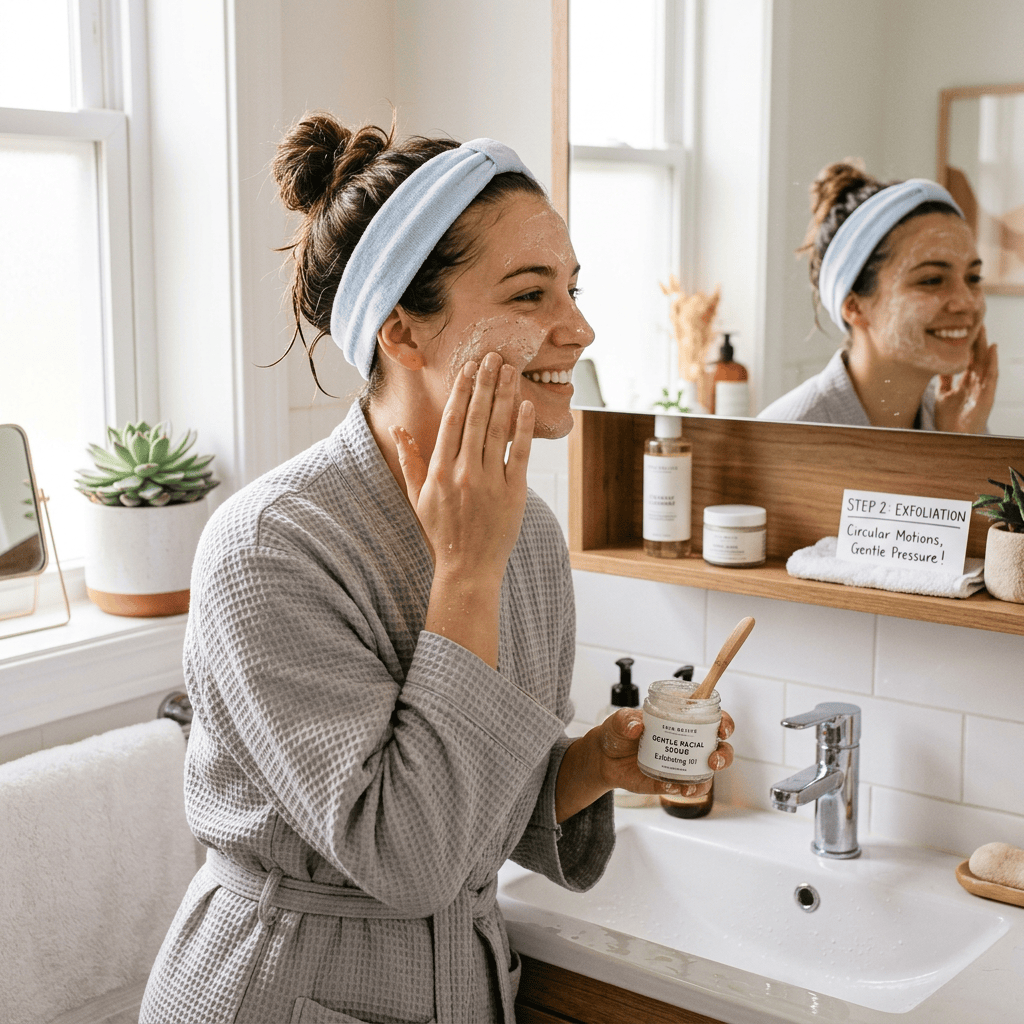
Exfoliation is one of the most effective ways to maintain smooth, bright, healthy‑looking skin — but only when it’s done correctly. At its core, exfoliating removes dead skin cells that build up on the surface, causing dullness, uneven texture, and poor product absorption. When that buildup is cleared away, hydration sinks in more easily, makeup applies more evenly and the skin looks fresher overall.

There are two main exfoliation methods: chemical and physical. Chemical exfoliants use acids or enzymes to dissolve dead skin cells without scrubbing. Lactic acid, mandelic acid, and fruit enzymes are the gentlest options, making them ideal for sensitive, dehydrated or combination skin. They smooth texture while supporting the moisture barrier. Stronger acids, like glycolic or salicylic, can be effective but should be used carefully and sparingly.
Physical exfoliation uses scrubs or tools to manually remove buildup. While it can feel satisfying, it’s easy to overdo. Harsh scrubs can create micro‑tears, increase redness, and weaken the barrier — especially for reactive or moisture‑depleted skin. If you prefer physical exfoliation, choose ultra‑fine, gentle formulas.
The most important rule: don’t exfoliate daily. Most skin types only need exfoliation once or twice a week. Over‑exfoliating leads to irritation, dehydration, and compromised barrier function — the exact opposite of what healthy skin needs.
When exfoliation is gentle, infrequent, and barrier‑friendly, it becomes a powerful tool for maintaining glow, clarity and long‑term skin resilience.
I’m Stacey Hobbs, thanks for reading Face by Stace! Until next time.
do you feel fabulous today?

