Roman bathhouses were more than communal spaces — they were the heart of Roman beauty culture. Across the empire, citizens visited the thermae not only to cleanse but to rejuvenate, socialize, and indulge in rituals that blended wellness with luxury. Bathing was a multi‑step experience, beginning with the apodyterium (changing room) and moving through warm, hot, and cold rooms that prepared the skin for treatments.
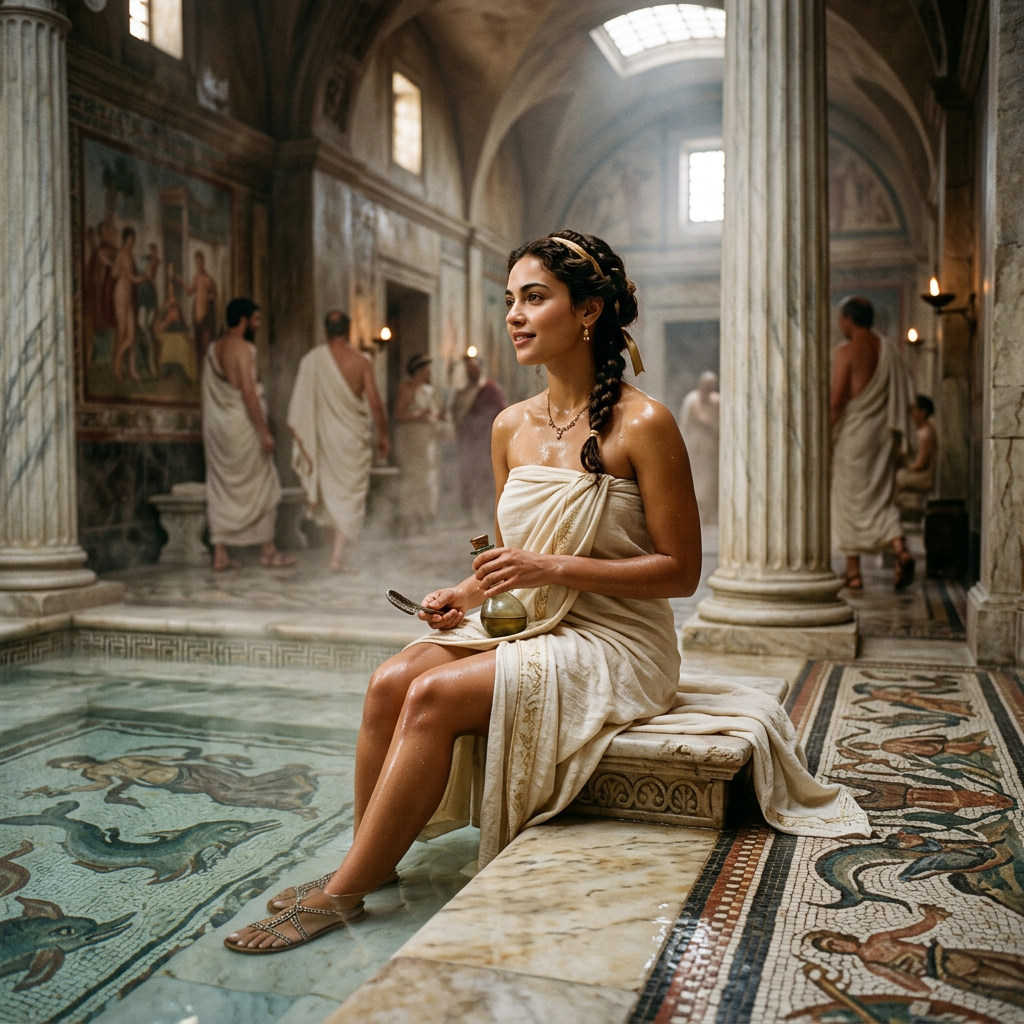
The caldarium, with its steam and heated pools, opened pores and softened the skin. Romans used strigils — curved metal tools — to scrape away oil, sweat, and dust, leaving the body refreshed and polished. After cleansing, bathers applied scented oils infused with herbs like myrtle, rosemary, or chamomile. These oils moisturized the skin and acted as early aromatherapy.
Bathhouses also offered massages, exfoliation, and even cosmetic services. Beauty was communal, tactile, and deeply sensory. The experience wasn’t rushed; it was a ritual of restoration that reflected Roman values of balance, pleasure, and physical care.
Bathhouse beauty reminds us that wellness has ancient roots. The Romans understood that radiance begins with warmth, water, and intentional ritual.
I’m Stacey Hobbs, thanks for reading Face by Stace! Until next time.
do you feel fabulous today?

