Perfumed oils were essential to Roman beauty, bridging skincare, fragrance, and ritual. In a climate of heat and dust, oils protected the skin, added softness, and carried scents that defined personal identity. Roman perfumers — highly skilled artisans — blended olive oil with botanicals, resins, and exotic imports to create luxurious mixtures used by both men and women.
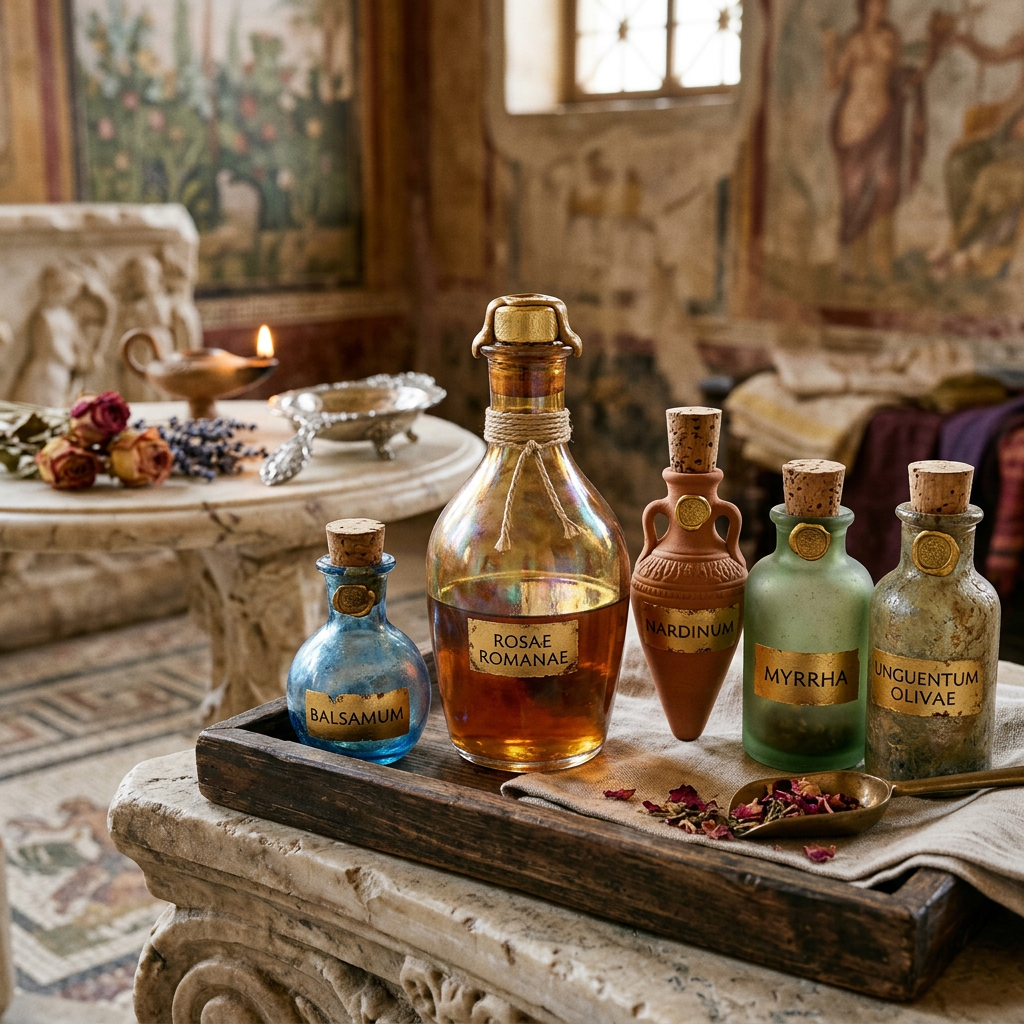
Common ingredients included rose, myrtle, lavender, saffron, and cinnamon. Wealthier Romans indulged in rarer additions like cardamom, spikenard, and frankincense. These oils were applied after bathing, massaged into the skin to seal moisture and leave a lingering fragrance. Some were used for hair, others for the body, and some served ceremonial purposes.
Perfumed oils also played a social role. A well‑chosen scent communicated refinement, status, and taste. Storage vessels — alabaster jars, glass bottles, and carved containers — elevated the ritual, turning fragrance into an art form.
Roman perfumed oils reveal a culture that valued sensory beauty. Their blends were early precursors to modern perfumery, proving that fragrance has always been a language of luxury and identity.
I’m Stacey Hobbs, thanks for reading Face by Stace! Until next time.
do you feel fabulous today?

