Roman beauty rituals relied on a range of cosmetic tools that blended practicality with craftsmanship. These tools, often made from bronze, bone, glass, or carved wood, reveal how seriously Romans approached grooming and personal care.
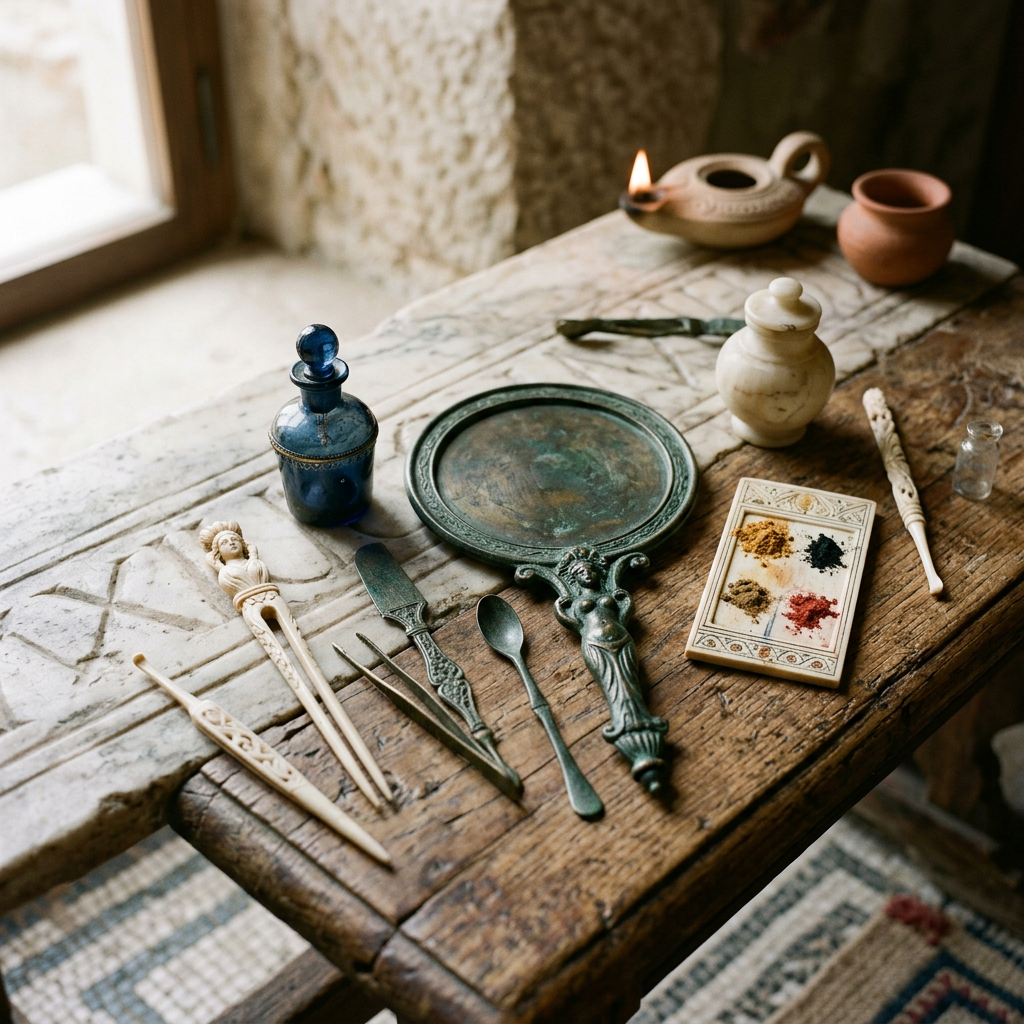
Mirrors, crafted from polished bronze, were central to daily beauty routines. Their reflective surfaces allowed precise application of cosmetics and oils. Small spatulas and mixing sticks were used to blend balms, perfumes, and pigments — early versions of cosmetic applicators. Tiny glass jars stored creams and salves, while ceramic pots held powdered cosmetics.
Tweezers and grooming tools shaped brows and removed stray hairs, reflecting Roman ideals of neatness and symmetry. Strigils, used in bathhouses, scraped oil and impurities from the skin, functioning as exfoliating tools long before modern scrubs existed.
These objects weren’t merely functional; many were decorated with motifs of gods, animals, or geometric patterns. Beauty, for Romans, was both ritual and artistry.
Ancient Roman cosmetic tools remind us that the foundations of modern beauty — precision, care, and sensory ritual — were established thousands of years ago.
I’m Stacey Hobbs, thanks for reading Face by Stace! Until next time.
do you feel fabulous today?

