Roman hair culture was a blend of artistry, identity, and social signalling. Hairstyles weren’t merely aesthetic choices — they communicated status, virtue, and even political alignment. Women’s hair, in particular, became increasingly elaborate during the Imperial period, evolving from simple waves to intricate curls, braids, and sculptural arrangements.
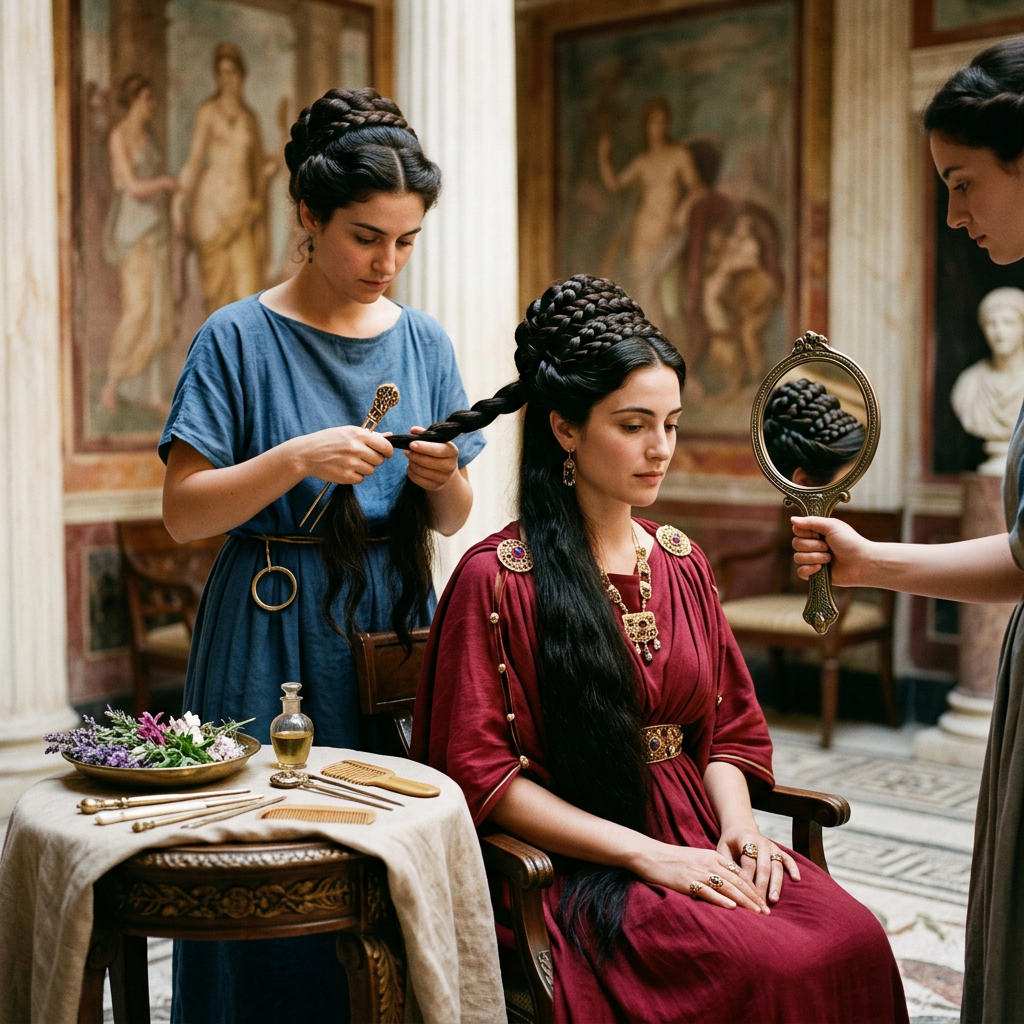
Wealthier women relied on ornatrices, skilled hairdressers who used heated metal tools to create tight curls known as calamistrum waves. Hairpieces and extensions were common, often made from imported hair. Styles were pinned into place using bone, bronze, or ivory hairpins, while ribbons, beads, and diadems added decorative flair.
Men’s grooming was equally intentional. Short, neatly styled hair reflected discipline and Roman ideals of masculinity. Beards came in and out of fashion depending on the emperor’s influence.
Roman hair rituals reveal a culture that understood beauty as both personal and political. Every curl, pin, and braid carried meaning.
I’m Stacey Hobbs, thanks for reading Face by Stace! Until next time.
do you feel fabulous today?

