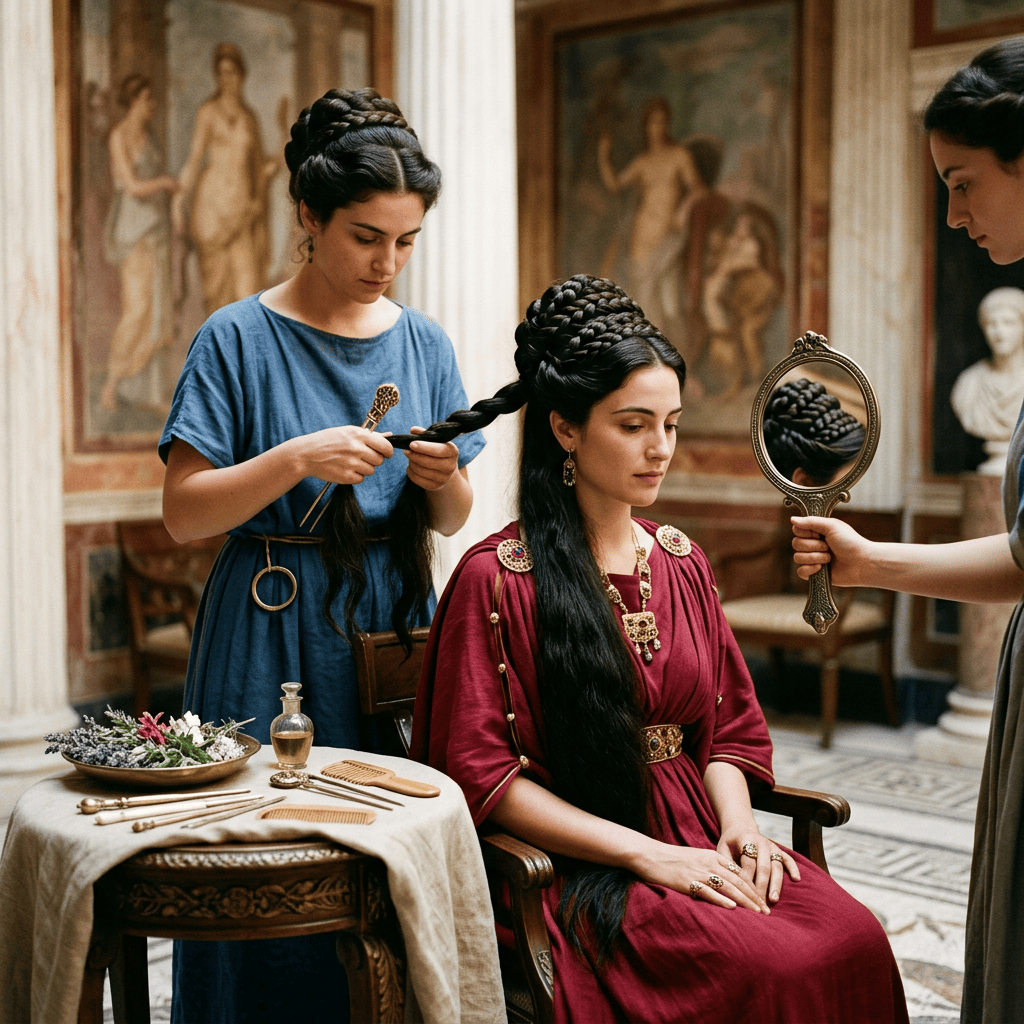
Roman hair culture was a blend of artistry, identity, and social signalling. Hairstyles weren’t merely aesthetic choices — they communicated status, virtue, and even political alignment. Women’s hair, in particular, became increasingly elaborate during the Imperial period, evolving from simple waves to intricate curls, braids, and sculptural arrangements. Wealthier women relied on ornatrices, skilled hairdressersContinue reading “Ancient Roman Hair Rituals”
Tag Archives: hairstyling
The 1950s Obsession with Permanent Wave Machines and Hair Technology
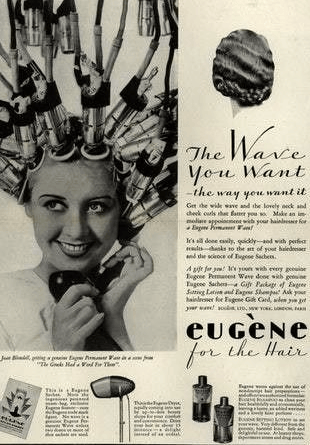
The 1950s marked one of the most dramatic eras in hair‑technology history — a decade when permanent wave machines, salon gadgets, and futuristic beauty devices captured the public imagination. After the austerity of the 1940s, women embraced glamour, structure, and highly styled hair and the permanent wave became the centrepiece of that transformation. Permanent waveContinue reading “The 1950s Obsession with Permanent Wave Machines and Hair Technology”
Award-Winner: LolaVie Peptide Plumping Volume Spray
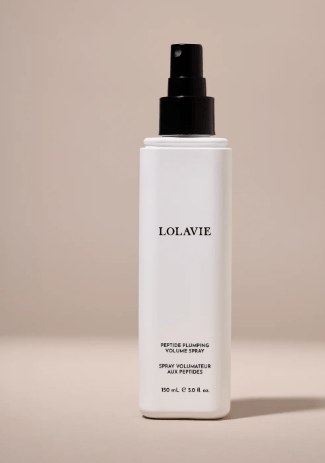
There is a reason as to why LolaVie Peptide Plumping Volume Spray has won Allure’s Best of Beauty awards for 2026. LolaVie’s award‑winning Peptide Plumping Volume Spray is a lightweight, silicone‑free styler that delivers instant fullness, touchable body, and long‑lasting lift while strengthening the hair with a blend of peptides, bamboo extract, and nourishing botanicals.Continue reading “Award-Winner: LolaVie Peptide Plumping Volume Spray”
The First Home Permanent Wave Machine (Bringing the Salon Into the Living Room – 1920s–1930s)
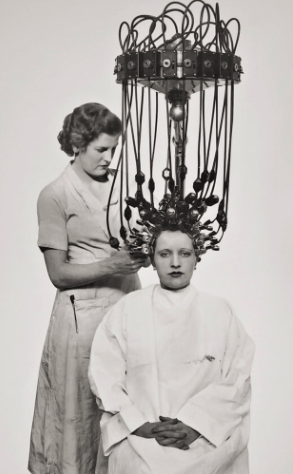
The first home permanent wave machine of the 1920s–1930s was one of the most ambitious beauty inventions ever marketed to consumers. Before its arrival, permanent waves were strictly a salon procedure, performed with towering electrical machines, dangling heated rods and skilled operators who monitored every curl. The idea that a woman could perform this complex,Continue reading “The First Home Permanent Wave Machine (Bringing the Salon Into the Living Room – 1920s–1930s)”

