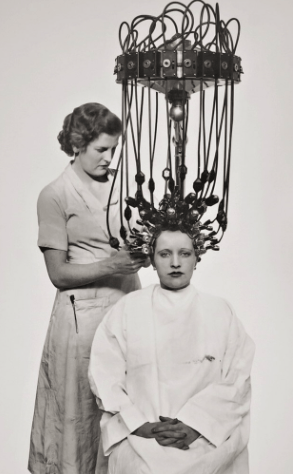
The first home permanent wave machine of the 1920s–1930s was one of the most ambitious beauty inventions ever marketed to consumers. Before its arrival, permanent waves were strictly a salon procedure, performed with towering electrical machines, dangling heated rods and skilled operators who monitored every curl. The idea that a woman could perform this complex, heat‑based chemical process at home was revolutionary — and a little dangerous.
Early home permanent wave machines were compact versions of their salon counterparts. Instead of a ceiling‑mounted octopus of electrical cords, the home model used a tabletop heating unit connected to several small curling heaters or clamps. These clamps were applied to sections of hair that had been treated with waving solution, then heated to set the curl. Instruction manuals promised “professional results,” “lasting waves,” and “modern beauty made simple,” but the reality was far more technical. Users had to time each curl precisely, monitor heat levels and avoid overheating — all without the guidance of a trained operator.

Despite the risks, these machines represented a major shift in beauty culture. They empowered women to experiment with salon‑grade technology in private, transforming the home into a personal beauty laboratory. The home permanent wave machine also democratized glamour: sleek Marcel waves and soft, sculpted curls were no longer limited to actresses or wealthy clients. Ordinary women could achieve fashionable styles on their own terms.
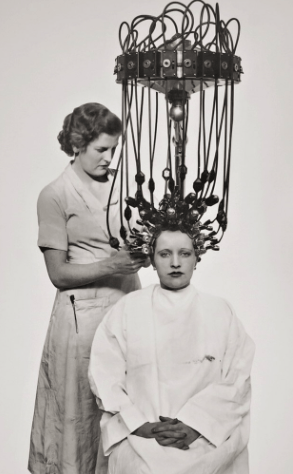
Though eventually replaced by safer, more efficient methods, the first home permanent wave machine remains a symbol of early homemade beauty innovation — a bold moment when technology, chemistry and personal style converged in the living room.
I’m Stacey Hobbs, thanks for reading Face by Stace! Until next time.
do you feel fabulous today?

