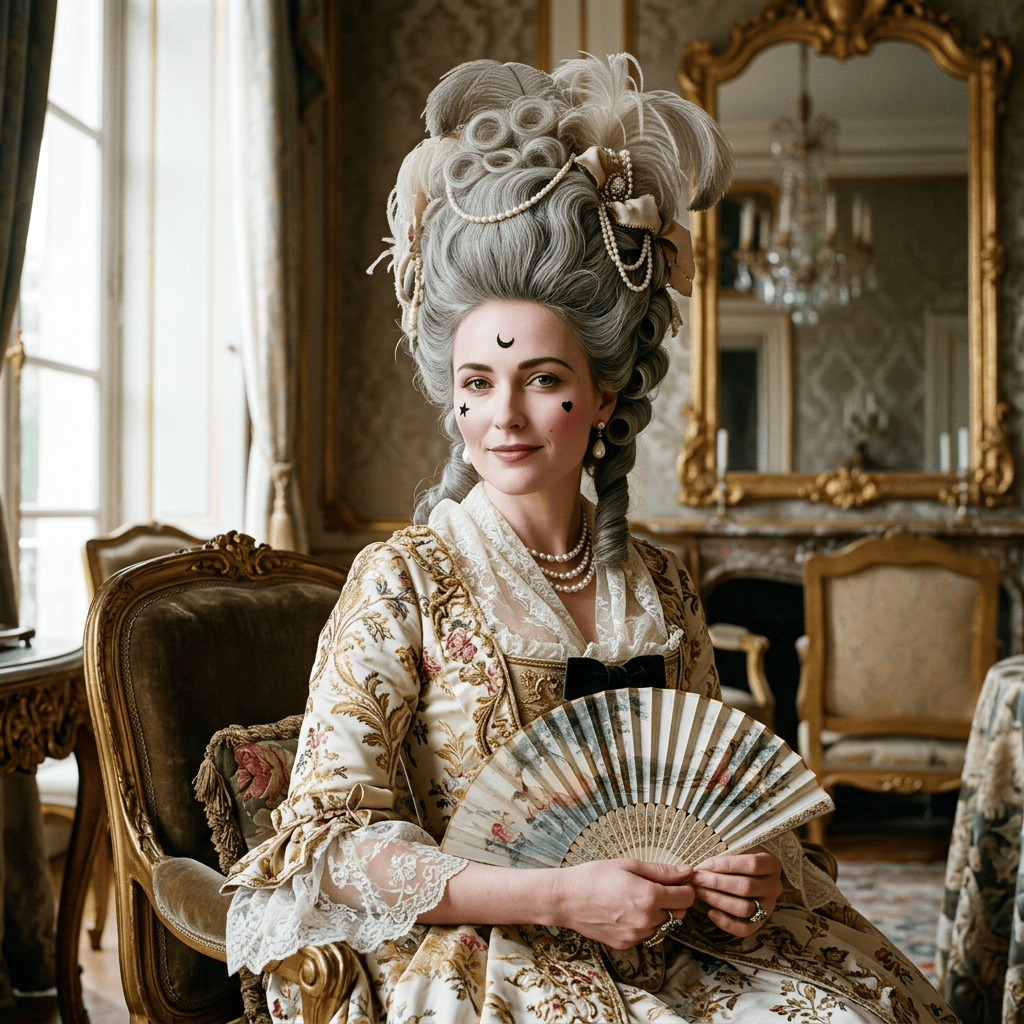
Beauty patches — small, velvet or silk cut‑outs shaped like stars, moons, hearts or simple circles — were one of the most charming and symbolic beauty trends of the Georgian and Rococo eras. Worn on the face, neck, or décolletage, these patches were more than decoration; they were a coded language of flirtation, fashion, and social identity.
Originally used to cover smallpox scars, patches quickly evolved into deliberate beauty statements. Their placement carried meaning: a patch near the mouth suggested playfulness, one near the eye hinted at mystery, and one on the cheek signalled confidence or coquetry. Court culture embraced these tiny markers as part of a larger aesthetic built on artifice — powdered skin, vivid rouge, and sculptural hair.
Patches were often jet‑black to contrast with pale, lead‑whitened complexions, creating a striking visual effect. Some were scented, some glittered, and some were cut into elaborate shapes that aligned with Rococo’s love of whimsy. They were stored in ornate patch boxes, turning even the act of application into a ritual of elegance.
Beauty patches remind us that historical beauty was deeply performative. A single velvet dot could communicate personality, status, or mood. In an era obsessed with visual storytelling, patches were tiny but powerful symbols of identity.
I’m Stacey Hobbs, thanks for reading Face by Stace! Until next time.
do you feel fabulous today?

