Ancient Egyptian skincare was remarkably advanced, built on natural ingredients that nourished, protected, and restored the skin in a harsh desert climate. Their formulas blended practicality with luxury, creating treatments that feel surprisingly modern.
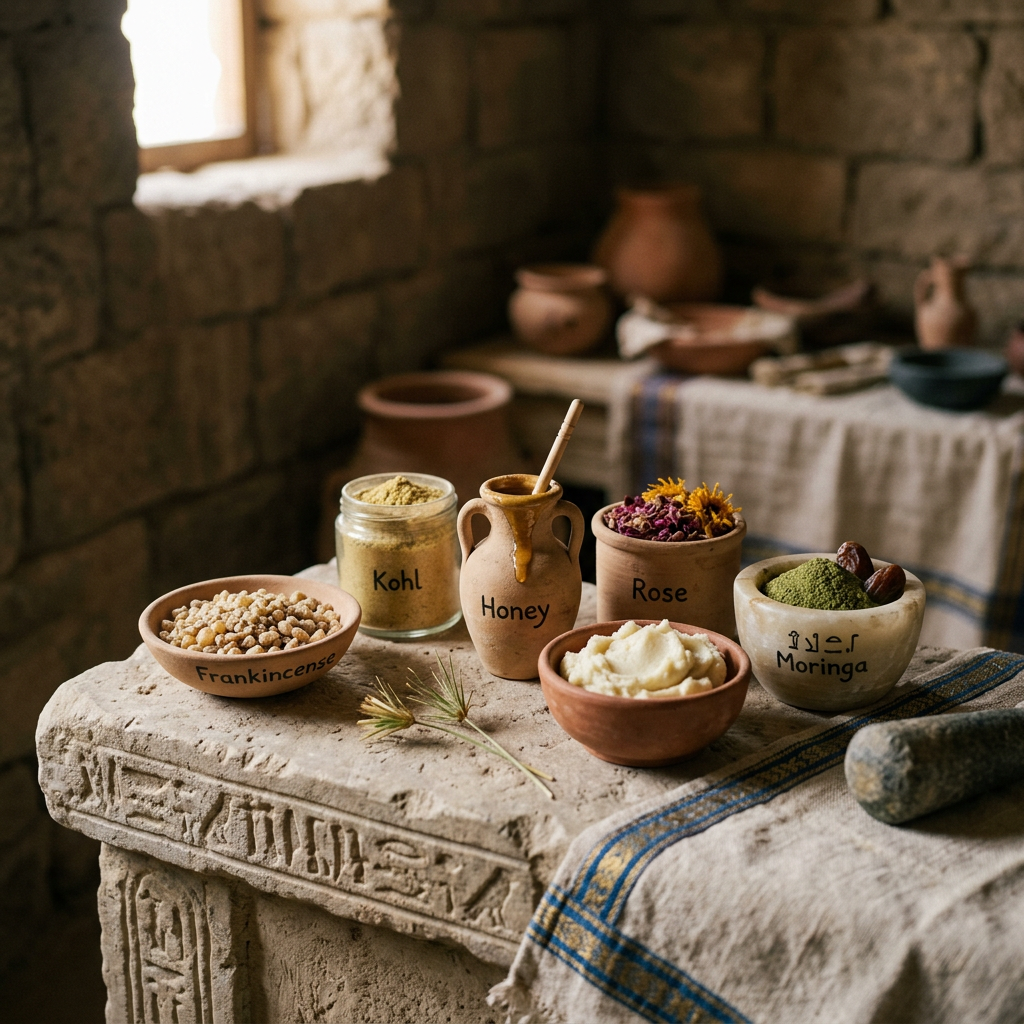
Moringa oil was one of the most prized ingredients. Lightweight yet deeply nourishing, it softened the skin, reduced dryness, and offered natural antioxidant protection. Egyptians also used castor oil and balanos oil, massaging them into the face and body to maintain moisture and resilience.
Natron, a mineral-rich salt blend, served as a cleanser, exfoliant, and deodoriser. Mixed with water or oils, it gently removed impurities and left the skin matte and fresh. Honey was another essential — used in masks to hydrate, soothe, and heal. Its antibacterial properties made it ideal for maintaining clear, glowing skin.
Milk and clay formed early brightening and softening treatments. Milk provided lactic-acid exfoliation, while clay purified and tightened the complexion. Wealthier Egyptians added botanicals such as lotus, myrrh, frankincense, and cinnamon to elevate their skincare into aromatic ritual.
Date‑palm oil and barley pastes were used for anti‑wrinkle care, reflecting an early understanding of skin repair. These ingredients weren’t random; they were chosen for their effectiveness and symbolic connection to nourishment, purity, and renewal.
Ancient Egyptian skincare reveals a culture that understood beauty as holistic — rooted in nature, ritual and intentional care.
I’m Stacey Hobbs, thanks for reading Face by Stace! Until next time.
do you feel fabulous today?

