Elizabeth Taylor understood glamour as both an art and a discipline and her beauty routine reflected that devotion. Among her most surprising routines was one that modern skincare now praises: she shaved her face. Not for hair removal but for exfoliation, luminosity and that signature Taylor radiance.
Long before dermaplaning became a trending treatment, Taylor used a simple razor to sweep away peach fuzz and dead skin. The technique wasn’t a secret within Old Hollywood; stars like Marilyn Monroe reportedly did the same. But Taylor elevated it into a routine. For her, exfoliation wasn’t merely maintenance — it was more about preparation.
Shaving created a smoother canvas for foundation, allowing her makeup artists to sculpt those famous cheekbones of hers with seamless precision. Under studio lights, her skin appeared almost incandescent, catching highlights without texture interference. The result was that unmistakable Taylor glow: soft, diffused and youthful.
What makes her approach legendary is the intention behind it. Taylor believed beauty should be tactile — something you feel as much as you see. Shaving her face was a moment of control, a way to refine her image with her own hands rather than relying solely on the makeup chair.
Today, dermaplaning is celebrated for exactly what Taylor knew decades ago: smoother skin, better product absorption and a lit‑from‑within finish. Elizabeth Taylor pioneered trends from the cat eye to this technique.
I’m Stacey Hobbs, thanks for reading Face by Stace! Until next time. do you feel fabulous today?
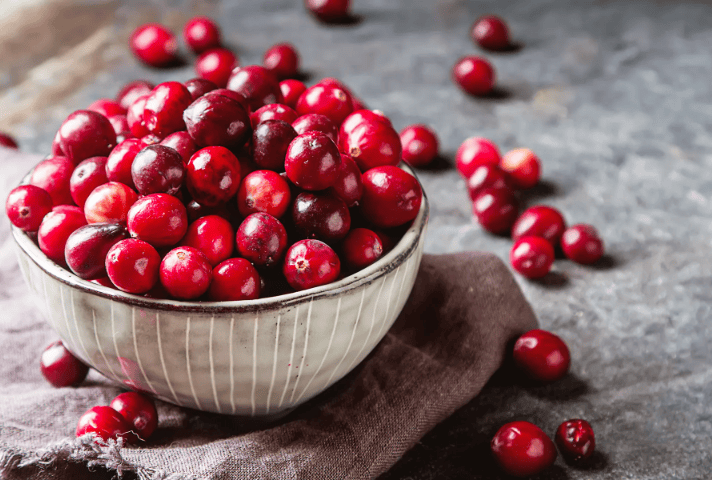
Cranberries have long been woven into North America’s cultural, culinary and wellness identity with it’s rich, just as vivid, and just as enduring as their ruby‑red colour. Before they became a seasonal favourite in modern skincare and clean‑beauty formulations, cranberries were used for centuries by Indigenous communities for healing, nourishment and natural pigmentation. Their tart acidity, bright colour and potent antioxidants made them one of the earliest fruit‑based beauty ingredients on the continent.
Today, cranberries are about heritage, science and modern glow‑forward beauty. They’re celebrated for their vitamin‑rich, their gentle exfoliating properties and their ability to support bright, resilient, collagen‑healthy skin. Cranberries are an elevated, seasonal yet timeless, rooted in real history yet perfectly suited for contemporary wellness.
This is the story of how a humble North‑American berry became a beauty staple.
Origins & Cultural Lineage
Cranberries are one of North America’s oldest cultivated fruits, deeply rooted in Indigenous foodways, medicine and dye traditions. Long before European settlement, Indigenous communities used cranberries for healing, nourishment and natural pigmentation, which became a beauty‑adjacent use that foreshadows their modern cosmetic relevance.
Early Beauty & Wellness Use
Cranberries were traditionally used in poultices and salves for their natural acidity and antibacterial properties. Their vivid pigment was also used as a natural tint, this was an early form of plant‑based beauty enhancement.
Colonial & Early American Beauty Influence
By the 1700s–1800s, cranberries appeared in homemade tonics, complexion waters and early apothecary formulas. Women used cranberry‑infused rinses to brighten dull skin and revive tired complexions — a precursor to today’s fruit‑acid skincare.
Modern Cosmetic Relevance
Cranberries are now recognized as a high‑performance beauty ingredient, celebrated for:
Old Hollywood had its share of beauty obsessives however Joan Crawford operated in a league of her own. This is a lady who believed a perfectly drawn mouth could communicate discipline, glamour and emotional command. Her lip‑liner technique wasn’t just about applying makeup; it was about strategy to Joan Crawford.
Crawford famously approached her lips the way a couturier approaches a gown: with structure first. She began by tracing the outer border of her natural lip line, creating a crisp architectural frame before any colour touched the skin. The liner was always sharp, always deliberate and always slightly overdrawn. It was to refine. Her goal was symmetry, lift and a mouth that photographed well.
She preferred blue undertone red lipstick in other words cool tones typically, for example the kind of red lipstick that was found in the decade that was known for glamour; the 1930s. 1940s red lipstick was true red, typically consisting of a perfect balance of blue and orange undertones. Some true reds may have more blue in the undertone. This gave her that un-mistakable Crawford contrast: porcelain skin, sculpted cheekbones and a well structured lip that could photographed well and to Crawford’s standards. But the secret wasn’t the shade — it was the precision. Crawford believed the lip line should be sketched in micro‑movements, never in one sweeping stroke. Each corner was tightened, each curve perfected, each edge softened to avoid harshness under studio lights.
The result? A lip that looked powerful, expensive and un-readable. This was the ultimate Crawford vibe.
Today, her technique remains. It’s proof that a lip liner, when wielded with discipline, can transform not just the mouth but the entire face.
I’m Stacey Hobbs, thanks for reading Face by Stace! Until next time. do you feel fabulous today?
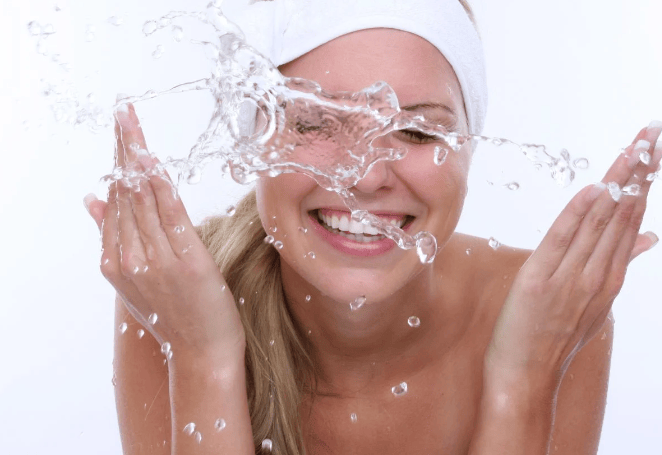
Let’s begin with washing our faces, we wash, we put warm or hot water on the face, causing the pores to open. The allows all of your skin-care products that you apply afterwards, as in your cleanser, toner, exfoliator, to seep into the pores. Or take a hot shower, it opens the pores as well. Then apply your skin-care products. It’s like washing the face as soon as you get out of a hot shower. If it’s steamy, like a sauna, then your pores are wide open. What do some people do afterwards? Place cold water onto their pores, to close them. Typically, when you are about to finish your showing, you should use cool water to close the pores on your skin and scalp. This also helps to create shiny, healthy hair.
Now, dipping the face into ice cold water, here’s the benefits. It closes the pores. Tightens the pores. It keeps wrinkles and fine lines at bay. The elasticity in skin remains tight, the skin remains wrinkle-free, fine lines-free. Elasticity in the skin is like an elastic band. What happens when the elastic band is stretched? It gets loose.
I’m Stacey Hobbs, thanks for reading Face by Stace! Until next time.
The Autumn season is the perfect time to begin to get your skin ready, during this transitional sason. From my pores being clogged by the air conditioning; heat from the sun, the humidity; sunscreen; salt water from the ocean, all of the goodness of enjoying Summer, that isn’t actually good for your skin. It does cause dehydration and sensitivity over the years, as our skin ages. Skin needs hydration after every non-transitional season; Summer and Winter. So, swapping out the light moisturizers for something heavier is a must.
Some of the things I like to do is a detox facial; a detox body wrap, all body wraps exfoliate the skin, some more than others; change my light moisturizer for something heavier, like a body butter and a richer hydrating moisturizer. Oh, how I cannot forget about beauty sleep. I’ll break this all down.
Detox Facial
Getty Images
Facials are a great way to retain healthy skin; keeping fine line and wrinkles at bay; to exfoliate, which allows old skin and any damage from the outdoors (and indoors, looking at you, ever so cool and thankful for; air conditioning) such as sunscreen, tanning lotions, heat, etc., that has seeped into the skin to be removed, so you’ve got clean, fresh skin. What I really like about detox facials is that I find my skin radiant and luminous. What I have also noticed in many detox facials is that it stimulates lymphatic drainage and will help to purify my skin. I typically just do one detox facial at the beginning of the season, and maintain the healthiness with my skin-care products that I’ve rotated, so I’m no longer using my Summer skin-care products.
Another really good facial treatment is a hydra facial!
Detox Body Wrap
Spa Ceylon
A detox body wrap is another great way to release the toxins from your pores. A detox can also be an exfoliant body wrap. Basically, all body wraps exfoliate, however, for me, during this time, I want it to be a bit more concentrated. They use organic skin-care products. Plus, you have to book your spa services at least two weeks in advance, that’s how incredibly in demand they are. Once you have been, you’ll discover why this high-end luxury spa is mostly everyone’s favourite. For more information on the importance of exfoliation, please, read my article. Like with the detox facial, I will only do a single detox body wrap, usually at the beginning of the Autumn season, then I rely on my skin-care formulas to do the trick.
An alternative to this, is using a detox bath bath salt.
Time for a Richer Moisturizer
Sephora
As the cool weather begins to hit, more so out here in Calgary, than in Southern Ontario, where I’m from, Summers are much shorter and dryer out here. It’s practically like a dessert, and in some parts of Alberta, it is a dessert, especially in the Summer-time. Anyway, I need a richer moisturizer. A light moisturizer doesn’t really do anything for my skin that is going to become even more dehydrated, tham what it already naturally is, especially living in Alberta. I don’t typically see results or feel the results. I always use a hydrating moisturizer. All of my skin-care products are vegan and cruelty-free. So, this hydrating heavy moisturizer, I typically use, is called:
What is the difference between a body moisturizer and a body butter? A body moisturizer I find is good for Spring and Summer, where a thicker lotion for the body, like body butter, really helps to nourish, hydrate my skin in the Autumn and Winter. I’ve noticed my dehydrated skin, or even dry patches from living out here in Alberta for so long, to which it has appeared for the first time in my life, dissipate, after I apply my ah-mazing body butter at night before I got to bed, and after I had taken my bath or shower.
Any body butter works really well, I however, use Lamb’s Soapworks body butter in Mango Papaya. I will be ordering their Pumpkin Spice body butter. As for my bath I do use Lamb’s Soapworks bath bombs and bath salts. Their bath soak are milk-based, which is perfect for this time of year.
Lotion for your Feet
Lamb’s Soapworks
Re-freshen your feet from the sandal season, as it comes to an end, Lamb’s Soapworks has an incredible and popular foot cream that hydrates my feet, feeling oh-so soft. Good-bye to cracking, rough feet! I can’t forget to give some TLC to my feet, and I don’t think you should, too!
A warm, Québécois‑comfort chicken dish inspired by Ricardo’s signature cozy, family‑forward cooking. Juicy chicken thighs are glazed with a glossy cranberry‑maple reduction that balances tart fruit with deep caramel sweetness. The result is a rustic, autumn‑perfect main that feels festive yet effortless — ideal for weeknight dinners, holiday tables or any moment that calls for Canadian warmth and seasonal flavour.
8 chicken thighs, bone‑in, skin‑on 1 cup fresh or frozen cranberries 1/3 cup pure maple syrup 2 tbsp Dijon mustard 2 tbsp olive oil 2 cloves garlic, minced 1/4 cup chicken broth 1 tsp fresh rosemary, chopped 1/2 tsp salt 1/4 tsp black pepper
Instructions
Prep the Chicken Pat chicken thighs dry and season with salt and pepper.
Sear Heat olive oil in a skillet over medium‑high. Sear chicken thighs skin‑side down for 5–6 minutes until golden. Flip and cook 3 minutes more.
Build the Glaze Add cranberries, maple syrup, Dijon, garlic, broth, and rosemary to the skillet. Stir gently around the chicken.
Simmer Reduce heat to medium. Simmer 15–18 minutes until cranberries burst and sauce thickens into a glossy glaze.
Finish Spoon glaze over chicken. Cook until internal temperature reaches 165°F.
Serve Plate chicken and drizzle with extra cranberry‑maple glaze. Garnish with rosemary
Storage
Refrigerator: 3–4 days
Freezer: Up to 2 months
Reheat: Warm gently in a skillet or 300°F oven to preserve glaze texture
Make‑ahead tip: Glaze thickens beautifully overnight — even better the next day
Substitutions
Chicken: Use breasts, drumsticks or turkey cutlets
Cranberries: Sour cherries or red currants
Maple syrup: Honey or brown sugar
Herbs: Thyme, rosemary or sage
Heat option: Add chili flakes or a splash of hot sauce
Citrus twist: Add orange zest for warmth and brightness
Beauty Benefits
Cranberries deliver vitamin C, supporting collagen and natural skin brightness.
Maple syrup contains antioxidants that help protect skin from environmental stressors.
Olive oil provides healthy fats that nourish the skin barrier for glow and softness.
Garlic + herbs offer anti‑inflammatory compounds that support overall skin vitality.
Lean protein helps maintain strong hair, nails, and skin structure.
Health Benefits
High‑quality protein from chicken supports muscle repair and steady energy.
Cranberry phytonutrients aid immune health and urinary tract wellness.
Maple syrup offers natural minerals like manganese and zinc.
Garlic supports heart health and has antimicrobial benefits.
Balanced sweet‑savory profile makes this dish satisfying without excessive sugar.
History + Cultural Context
Cranberries and maple syrup are two pillars of Canadian culinary heritage. Ricardo’s cooking often celebrates these ingredients — approachable, comforting and deeply tied to local tradition. Cranberry‑maple glazes appear throughout Québécois home cooking especially in autumn and winter when families gather around warm, rustic meals. This dish blends Canadian seasonality, Indigenous fruit history and modern family‑friendly cooking, making it quintessentially Ricardo‑inspired.
I’m Stacey Hobbs, thanks for reading Face by Stace! Until next time. do you feel fabulous today?