25 forgotten beauty secrets women in the 1950’s part 2: ice water facials Joan Crawford’s secret to tightening pores, pin curls, hair rinse!

It is so fascinating to discover or re-discover beauty secrets from the 1950s, specifically with women. From Pond’s Cold Cream and Vaseline petroleum jelly, such as did you know Kleenex facial tissue was invented in 1924, by Kimberly-Clark through the global phenomenon of Pond’s Cold Cream? How about cream-based cleansers and cleansing balms that evolved from Pond’s Cold Cream? And Vaseline petroleum jelly? Check 25 forgotten beauty secrets women in the 1950’s part 1!

This section of part two, discover Joan Crawford’s pore tightening secret, her infamous ice water facials; pin curls; sleeping in pin curls and why women resorted to this method; silk (and satin) pillowcases, how to refrain from waking up with “the frizz” or “bedhead frizz”, vinegar, lemon juice and beer hair rinse, and why the ladies of 1950s relied on hair rinses. Rainwater, anyone?

Ice‑Water Facials: Joan Crawford’s Pore Tightening Secret

coldshowersuccess.com
Joan Crawford

Hollywood icons like Joan Crawford swore by ice water facials to maintain youthful skin, tighten pores and for other people to reduce puffiness. This ritual pre-dated modern cryotherapy, ice facialsand was widely recommended in beauty magazines of the era.

While other Hollywood icons such as Marilyn Monroe loved to indulge in ice baths. 

Old Hollywood Icons Who Used Ice Water Facials in the 1950s

Joan Crawford: The Most Documented Ice‑Facial From Her Autobiography

Joan Crawford is best known for indulging in ice water facials. In 1955, Crawford would sub-emerged her face in a bowl of ice water twenty-five times in a single morning, on a regular basis, never mind partaking in this ritual twice a day, as it is documented. She relied on on physical shock to tighten her skin and to visibly shrink her pores, since Botox and other injected chemicals were non-existent. Crawford would often include rosewater in her icy water. She believed this icy water, in addition to giving herself tightened skin, it reduced puffiness and kept her complexion taut. Crawford had mentioned this technique in her autobiography. 

According to Joan Crawford’s personal accounts and her autobiography

  • She filled a large sink or silver basin with freezing water, a heavy amount of crushed ice cubes, and a splash of witch hazel or rose water. Typically, rose water was her go-to selection.
  • She would bend over the basin and plunge her face or vigorously splash the freezing mixture onto her skin exactly twenty-five times. Not more, not less. Twice per day.
  • Once the ice ritual was complete, she immediately layered on a generous application of heavy moisturizing creams (most notably from Erno Laszlo) to trap the moisture and hydration, and soothe the freezing skin.

The Exact 1950s Protocol

  1. Her housekeeper or assistant filled a massive, ornate silver washbasin with freezing tap water and added an entire tray of crushed ice cubes.
  2. Crawford always added a heavy splash of witch hazel or rose water to the ice slurry to maximize the skin-tightening and soothing benefits.
  3. Bending directly over the basin, she would either submerge her entire face or frantically splash the freezing water against her skin exactly 25 times.
  4. She followed the shock treatment with a heavy, thick layer of cold creams and moisturizers like Erno Laszlo Active Phelityl Cream to trap the sudden rush of moisture.

Marilyn Monroe: Ice Baths

It has been documented that Marilyn Monroe loved her ice baths. While not specifically documented as doing face‑only ice facials, Marilyn Monroe practiced ice baths, which are an early form of cryotherapy and served the same purpose: tightening skin and reducing inflammation. It was known, Monroe would indulge in ice baths to sustain her skin firm and tight. 

Due to the fascination of Hollywood secrets, women began adopting this beauty ritual of ice water facials as part of the skin-care routine. Before anyone knew it, ice water facials were mainstream popularity with regular women. Joan Crawford and Marilyn Monroe pioneered this beauty trend in the 50s, behind studio walls. 

This is considered an early, more extreme version of the modern ice facial. Today, ice rollers, cryo sticks, cryotherapy and other professional cryo-facials offer similar benefits, and what is used today to attain the same results. Dermatologists still recommend cold water or ice treatments for de-puffing and invigorating the skin, especially before make-up application. As they say, what is old is new again. Sometimes with an elevated version.

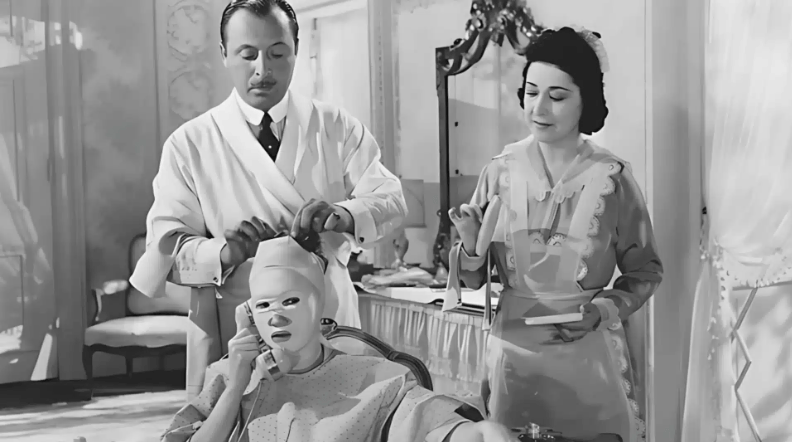
The Ice Face Mask Beauty Treatment (1950s)

Max Factor Jr., designer of the the ice facial mask in the 1940s, designed to reduce puffiness for actresses in between scenes or as a night-time/evening mask. 

Pin Curls: 
The Foundation of Structured Waves

Marilyn Monroe
Marilyn Monroe
Marilyn Monroe

The backbone of the 1950s hairstyle were pin curls. From every iconic look from Marilyn Monroe’s soft blonde waves to Lucille Ball’s structured waves, began with these tiny, coiled curls secured flat against the head. Every woman sported this hairstyle, which was what one would refer to it as a cookie cutter look, no different than any other decade, whether it be flapper, 30s make-up and hair etc. Every beauty school taught this hair style, practiced at home and in salons.

The most popular pin curls ladies of the 50s would wear are flat pin curls, stand-up pin curls and reverse pin curls. 

Lucille Ball
I Love Lucy (1951)
I Love Lucy (1951)

Pin curls were the absolute foundation of 1950s women’s hairstyles. Women used this wet-set technique to achieve the era’s signature volume, soft waves and sculpted, touchable curls. The hair was wrapped flat against the head or rolled upward and secured until it dried completely.

Pin curls were beloved hairstyle of the 1950s, because they were:

  • Heatless (no damage, no expensive tools)
  • Long‑lasting (a set could hold for days)
  • Versatile (tight curls, soft waves, sculpted Hollywood glamour)
  • Accessible (every woman could do them at home)

Today, while hot tools have largely replaced pin curls, vintage enthusiasts and professional stylists still use this technique for authentic retro looks. Modern setting sprays and flexible hold products make the process easier and longer-lasting.

Silk & Satin Pillowcases

In the 1950s, silk and satin pillowcases were initially elite luxury items transitioned into an absolute mainstream necessity for everyday women. This was the era of the weekly salon visit, where a woman’s hair was washed, set and heavily designed to last an entire week. In other words, hair is to women, what cars are to men. No messing up the hair! LOL!

Personal handheld blow dryers and curling irons were not yet common appliances within the home, preserving a professional hairstyle overnight was a major challenge. The silk and satin pillowcase, preferably silk was the women’s chosen fabric, became the ultimate secret weapon to achieve this.

The Weekly “Salon Survival” Strategy

Before silk pillowcases became popular, mid-century women resorted to extreme measures to keep their beehives, bouffants and structured pin curls from crushing:

Many women literally slept propped up vertically against a mountain of stiff pillows or sitting up in a chair to keep their hair from touching the bed.

The widespread introduction of silk and satin beauty pillowcases changed overnight habits. The perfectly smooth, frictionless surface allowed a woman’s head to glide effortlessly across the pillow as she tossed and turned, preventing the cotton fibres from pulling, snapping or fuzzing up her tight curl ridges.

Preservation vs. Cotton Absorption

Mid-century beauty columns and advertisements continuously educated women on why standard household cotton bedding was destroying their hair and skin:

  • Preventing “The Frizz or Bedhead Frizz”: Cotton behaves like hook-and-loop fabric against a delicate pin curl set. The friction causes individual hairs to separate from their uniform wave structure, creating instant bedhead frizz. Silk completely eliminated this static friction.
  • Retaining Moisture and/or Hydration: Cotton is highly absorbent, meaning it acts like a sponge, actively pulling out the hair’s (and skin’s) natural sebum and/or hydration, and overnight setting lotions. Silk’s natural protein-based composition does not absorb moisture and/or hydration, keeping the hair hydrated, shiny and structurally sound until the next salon appointment. Satin works just as well as silk. 

The 1950s Silk Alternatives: “Slumber Caps”

Because, real mulberry silk bedding remained a premium expense, mid-century manufacturing introduced affordable, synthetic alternatives for the budget-conscious housewife:

The post-war boom in synthetic textiles led to a surge in cheap acetate satin and nylon pillowcases which mimicked the slide of real silk.

For women who didn’t want to change their entire bedding set, silk and satin hair nets or slumber caps were used. These elasticized bonnets enclosed the hair entirely, allowing the head to roll safely against standard cotton sheets without disrupting the delicate geometry of the pin curls underneath.

Sleeping in Pin Curls

Sleeping in pin curls was a near-universal ritual for women. Because hot styling tools were not yet in existence in households, the entire mid-century relied entirely on a cold wet-set that dried overnight.

The 1950s Bedtime Routine

  • Step 1: Women washed their hair, applied a liquid setting lotion (like Lottabody or vintage Revlon Satin Set), and meticulously wound their hair into dozens of tiny circles against the scalp.
  • Step 2: They secured curls using flat, metal bobby pins crossed into an “X” or flat, two-prong aluminum clips. Triangular or bulky duckbill clips were strictly avoided for bed because they caused “sleep torture.”
  • Step 3: To prevent the curls from friction-frizzing against cotton pillows, women wrapped their heads tightly. They donned an elasticized mesh hairnet first, followed by a colorful chiffon scarf or a structured vintage bouffant bonnet.
  • Step 4: The mid-1950s saw the invention of small, flexible rubber spools, called Spoolies and soft foam “pillow rollers”. These marketed the promise of a more comfortable night’s sleep than hard metal pins.

The Morning Reality

Waking up with a head full of pins was incredibly normalized. Pop culture of the 1950s frequently depicted housewives at the breakfast table or greeting the milkman with their hair completely wrapped in colorful scarves or hidden under rollers. However, typically, a woman would only remove her pins and perform the vigorous “brush-out” immediately before leaving the house or hosting guests.

Hair Rinses

Vinegar, Beer and Lemon Rinses for Shine and Lightening

Ladies of the 50s relied on hair rinses such as one that consists of three ingredients, vinegar, lemon juice and beer to enhance shine and subtly lighten hair, women used vinegar or lemon juice rinses. These natural acids helped remove residue and brighten colour, especially for blondes.

Pantry staples like beer, vinegar, and lemon juice were essential components of women’s haircare routines, functioning as hair rinses, which are predecessors to present day commercial conditioners. Because, shampoos of this era were highly alkaline and synthetic cream rinses were just starting to hit the market, women relied on these acidic kitchen ingredients to restore their hair’s natural pH, strip away dulling soap scum and prep their locks for structural pin curl sets.

After shampooing, a diluted vinegar or lemon juice solution was poured over the hair and left for a few minutes before rinsing with water. Rainwater was sometimes preferred for its softness. Yes, rainwater. 

Presently, clarifying rinses and acid-based conditioners serve as a similar purpose. Apple cider vinegar rinses are as much of a recommendation and continues to be as such for shine and scalp health, while lemon juice is used cautiously for natural lightening.

Vinegar

Most women in the 1950s washed their hair only once or twice a week using traditional soap bar or early liquid shampoos, which left behind a thick, dulling film. An apple cider or white vinegar rinse acted as an acidifier to dissolve this soap scum.

The acid closed the hair cuticles flat. This instantly eliminated frizz, prevented tangles and gave the hair shine.

Women mixed one tablespoon of vinegar into a pitcher of warm water, poured it over their freshly washed hair and rinsed it out with cold water.

Lemon Juice: Brightens

Lemon juice was preferred over vinegar by women with blonde or light brown hair.

The citric acid provided the same cuticle-closing shine as vinegar, but it also acted as a mild, natural bleaching agent.

Women diluted the juice of one squeezed lemon into water as a final rinse. When paired with drying their hair out in the sun, it brought out vibrant, golden highlights without the harshness of chemical bleaches from this decade.

Beer Rinses: The Volume & Setting Lotion

Flat or stale beer was heavily utilized by women with fine, limp hair whom needed maximum structural integrity for structural 1950s hairstyles, such as bouffants and barrel curls.

The malt and hops in beer are rich in proteins that temporarily bind to the hair shaft. This expanded the diameter of each hair strand, providing massive body, bounce and a stiff texture that held a pin curl set for days.

A can of beer was opened ahead of time to let the carbonation escape. After shampooing, women poured the flat, room-temperature beer straight through their hair. Unlike vinegar, the beer was often left in the hair (or only lightly splashed with water) because as it dried, the sugars acted as a natural, firm-holding setting lotion. Once dry, the strong alcohol smell completely evaporated, leaving only shiny, volumized hair.

After all, 1950s marked the birth of commercial hair rinses.

I’m Stacey Hobbs, thanks for reading. Until next time!

do you feel fabulous today?
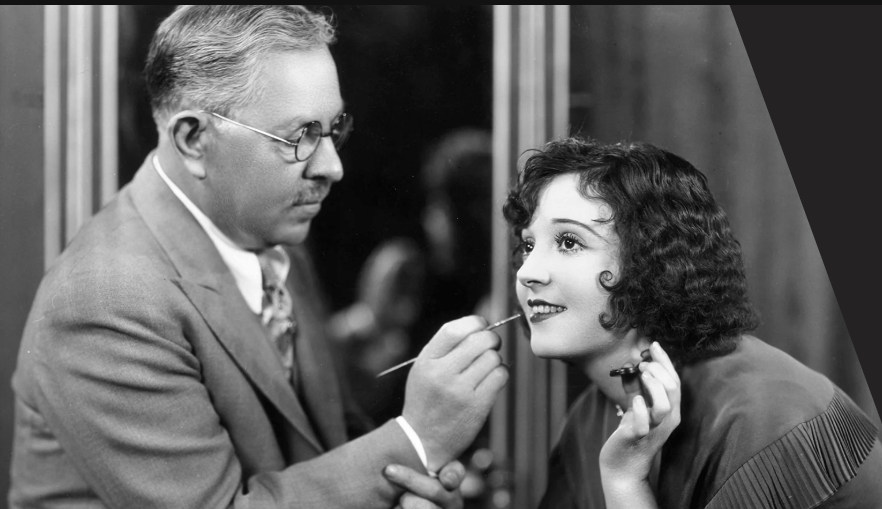
Father of Make-up, Max Factor: the man who invented make-up and “make-up”

You may have heard of Ben Nye, let’s take it back even further to the father of Make-up, the gentleman who invented make-up and “make-up”, the legendary Max Factor.

Ava Gardner/myhandbook.ru
Marilyn Monroe/modalia.es

Every make-up artist wouldn’t be where they are today if it weren’t for Max Factor. Let’s throw it out there. Not only is Max Factor the father of make-up, Max Factor invented make-up and the word make-up.

Max Factor is a combination of a person and a brand, a bridge between early Hollywood and modern consumer beauty. 

Origins of Max Factor and the brand

Max Factor Sr. was born Maksymilian Faktorowicz, a Polish-Jewish, in 1872 in Poland, then under the Russian Empire. 

By age eight he was assisting a dentist and pharmacist; by nine he was apprenticed to a wig maker and cosmetician while in Poland, gaining hands‑on experience with hair, wigs and rudimentary cosmetics.

Factor later opened his own shop in Ryazan, selling hand‑made rouges, creams, fragrances and wigs, and became known when a travelling theatrical troupe used his products to perform for Russian nobility.

Factor’s success led to an appointment as cosmetics expert to the Russian royal family and the Imperial Russian Grand Opera, an early indication that his work sat at the intersection of performance, aesthetics and technical craft, long before he arrived in Hollywood.

Concerned about rising antisemitic persecution in the Russian Empire, Factor emigrated to the United States in 1904.

Factor’s re-location to Los Angeles, saw an opportunity in the film industry, this led to him moving his family and his business to L.A., he supplied made-to-order wigs and theatrical make-up to studios and performers.

Max Factor & Company was formally founded in 1909, becoming a specialist in movie make‑up and later a global cosmetics brand.

From the beginning, the brand’s identity was inseparable from Hollywood—its lab was effectively an R&D arm for the film industry.

Technical innovations and product firsts

When Factor first laid his eyes on motion pictures, he found traditional stage greasepaint “terrifying” on screen. Factor had found greasepaint to be too heavy, mask‑like and ill‑suited to the camera.

1914 Flexible Greasepaint
In response, he created the first make‑up specifically for film, which is a “flexible greasepaint” that could be applied thinly and had a more human-look on camera.

With the success of flexible greasepaint, this innovation effectively launched screen make‑up and positioned Max Factor as the authority on cosmetics for film.

In 1918, Factor introduced the Colour Harmony principle—co-ordinating make‑up shades to complement a woman’s natural complexion, eye colour and hair colour.

He developed powders and shades that worked with evolving film technologies, ensuring faces appeared matte and natural on camera while still flattering in person.

This was an early, systematic approach to shade matching and undertones.

Coining the term “make‑up” and democratizing glamour

Around 1920, Factor introduced a full range of cosmetics to the general public and coined the term “make‑up” for these products.

Factor launched “Society Make‑up,” allowing regular women to emulate the looks of their favourite movie stars, breaking the boundary between studio and street.

His guiding belief “You are not born glamorous. Glamour is created.”—framed beauty as a craft and a set of tools, not an accident of birth.

Relationship with Hollywood and star‑making

Make‑up artist to the Golden Age

In Hollywood’s Golden Age, Max Factor became synonymous with movie glamour.

Factor created signature looks for icons such as Ava Gardner, Jean Harlow, Marlene Dietrich, Marilyn Monroe, Katharine Hepburn, Rita Hayworth, Bette Davis, and others

Factor often customized shades and textures for individual stars, adjusting for lighting, film stock and facial structure.

This work shaped how these actresses appeared on screen but also how audiences imagined “glamour” itself.

From studio lab to consumer aspiration

As women saw these stars on screen, they wanted to replicate their looks. Max Factor’s business model bridged their desire.

Products developed for film like Pan‑Cake make-up, were later released to the general public when actresses began taking them home for personal use.

Campaigns marketed Max Factor as the brand that could give “movie‑star glamour” to any woman, reinforcing the idea that professional techniques were now accessible to regular women.

This dynamic helped cement the modern pattern where professional artistry drives consumer trends.

Brand evolution and corporate history

Max Factor, Sr. died in 1938 at age 66. His son Francis adopted the name Max Factor, Jr., continuing the business and developing products like Tru‑Color lipstick and Pan‑Stik. Max Factor Sr.’s great-grandsons, Dean and Davis Factor are founders of Smashbox Cosmetics.

The company remained family‑owned for several generations, expanding internationally and maintaining its Hollywood association.

Max Factor & Company was sold in 1973 and later acquired by Procter & Gamble in 1991; today the brand is owned by Coty.

Max Factor now operates as a global cosmetics line, with heritage storytelling emphasizing its Hollywood roots and “iconic firsts.”

The brand’s official materials highlight its timeline from 1872 onward, positioning its innovations as milestones in the history of make‑up.

The corporate shifts reflect a broader pattern in beauty: founder‑driven artistry evolving into large‑scale, multi-national brand management.

Cultural and industry legacy

Max Factor has influence is both linguistic and conceptual. 

With Factor popularizing the term “make‑up” re-framed cosmetics as a deliberate act of construction rather than mere paint or powder.

His insistence that glamour could be created with the right tools and skills democratized beauty, anticipating today’s emphasis on technique, tutorials and artistry.

Technical foundations of modern beauty products

Many contemporary products trace back to Max Factor innovations.

Film‑ready foundation: Pan‑Cake and Pan‑Stik pre-figure HD and long‑wear foundations.

Lip gloss and long‑wear lipstick: Lip Pomade and Tru‑Color lipstick anticipate today’s glosses and transfer‑resistant formulas.

Shade systems: Colour Harmony fore-shadows the extensive shade ranges and undertone‑based complexion lines now standard in prestige and mass markets.

Hollywood glamour as a global template

By codifying the looks of Hollywood’s Golden Age, Max Factor helped export a specific vision of beauty worldwide.

The platinum blonde of Jean Harlow, the sultry glamour of Rita Hayworth, and the sculpted features of Marlene Dietrich were all, in part, Max Factor constructions.

Re-creations of classic Hollywood glamour, the red lips, sculpted brows, flawless matte skin, still draw on techniques and products pioneered in his lab.

Max Factor stands at the origin point of modern make‑up: a trained wig maker and cosmetician who became Hollywood’s go‑to innovator, then transformed that insider expertise into a consumer brand. Through inventions like Flexible Greasepaint, Pan‑Cake, lip gloss, and Colour Harmony, he solved technical problems for film while simultaneously redefining what everyday women could do with cosmetics.

Max Factor’s legacy is visible every time the discussion of make-up is present, to chase camera‑ready skin or to reference Old Hollywood glamour. The fascinating history of Max Factor is foundational in the history of beauty as an accessible, constructed and creative art form.

I’m Stacey Hobbs, thanks for reading. Until next time!

do you feel fabulous today?

What Happened When Nylon Stockings Were Scarce During WWII? Women Got Creative! Plus, the Birth of Sally Henson Leg Makeup

During World War II nylon stockings largely disappeared from civilian life, because nylon production was re-directed to military uses (parachutes, ropes, tire reinforcement), prompting rationing, black markets, creative leg-make-up solutions came into play and intense post-war demand that sparked the so‑called, the infamous “nylon riots.”

Women making hosiery at Minnesac Mills, Philadelphia. (Photo by Lewis Hine,
1936-1937)/www.smithsonianmag.com

Nylon was invented in the mid‑1930s and introduced to the public as a revolutionary hosiery fibre as early as 1939 and later than 1940; its stretch, durability, and “no‑run” promise made stockings a fashion must‑have almost instantaneously.

During WWII many women simulated stockings by applying a thin, sheer “leg make-up” (often called liquid stockings) and drawing a seam line; recipes ranged from commercial leg make-up to home mixes like tea or gravy browning and the look was widely taught in war-time beauty guides and films. Tea? Gravy browning? Did these ingredients actually hold up as a substitute for stockings? 

Wartime conversion and shortages

Nylon was diverted to war production and civilian hosiery largely halted by early 1942. This shift is the central cause of wartime shortages and later post-war demand. The key date of wartime conversion after Pearl Harbor.

The War Production Board and related agencies managed raw materials; silk imports from Japan had already been curtailed before full nylon conversion.

Nylon’s military uses made it strategically important, so civilian hosiery production was suspended.

When limited civilian shipments resumed in 1945–1946, mass crowds and “nylon riots” erupted in multiple cities as women queued for scarce pairs. Examples in the press include long lines, store scuffles, and police crowd control. These are widely reported in local papers of late 1945.

Lines formed when nylons were finally available again in Autumn 1945 after the end of World War II/German Hosiery Museum

Women improvised with leg make‑up (“paint‑on” stockings) and commercial products such as “Stocking Stick.” Advertisements and how‑to columns from the era promoted these alternatives.

The creative adaption:
Leg Make-up

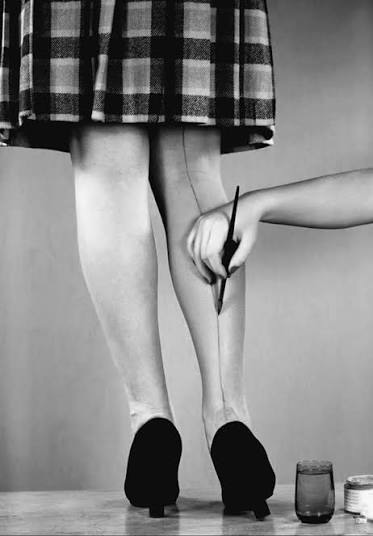
With Nylon Stockings Scarce, Women would Paint their Legs so it Looked like Stockings, 1940s/rarehistoricalphotos.com

Women had to resort to creativity, since leaving the home without nylon stockings was un-heard of. In other words, it was societal un-acceptable, un-civilized to step out in bare legs. What would the people say? This would lead to war-time shortages sparked a massive cosmetic boom.

Women on the home front used “liquid stockings,” which are cosmetic preparations spread thinly over the legs to mimic silk hosiery and often finished the look by drawing a dark seam up the back of the leg with eyeliner pencil to imitate seamed stockings. This practice became common because nylon and silk were diverted to the war effort, creating widespread shortages. There was a war going on, don’t you know? 

Many period sources and modern retrospectives document a range of approaches: commercial leg make-up bars or creams, thin liquid foundations and improvised household mixtures (tea, shoe polish dilutions or gravy browning in Britain) were reported. These methods varied in smell, longevity, and realism.

These home-made recipes were curated for women who couldn’t afford leg make-up or could find leg make-up, what was one to do? Resort to creative alternatives.

A common recipe from back in the day in the 1940s, kitchen staples like cocoa powder, instant coffee or tea, and liquid gravy browning (e.g., Kitchen Bouquet) were mixed with creams or water and smoothed onto the skin.

The hazard that may follow, while it offered a flawless artificial tan, this do-it-yourself method had drawbacks. Primarily with the savoury smell, the threat of running in the rain, oh, and let’s not forget, the risk of being chased by hungry neighbourhood pets. Oh, wait, there are those dogs coming, again. 

Perfecting the Illusion
To ensure the painted legs looked exactly like real stockings, a few extra steps were taken.

The Back Seam
The defining feature of 1940s stockings was the seam running up the back of the leg. Women used black or brown eyebrow pencils to draw a perfectly straight line.

The Heel Details
Many women would also shade the ankle and heel areas with makeup to mimic the reinforced heels of traditional silk or nylon hose.

Historical recipes give the most period-accurate finish but often used non-cosmetic ingredients that could stain clothing or irritate skin.

  • Leg makeup and “painted seams” to simulate stockings.
  • Wearing rayon or cotton hose when available, though these were less durable and less flattering.
  • Conserving and collecting damaged stockings for recycling into military supplies; collection drives were organized.
  • A thriving black market emerged; used or smuggled nylons fetched many times the retail price.

Commercial Brands 
Drugstores sold specialized leg foundations and stocking sticks by brands like Leg Silque, Toots, and LA Jack.

Bare Leg Bars
Department stores even set up “Bare Leg Bars” where women could have the leg makeup professionally applied and the seams perfectly drawn.

These adaptations also influenced fashion (greater acceptance of slacks and different skirt lengths) and everyday grooming practices.

Liquid hosiery being applied to a woman’s legs, Brisbane, 1941

Post-war demand and the Nylon Riots

When small shipments of nylons returned after Japan’s surrender, pent‑up demand exploded. Massive crowds, fights and broken windows—referred to as “nylon riots”— which occurred in multiple U.S. cities between late 1945 and early 1946 as women rushed stores for limited pairs. DuPont eventually scaled production to meet demand, but the immediate aftermath was chaotic.

Today, modern iterations of this vintage WWII staple (such as Sally Hansen Airbrush Legs or Dermablend Leg and Body Make-up) are still utilized to cover imperfections and achieve a flawless, airbrushed look.

I’m Stacey Hobbs, thanks for reading. Until next time!

do you feel fabulous today?

25 Forgotten Beauty Secrets Women in the 1950’s Part 3: Household Skin-Care Remedies, Homemade Hair Masks and conditioners (Rita Hayworth’s Documented Hair Treatment!), Cold Spoons for De-Puffing the Eyes, Scalp Oiling & Packing (Black Hair-Care) and Aerosol Hairspray

Hey, everyone, and welcome back to part three of 25 forgotten beauty secrets women in the 1950’s part 3! 

It is so fascinating to discover or re-discover beauty secrets from the 1950s, specifically with women. From Pond’s Cold Cream and Vaseline petroleum jelly, such as did you know Kleenex facial tissue was invented in 1924, by Kimberly-Clark through the global phenomenon of Pond’s Cold Cream? How about additional inventions through the miracle in a jar, Pond’s Cold Cream, which include, in addition to the invention of Kleenex facial tissue, but not limited to, cream-based cleansers and cleansing balms that evolved from Pond’s Cold Cream? And Vaseline petroleum jelly? Oh, and those Old Hollywood icons from Marilyn Monroe, to Jackie Kennedy in her early years, and more of whom relied on Pond’s Cold Cream as a “primer” and for everything, even though they had their skin-care doctor to prescribe high-end luxury products, as well as Vaseline as another primer option. Marilyn Monroe’s make-up artist applied Vaseline before make-up application, whether its for film, photo-shoots or whichever. On film it delivered a natural glow, if you will. Check 25 forgotten beauty secrets women in the 1950’s part 1!

Check out part two, discover Joan Crawford’s pore tightening secret, her infamous ice water facials; Do you want to take a bath like Marilyn Monroe? Then you’ll love to re-create her documented ice bath; pin curls; sleeping in pin curls and why women resorted to this method; silk (and satin) pillowcases, how to refrain from waking up with “the frizz” or “bedhead frizz”; vinegar, lemon juice and beer hair rinse, and why the ladies of 1950s relied on hair rinses. Rainwater, anyone?

In this section of part three, enjoy household skin-care remedies (Aspirin Masks, Witch Hazel and Baking Soda), homemade hair masks and conditioners (egg, mayo and olive oil treatments and Rita Hayworth’s documented hair treatment!), cold spoons for de-puffing the eyes, scalp oiling & packing (Black hair-care) and Aerosol Hairspray.

Household Remedies for Skin Blemishes: 
Aspirin Masks, Witch Hazel and Baking Soda

Before skin-care has evolved into sophistication form, women relied on simple household remedies for blemishes and irritation. Aspirin masks, witch hazel and baking soda were among the most popular treatments.

Women often relied on accessible pantry and medicine cabinet items for home-made skin-care. These frugal, do-it-yourself treatments were passed down through generations or shared in women’s magazines. They utilized household staples as quick, budget-friendly fixes for blemishes and oily skin.

Aspirin (acetylsalicylic acid) was crushed and mixed with water to create a paste for spot treatments. Witch hazel was applied with cotton pads to soothe and tone the skin. Baking soda was used as a gentle exfoliant or mixed into masks.

Presently equivalent, while over-the-counter treatments now offer targeted solutions, many still turn to these classic remedies for their affordability and effectiveness. Witch hazel remains a popular toner and aspirin masks are recommended by some dermatologists for occasional use.

Note: While these historical hacks are fascinating and cost-effective, modern dermatology advises caution. These harsh ingredients can cause severe dryness, irritation and disrupt your skin barrier if overused. Always proceed with a patch test.

Hair Masks and Conditioners: 
Egg, Mayonnaise and Olive Oil Treatments

Before commercial conditioners, women relied on kitchen ingredients to nourish their hair. Egg, mayonnaise and olive oil were prized for their moisturizing and strengthening properties.

Back in the 1950s, the term “hair mask” did not exist; instead, deeply conditioning treatments were called “re-conditioning treatments,” “creme treatments,” or “scalp packs.” Because women of the 1950s washed their hair only once a week and subjected it to harsh chemical perms, baking hood dryers and rigid styling lacquers, deep conditioning was an essential ritual.

Application
Eggs were beaten and applied to damp hair, sometimes mixed with oil or honey, then left for 20–30 minutes before rinsing with cool water. Mayonnaise and olive oil were used similarly, providing shine and softness

1. The Lanolin Craze 
(Commercial “Creme Packs”)

Treatment
Originally created for Hollywood actors whose hair was fried by studio lighting. This intense, 100% waterless compound of lanolin and oils became a massive commercial hit for home use in the 50s.

Women applied these heavy creme ointments generously from root to tip. To help the thick lipids penetrate the hair cuticle, they would wrap their heads in a piping-hot, wrung-out bath towel or sit under a home salon hood dryer for 20 to 30 minutes before shampooing the excess out.

2. Egg-Enriched Deep Conditioners

Commercial Creme Shampoos
Drugstore shelves were flooded with products like Richard Hudnut Enriched Creme Shampoo, which boasted real dried egg powder right on the label.

The DIY Egg Pack
For a deep at-home treatment, women beat raw egg yolks with a tablespoon of olive oil or castor oil. They massaged the raw mixture into dry hair, left it on for half an hour under a plastic shower cap and rinsed it out with tepid water (using hot water would accidentally cook the egg into the hair).

3. The Mayonnaise Pack

For women dealing with severe breakage from early at-home chemical perms (like Toni Home Permanents), mayonnaise was the ultimate heavy-duty kitchen mask.

Because mayonnaise is an emulsion of soybean oil, egg yolks and vinegar. This hair mixture acted as a perfect all-in-one mid-century hair mask.

The oils and eggs deeply moisturized and smoothed the frizzy hair cuticles, while the mild acidity of the vinegar lowered the hair’s pH back to normal after a harsh chemical processing treatment.

4. Scalp Oiling & Packing (Black Hair Care)

For Black women navigating the high-volume, sculpted styles of the 1950s, deep conditioning often focused heavily on scalp health and moisture retention.

Because styling heavily featured metal hot combs heated over gas stoves to temporarily relax texture, the hair was highly prone to thermal damage.

The Treatments
Women used dense, nourishing grease packs and petrolatum-based treatments from pioneering Black-owned brands like Madam C.J. Walker Manufacturing Company. Heavy pressing oils and sulphur-infused scalp ointments were applied thickly as a mask to soothe the scalp and protect the hair strands from structural snap-breakage.

Olive Oil Treatments

women embraced simple, kitchen-pantry beauty hacks to achieve glossy Old Hollywood hair and glowing skin. Olive oil was a go-to remedy used as an intensive, deep-penetrating hot oil treatment for dry hair, and blended with ingredients like mayonnaise and eggs for conditioning.

Hair Treatments

The “Hollywood” Mask

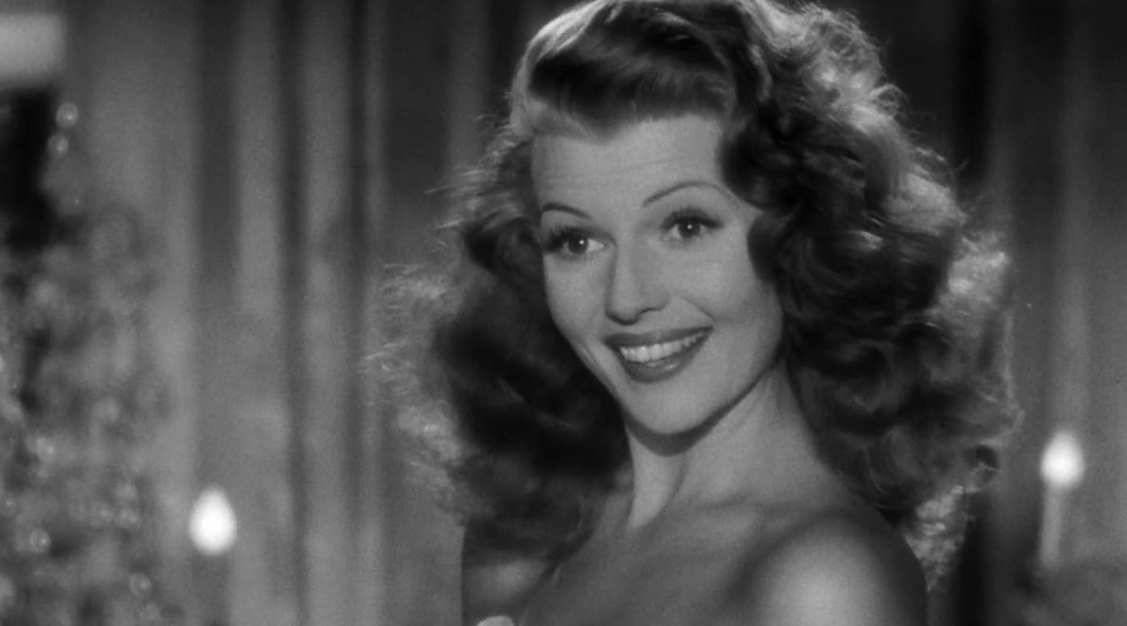
Rita Hayworth/Gilda (1947)/afl.com
sharvayoni.com

Rita Hayworth is documented as using a version of olive oil, egg and lemon-based hair treatment. to mix olive oil with mayonnaise, raw eggs, and a squeeze of lemon juice.

Rita Hayworth famously treated her heavily dyed hair with olive oil, then rinsed it with hot water and lemon juice to remove residue. This routine appears in multiple historical accounts and beauty write‑ups.

Why it matters
Her method is the closest Old Hollywood match to the modern “mayo + egg + olive oil + lemon” mask, because mayonnaise is simply oil + egg + acid (vinegar/lemon). So while she didn’t use mayonnaise itself, she used the same core ingredients in their raw form.

Hot Oil Applications
Women warmed olive oil and massaged it into the scalp and hair to restore shine to over-processed, dull hair.

Overnight Conditioning
For severely dry or brittle strands, some women wrapped their oiled hair in a silk scarf and left it on overnight to deeply lock in moisture.

Unlike today’s specialized serums, women of this era relied heavily on domestic, accessible knowledge. However, modern dermatologists note some caveats to these vintage methods. While heavily moisturizing, applying olive oil can be problematic for acne-prone skin because it is moderately heavy and can clog pores. Additionally, in an era before widespread SPF, women using olive oil for skin conditioning sometimes exposed themselves to the sun, risking severe sunburns.

Cold spoons for de‑puffing eyes

The 1950s beauty culture emphasized a polished, “always‑presentable” look and promoted simple, inexpensive home remedies such as cold creams, chilled cloths and quick cold compresses. These routines were widely taught in women’s magazines, beauty columns and salon lore, which presented chilled compresses as an easy way to look rested before social calls or work.

Typical 1950s ritual

Chill a metal spoon or small metal bowl in the refrigerator or run it under cold water; lie back with eyes closed; place the rounded spoon bowl at the inner corner of the eye and sweep outward toward the temple a few times; finish with cold cream. This sequence matched the era’s ritualized grooming and was often framed as a Hollywood or magazine “secret.”

Stainless‑steel teaspoons transfer cold quickly, are easy to clean, and were a convenient household tool for a quick, temporary de‑puffing effect.

Aerosol Hairspray

Aerosol hairspray revolutionized beauty in the 1950s. Adapted from WWII bug spray technology, it allowed women to ditch sticky hair lacquers and finally achieve the rigid hold required for iconic styles like the bouffant, French twist, and pompadour.

The 1950s Hairspray Boom

Beauty company Helene Curtis popularized the product in 1950 with their iconic Spray Net, which was actually responsible for coining the term “hairspray”.

Brands like Aqua Net, White Rain, and Lady Patricia dominated bathroom counters and local beauty salons across North America.

Unlike modern lightweight mists, the 1950s formulas used high amounts of shellac and harsh resins in a propellant base. These formulas gave hairstyles an iron-clad freeze, making them highly flammable.

How They Styled Their Hair

Women visited local salons for a weekly wash, set, and styling, using heavy coats of aerosol to make the sculpted pin curls and victory rolls last for days.

Because the spray was so heavily lacquered, women would use toilet paper to block their faces while spraying.

The extreme grip of 1950s aerosol was the catalyst for the towering, highly structured “beehive” hairstyles that exploded into the 1960s.

I’m Stacey Hobbs, thanks for reading. Until next time!

do you feel fabulous today?
25 Forgotten Beauty Secrets Women in the 1950’s Part 4: Hair Accessories and Ornaments, 1950’s make-up look, nail care and Max Factor Pan-Cake Make-up

Hey, everyone, and welcome back to part four of 25 forgotten beauty secrets women in the 1950s part 4!

It is so fascinating to discover or re-discover beauty secrets from the 1950s, specifically with women. From Pond’s Cold Cream and Vaseline petroleum jelly, such as did you know Kleenex facial tissue was invented in 1924, by Kimberly-Clark through the global phenomenon of Pond’s Cold Cream? How about additional inventions through the miracle in a jar, Pond’s Cold Cream, which include, in addition to the invention of Kleenex facial tissue, but not limited to, cream-based cleansers and cleansing balms that evolved from Pond’s Cold Cream? And Vaseline petroleum jelly? Oh, and those Old Hollywood icons from Marilyn Monroe, to Jackie Kennedy in her early years, and more of whom relied on Pond’s Cold Cream as a “primer” and for everything, even though they had their skin-care doctor to prescribe high-end luxury products, as well as Vaseline as another primer option. Marilyn Monroe’s make-up artist applied Vaseline before make-up application, whether its for film, photo-shoots or whichever. On film it delivered a natural glow, if you will. Check 25 forgotten beauty secrets women in the 1950’s part 1!

Check out part two, discover Joan Crawford’s pore tightening secret, her infamous ice water facials; Do you want to take a bath like Marilyn Monroe? Then you’ll love to re-create her documented ice bath; pin curls; sleeping in pin curls and why women resorted to this method; silk (and satin) pillowcases, how to refrain from waking up with “the frizz” or “bedhead frizz”; hair; vinegar, lemon juice and beer hair rinse; and why the ladies of 1950s relied on hair rinses. Rainwater, anyone?

Enjoy part three, household skin-care remedies (Aspirin Masks, Witch Hazel and Baking Soda), homemade hair masks and conditioners (egg, mayo and olive oil treatments and Rita Hayworth’s documented hair treatment!), cold spoons for de-puffing the eyes, scalp oiling & packing (Black hair-care) and Aerosol Hairspray.

In this section of part four, Hair Accessories and Ornaments (Ribbons, Flowers and Combs), 1950s make-up look, nail care and Max Factor Pan-Cake Make-up.

Hair Accessories and Ornaments: 
Ribbons, Flowers and Combs

Hair accessories completed the 1950s look, with ribbons, flowers, jeweled combs and headbands adding a touch of femininity and flair. 

Women of the 1950s used hair accessories to look perfectly polished. Accessories matched the era’s structured, ultra-feminine hairstyles. Women valued coordinated, neat looks for every occasion. 

Ribbons and Headbands
Satin ribbons were tied around high ponytails, while Velvet bands kept short poodle cuts neat. Chiffon scarves were wrapped loosely over bouffants and gingham bows matched causal Summer playsuits.

Hair Flowers
Faux blossoms were placed over side-swept rolls. Tropical orchids were paired with popular tiki culture. Rose clips were tucked behind the ears for romance, while flower wreaths were worn over structured crown curls.

Decorative Combs
Rhinestone combs were secured in evening up-dos elegantly. Tortoiseshell slides were held back in daytime French twists. Lucite prongs were featured in colourful, marbled designs. Pearl teeth were accentuated formal bridal hairstyles beautifully.

Face Powders, Blotting Techniques and 
Compact Culture

Pressed powder compacts were both a beauty essential and a fashion accessory. Women carried ornate compacts for touch-ups, using blotting papers to control shine throughout the day.

1950s face powder culture prioritized a flawless, velvet-matte finish. A shine-free, “porcelain” complexion was the standard of beauty, making the public application of powder a major social ritual. 

After the application of foundation, loose or pressed powder was used to set make-up and to mattify the skin. Blotting papers absorbed excess oil, preserving the flawless matte finish. No different than the present. 

Today, this is how loose or pressed powder needs are in make-up application, the same goes for blotting papers. All for the same reason as the 1950s.

The Compact Culture

  • Status symbols: Women collected jewelled, enameled and sterling silver compacts.
  • Luxury brands: Stratton, Elgin American, and Evans dominated the high-end market.
  • Social ritual: Powdering your nose in public was a stylish, accepted gesture.
  • Music boxes: Some novelty compacts played tunes when opened at parties.
  • Convertible wells: Designs held loose powder or fitted specific pressed powder pans. 

Face Powder Trends

  • Max Factor Pan-Cake: This heavy, water-activated base ruled the early 1950s.
  • Coty Airspun: A lighter, loose powder used to set liquid foundation.
  • Matching undertones: Powders highlighted peaches-and-cream or warm rosy skin tones.
  • Velour puffs: Large, plush puffs were essential to press powder into skin.

Blotting Techniques

  • Linen tissues: Women pressed specialty linen sheets firmly against the 
    T-zone.
  • Powder pounding: Puffs pressed fresh powder over oil instead of wiping it.
  • Restoration ritual: Blotting always preceded reapplying powder to prevent cakey buildup.
  • Handkerchief shields: Cotton cloths protected structured collars during daytime touch-ups.

Hand Care, Nail Polish Trends and 
Cutex Practices

Cutex and Revlon dominated the nail polish market, offering a range of reds, pinks and pastels. Manicured hands were a symbol of elegance, with regular moisturizing and cuticle care as part of the routine. Pastel was a common colour theme of the decade, from make-up to home decorations, such as kitchen appliances, as well. 

Nails were filed into oval or rounded shapes, cuticles pushed back and nail polish applied in two coats with a glossy topcoat. Matching lips and tips was a popular trend.

Nail Polish Trends
Nail polish trends of 1950s women consisted of four big trends. These trends were: Almond shapes maintained long, rounded, elegant contours. Bold reds dominated daily glamour. Frosted pinks provided soft, pearlescent shimmer choices. Half-moon manicures left the base lunula bare.

Hand Care Routines
Hand care routines were warm soaking, careful filing, base coats, thin layers and protective gloves.

  • Warm soaking: Softened rough cuticles before trimming.
  • Careful filing: Smoothed edges to prevent snagging.
  • Base coats: Shielded beds from deep staining.
  • Thin layers: Ensured even, chip-resistant drying.
  • Protective gloves: Shielded pristine polish during chores.

Presently, gel polishes, nail art and professional manicures offer endless possibilities. The classic 1950s palette remains a favourite option for those seeking a timeless, feminine look.

Eyebrow Shaping and Pencil Techniques

1950s eyebrows were arched, or pointed, the techniques created a bold, thick and highly structured look. Departing from the utra-thin lines of the 1930s, to adopt a defined, high-angled arch that beautifully framed the eyes, the face and over all balanced the era’s heavy Pan-Cake foundation and vivid red lips. 
Regardless of natural hair color, brows were filled in deep and dark.

Tweezing & Shaping Rules

  • Strict neatness: The space below the arch was plucked entirely bare to highlight the brow bone.
  • Minimal top plucking: Tweezing occurred mostly from underneath to preserve natural thickness.
  • Petroleum jelly finish: A swipe of Vaseline kept hairs lying perfectly flat all day.

Old Hollywood Icons Inspirations

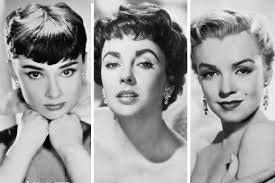
Audrey Hepburn: Made the straight, thick and heavily filled “boyish” brow incredibly popular.
Marilyn Monroe: Set the standard for the ultra-sharp, highly pointed arch.
Elizabeth Taylor: Championed naturally dark, framing, and commanding buxom brow contours.

Max Factor’s Pan-Cake Make-up

Max Factor’s water-activated Pan-Cake makeup was the defining foundation for women in the 1950s.

1950s women seeking a flawless, full-coverage look. Originally designed for Hollywood’s Technicolour film sets, it quickly transitioned into a daily beauty staple, selling tens of millions of units throughout the decade.

Hollywood Roots

  • Technicolor solution: Developed to stop studio light glare.
  • Massive popularity: Millions of everyday women bought it.
  • Old Hollywood glam: Promised a screen-star complexion.
  • Shade range: Offered warm peach and pink undertones.

The Application Process

  • Damp sponge: Women activated the dry cake with water.
  • Swift blending: The formula dried incredibly fast.
  • Oily skin savior: Resisted sweat and mid-day melting.
  • Drying nature: Required heavy pre-moisturizing creams.

The Mask Effect

  • Opaque coverage: Concealed all blemishes and freckles completely.
  • Velvet-matte finish: Left zero shine on the face.
  • Porcelain canvas: Allowed bold red lipsticks to pop beautifully.
  • Colour shift: Dried slightly lighter than the wet cake.

Iconic Actresses Who Swore By It

Before Pan-Cake was invented, early film make-up highly reflected background colours. If an actress stood near red curtains, she looked sunburned on screen. Major Golden Age icons actually refused to shoot in colour until Pan-Cake solved this glare. Old Hollywood icons that loved Max Factor Pan-Cake make-up, this includes but not limited to Greta Garbo, Betta Davis, Norma Shearer, Betty Grable, Loretta Young, Judy Garland, Claudette Colbert and Joan Crawford.

Claudette Colbert had a custom shade named “Dark”, which was made specifically for her skin tone by Max Factor.

Did Men Wear It Too?

Actors like Charlie Chaplin, Buster Keaton, and Rudolph Valentino wore Max Factor’s base formulas to standardise their complexions under intense studio light bulbs.

(Note: While Marilyn Monroe is often tied to Max Factor, her favourite product was actually the later, creamier spin-off called Pan-Stik, rather than the water-activated cake.)

For more on Max Factor, his innovations, the history of the Father of Make-up, check it out!

Salon Culture: 
Weekly Visits and Professional Etiquette

Regular, weekly salon visits were a social ritual, with women gathering for weekly shampoos, sets and styling. Salons were centers of community, gossip and self-care, with strict standards for hygiene and technique.

Women booked standing appointments for their preferred styles, often spending hours under hood dryers or receiving perms. Professional stylists were trained in pin curls, roller sets, and chemical treatments.

More on salon culture in America, Europe, Paris and Canada in the 20th century, stay tuned!

The Influence of Advertising, Magazines and Hollywood

The Iconic Revlon “Fire and Ice” (1952) Ad

The 1950s beauty landscape was shaped as much by cultural forces as by products and techniques. Hollywood stars like Marilyn Monroe, Grace Kelly, and Elizabeth Taylor set trends that women across America rushed to emulate. Magazines and advertisements played a pivotal role, offering step-by-step guides, product recommendations, and aspirational imagery.

Advertising campaigns—such as Revlon’s “Fire and Ice”—redefined beauty as a form of self-expression, not just a means to attract men. Beauty brands competed fiercely, introducing new shades, formulas, and packaging to capture the imagination of consumers. The rise of television brought beauty tutorials and product endorsements into living rooms, further democratizing access to the latest trends.

I’m Stacey Hobbs, thanks for reading. Until next time!

do you feel fabulous today?

What’s New and Hot: Eminence Ceramide Repair Balm

Ceramide Repair Balm comforts the skin with a blend of ceramide complex, allantoin and calendula extract. Infused with cupuaçu butter and elderberry seed oil, this rich balm helps relieve dryness, leaves skin feeling soft and supple, and supports a healthy-looking complexion.

  • Clean Beauty
  • Cruelty-free, no testing on animals
  • Nut-free
  • Gluten-free
  • All Skin Types
  • Sensitive Skin

Without

  • Parabens
  • Phthalates
  • Sodium Lauryl Sulfate (SLS)
  • Propylene Glycol

Eminence’s Ceramide Repair Balm is proud to carry the National Eczema Association (NEA) Seal of Acceptance™, signifying it’s safe and effective for sensitive, eczema‑prone skin.

eminenceorganics.com

Key Ingredients

Calendula Extract: calms the appearance of redness and irritation

Ceramide Complex: supports maintenance of the skin’s moisture barrier

Elderberry Seed Oil: nourishes the skin with essential fatty acids for a healthy-looking skin barrier

Cupuaçu Butter: thick moisturizing butter with a velvety and non-greasy finish

Allantoin: repairs dry skin and helps retain moisture on skin

Eminence Story

Eminence Organic Skin Care, has been blending the power of nature with results-driven skin care experiences since 1958. As trailblazers in the clean beauty movement, Eminences’ seasoned experts crafting the world’s best natural, organic and Biodynamic skin-care products. With roots in Hungary, Eminence Organic Skin Care has grown into a global brand, beloved across more than 40 countries.

Price: $88

For more information, please visit:eminenceorganics.com

Have you tried Eminence Ceramide Repair Balm? Let me know, I’d love to hear from you!

I’m Stacey Hobbs, thanks for reading. Until next time!

do you feel fabulous today?