What’s New and Hot: Eminence Tetrapeptide Lifting Gel

Tetrapeptide Lifting Gel is firm and refreshes the skin with this lightweight, oil-free gel powered by hyaluronic acid to hydrate and tetrapeptides. Designed for use as a conductive agent for micro-current, galvanic and ultrasonic devices or as a standalone skin care step that extends the benefits of device treatments, it leaves the complexion looking smoother, lifted and more refined.

  • Clean Beauty
  • Soy-free
  • Nut-free
  • Gluten-free
  • Hydrates
  • For Sensitive Skin
  • For All Skin Types

Without

  • Parabens
  • Phthalates
  • SLS
  • Propylene Glycol
  • Animal Testing, Cruelty-free

Key Ingredients

  • Minerals and Salts: enhance conductivity for microcurrent and galvanic treatments; support better product penetration.
  • Elderberry Fruit: rich in antioxidants and visibly calms skin.
  • Tetrapeptide: improves skin firmness and overall lift.
  • Hyaluronic Acid: deeply hydrates and preserves moisture in the skin.
  • Aloe Vera Juice: enhances hydration in the skin, soothing and refreshing.
eminenceorganics.com

Eminence Story

Eminence Organic Skin Care, has been blending the power of nature with results-driven skin care experiences since 1958. As trailblazers in the clean beauty movement, Eminences’ seasoned experts crafting the world’s best natural, organic and Biodynamic skin-care products. With roots in Hungary, Eminence Organic Skin Care has grown into a global brand, beloved across more than 40 countries.

Price: $72

For more information, please visit:eminenceorganics.com

Have you tried Eminence Tetrapeptide Lifting Gel? Let me know, I’d love to hear from you!

I’m Stacey Hobbs, thanks for reading. Until next time!

do you feel fabulous today?

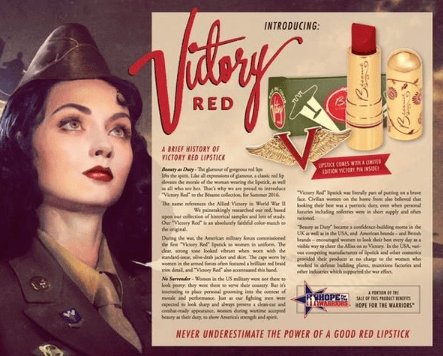
Materials for Lipstick Were Scarce During WWII, the Importance of Victory Red and What Did Lipstick Represent in the War?

During the Second World War, in both America and Canada, lipstick materials were in shortage, leaving women to become creative, since lipstick has sustained a powerful symbol of morale and normalcy on the home front. Upon the conclusion of the war, the “Victory Red” shape was worn by women in celebration, much like the Victory Rolls hairstyle, in celebration of having won the war. Materials shortages and factory conversions changed how lipstick was made and packaged, however women still sought red lips as a small, defiant ritual of femininity and confidence. 

Much like stockings, it was un-heard of, socially un-acceptable to leave the home without wearing lipstick. 

What lipstick represented

Wearing lipstick was framed as an act of resilience: a quick, visible way to “look like yourself” amid upheaval.

Advertisers and some governments encouraged women to keep up appearances as part of the war effort; beauty was sometimes cast as patriotic.

How the war changed production and use

Rationing and shortages.
Metals, fats and certain oils were rationed or re-directed to military use, which affected packaging and some ingredients. In places where cosmetics were scarce, lipstick became more prized.

Factory shifts.
Some cosmetic manufacturers re-purposed plants for war production (first‑aid kits, chemical components), reducing civilian output.

Re-formulation and packaging changes.
To conserve materials, companies simplified packaging and adjusted formulas when key ingredients were un-available.

Homemade and recycling.
Women improvised with homemade substitutes (e.g., vegetable dyes) and saved or re-melted old lipstick stubs, practices that could be un-hygienic or irritating.

Everyday practice and style

“Victory red.”
Bold red shades were especially popular because they read well in photos and on film and signaled confidence.

Practical application.
Compact, portable products (like pan‑cake make-up and small lipstick tubes) were favoured for convenience and economy.

Class and regional differences.
Availability varied by country and class; in some places lipstick was common, in others it was scarce and therefore more ceremonial.

I’m Stacey Hobbs, thanks for reading. Until next time!

do you feel fabulous today?

Salon Culture: Weekly Visits and Professional Etiquette in America

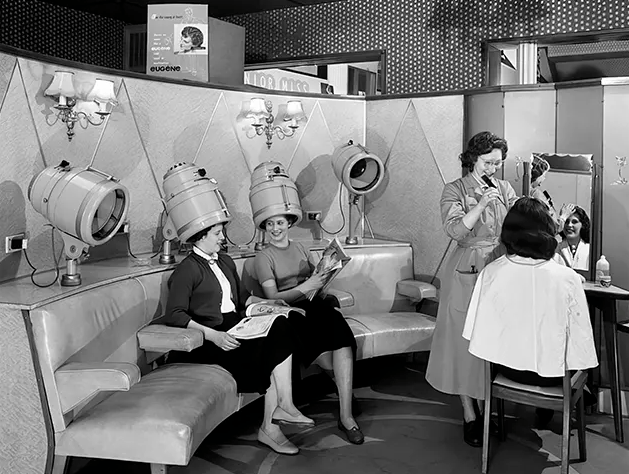
American salon culture, during the 20th century transformed from an elite social pastime. During the 1950s, regular salon visits were a social ritual, with women gathering for weekly shampoos, sets and styling. Salons were centres of community, gossip and self-care, with strict standards for hygiene and technique.

Salons in America in 1950s

In the 1950s, hair salons were not just places for hair styling, but also social hubs where women gathered to discuss the latest gossip and escape the daily grind. The salons were equipped with modern amenities like hair dryers and offered a range of services from basic haircuts to more elaborate treatments. The era was marked by the introduction of new hair products and the rise of television, which influenced the popularity of certain hairstyles and services. Salons played a 
significant role in maintaining the social standards of the time, and while the styles and services have evolved, the essence of the salon as a community and social space remains a cherished part of American history.

Weekly Salon Rituals

Weekly salon visits were a common part of many women’s routines in the post‑war decades. Salons offered more than haircuts: they provided setting, styling and maintenance that supported the era’s polished, camera‑ready looks.

The typical patterns at the salon included:

Regular appointments.
Women would often attend the salon on a weekly or bi-weekly basis for shampooing, setting and styling.

Between‑visit maintenance.
In between salon visits, women would care for their hair at home by brushing, pin‑curling, using home treatments to preserve the salon style.

A ritualized sequence.
in the salon: consultation → shampoo and scalp massage → set/roller placement → blow‑dry or hood dryer → styling and finishing.

Typical Salon Services and Timing

Shampoo and Set.
The core weekly service; setting on rollers or pin curls followed by drying under a hood dryer.

Permanent Waves and Chemical Services.
Less frequent, but common for longer‑lasting shape.

Scalp and Hair Treatments.
Oil massages, tonics and home‑remedy recommendations.

Manicure and Basic Beauty Services.
Many salons or adjacent parlors offered nail care and simple facial treatments as part of a weekly beauty regimen.

Social Role and Cultural Meaning

  • Salons as social hubs
    • weekly visits were opportunities for socializing, gossip and community bonding.
  • Status and identity
    • a well‑kept salon style signaled respectability, modernity and adherence to the 50s beauty ideals.
  • Domestic partnership
    • salon routines reinforced at‑home rituals (e.g., nightly brushing, pin‑curling) that extended the salon’s work into daily life.

I’m Stacey Hobbs, thanks for reading. Until next time!

do you feel fabulous today?

25 Forgotten Beauty Secrets Women in the 1950’s Part 5: Milk Baths, Cat Eye, Sleeping Gloves and Socks, Homemade Perfume Layering, Home Perms and Cold-Wave Kits

Hey, everyone, and welcome back to part five of 25 forgotten beauty secrets women in the 1950s part 5!

It is so fascinating to discover or re-discover beauty secrets from the 1950s, specifically with women. From Pond’s Cold Cream and Vaseline petroleum jelly, such as did you know Kleenex facial tissue was invented in 1924, by Kimberly-Clark through the global phenomenon of Pond’s Cold Cream? How about additional inventions through the miracle in a jar, Pond’s Cold Cream, which include, in addition to the invention of Kleenex facial tissue, but not limited to, cream-based cleansers and cleansing balms that evolved from Pond’s Cold Cream? And Vaseline petroleum jelly? Oh, and those Old Hollywood icons from Marilyn Monroe, to Jackie Kennedy in her early years, and more of whom relied on Pond’s Cold Cream as a “primer” and for everything, even though they had their skin-care doctor to prescribe high-end luxury products, as well as Vaseline as another primer option. Marilyn Monroe’s make-up artist applied Vaseline before make-up application, whether its for film, photo-shoots or whichever. On film it delivered a natural glow, if you will. Check out 25 forgotten beauty secrets women in the 1950’s part 1!

Check out part two, discover Joan Crawford’s pore tightening secret, her infamous ice water facials; Do you want to take a bath like Marilyn Monroe? Then you’ll love to re-create her documented ice bath; pin curls; sleeping in pin curls and why women resorted to this method; silk (and satin) pillowcases, how to refrain from waking up with “the frizz” or “bedhead frizz”; hair; vinegar, lemon juice and beer hair rinse; and why the ladies of 1950s relied on hair rinses. Rainwater, anyone?

Enjoy part three, household skin-care remedies (Aspirin Masks, Witch Hazel and Baking Soda), homemade hair masks and conditioners (egg, mayo and olive oil treatments and Rita Hayworth’s documented hair treatment!), cold spoons for de-puffing the eyes, scalp oiling & packing (Black hair-care) and Aerosol Hairspray.

Enjoy part four that consists of Hair Accessories and Ornaments (Ribbons, Flowers and Combs), 1950s make-up look, nail care and Max Factor Pan-Cake Make-up.

In this section of part five, Milk Baths, Cat Eye (Re-create Marilyn Monroe’s classic cat-eye by her make-up artist), Sleeping Gloves and Socks, Homemade Perfume Layering, Home Perms and Cold-Wave Kits.

Sleeping Gloves and Socks

Women of this decade regularly wore cotton sleeping gloves and cosmetic socks overnight as a core part of their intensive bedtime beauty routines to lock in heavy moisturizers to achieve soft, youthful skin.

The 1950s Overnight Beauty Routine

During this era, flawless, porcelain-like skin was the ultimate beauty standard. Magazines and advertisements heavily promoted overnight masking as a domestic duty and a pampering ritual.

Before bed, women applied thick layers of heavy creams, such as Jergens Lotion, Pond’s Cold Cream, or Pacquin’s Hand Cream, slipped on white, breathable cotton gloves. The gloves prevented the greasy creams from staining bed linens while forcing the skin to absorb the moisture.

Similar to hand care, women slathered their feet in petroleum jelly (Vaseline) or specialized heel salves, pulling on thin cotton or wool socks to heal dry skin to eliminate roughness overnight.

The gloves and socks were almost exclusively made of 100% white cotton. Cotton was favoured because it was lightweight, highly breathable, washable, and did not trap sweat, which could cause skin irritation. 

Cat Eye Eyeliner Look (aka Winged Liner) 

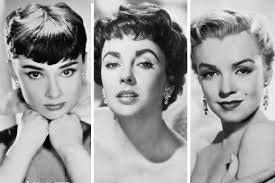
Initially referred to as the cat eye. When I think of cat eye make-up look, I think of Elizabeth Taylor, Audrey Hepburn and Marilyn Monroe. 

The winged or cat-eye eyeliner became a defining feature of 1950s makeup, popularized by icons like Marilyn Monroe and Audrey Hepburn. Cake eyeliners and gel liners were used to create this classic eyeliner look that has retained its popularity decades later. 

The cat eye trend took over women’s fashion and beauty, emerging as a defining symbol of the 50s glamour through iconic upswept eyewear in both fashion and beauty.

The 1950s Cat-Eye Makeup Look

The 1950s marked the birth of the modern winged or cat-eye eyeliner technique, heavily influenced by the pin-up aesthetic and a shift toward eye-centric make-up looks.

Several iconic Old Hollywood film stars prominently wore the cat eye look in the 1950s, defining and popularizing the trend. These Old Hollywood icons whom loved this eye make-up look are Marilyn Monroe, Audrey Hepburn, Brigitte Bardot, Elizabeth Taylor and Sophia Loren.

 Marilyn Monroe
Marilyn Monroe is arguably the most famous champion of both cat-eye forms in the 1950s.

Monroe popularized “bedroom eyes,” using a subtle, elongated flick of brown or black eyeliner on the upper lid. Her make-up artist, Allan “Whitey” Snyder, famously used a tiny extra downward triangle of shadow on the outer lower lash line to mimic the shadow of her upper lashes, giving her eyes a naturally cat-like tilt.

Audrey Hepburn
Audrey Hepburn brought an entirely different, ultra-chic energy to the now classic look.

In the early 1950s, Hepburn popularized a very distinct outlined cat eye. She favoured a thicker, highly precise wing that swept outward to complement her striking, thick gamine eyebrows.

Brigitte Bardot
While her peak “beehive and heavy liner” look defined the 1960s, the French star actually started the trend in the mid-to-late 1950s.

Following her break-out role in the 1956 film And God Created Woman, Bardot became globally recognized for her heavy, smudged, inky-black cat-eye liner. She made the look appear effortlessly smoky and rebellious rather than perfectly pristine.

Elizabeth Taylor
Elizabeth Taylor was a massive fan of emphasizing her beautiful coloured eyes, Taylor wore a highly glamorous, defined wing of eyeliner throughout the 1950s. 

Sophia Loren
Sophia Loren began her signature look in the late 1950s. Loren used an exaggerated, graphic double-wing technique, by lining both the top and bottom lids and pulling them upward to elongate her striking, almond-shaped eyes.

Home Perms and Cold-Wave Kits

The desire for long-lasting curls led to the popularity of home perm kits, such as Toni and Lilt. These kits democratized salon treatments, though the process could be challenging and odorous.

Hair was washed, wrapped around rods, and treated with a chemical solution. After a set time, a neutralizer was applied. The result was a head of curls that could last for months.

Milk Baths

Milk baths became increasingly popular during this era, it received such a revival. A major mid-century revival, transitioning from an ancient elite secret into a highly commercialized, essential weekly ritual for regular women seeking soft, porcelain-smooth skin. In addition, to providing exfoliation (lactic acid), often scented with rose petals, honey or essential oils; they were promoted in magazines and home beauty guides as an at-home luxury rather than a medical treatment. 

Driven by the post-WWII booming cosmetics industry and Old Hollywood glamour, the milk bath became the ultimate symbol of domestic self-care and relaxation.

Milk baths fit the era’s beauty ideals, which are pale, smooth, camera‑ready skin and were framed as a genteel, feminine luxury. 

Typical 1950s recipe and ritual

  • Base: Whole milk, buttermilk or powdered milk dissolved in warm bathwater.
  • Additives: Rose petals; a tablespoon or two of honey; oatmeal for soothing; a few drops of perfume or essential oil.
  • Method: Soak for 15–30 minutes, then rinse with lukewarm water and pat dry. Women often followed with body lotion or talcum powder as part of the evening routine. The ritual emphasized relaxation and “soft, pale” skin rather than clinical exfoliation.

Housewives relied on convenience and the rapidly growing commercial beauty market.

Commercial “Milk Bath” Products
Major cosmetic houses began manufacturing luxury, shelf-stable powder and cream bath additives that mimicked the properties of milk while adding beautiful perfumes.

  • Brands like Shulton sold Desert Flower Milk Foam Bath, which came in beautifully illustrated vintage boxes.
  • Luxury fashion houses hopped on the trend, offering highly coveted items like Chanel No. 5 Milk Bath Creme to scent and soften the water.
  • Later in the decade and into the 60s, door-to-door sales companies like Avon found massive success selling packaged Avon Milk Bath Powders in decorative, retro plastic milk jugs.

Well that’s a wrap on this series except there are more beauty secrets from the 50s I’ll share separately – it’s so good! 

I’m Stacey Hobbs, thanks for reading. Until next time!

do you feel fabulous today?

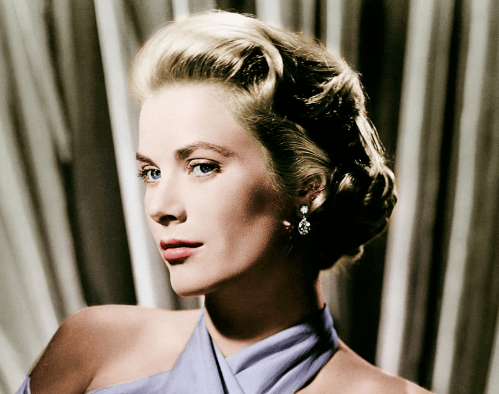
Get the Look: Grace Kelly’s Contouring Look From Her Makeup Artist

A minimalist, architectural approach to sculpting the face, long before, decades before social media turned contouring into a trend.

Grace Kelly’s beauty philosophy, as well as her regime was rooted in restraint. This is where modern contouring often relies on opaque creams, sharp lines and dramatic transformation. Whereas, Kelly’s method was the opposite of the modern version of contouring. Kelly’s light placement, soft shadow and bone‑structure enhancement rather than reinvention. Her look was built on precision, instead of product. 

Grace Kelly’s contouring is a soft, two‑blush technique, which consisted of a cooler, deeper shade placed under the cheekbone to create shadow, then a lighter/rosier shade on the apples to lift and brighten, blended until invisible.

Below is the re-constructed, documented technique used by Kelly’s make-up artists in the 1950s, a method that has sustained flawlessly today.

1. Start With a Matte, Velvety Base

1950s cameras were un-forgiving, so actresses relied on matte foundations, to eliminate shine on screen, so the appearance is appeasing for the audiences, in addition to the screen, also happened to photographed cleanly. Kelly preferred a finish that looked like skin, not shine, the perfect canvas for subtle sculpting.

Modern translation
Use a satin‑matte foundation or skin tint. Avoid overly dewy formulas; they blur structure.

2. Contour With Shadow, Not Bronzer

Grace Kelly’s make-up artists used cool, taupe‑based shadows to mimic natural bone structure, as opposed to a sun‑kissed warmth.

Where the contour went:

  • Under the cheekbone, but blended upward, not downward.
  • Along the temples, kept extremely soft.
  • Under the jawline, feathered to avoid harsh edges.

This created a lifted, aristocratic silhouette without visible “make-up.”

3. Highlight With Light, Not Glitter

Kelly’s signature radiance came from brightness, not from shimmer.

Her makeup artists used
Grace Kelly’s make-up artists used pale cream products, ivory matte powders and sometimes a touch of petroleum jelly for a subtle sheen (radiance), but never sparkle. 

Placement:

Placement consisted of tops of cheekbones, bridge of the nose, brow bone and centre of the chin.

This created the illusion of sculpted bone structure through contrast alone.

4. The Grace Kelly Cheek Technique

Grace Kelly’s blush placement is one of the most iconic elements of her look.

She wore blush high, almost at the outer cheekbone, this would lift the face. The shade was typically used was a cool rose or a soft coral. This depended on the film lighting.

This placement kept her look youthful, refined and camera‑ready.

5. Precision Powdering

Instead of setting the entire face, Kelly’s artists powdered only where needed; sides of the nose, under the eyes and around the mouth. 

This preserved dimension while keeping the make-up durable under hot studio lights.

6. The Finishing Touch: Symmetry

Grace Kelly’s beauty was defined by balance. Her make-up artists often made micro‑adjustments. These micro-adjustments included a slightly stronger contour on one side, a brighter highlight on the other, to create perfect symmetry on camera.

This is the part most people miss when re-creating Old Hollywood looks.

Why This Method Still Works Today

This method works today, because it is about architecture, as opposed to trends. The Grace Kelly method enhances the features she already posses, by using light and shadow the way a photographer or painter would.

At the end of the day, this contouring classic look of Grace Kelly’s was achieved long before bronzing powders ever came into the picture, but that doesn’t the technique hadn’t already been in existence. 

Have you re-created the Grace Kelly contour method? Let me know, I’d love to hear from you!

I’m Stacey Hobbs, thanks for reading. Until next time!

do you feel fabulous today?

The Birth of Teenage Fashion

Teenage fashion made an appearance in the 1950s, however it didn’t appear; it erupted onto the scene. Arguable teenage fashion began it’s experimentation before erupting in the 1940s with the Frank Sinatra phenomenon, before it erupted in the following decade to come. Before the 1940s, young people dressed like miniature adults, mirroring their parents’ wardrobes and social expectations. But as the world shifted through war, prosperity, music and media, a new identity emerged: the teenager. Teenager is a demographic with its own desires, spending power and cultural influence.

From Uniformity to Individuality

During the Second World War, rationing shaped clothing choices for everyone. Young women learned to sew, mend and personalize what little they had. This ingenuity planted the earliest seeds of youth-driven style, which comprised of cuffed sleeves, shortened hems, playful hair ribbons and saddle shoes. 

By the late 1940s and early 1950s, rising post-war prosperity created something revolutionary. For the first time, teens weren’t just considered as children; they were consumers. And the fashion industry took noticed, before other industries. 

The 1950s: A New Market Is Born

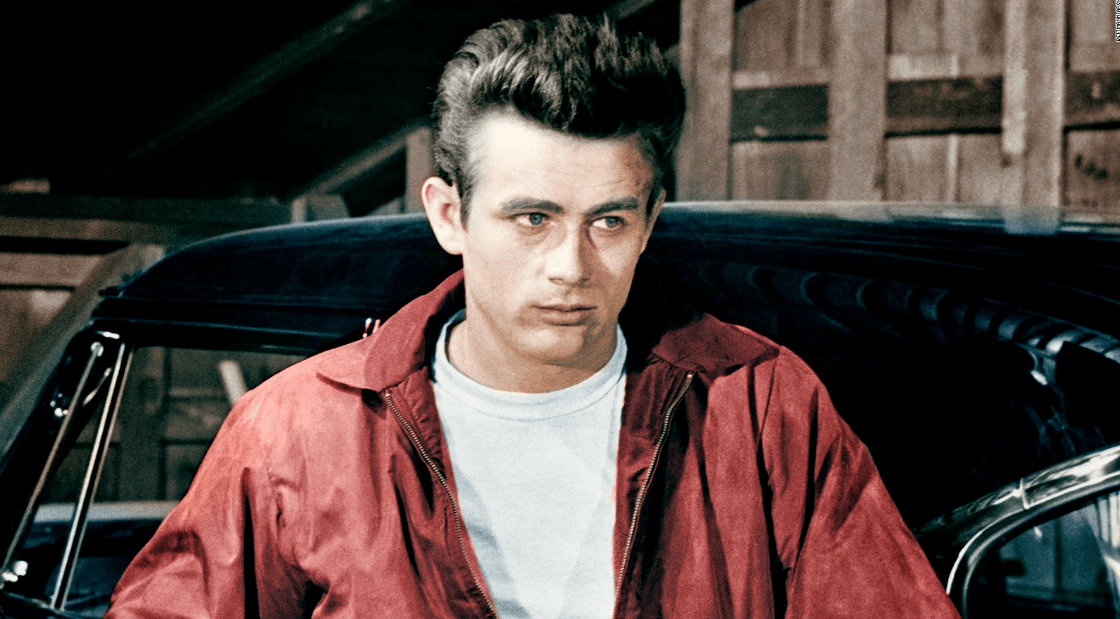
James Dean in Rebel Without a Cause/www.thirteen.org

Hollywood amplified this shift with actors like James Dean (Rebel Without a Cause) and Sandra Dee didn’t just act, they modelled a lifestyle. Denim, leather jackets, circle skirts, cardigans, bobby socks… these were considered as teenage clothes of the 50s. They were symbols of freedom, rebellion, romance and belonging.

Magazines followed. So did advertisers. So did department stores. Suddenly, “teen style” wasn’t a fringe idea—it was a booming industry.

The 1960s: Youth Culture Takes Over

http://www.stylingoutfits.com
fiftiesweb.com

By the time the 1960s rolled around, teenagers weren’t just influencing fashion, they were leading it. London’s Mod scene, California’s surf culture and the global rise of popular music created a visual language that belonged entirely to the young.

  • Mini skirts signaled liberation.
  • Bold prints and bright coloursreflected optimism and experimentation.
  • Twiggy, crowned “The Face of 1966,” embodied the era’s new aesthetic—wide-eyed, modern and un-mistakably youthful.
  • Counter-culture movements pushed boundaries even further, embracing handmade, bohemian and psychedelic styles.

Youth wasn’t a phase anymore. It was a cultural force.

Why Teenage Fashion Mattered

Teen fashion re-shaped much more than closets, it re-shaped the identity of the youth. It gave young people a way to express independence, challenge norms and build communities. It democratized style, making it accessible, playful and deeply personal.

The fashion industry had changed forever once the teenager era had arrived. Designers began transforming their mentality by having youth on the mind. Retailers built entire departments around them. The press followed the tastes of the teenagers. Trends flowed upward—from the street to the runway—not the other way around. Teens began being something of an influence to designers.

The Legacy Today

Every trend cycle we see now—Y2K revivals, sneaker culture, TikTok micro‑aesthetics—traces back to that moment when teenagers first claimed fashion as their own. The idea that style can be expressive, rebellious, experimental, or simply fun? That began here.

Teenage fashion wasn’t jsut born, it became a phenomenon in its own right. It re-defined what fashion could be.

I think I may re-watch a Rebel Without a Cause, how about you? 

I’m Stacey Hobbs, thanks for reading. Until next time!

do you feel fabuloous today?