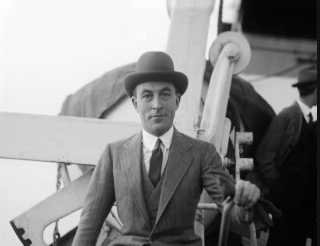
Before Chanel, Before Lagerfeld, Before Modern Luxury Had a Language, There Was Patou!
Jean Patou is one of the most influential designers of the 20th century — yet he is rarely mentioned in contemporary fashion conversations. His name has faded from mainstream memory but his impact is everywhere: in sportswear, in perfume history, in modern elegance and in the careers of designers who came after him.
To understand modern fashion, you must understand Jean Patou.
This is the introduction he deserves.
1. The Rise of a Modernist
Jean Patou founded his couture house in 1914, but it was the 1920s that made him a star. While Paris was still recovering from the war, Patou saw a new kind of woman emerging — active, modern, independent and ready to break from the rigid femininity of the Belle Époque.
Patou designed for her.
He created:
- clean lines
- modern silhouettes
- luxury sportswear
- effortless elegance
- clothing meant for movement
He wasn’t interested in fantasy.
He was interested in reality — and in elevating it.
2. The Inventor of Luxury Sportswear
Patou revolutionized fashion by introducing sportswear as couture.
He designed:
- tennis dresses
- golf skirts
- swimwear
- knitwear
- streamlined separates
His muse was Suzanne Lenglen, the tennis superstar whose Patou dresses became cultural icons. She played in couture — something un-heard of at the time.
Patou made athleticism glamorous.
He made comfort luxurious.
He made modernity beautiful.
Every designer who touches sportswear today echoes Patou.
3. The Perfume That Changed the World
In 1930, during the Great Depression, Patou released Joy — a perfume so expensive, so luxurious and so refined that it became known as:
“the costliest perfume in the world.”
Joy was not about excess. It was about optimism.
It became one of the most successful fragrances in history — rivaling Chanel No. 5 and shaping the future of luxury perfumery.
Patou understood that scent could be a cultural statement.
4. The Patou Woman
Patou’s clientele were women who embraced modernity without abandoning elegance.
She was:
- active
- cultured
- cosmopolitan
- confident
- refined
- modern
She didn’t want fantasy. She wanted reality — elevated.
Patou dressed the woman who lived in the world, instead of the woman who lived in a salon.
5. The House That Shaped Future Legends
Patou’s influence didn’t end with his death in 1936.
His house became a training ground for young designers, including:
- Karl Lagerfeld, who became head designer at Patou at just 21
- designers who later shaped Chloé, Fendi, and modern couture
6. Why Jean Patou Matters Today
Patou shaped:
- modern sportswear
- luxury fragrance
- streamlined elegance
- the concept of “active luxury”
- the foundation of modern couture thinking
He is the missing link between:
- Poiret’s theatrical modernism
- Chanel’s minimalist modernism
- Dior’s post‑war romanticism
- Lagerfeld’s intellectual modernism
Patou is the bridge.
I’m Stacey Hobbs, thanks for reading Face by Stace! Until next time.
do you feel fabulous today?
 Face by Stace