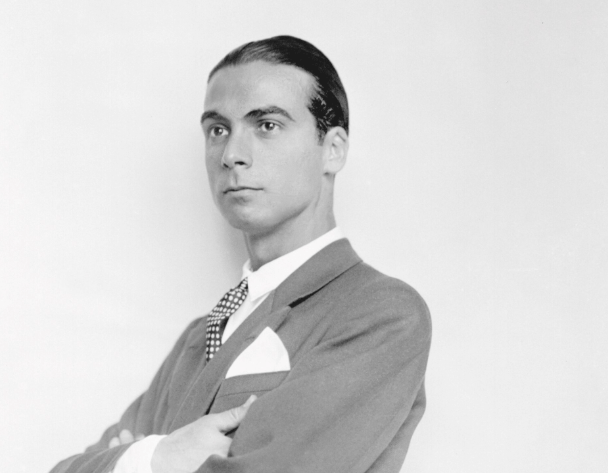
Balenciaga matters because he changed the very definition of fashion. He proved that clothing could be architecture, that silhouette could be language and that restraint could be revolutionary. In an industry built on spectacle, he demonstrated that the most powerful ideas often emerge from silence — from discipline, from clarity, from the refusal to compromise. His work did not chase trends or seasons. It pursued truth: the truth of proportion, the truth of structure, the truth of how fabric can shape space around the body.
His relevance today is not nostalgic; it is structural. Every designer who experiments with volume, who dissolves the waistline, who sculpts fabric into un-expected forms is working in a world Balenciaga built. Minimalism carries his fingerprints. Modern couture follows his blueprint. Even the avant‑garde owes him a debt, borrowing his belief that fashion can challenge the eye rather than flatter it. His ideas were not tied to the 1950s or 1960s. They were timeless principles — the kind that continue to evolve long after the designer himself has stepped away.
Balenciaga also matters because he protected his vision. By withdrawing from the industry at the height of his power, he preserved the purity of his archive. There are no diluted late collections, no compromises, no attempts to adapt to trends he did not believe in. His body of work remains intact — a rare, pristine record of a designer who never wavered. This integrity is part of his myth. It is why designers still speak of him with reverence, why his patterns are studied like architectural plans, why his name carries a weight that transcends fashion.
But perhaps the most enduring reason Balenciaga still matters is that he showed what fashion can be when it is treated as art. He believed that beauty begins with intention, that elegance is a form of discipline and that the body can be transformed through shape rather than decoration. His work invites contemplation. It asks the viewer to slow down, to look closely, to appreciate the precision of a curve or the quiet drama of a volume. In a world that moves quickly, Balenciaga’s designs remind us that true innovation requires patience.
Part XIII marks the moment when Balenciaga’s story becomes more than history. It becomes a lesson — a reminder that fashion is not defined by clarity. Not by excess, but by purpose. Not by trends, but by vision. Balenciaga still matters because he built a foundation strong enough to support the future. He remains the eternal architect of fashion.
I’m Stacey Hobbs, thanks for reading Face by Stace! Until next time.
do you feel fabulous today?
 Face by Stace