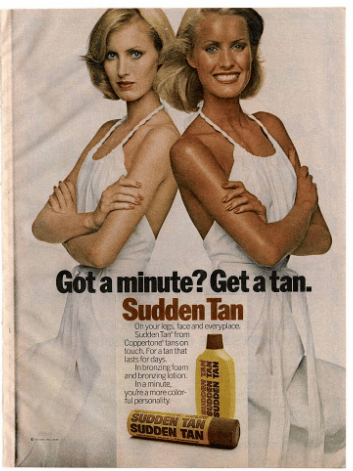
The 1970s marked a dramatic shift in American beauty culture. Gone were the powdered faces and sculpted bouffants of the 1960s. In their place emerged a new ideal: sun‑kissed skin, athletic bodies and a lifestyle built around tanning, dieting and California‑coast vitality. Beauty was no longer something applied — it was something lived.
This decade produced a new archetype of femininity: the woman who looked like she spent her days outdoors, moving, laughing, glowing. And at the centre of this cultural transformation were icons like Farrah Fawcett, whose effortless radiance became the blueprint for an entire generation.
The Tanning Craze: Sunlight as a Beauty Ritual
The 1970s were the first decade where tanning became a mainstream beauty goal. A bronzed complexion symbolized:
- youth
- health
- athleticism
- leisure
- California freedom
Women flocked to beaches, backyards and tanning beds (which emerged late in the decade) to achieve the golden glow associated with Farrah, Cheryl Tiegs, and the emerging “jogging culture.”
Baby oil, tanning accelerators, and sun reflectors were common tools — long before SPF became a household word. A tan wasn’t just a look; it was a lifestyle. It suggested you had time, freedom and access to the outdoors.
This was the era when the tan became aspirational, a symbol of modern American femininity.
Dieting Culture: The Pursuit of the Athletic Body
Alongside tanning came the rise of dieting culture — a defining feature of 1970s beauty. The ideal body was no longer the hourglass of the 1950s or the waifish mod silhouette of the 1960s. The new standard was:
- lean
- toned
- athletic
- lightly muscular
- “California healthy”
This shift was fueled by:
- the jogging boom
- the rise of aerobics
- the popularity of health clubs
- the emergence of diet books and fad diets
- the cultural obsession with “slimming down”
Women were encouraged to be active, to move, to sculpt their bodies through lifestyle rather than corsetry or cosmetics. Dieting became a daily ritual — grapefruit diets, liquid diets, calorie counting and early versions of “clean eating” dominated magazines and talk shows.
Beauty was no longer just about the face. It was about the body as a visual statement.
The California Aesthetic: Effortless, Athletic, Sun‑Lit
The 1970s aesthetic was deeply tied to California culture — beaches, roller skating, surfing, jogging and outdoor life. This aesthetic shaped everything:
- feathered hair that moved with the wind
- bronzed skin
- glossy lips
- minimal makeup
- natural textures
- white teeth
- athletic figures
Farrah Fawcett embodied this perfectly. Her glow was cultural. She represented a new kind of beauty: active, approachable, sun‑lit and alive.

The Legacy of 1970s Tanning + Dieting
The 1970s set the stage for decades of beauty trends that followed. The obsession with bronzers, self‑tanners, fitness culture, diet culture, “healthy glow” aesthetics and athletic femininity all trace back to this era.
It was a decade where beauty became intertwined with lifestyle — where the pursuit of radiance and slimness shaped not only how women looked but how they lived.


I’m Stacey Hobbs, thanks for reading Face by Stace! Until next time.
do you feel fabulous today?
 Face by Stace