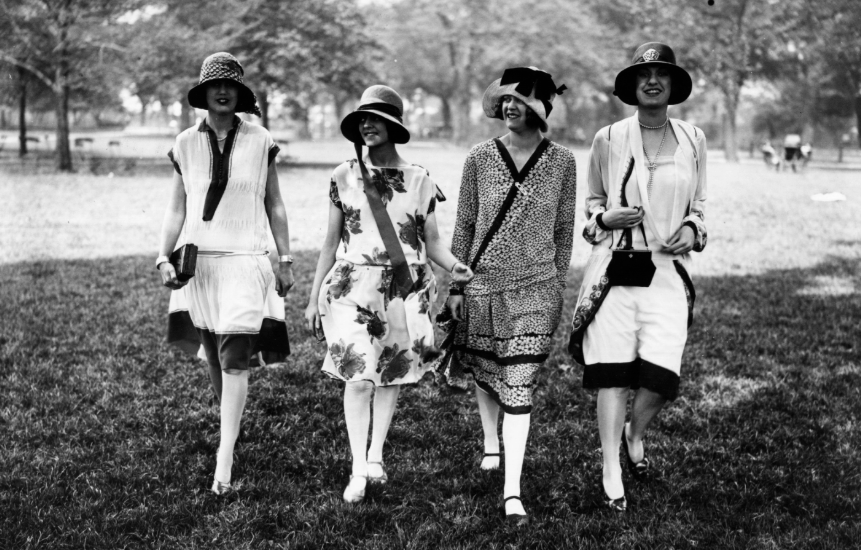
Now that we’ve laid out the political, economic, and social foundations of Prohibition, we can finally turn to how this era reshaped the fashion and beauty industry.
Prohibition re-shaped more than nightlife. It re-shaped the aesthetics. When alcohol went underground, glamour followed — slipping into speakeasies, private clubs/speakeasies, and hidden rooms where fashion and beauty became symbols of rebellion, sophistication, and modern identity. Yet the way Prohibition influenced style differed sharply between Canada and the United States, shaped by culture, enforcement, and the emotional climate of each country.
Prohibition didn’t just change what people drank. It changed how they dressed.
1. The Mood Shift: From Public Glamour to Private Seduction
United States
American Prohibition created a new kind of glamour, one of which was born in the shadows of prohibition. Speakeasies became cultural, where style evolved away from public scrutiny. Women embraced slinky evening dresses, metallic fabrics, beaded details, daring necklines, and dramatic makeup.
Speakeasies were seductive, modern, and intentionally transgressive. Fashion became an act of defiance.
Canada
Canada’s Prohibition was shorter, less dramatic, and more regionally fragmented. Without a national speakeasy culture, Canadian fashion shifted more subtly:
- urban women followed American trends.
- rural women remained practical.
- glamour existed, but without it being underground.
Canadian style absorbed the era’s mood, however it did not become a symbol of rebellion in the same way.
America’s glamour went underground.
Canada’s glamour stayed above ground, but softened.
2. Beauty: The Rise of the “Speakeasy Face” vs. Canadian Practicality
United States
Beauty became bolder during Prohibition. In hidden bars and jazz clubs, women embraced deep berry or wine‑red lipstick, smoky eyes, thin, dramatic brows, and glossy waves and finger curls.
Cosmetics were inexpensive luxuries, small rebellions women could afford. The beauty industry flourished, driven by Hollywood and nightlife.
Canada
Canadian beauty culture followed American trends but with more restraint. Lipstick remained popular, but shades were softer; grooming emphasized neatness over drama; urban salons offered finger waves and permanents; rural women relied on home styling and drugstore basics.
Beauty in Canada was modern and conservative, as opposed to it being provocative. It reflected practicality rather than rebellion.
American beauty was nocturnal.
Canadian beauty was daylight‑friendly.
3. Fashion Materials & Making: Thrift, Innovation, and the Economics of Prohibition
Prohibition overlapped with economic uncertainty, especially in Canada, where the Depression arrived early in resource‑dependent regions.
United States
Speakeasy fashion encouraged silk, satin, and velvet for evening wear; metallic thread embroidery; and bias‑cut dresses that moved with jazz rhythms.
But outside nightlife, women embraced thrift by re-working older garments, simplifying silhouettes, and choosing fabrics that transitioned from day to night.
Prohibition created a dual wardrobe: practical by day, glamorous by night.
Canada
Canadian fashion leaned more heavily into practicality wool, flannel, and sturdy cotton; dresses designed for durability; fewer evening garments, more daywear; and catalog patterns from Eaton’s and Simpson’s guiding national style.
Even in cities, Canadian women balanced modernity with climate, budget, and social norms.
Prohibition glamour existed in Canada, it was however, quieter, rarer, and more urban.
4. Cultural Meaning: Style as Rebellion vs. Style as Modernity
United States
Fashion during Prohibition became symbolic. A form of rejection of moral policing, a celebration of autonomy, and a fusion of jazz culture and modern femininity.
The speakeasy women became an icon; glamorous, independent, and modern.
Canada
Fashion carried a different meaning. A form of a reflection of urban modernization, a negotiation between tradition and modernity, and a quieter embrace of new beauty norms.
Canadian style evolved, but without the political charge of American nightlife.
I’m Stacey Hobbs, thanks for reading! Until next time.
do you feel fabulous today?
 Face by Stace