
Howard Hughes: What Was on His Vanity Table?

Howard Hughes’ vanity table wasn’t glamorous — it was clinical. Where other Hollywood men displayed colognes, brushes and grooming luxuries, Hughes kept a setup that looked more like a sanitization station than a dressing area. His grooming rituals reflected his obsession with precision, cleanliness and control.

Barbasol Shaving Cream

Hughes was loyal to Barbasol — a simple, reliable shaving cream that matched his preference for functional, no‑nonsense products.

Gillette Safety Razors

He kept multiple razors on hand, rotating blades frequently to reduce what he considered “contamination risk.”

Ivory Soap

Pure, unscented and famously simple. Hughes avoided fragrance and preferred products he believed were “cleaner.”

Alcohol & Disinfectant Bottles

This was the centerpiece of his vanity. He kept rubbing alcohol, hydrogen peroxide, disinfectant solutions, sterilized cotton pads and sealed glass jars. He wiped down tools, surfaces and his hands repeatedly.

Metal Nail Tools (Sterilized)

Nail clippers, files and cuticle tools were stored in glass containers and cleaned before and after each use.

Hair Brushes Wrapped in Tissue

To keep them “clean,” Hughes wrapped his brushes in tissue paper and replaced them often.

White Hand Towels

Stacks of fresh white towels, folded with precision. He used them once, then replaced them.

Petroleum Jelly (Vaseline)

A simple staple he used for dry skin and minor abrasions, especially during long flights.

Cotton Gloves

He occasionally wore cotton gloves to avoid touching surfaces unnecessarily or after applying ointments.

Hughes’ vanity table reveals a man whose grooming rituals were shaped by:

  • control
  • repetition
  • sterility
  • precision
  • and an intense desire to manage his environment

It wasn’t about beauty — it was about order.

I’m Stacey Hobbs, thanks for reading Face by Stace! Until next time.
do you feel fabulous today?
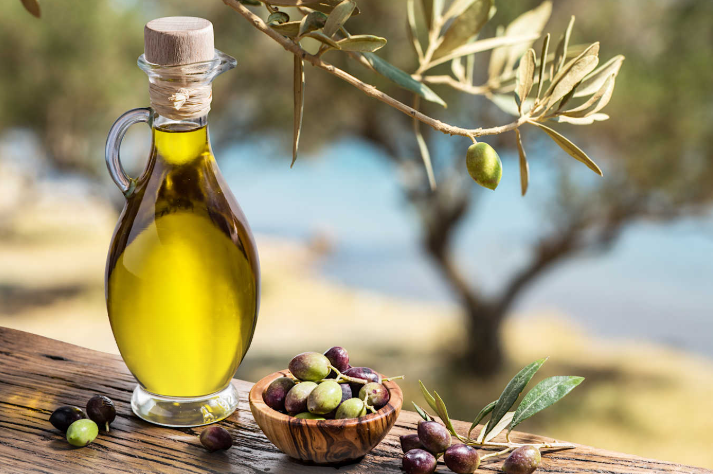
Olive Oil for Split Ends in 1930s

In the 1930s, beauty was shaped by restraint. Women lived through economic austerity, yet their grooming rituals remained tender, intentional and luxurious. Instead of beauty being purchased it was made at home, with ingredients pulled from the pantry rather than the department store. And few ingredients carried more cultural weight than olive oil.

Olive oil was one of beauty’s oldest luxuries: a Mediterranean staple used by Greek athletes, Roman empresses and Renaissance women who believed its golden richness symbolized vitality and longevity. By the 1930s, that lineage still mattered. Even in the midst of the Depression, olive oil remained a small, accessible indulgence — a way for women to maintain softness, shine and dignity when everything else felt uncertain.

Why Olive Oil?

Hair in the 1930s endured constant stress:

  • daily brushing
  • pin curls
  • Marcel waves
  • heated irons
  • setting lotions
  • rigid styles that demanded control

Split ends were inevitable.

Olive oil became the era’s answer — a kitchen‑table treatment that softened brittle ends, restored sheen and protected hair from the harshness of styling tools. Women warmed a teaspoon between their palms and smoothed it through the last two inches of their hair, letting it sit while they prepared supper or folded laundry. It was a ritual of care woven into everyday life.

The 1930s Olive Oil Split-End Recipe

Ingredients

  • 1–2 teaspoons olive oil
  • A comb
  • A silk scarf or cotton wrap

Directions
Women applied olive oil only to the ends — never the roots — to avoid weighing down the structured styles of the era. The oil was combed through gently, then the hair was wrapped in a scarf to allow the treatment to penetrate. Some left it on for an hour; others slept in it overnight. The next morning, they rinsed with warm water and a mild soap, revealing ends that felt smoother, softer and more manageable.

Why It Worked

Olive oil’s natural fatty acids helped coat the hair shaft, reducing the appearance of fraying and dryness. It didn’t “repair” split ends — nothing truly does — but it masked them beautifully, giving hair the illusion of health and uniformity. In a decade defined by precision waves and sculpted silhouettes, that illusion mattered.

Olive oil was more than a beauty ingredient. It was a symbol of continuity — a golden thread connecting ancient rituals to Depression‑era resilience. Women used it not because it was trendy, but because it was trusted, accessible and quietly luxurious. A small act of softness in a decade that demanded strength.

Olive oil for split ends wasn’t just a treatment. It was a moment of care — a reminder that beauty, even in hard times, could still be simple, elegant, and profoundly human.

I’m Stacey Hobbs, thanks for reading Face by Stace! Until next time.
do you feel fabulous today?
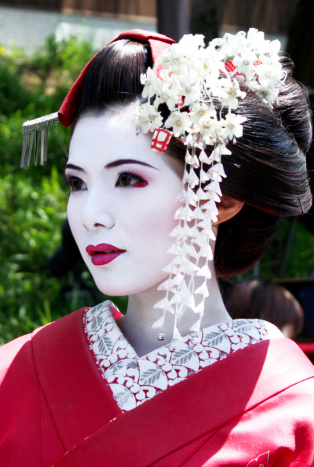
Geisha Makeup: The History of an Iconic Regime

Geisha makeup is one of the most recognizable beauty traditions in the world, a ritual shaped by centuries of artistry, symbolism and performance. Its origins trace back to Japan’s Edo period (1603–1868), when entertainers, dancers and musicians developed a visual language that communicated status, skill and refinement.

The white face — oshiroi — was the foundation. Made originally from rice powder, it created a luminous, porcelain finish that stood out in candlelit teahouses. The whiteness symbolized purity, elegance,and the ideal of feminine beauty. It also acted as a visual canvas, allowing the eyes and lips to become expressive focal points.

The eyes were lined with charcoal or black pigment to create definition and drama. Over time, red accents were added around the eyes — a colour associated with youth, vitality and allure. These touches gave the face depth and emotion, essential for performers whose expressions needed to be visible from a distance.

The lips were painted in a small, stylized shape using safflower‑based red pigment. Apprentice geisha (maiko) wore only the lower lip painted, signaling their training status. Fully fledged geisha painted both lips, creating the iconic heart‑like shape that conveyed maturity and mastery.

Hair ornaments and kimono patterns completed the look, each chosen with precision. Every detail — colour, placement, shape — communicated age, rank, season and artistry. Geisha makeup was never just cosmetic; it was a coded language.

Today, geisha makeup remains a living tradition. It is practiced with the same discipline and reverence, preserving a beauty ritual that is both theatrical and deeply cultural — a testament to Japan’s enduring artistry.

Geisha makeup is not simply applied. It is performed.

I’m Stacey Hobbs, thanks for reading Face by Stace! Until next time.
do you feel fabulous today?

The Vanity Table of Cary Grant: The Polished Gentleman of Old Hollywood

Cary Grant’s vanity table was a study in immaculate grooming, a quiet ritual of discipline, elegance and self‑possession. Long before “male beauty” became a cultural conversation, Grant understood that presentation was power. His face, his silhouette and his grooming were part of the persona he crafted with precision: the gentleman, the charmer, the impossibly polished leading man.

Grant’s complexion was famously smooth and even, maintained through a consistent routine of cleansing, toning, and moisturizing long before men spoke openly about skincare. He favoured lightweight creams that kept his skin hydrated without shine, allowing the camera to capture his features with clarity. His grooming was never theatrical; it was subtle refinement.

Hair was Grant’s signature. He kept it impeccably neat, shaped with pomade that offered shine without heaviness. The style was timeless — a clean side part, sculpted but natural, the kind of grooming that suggested effortlessness even though it required intention. His barbers were chosen carefully and his cuts were maintained with near‑military regularity.

Fragrance was another luxury. Grant gravitated toward crisp, masculine scents with citrus and herbal notes — understated, never overpowering. His colognes were chosen to complement his presence.

On his vanity table, everything had a purpose: a silver comb, a well‑worn brush, a classic razor, a small collection of creams and a bottle of cologne. Nothing excessive. Nothing flamboyant. Just the essentials of a man who understood that elegance is a daily practice.

Cary Grant’s vanity table wasn’t about vanity at all — it was about discipline, identity and the art of being timeless.

I’m Stacey Hobbs, thanks for reading Face by Stace! Until next time.
do you feel fabulous today?
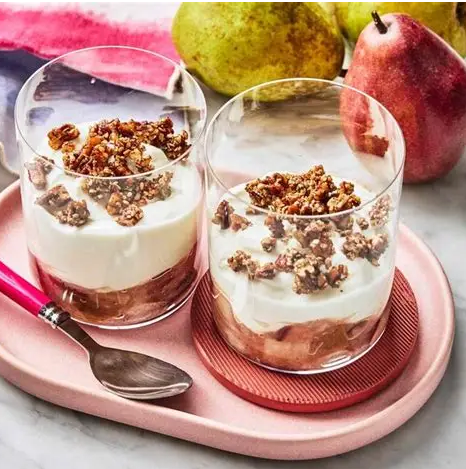
Pear & Vanilla Yogurt Parfait (French Market Breakfast): Pardon Your French Inspired

Pear & Vanilla Yogurt Parfait 
(French Market Breakfast)

Soft, fresh— perfect for a quiet‑luxury morning.
Fresh, delicate, and softly elegant — a morning ritual inspired by French market culture.

Prep Time: 10 minutes
Cook Time: 0 minutes (or 10 minutes if lightly stewing the pears)
Servings: 2

Pear Yogurt Parfait | Punchfork/www.punchfork.com

Pardon Your French Influence

This parfait captures Audrey’s signature French countryside sensibility:

  • Market‑fresh simplicity — fruit, yogurt, honey, nuts
  • Soft, feminine presentation — layered glass, gentle colours
  • Seasonal elegance — pears at their peak, lightly perfumed with vanilla
  • Rustic restraint — nothing heavy, nothing fussy
  • Morning quiet luxury — the kind of breakfast enjoyed slowly, with sunlight and linen

It’s the perfect French breakfast: nourishing, delicate and beautiful.

Ingredients

For the pears:

  • 2 ripe pears, diced or thinly sliced
  • 1 tsp honey
  • ½ tsp vanilla extract (or seeds from ¼ vanilla bean)
  • Optional: squeeze of lemon
  • Optional: pinch of cinnamon or cardamom

For the parfait:

  • 1 ½ cups plain or vanilla yogurt (Greek or French‑style)
  • ¼ cup granola or toasted almonds
  • Extra honey for drizzling

Instructions

1. Prepare the pears

Option A — Fresh: Toss pears with honey, vanilla, and lemon. Let sit 5 minutes.

Option B — Lightly stewed (French countryside style): Warm pears in a small pan with honey and vanilla for 5 minutes until softened but still holding shape.

2. Assemble the parfait

Layer yogurt into two glasses. Add pears. Sprinkle granola or almonds. Repeat layers for height and beauty. Finish with a drizzle of honey.

Beauty Benefits

  • Pears hydrate the skin internally thanks to natural humectants.
  • Yogurt supports gut health – clearer, calmer complexion.
  • Almonds provide vitamin E – stronger moisture barrier + glow.
  • Honey offers antioxidants that protect collagen.
  • Vanilla has calming aromatherapeutic effects that reduce stress (stress = inflammation).

Health Benefits

  • High fibre from pears supports digestion and stable energy.
  • Yogurt provides probiotics for gut‑skin harmony.
  • Almonds offer healthy fats + protein.
  • Honey adds minerals and gentle sweetness.
  • Warm spices reduce inflammation.

Historical Context (French Edition)

French market breakfasts have long centered around fresh fruit, yogurt and honey — simple foods that reflect regional produce and countryside living. Pears, cultivated in France since medieval times were prized for their elegance and versatility. Vanilla, introduced to France in the 17th century became a staple in patisserie and breakfast rituals.

This parfait echoes that heritage: fresh, delicate and rooted in French terroir.

Storage

  • Best enjoyed immediately.
  • If storing, keep pears and yogurt separate for up to 24 hours.
  • Granola should be added just before serving to maintain crunch.

Substitutions (Pardon Your French Style)

  • Swap yogurt for fromage blanc for a more authentic French breakfast.
  • Replace almonds with hazelnuts for a Normandy twist.
  • Use lavender honey for a perfumed finish.
  • Add a spoon of pear compote for extra softness.

There are so many delicious pear recipes and we have only just begun. Oh you just wait. There will plenty more! Which pear recipe will you be making? As for myself? Decisions, decisions, decisions lol. All of them!! Enjoy this Pear & Vanilla Yogurt Parfait (French Market Breakfast)!

I’m Stacey Hobbs, thanks for reading Face by Stace! Until next time.
do you feel fabulous today?
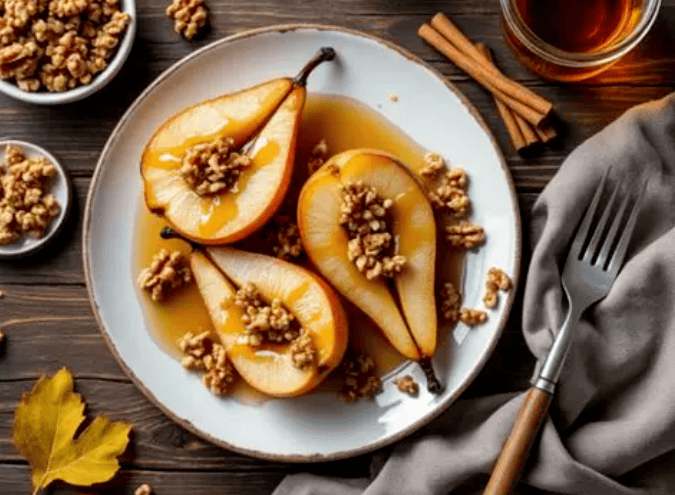
Ricardo Inspired Maple‑Roasted Pears with Walnuts & Cinnamon

Maple‑Roasted Pears with Walnuts & Cinnamon

Warm, fragrant and perfect for breakfast or dessert.

Prep Time: 10 minutes
Cook Time: 20 minutes
Servings: 4

Baked Pears with Maple Syrup and Walnuts - Satisfy Your Cravings
Baked Pears with Maple Syrup and Walnuts – Satisfy Your Cravings/satisfyyourcravings.com

Ingredients

  • 4 ripe pears, halved or quartered
  • 2 tbsp maple syrup
  • 2 tbsp butter
  • 1 tsp ground cinnamon
  • ½ cup walnuts
  • Pinch sea salt

Instructions

  1. Prepare the pears
    Preheat oven to 375°F (190°C). Arrange pear halves in a shallow baking dish.
  2. Add flavour
    Dot pears with butter, drizzle maple syrup, and sprinkle cinnamon + sea salt.
  3. Add walnuts
    Scatter walnuts around and over the pears.
  4. Roast
    Bake for 20 minutes until pears are tender and edges are caramelized.
  5. Serve
    Serve warm with yogurt, ice cream, or on their own as a cozy autumn dessert.

Beauty Benefits

  • Pear humectants hydrate the skin from within.
  • Walnut omega‑3s strengthen the moisture barrier → glow.
  • Maple syrup antioxidants help protect collagen.
  • Warm spices (cinnamon) boost circulation → radiance.
  • Warm foods support digestion → clearer complexion.

Health Benefits

  • Pears offer fiber for gut balance + hydration.
  • Walnuts support heart and brain health.
  • Maple syrup provides minerals + lower glycemic sweetness.
  • Cinnamon helps stabilize blood sugar.
  • Warm foods soothe digestion and support metabolic balance.

Historical Context

Maple‑roasted fruit is deeply rooted in Canadian autumn cooking, especially in regions with strong maple production like Quebec and Ontario. Pears have long been part of Canadian orchard culture and pairing them with maple syrup reflects a traditional, seasonal approach to cooking: simple ingredients, warm flavours and practical comfort.

Walnuts also have a long history in Canadian home baking, often used in fall desserts and breakfast dishes. This recipe blends orchard fruit, maple sweetness and rustic roasting — a perfect reflection of Canadian culinary heritage.

Storage

  • Store roasted pears in an airtight container for up to 3 days.
  • Reheat gently at 300°F for 10 minutes or warm in a skillet.
  • Walnuts may soften over time — add fresh ones when serving leftovers.

Substitutions

  • Pecans instead of walnuts for extra sweetness.
  • Honey instead of maple syrup (more floral, less caramel).
  • Cardamom or nutmeg instead of cinnamon for a different warm spice profile.
  • Coconut oil instead of butter for a dairy‑free version.
  • Bosc pears for firmer texture; Bartlettfor softer, juicier results.

Enjoy Maple‑Roasted Pears with Walnuts & Cinnamon!

I’m Stacey Hobbs, thanks for reading Face by Stace! Until next time.
do you feel fabulous today?