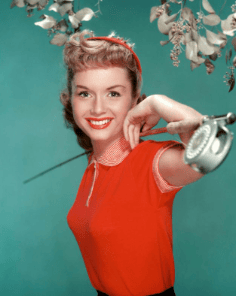
Debbie Reynolds: The Peach‑Tone Glow Behind America’s Sweetheart

Debbie Reynolds’ beauty was often described as fresh, bright and irresistibly youthful — the quintessential “girl next door” of 1950s Hollywood. But behind that effortless glow was a carefully curated palette built around one defining colour family: peach‑toned makeup. Warm, soft, and subtly radiant, peach shades became a signature of her ingénue persona.

Studio makeup artists understood that Reynolds’ appeal depended on maintaining a look that felt wholesome and approachable. Peach tones were ideal for this. They softened her features, brightened her complexion under harsh studio lighting and created the illusion of natural warmth. Her lip colours often sat in the peach‑pink spectrum, her blush leaned toward warm apricot, and even her eye makeup — famously green‑toned — was balanced with gentle warmth across the rest of her face. The result was a glow that felt innocent yet polished, youthful yet camera‑ready.

This palette also aligned perfectly with MGM’s branding strategy. Peach makeup kept Reynolds visually distinct from the era’s glamour icons, whose looks relied on bold reds, sculpted cheekbones and dramatic contrasts. Debbie’s warmth made her relatable — the girl audiences felt they already knew.

Today, her peach‑toned vibe remains a colour in how it can shape a persona. Debbie Reynolds didn’t just wear peach; she embodied it. Her glow became part of her legacy, a reminder that even the sweetest Hollywood images were crafted with intention, artistry and an understanding of how beauty communicates character.

I’m Stacey Hobbs, thanks for reading Face by Stace! Until next time.
do you feel fabulous today?
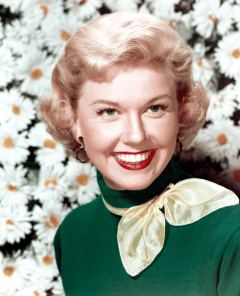
Debbie Reynolds: The Studio‑Crafted “Girl Next Door”

Debbie Reynolds entered Hollywood as the embodiment of the “girl next door”—fresh‑faced, wholesome and effortlessly charming. Her beauty was marketed as natural and approachable, a contrast to the sultry glamour of her contemporaries. Yet behind the scenes, her image was anything but effortless. MGM carefully engineered her persona, shaping everything from her makeup to her mannerisms to maintain the illusion of innocence.

Reynolds’ look, which was soft curls, bright eyes and minimal‑looking makeup was meticulously crafted by studio artists. Her appearance had to remain youthful and un-threatening, a visual promise of sweetness that aligned with the roles she was given. The pressure to maintain this image was constant. MGM monitored her weight, controlled her styling and expected her public behaviour to mirror the purity of her on‑screen characters. Even as she matured, the studio insisted she remain the ingénue.

This contrast between persona and reality defined much of Reynolds’ early career. While audiences adored her for her sincerity and sparkle, she privately navigated the emotional strain of living up to an image she didn’t choose. Her later reflections revealed how challenging it was to maintain a façade of effortless beauty while facing personal hardships and studio demands.

Debbie Reynolds’ story is a reminder that Old Hollywood’s “natural beauty” was often a carefully curated illusion. Her legacy endures not only for her talent but for the resilience behind the smile—proof that even the sweetest personas were shaped by the pressures of an industry built on perfection.

I’m Stacey Hobbs, thanks for reading Face by Stace! Until next time.
do you feel fabulous today?
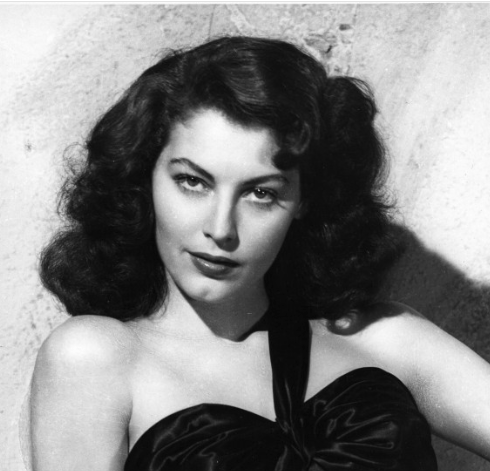
Doris Day: Her Coral‑Peach Lipstick Is Historically Significant Beginning of a Classic Hue

Doris Day’s beauty was sunshine made visible — warm, approachable and effortlessly fresh. But one detail of her look carries genuine historical weight: her coral‑peach lipstick. Far more than a flattering shade, it marked a turning point in mid‑century beauty culture, and Day became one of its most influential ambassadors.

In the late 1940s and 1950s, American cosmetics shifted away from the wartime dominance of bold, blue‑red lipsticks. Women wanted something softer, lighter and more optimistic — a shade that matched the post‑war mood. Coral‑peach emerged as the answer (in addition to nude pink). It brightened the face without the intensity of red, offering femininity with a modern, daytime ease. Doris Day embodied that vibe perfectly.

Her fair complexion, golden hair and cheerful screen persona made coral‑peach feel natural, almost inevitable. On camera, the shade lifted her features, added warmth and reinforced her signature “California‑sunny” glow. Off camera, beauty brands took notice. Coral tones surged in popularity, appearing in advertisements, department‑store counters and magazine tutorials. Day wasn’t just wearing a trend, instead she was helping define one.

The significance lies in how coral‑peach re-framed glamour. It made beauty feel lighter, friendlier and more accessible. It signaled a cultural shift toward freshness rather than drama, daytime polish rather than evening intensity. Doris Day’s lipstick wasn’t simply a colour of choice. It was a symbol of a new kind of femininity that women, ladies loved and worn proudly.

I’m Stacey Hobbs, thanks for reading Face by Stace! Until next time.
do you feel fabulous today?

Ava Gardner: Her Smoky Eye Was Created with Soot + Petroleum Early in Her Career

Ava Gardner’s beauty was smoldering, magnetic and impossible to ignore. But the smoky eye that became one of her earliest trademarks wasn’t created with luxury cosmetics or studio‑perfect palettes. In her pre‑MGM days, before she had access to professional makeup artists, Gardner used a resourceful, era‑typical technique: soot mixed with petroleum jelly to darken and define her eyes.

It was a method used during the Second World War due to shortages of materials for makeup. Soot provided intense pigment; petroleum gave slip and adhesion. Together, they created a soft, blurred shadow that framed Gardner’s naturally striking eyes. The effect wasn’t precise — it was atmospheric. A little wild. A little dangerous. And it suited her perfectly.

When Gardner arrived in Hollywood, studio artists refined the look with proper cosmetics, but they kept the essence: depth without harshness, smoke without stiffness. Her eyes didn’t rely on sharp lines or heavy contour. They relied on mood. Even in her earliest screen tests, that shadowed gaze communicated sensuality and defiance — a woman who didn’t need permission to be unforgettable.

What makes this detail so compelling is how it mirrors the origins of the modern smoky eye. Today’s beauty brands sell curated palettes promising “effortless smolder,” but Gardner achieved it with the simplest, rawest materials available. Her look wasn’t manufactured. It was improvised and it became iconic.

I’m Stacey Hobbs, thanks for reading Face by Stace! Until next time.
do you feel fabulous today?

Ava Gardner: Slept with Hair Wrapped in Silk Scarves

Ava Gardner understood glamour as a living thing, something that needed to be protected, nurtured, and preserved even in sleep. One of her most intimate beauty routines was wrapping her hair in silk scarves at night, a practice that kept her famously lush waves smooth, glossy and camera‑ready long before modern hair‑care science caught up.

Silk was Gardner’s secret weapon. Unlike cotton, which tugs at strands and absorbs moisture, silk allows hair to glide without friction. For Gardner, whose hair had a naturally wild, sensual texture, this mattered. The scarves prevented breakage, reduced frizz, and maintained the fluid movement that became part of her signature allure. She didn’t want stiff curls or sculpted waves — she wanted softness. Silk helped her keep it.

The ritual itself was simple but intentional. After brushing her hair to distribute natural oils, she tied a silk scarf securely around her head, ensuring the fabric stayed in place through the night. The result was hair that woke up smooth instead of tangled, shiny instead of dulled by pillowcase abrasion. It was Old Hollywood practicality wrapped in elegance.

What feels striking today is how modern the habit is. Silk wrapping is now a staple in beauty routines across cultures, praised for its ability to preserve styles and protect hair health. Gardner was doing it decades before it became mainstream — not because it was trendy, but because it worked.

I’m Stacey Hobbs, thanks for reading Face by Stace! Until next time.
do you feel fabulous today?

Ava Gardner: Loved Coconut Oil Long Before It Was Trendy

Ava Gardner was a woman who understood sensuality in its purest form, not manufactured, not embellished, but elemental. Long before coconut oil became a modern beauty obsession, Gardner was already using it as one of her beauty secrets. For her, coconut oil wasn’t a trend. It was a routine.

Gardner’s skin had that un-mistakable Old Hollywood glow: warm, supple, and effortlessly luminous. Coconut oil played a quiet but essential role in maintaining that radiance. She used it as a body moisturizer, massaging it into her arms, legs, and décolletage to keep her skin soft under the harsh studio lights that could easily dull, very dehydrate or dry the complexion. The oil’s natural fatty acids gave her skin a sheen that looked healthy rather than glossy, which is a kind of understated glamour that matched her earthy beauty.

She also used coconut oil in her hair, smoothing a small amount through the ends to maintain shine and prevent breakage. Gardner’s hair had a wild, touchable quality that set her apart from the more sculpted styles of her contemporaries. Coconut oil helped preserve that softness, keeping her waves fluid and camera‑ready without stiffness.

What feels striking today is how aligned Gardner’s instincts were with modern Clean‑Beauty philosophy. She gravitated toward simple, natural ingredients long before they were packaged as luxury. Coconut oil wasn’t a fad for her — it was a staple.

I’m Stacey Hobbs, thanks for reading Face by Stace! Until next time.
do you feel fabulous today?