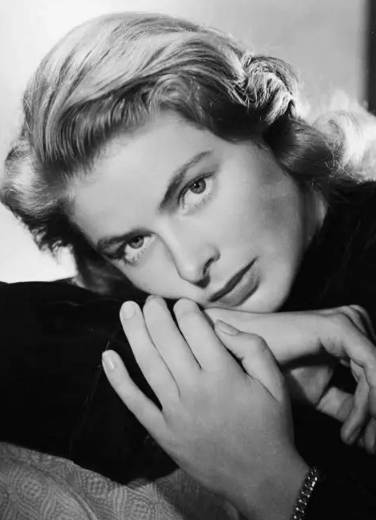
Ingrid Bergman: The Natural Brow That Rewrote Hollywood Beauty

Ingrid Bergman arrived in Hollywood with a face that defied every rule of studio glamour. Her skin was fresh, her features unaltered, and her brows — soft, full, and untouched — were a rebellion against the era’s obsession with thin, sculpted arches. In the late 1930s and early 1940s, when shaving the brows only to have the brows to be re-drawn, otherwise by this time other actresses relied on tweezing/plucking their brows, as opposed to the common trend of the 1920s and the 1930s to shave their brows to drawn them on again on a specific placement of the face and specific shape of each decade, with the only similarity between these two styles of brows were the fact that they were thin. By the time Bergman entered Hollywood, thin, sculpted arches was practically a studio mandate, Bergman’s refusal to re-shape her brows was more than a preference. It was a statement.

Producers tried to persuade her to conform. Hollywood’s beauty machine wanted sharper arches, narrower brows and a more “manufactured” look. Bergman refused. She kept her brows exactly as they were: natural, Nordic, and expressive. That choice became part of her identity — the visual signature that set her apart from every other leading lady of her time.

Her brows framed a face that felt honest, modern and emotionally transparent. They softened her presence while giving her a grounded strength that directors adored. In Casablanca, her natural brows became part of the film’s emotional architecture, amplifying the sincerity and vulnerability that made Ilsa Lund unforgettable. Audiences saw a woman who didn’t hide behind artifice and that authenticity resonated deeply in a world emerging from war and craving realism.

Bergman’s brows weren’t just a beauty choice; they were a cultural pivot. They helped usher in a new era of glamour — one defined by authenticity rather than perfection. Her clean‑beauty vibe, anchored by those natural brows, shaped postwar European cinema and influenced generations of actresses who embraced softness over sculpting, truth over transformation.

Ingrid Bergman’s brows became one of the most revolutionary beauty statements in Hollywood history.

I’m Stacey Hobbs, thanks for reading Face by Stace! Until next time.
do you feel fabulous today?

Ingrid Bergman: The Clean‑Beauty Ideal That Redefined Postwar European Glamour

When Ingrid Bergman appeared on screen in the 1940s, she didn’t look like anyone else in Hollywood. Her face was free of heavy powder, her brows were soft and natural, her skin glowed without artifice, and her beauty felt startlingly honest. In an era dominated by sculpted brows, lacquered lips, and theatrical glamour, Bergman’s clean‑beauty vibe was a revolution — one that would shape post-war European cinema.

Her appeal wasn’t manufactured; it was elemental. Bergman’s Nordic freshness, vitality, and emotional transparency made her the antithesis of pre-war Hollywood glamour. She didn’t hide behind makeup or persona. She brought her real face to the screen, and audiences saw a woman who felt modern, liberated, and profoundly human. That authenticity resonated deeply in post-war Europe, where the appetite for realism — emotional, visual and cultural was re-shaping film itself.

Directors like Roberto Rossellini recognized the power of her natural beauty immediately. In films such as Stromboli and Europa ’51, Bergman’s clean vibe became a cinematic tool: her bare skin, un-painted lips and un-manicured simplicity amplified the rawness of post-war storytelling. She embodied a new kind of glamour — one defined not by perfection, but by truth.

Her influence extended beyond film. European beauty culture began to embrace lighter makeup, natural brows, and skin that looked like skin. The postwar ideal shifted from theatricality to purity, from artifice to authenticity. Bergman didn’t just fit into this new look; she helped create it.

Ingrid Bergman’s clean‑beauty approach wasn’t a trend. It was a cultural reset. She proved that glamour could be honest, that beauty could be un-adorned and that simplicity could be cinematic. In doing so, she became the face of a new era — one where European glamour was defined not by excess, but by elegance.

I’m Stacey Hobbs, thank for reading Face by Stace! Until next time.
do you feel fabulous today?

Sophia Loren: The Olive‑Oil Bath Routine That Defined Mediterranean Beauty Plus Loren’s Recipe

Sophia Loren’s beauty has always been described as luminous — a glow that seemed to come from within, soft yet un-mistakably sensual. While Hollywood loved to credit genetics or glamour, Loren herself repeatedly pointed to something far simpler, far more Mediterranean: olive oil.

Among her most famous routines was the olive‑oil bath, a practice she openly discussed throughout her career. It wasn’t a myth nor a retroactive beauty rumour — it was one of the few Old Hollywood beauty secrets that was both authentic and documented.

Loren believed that olive oil softened the skin, enhanced its natural sheen and protected it from dryness. The ritual wasn’t extravagant; it was rooted in the same traditions found across Italy, Greece, and the Mediterranean coastline. Warm water, a few tablespoons of extra‑virgin olive oil and the kind of slow, indulgent soak that feels like a return to the body.

Her glow wasn’t accidental. It was cultural.

Sophia Loren’s Olive‑Oil Bath Recipe (Documented Routine)

This is the exact method she described — simple, elegant and deeply Mediterranean.

Ingredients

  • 2–4 tablespoons extra‑virgin olive oil
  • Warm bathwater
  • Optional: a few drops of essential oil (Loren sometimes mentioned jasmine or citrus notes, though not as part of the olive‑oil regime itself)

Method

  1. Fill the tub with warm water, not hot — heat breaks down olive oil’s beneficial compounds.
  2. Add 2–4 tablespoons of extra‑virgin olive oil directly into the bath.
  3. Swirl the water with your hand to disperse the oil.
  4. Soak for 15–20 minutes, allowing the oil to lightly coat the skin.
  5. Pat dry, not rub — this preserves the moisture film.
  6. Optional: massage a few drops of olive oil into elbows, knees or décolletage afterward for added sheen.

Why it works

Olive oil is rich in:

  • squalene (a natural skin‑identical hydrator)
  • oleic acid (softens and conditions)
  • polyphenols (antioxidants that protect the skin barrier)

The bath creates a micro‑emulsion of oil and water that leaves the skin supple, glowing and subtly perfumed.

Sophia Loren’s olive‑oil bath regime is a beauty tip worth trying. It reflects a Mediterranean philosophy that beauty is nourishment, softness, and a regime rather than correction. Her glow wasn’t manufactured; it was maintained through practices that honoured the body rather than masked it.

In an era obsessed with glamour, Loren’s olive‑oil bath was a reminder that true radiance often comes from simplicity.

I’m Stacey Hobbs, thanks for reading Face by Stace! Until next time.
do you feel fabulous today?

Sophia Loren: The Warm‑Tone Sculpting Technique That Preceded Modern Contouring

Long before contour sticks, cream palettes, and social‑media tutorials defined the architecture of the modern face, Sophia Loren was already sculpting hers with a technique that felt instinctive, cinematic, and unmistakably Italian. Her beauty was legendary with her almond eyes, full lips and cheekbones that seemed carved by light itself but the secret behind her dimensional look wasn’t heavy shadow. It was warmth.

Loren’s approach relied on liquid rouge, terracotta tones and sienna‑rose pigments applied with a softness that allowed the skin to glow through. Instead of creating sharp, cool shadows, she used warm translucency to lift the cheekbones, elongate the jawline, and bring natural vitality to the face. Her sculpting wasn’t about altering bone structure; it was about enhancing it through light, warmth, and movement.

This technique emerged from the visual language of Cinecittà, where Mediterranean beauty was celebrated through sun‑kissed tones rather than stark contrasts. Makeup artists of the era understood that warm pigments responded beautifully to film lighting, creating depth without harshness. Loren mastered this approach, blending with her fingertips allowing the heat of the skin to melt the product seamlessly.

In many ways, her method is the missing link between early Hollywood shading (Dietrich, Taylor) and the precision contouring of the modern era. It was contouring before contouring had a name — intuitive, sensual and rooted in the natural warmth of Italian glamour. Contouring had actually been around decades prior in other methods that were not affiliated with Loren’s technique.

Sophia Loren’s warm‑tone contouring remains a timeless reminder that dimension doesn’t always come from shadow. Sometimes, it comes from the light.

I’m Stacey Hobbs, thanks for reading Face by Stace! Until next time.
do you feel fabulous today?
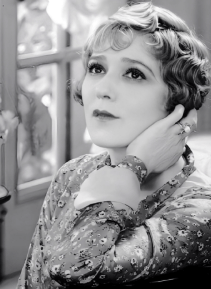
Mary Pickford: The First American Sweetheart

Long before Hollywood perfected the ingénue archetype, Mary Pickford defined it. With her cascade of golden curls, delicate features, and expressive eyes, she became the first actress to embody what studios — and audiences — would come to call America’s Sweetheart. But Pickford’s influence extended far beyond her beauty. She shaped the film industry itself, proving that sweetness could coexist with extraordinary power.

Pickford’s early roles cast her as the innocent girl, the plucky heroine, the embodiment of youthful virtue. Her image was carefully crafted: soft curls, modest dresses and a face that radiated sincerity. Yet behind this gentle persona was a fiercely intelligent woman who understood the business of filmmaking better than many of her male counterparts. She negotiated un-precedented contracts, controlled her own productions and became one of the highest‑paid actresses of her era.

In 1919, she co‑founded United Artists alongside Charlie Chaplin, D.W. Griffith, and Douglas Fairbanks — a revolutionary move that gave artists control over their own work. It was a bold act of independence from a woman the public believed was defined by sweetness alone.

Mary Pickford’s legacy is a study in contrast: a woman whose delicate beauty made her beloved and along with her strategic brilliance. She wasn’t simply America’s Sweetheart; she was one of Hollywood’s earliest architects in advocating for the rights of artists. Her story reminds us that the ingénue archetype, often dismissed as fragile was built on the shoulders of a woman who understood exactly how to wield her charm — and her power.

I’m Stacey Hobbs, thanks for reading Face by Stace! Until next time.
do you feel fabulous today?
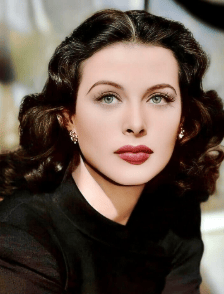
Hedy Lamarr: When Hollywood Beauty Hid a Brilliant Mind

Hedy Lamarr was introduced to the world as “the most beautiful woman alive,” a title that followed her through every studio contract, every publicity still, every frame of film. Her beauty was treated as her destiny — luminous skin, sculpted brows and a face that seemed engineered for the camera. Yet behind the glamour was a mind operating at a level Hollywood never expected, and often never acknowledged.

While studios cast her as the exotic seductress, Lamarr spent her evenings sketching inventions at her drafting table. She studied engineering textbooks between takes, dismantled gadgets to understand their mechanics and collaborated with composers and scientists on ideas that were decades ahead of their time. Her most famous creation — a frequency‑hopping communication system designed to protect Allied torpedoes from enemy interference — became the foundation for modern Wi‑Fi, Bluetooth, and GPS technology.

The contrast between her beauty and her intellect wasn’t a contradiction; it was a revelation. Lamarr’s brilliance challenged the era’s assumptions about what a woman, especially a glamorous one, could be. Hollywood wanted her face. History needed her mind.

Today, Hedy Lamarr stands as one of the most compelling dualities in beauty culture: a woman whose elegance captivated the world and whose genius quietly shaped the future. Her story reminds us that beauty can be a spotlight but it can also be a disguise, concealling depths that the world is not yet ready to see.

I’m Stacey Hobbs, thanks for reading Face by Stace! Until next time.
do you feel fabulous today?