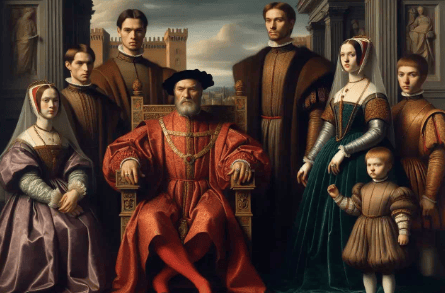
The Medici Legacy in Modern Luxury Branding

Long before luxury houses crafted identities through logos, ateliers, and heritage storytelling, the Medici family of Renaissance Florence had already written the guide to luxury. Their power was not expressed through excess but through aesthetic authority — a fusion of art, patronage and cultural influence that still shapes modern luxury branding.

The Medici understood that beauty was political. By commissioning artists like Botticelli, Michelangelo, and Vasari, they transformed Florence into a visual manifesto of refinement and prestige. Their palaces, portraits and public works functioned as early brand campaigns: controlled imagery designed to communicate stability, sophistication and divine favour. In essence, the Medici turned art into identity — a strategy luxury houses now use to cultivate myth and exclusivity.

Modern brands use this legacy. Houses like Gucci, Ferragamo, and Pucci — all Florentine — draw on the city’s Medicean heritage of craftsmanship, artistry and cultural capital. Even global luxury giants adopt Medici‑style tactics: commissioning artists, staging grand architectural spaces and weaving historical narratives into their brand DNA. The Medici taught the world that luxury is not merely material; it is symbolic, experiential and deeply tied to cultural storytelling.

Their influence endures in the way luxury brands position themselves as patrons of the arts, guardians of heritage and arbiters of taste. The Medici didn’t just shape Renaissance culture — they shaped the modern concept of luxury itself.

Their legacy is the idea that beauty, when strategically curated, becomes power.

I’m Stacey Hobbs, thanks for reading Face by Stace! Until next time.
do you feel fabulous today?
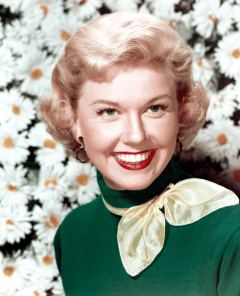
Fashioning Innocence: Doris Day’s Wardrobe as Cultural Messaging

Doris Day’s wardrobe was never just clothing — it was cultural communication. Throughout the 1950s and early ’60s, Hollywood used her style to craft an image of innocence, optimism and approachable femininity. Day’s fashion projected a wholesome ideal that audiences instantly recognized: pastel dresses, pillbox hats, soft knits, tailored skirt suits, and playful pajamas that reinforced her girl‑next‑door charm.

Costume designers like Edith Head, Jean Louis, Bill Thomas, and Irene shaped her on‑screen identity through carefully curated looks. In Pillow Talk, Teacher’s Pet, and Lover Come Back, Day’s polished wardrobe communicated competence and independence while still preserving her “wholesome” persona — a cultural contradiction that defined her era.

Her clothes carried ideological weight. Feminine silhouettes, soft colours and immaculate grooming signaled moral clarity and emotional purity. Even when Day played career women navigating modern life, her wardrobe reassured audiences that she remained wholesome, cheerful and safe within traditional gender expectations. Critics later noted that her fashion reinforced mid‑century ideals of white femininity, shaping how innocence and desirability were visually coded in popular culture.

Yet Day’s style also empowered. Her tailored suits, crisp shirts and structured jackets were more for the modern working woman, influencing real‑world wardrobes and inspiring viewers to see professionalism and femininity as compatible.

Through fashion, Hollywood crafted innocence, and Day wore it with effortless grace.

I’m Stacey Hobbs, thanks for reading Face by Stace! Until next time.
do you feel fabulous today?
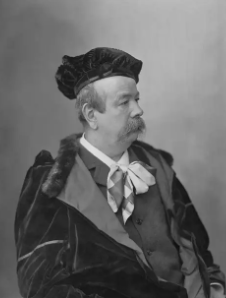
The Birth of Haute Couture: Worth, Poiret, and the Rise of the Designer

Haute Couture began not as an industry, but as a revolution — one led by designers who transformed dressmaking into an art form. In the mid‑19th century, Charles Frederick Worth reshaped fashion’s entire structure. Before Worth, women chose fabrics and commissioned anonymous seamstresses. Worth reversed the power dynamic. He designed the garment first, presented it on live models, and invited clients to choose from his vision. With this shift, the designer became the author of fashion, not the servant of it.

Worth’s salon in Paris became the epicenter of luxury, attracting royalty, aristocrats and international elites. His innovations — seasonal collections, signature silhouettes and the practice of signing garments — laid the foundation for modern couture. By 1868, the Chambre Syndicale de la Haute Couture formalized the system establishing Paris as fashion’s capital.

Paul Poiret carried the torch into the early 20th century, pushing couture into modernity. He rejected corsets, introduced fluid draping and infused his designs with global influences. Poiret understood fashion as lifestyle, expanding into fragrance, interiors, and branding long before such ideas were commonplace. His bold colours, exoticism and theatrical presentations positioned the designer as a cultural visionary.

Together, Worth and Poiret created the guide for the modern fashion house: a designer with a distinct look, a controlled atelier and a clientele seeking artistry rather than utility. Their work transformed clothing into identity, and Paris into the world’s couture capital.

Haute Couture wasn’t born from fabric — it was born from imagination.

I’m Stacey Hobbs, thak

Doris Day vs. Marilyn Monroe: Two Sides of Mid‑Century Femininity

Mid‑century Hollywood offered audiences two visions of femininity, embodied perfectly by Doris Day and Marilyn Monroe. Though both were blonde, beloved, and bankable, their star images represented opposite ideals. Monroe was crafted as the sensual goddess — a figure of desire, fantasy, and erotic glamour. Day, by contrast, became the wholesome girl‑next‑door, radiating warmth, approachability, and domestic charm.

Studios leaned into these contrasts. Monroe’s roles emphasized allure, vulnerability, and the magnetic pull of sexuality, aligning her with the era’s fascination with the bombshell archetype. Critics even described her as “the answer to any red‑blooded American boy’s dream,” a symbol of Cold War‑era desirability.

Day’s persona offered a counterbalance: cheerful, reliable, and morally upright. She embodied stability at a time when American culture idealized the nuclear family and traditional womanhood. Her image was so strongly associated with purity that studios routinely positioned her as the woman men wanted to marry — a sentiment echoed in contemporary commentary and later scholarship.

Yet their differences also reveal the era’s complexity. Scholars note that Day was not always as demure as her reputation suggests, nor Monroe as transgressive. Both actresses navigated — and sometimes resisted — the gender expectations placed upon them.

Together, Day and Monroe formed a cultural dyad: two sides of mid‑century femininity, shaping how America imagined desire, respectability and the roles women were meant to play.

I’m Stacey Hobbs, thanks for reading Face by Stace! Until next time.
do you feel fabulous today?
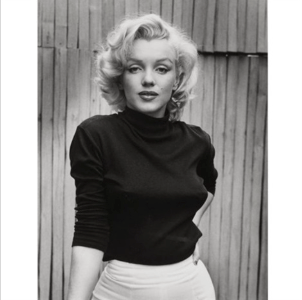
How Hollywood Used Beauty to Shape Cultural Values

From the 1920s through the 1960s, Hollywood didn’t just entertain; it engineered the beauty look of American femininity. Beauty became one of its most powerful cultural tools. Studios crafted star images with meticulous precision — sculpted brows, flawless skin, lacquered lips — each detail designed to communicate who a woman should be and how she should be seen.

These beauty codes shaped values. A perfectly powdered face signaled purity. A glossy red lip suggested desirability. A thin, arched brow conveyed sophistication. Hollywood used these cues to guide audience perception, reinforcing ideals of youth, whiteness, delicacy and softness. Glamour wasn’t accidental; it was ideological.

Cosmetics companies amplified this influence. Products were named after starlets, promising women they could purchase Hollywood’s beauty — and, by extension, its cultural approval. Everyday routines began to mirror studio vibe: contouring borrowed from film lighting, brow shaping from makeup departments, hair waves from screen sirens. Beauty became a form of cultural participation.

On screen, appearance shaped narrative. Heroines with flawless makeup were coded as virtuous or aspirational. Women with smudged eyeliner or undone hair were framed as dangerous, troubled or morally ambiguous. Hollywood used beauty to define femininity, morality, class and even modernity.

By the postwar era, actresses like Ingrid Bergman disrupted the system with clean beauty and authenticity, signaling a shift toward realism. Yet even this “natural” look was carefully curated — another aesthetic used to communicate evolving cultural values.

Hollywood didn’t simply reflect beauty standards. It created them, teaching generations what femininity should look like and what it should mean.

I’m Stacey Hobbs, thanks for reading Face by Stace! Until next time.
do you feel fabulous today?
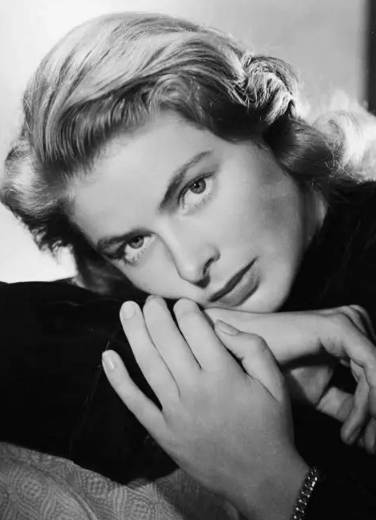
Ingrid Bergman: The Woman Who Made Bare Skin Glamorous

When Ingrid Bergman stepped into Hollywood, she didn’t arrive with the usual arsenal of glamour. No sculpting creams, no heavy pancake foundation, no brow stencils, no contour palettes. In fact, she arrived with no makeup kit at all — a detail that stunned Irene Selznick, who famously asked, “You mean you have nothing on your face?” Bergman simply didn’t believe she needed it.

Her refusal to wear heavy makeup wasn’t a quirk; it was a conviction. Hollywood’s beauty machine wanted to reshape her — thinner brows, heavier base, sharper arches, the full studio makeover. Bergman declined every suggestion. She insisted on minimal foundation, soft powder only when necessary and her own un-touched skin as the centerpiece of her look. It was a radical stance in an era when actresses were expected to submit to the studio’s look demands.

David O. Selznick eventually embraced her defiance, branding her as Hollywood’s first “natural actress.” It wasn’t marketing hyperbole. Bergman’s clean‑beauty look became her cinematic identity — a face that carried emotional truth without layers of artifice. Her skin, luminous and unmasked, allowed audiences to see vulnerability, strength and sincerity in a way heavy makeup could never achieve.

On screen, her minimal foundation became a storytelling tool. In Casablanca, her bare skin amplified the softness of Ilsa’s longing. In her European films with Rossellini, her natural complexion aligned perfectly with postwar realism, where authenticity mattered more than glamour. Bergman’s face didn’t hide; it revealed.

Her influence reshaped beauty far beyond Hollywood. As Europe rebuilt itself after the war, her clean‑beauty look became a symbol of modernity, that was fresh, honest and transparent. She helped shift the cultural ideal from theatrical perfection to natural elegance.

Ingrid Bergman didn’t just refuse heavy makeup. She redefined what glamour could be. Her bare skin became a cinematic revolution — one that still remains in today’s clean‑beauty movement.

I’m Stacey Hobbs, thanks for reading Face by Stace! Until next time.
do you feel fabulous today?