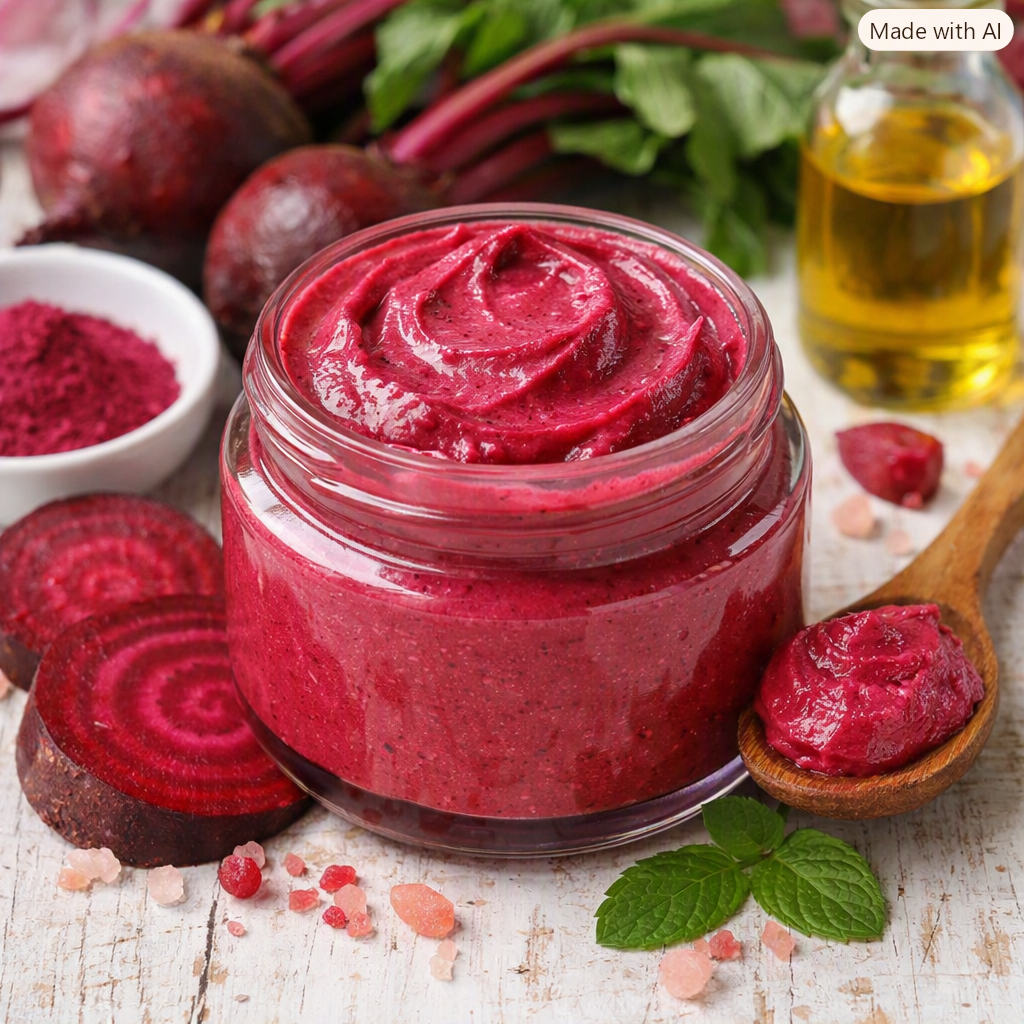
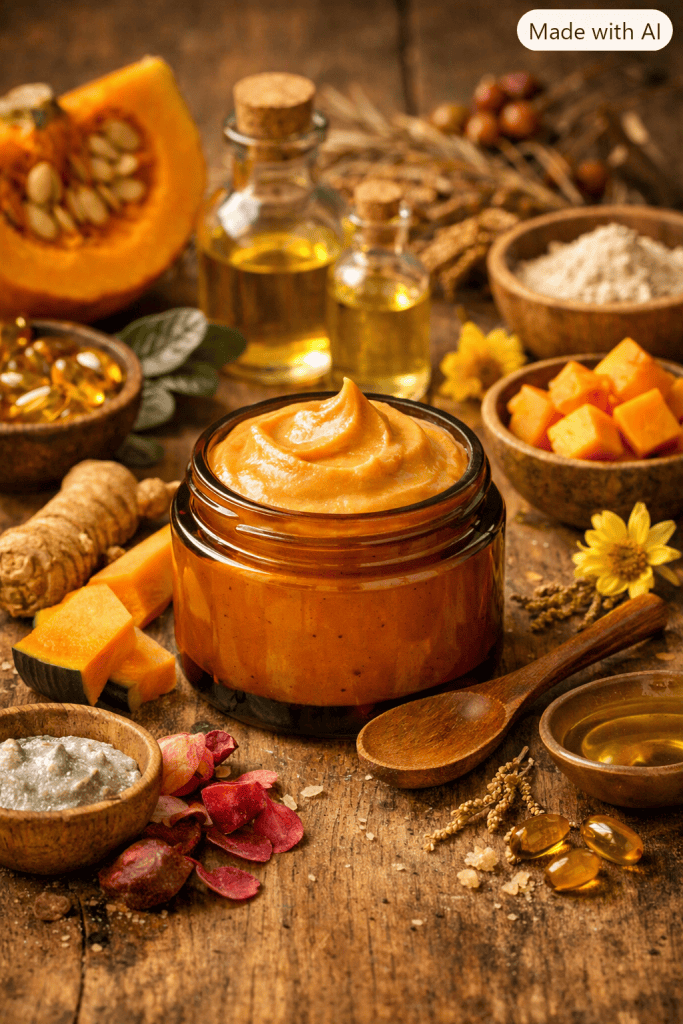
A brightening, circulation‑enhancing masque that delivers instant glow and improved tone.
Description
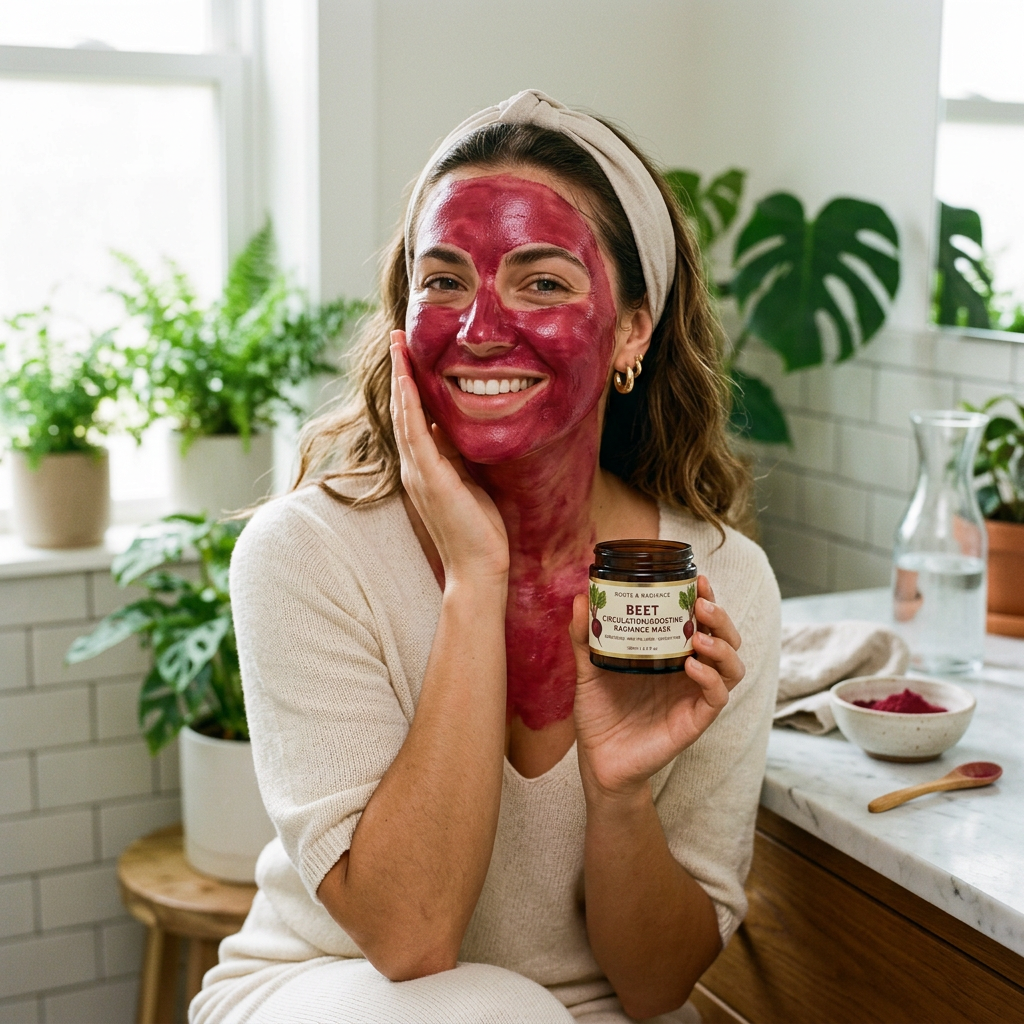
This masque is silky, vibrant, and deeply revitalising. Beet’s natural pigments boost microcirculation, giving the skin a fresh, rosy radiance. Ideal for dullness, uneven tone, or skin that feels flat and tired.
A smiling woman demonstrates a beet-based facial mask in a bright, plant-filled kitchen./Made with AI
Beauty Benefits
Betalains — powerful antioxidants that brighten and protect.
Natural pigments — boost circulation for a healthy flush.
Vitamin C — supports collagen and clarity.
Honey — hydrates and calms.
Yogurt lactic acid — gently refines texture.
Ingredients
2 tbsp beet purée (steamed, blended)
1 tbsp plain yogurt
1 tsp honey
Optional: 1 drop rosehip oil
Instructions
Apply a thin layer to clean skin. Leave on 8–10 minutes. Rinse with cool water.
Storage
Keeps 48 hours refrigerated.
Substitutions
Replace yogurt with aloe for sensitive skin.
Replace honey with glycerin for vegan use.
Beet is an autumn circulation + radiance ingredient: betalains, natural pigments, antioxidants, minerals, and gentle acids. It’s one of the strongest glow‑enhancing ingredients of the season — perfect for dull, tired, or low‑circulation October skin.
I’m Stacey Hobbs, thanks for reading Face by Stace! Until next time. do you feel fabulous today?
A very popular post on the original Face by Stace, bringing back a classic that has been refreshed. This topic has been so popular, I have written versions of it for magazines. Enjoy!
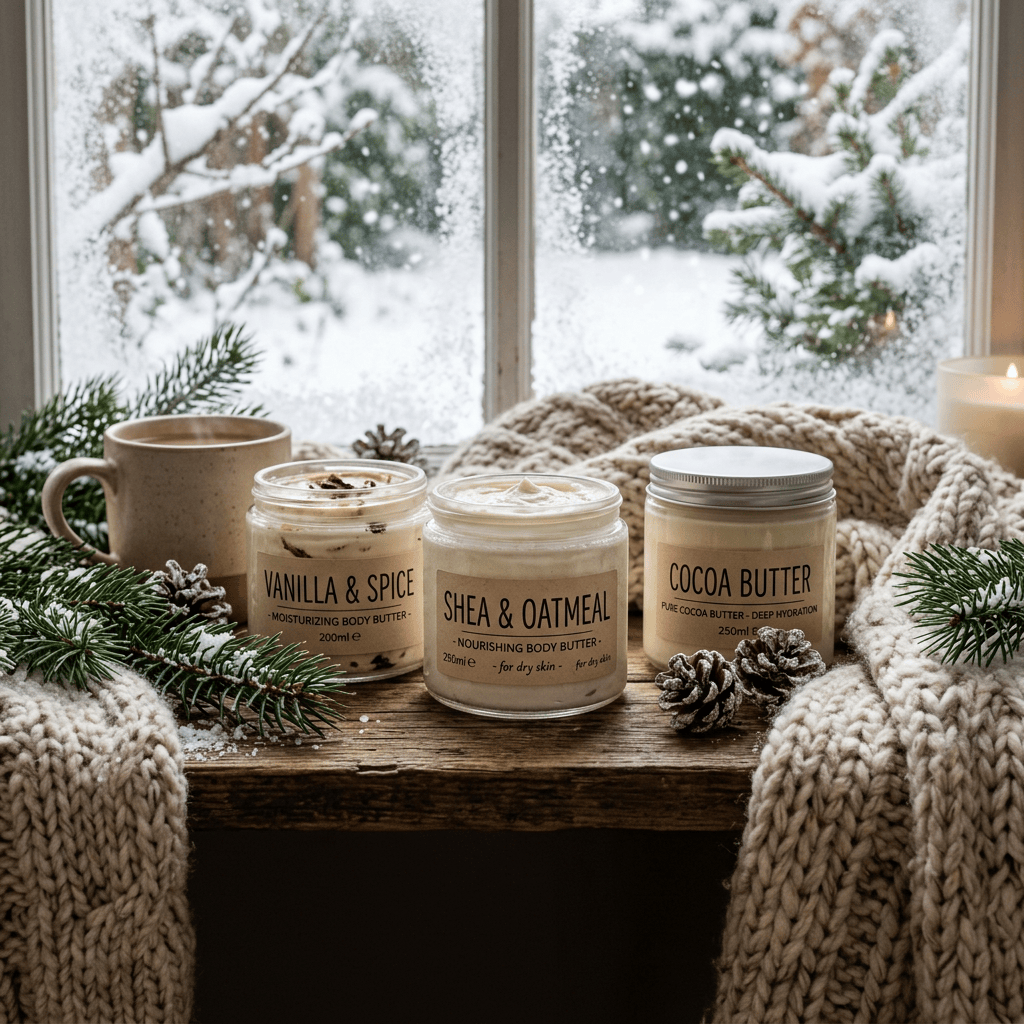
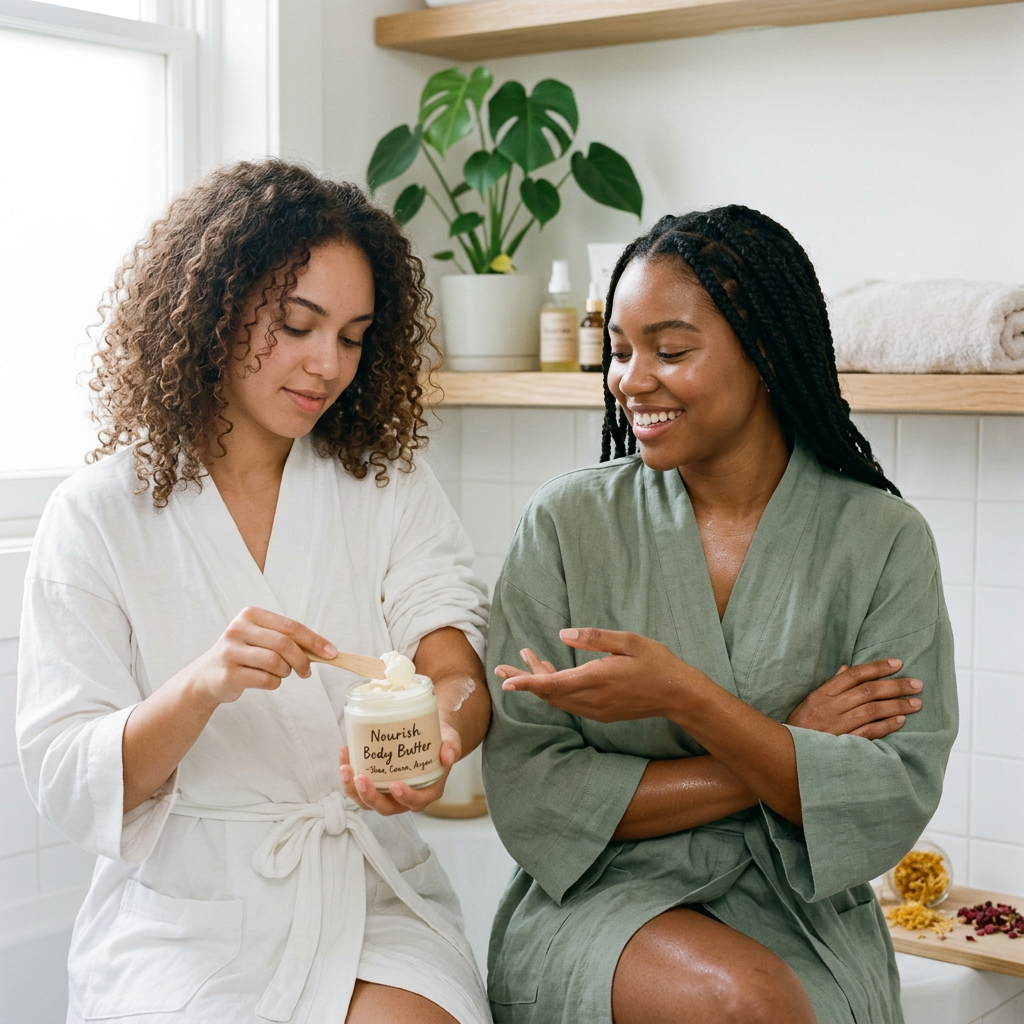
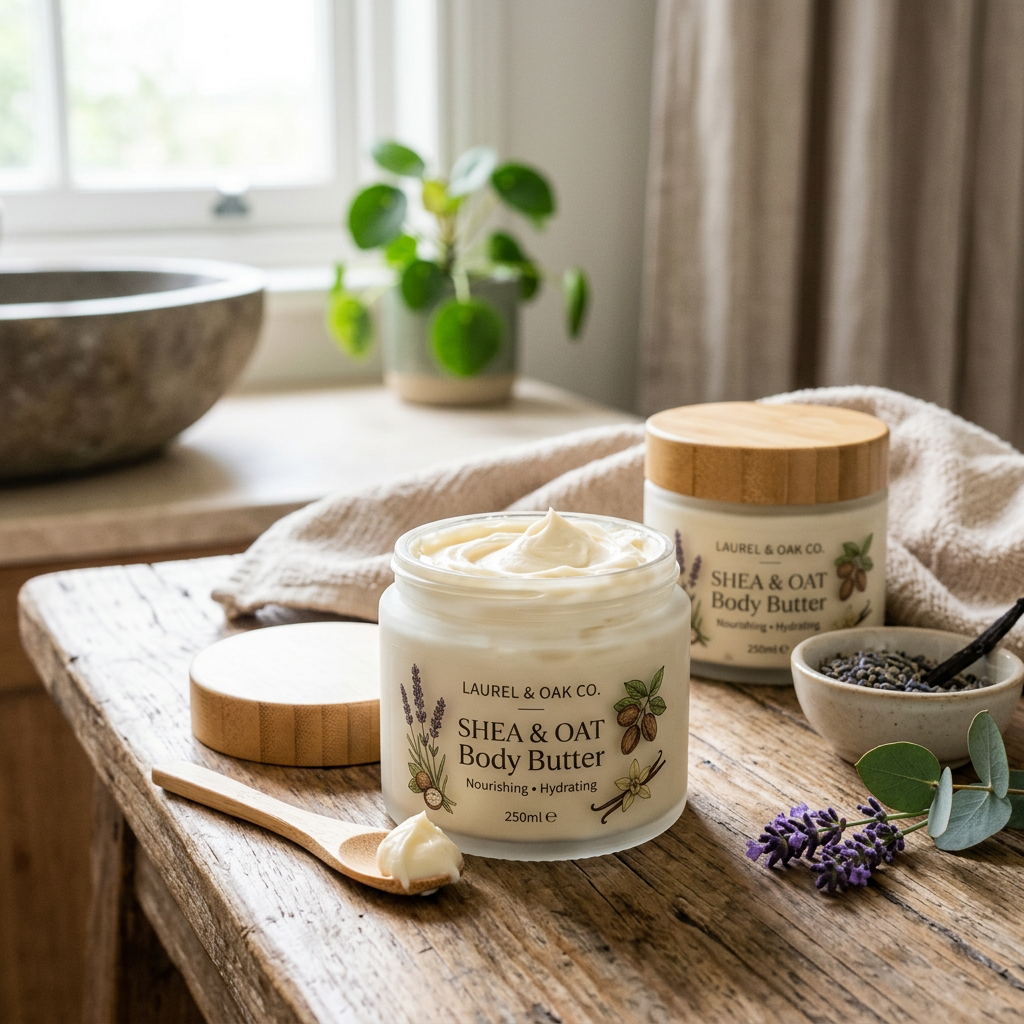
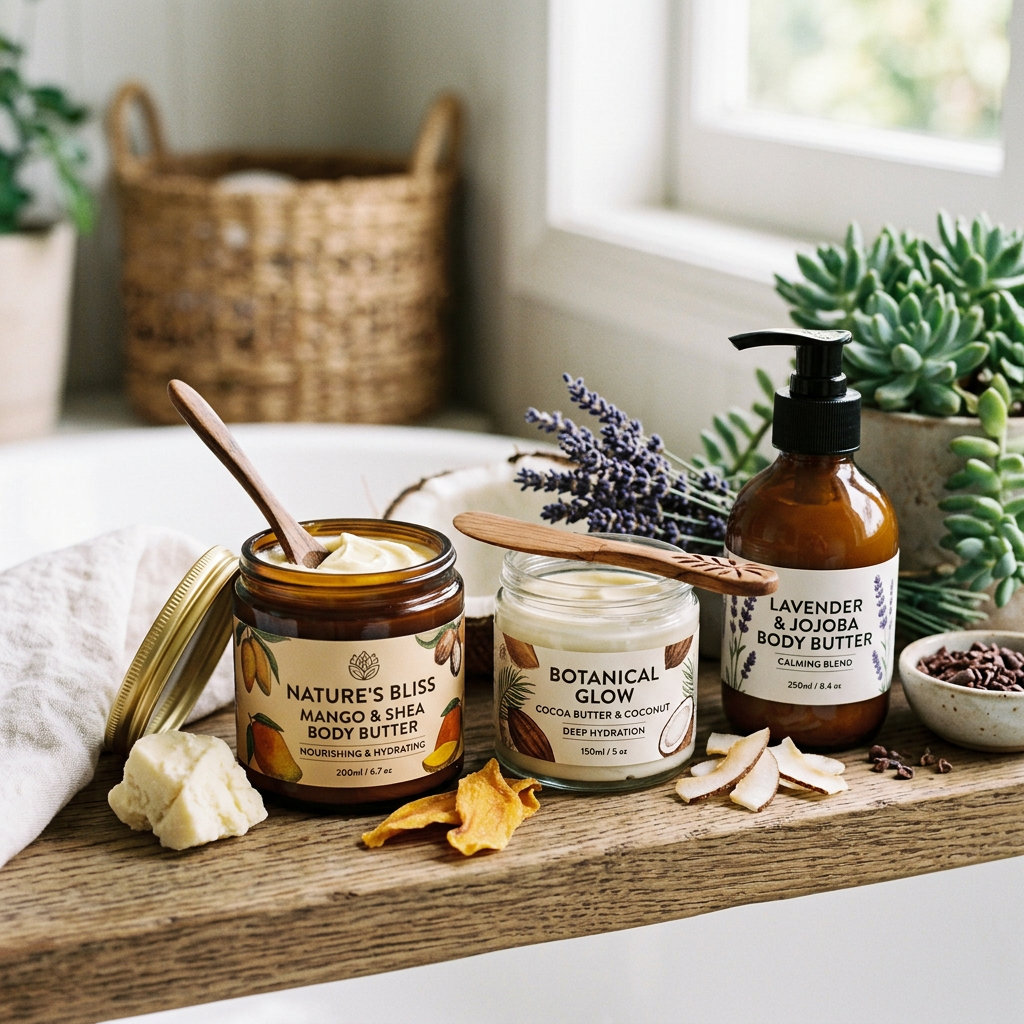
Body butters are the best, aren’t they? Non-greasy that is, like with all skincare formulas is my preference. Have you really had a good, or better yet, a fantastic butter cream? They are ideal to be used during the colder months when dehydrated skin or worse severe dehydrated skin seep in. No, thank you, am I right?!
Body butters are excellent for dehydrated or severely dehydrated skin and especially, particularly and specifically with dry skin. Butter creams are ideal for colder months to restore hydration and for dry skin types that need oil as opposed to water content which is what hydration is. Hydration and moisture do differ.
Body butters become essential as soon as the temperature drops. Cold air, indoor heating and wind all pull moisture from the skin, leaving it tight, dull, and more prone to irritation. During the fall and winter months, I reach for body butters because they offer something regular lotions simply can’t: deep, lasting nourishment.
Unlike lighter creams, body butters are rich in natural oils and plant‑based fats that mimic the skin’s own protective barrier. Ingredients like shea butter, cocoa butter, mango butter, and cupuaçu butter create a cushion of moisture that stays put, preventing transepidermal water loss — the main culprit behind Winter dryness or Winter deydratedness, not a fan, hence why I need and want body butters, they became a real life saver during these months. They melt into the skin slowly, delivering comfort, softness and that velvety finish that feels instantly restorative.
Cold weather also calls for formulas that soothe. Shea butter calms irritation. Cocoa butter supports elasticity. Mango butter absorbs beautifully without heaviness. These butters work together to keep the skin supple, resilient, and glowing even when the environment is harsh.
There’s also a sensory element. Body butters feel indulgent — warm, creamy and grounding. Applying them becomes a small ritual: a moment of care that feels luxurious in the middle of a long, cold season.
Takeaway: Body butters aren’t just moisturizers; they’re protection, comfort and nourishment. When the weather turns cold, they become the most reliable way to keep skin soft, healthy and beautifully conditioned.
Beauty‑Benefits
Deep Barrier Repair
Body butters are rich in natural lipids that mimic the skin’s own protective barrier. Ingredients like shea, cocoa, mango, and cupuaçu butter help reinforce that barrier, reducing moisture loss and keeping winter skin soft, smooth, and resilient.
Vitamin‑Rich Nourishment
Shea butter delivers vitamins A and E, supporting cell turnover and helping calm irritation. Cocoa butter brings polyphenols that improve elasticity and protect against environmental stress. Mango butter adds lightweight moisture with a silky finish — ideal for dry, dull, or dehydrated skin.
Long‑Lasting Hydration
Unlike lotions, body butters create an occlusive layer that locks in hydration for hours. This helps prevent flaking, tightness, and the rough texture that often appears during cold, windy months.
Soothing & Anti‑Inflammatory
Cold‑pressed butters retain natural anti‑inflammatory compounds that help calm redness and sensitivity. They’re especially beneficial for winter‑stressed skin that reacts to temperature changes, indoor heating, and dry air.
Glow‑Enhancing Texture
The dense, creamy consistency of body butters melts into the skin, leaving a velvety finish that enhances natural radiance. They smooth the appearance of rough patches and create a soft, healthy glow even in harsh weather.
Seasonal Protection
Body butters act as a winter shield — protecting the skin from windburn, dryness, and environmental stress. Their richness makes them ideal for elbows, knees, hands, and any areas prone to seasonal dehydration.
A very popular post on the original Face by Stace, bringing back a classic that has been refreshed. This topic has been so popular, I have written versions of it for magazines. Enjoy!
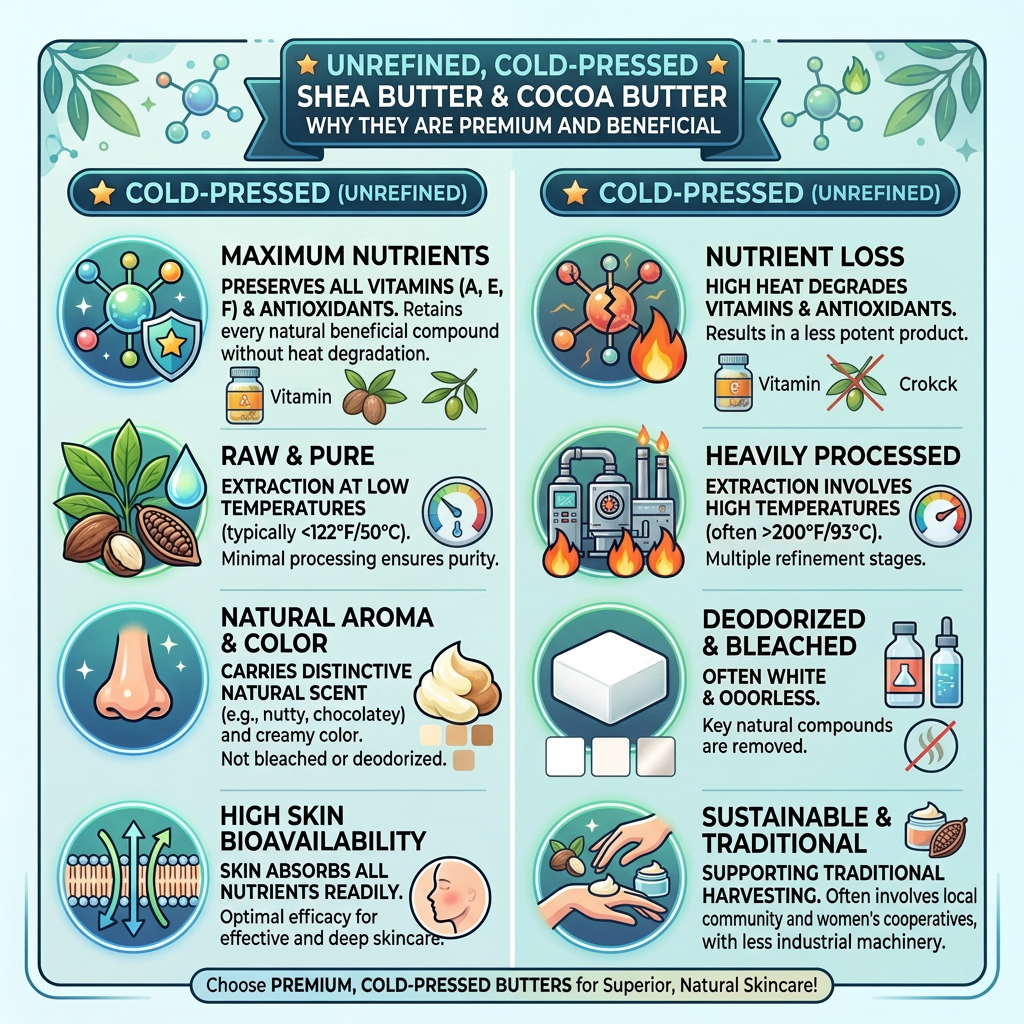
I have found body butters work efficiently, effectively and literally instantly, I kid you not! Butter creams, such as this Beet Overnight Radiance Cream, you will notice a difference immediately. Make sure to always use cold-pressed shea butter (and cocoa butter). To provide simplicity, hot-pressed shea butter is a quick process causing all of the nutrients and goodness that shea butter is known for to evaporate, which is why cold-pressed shea butter (and cocoa butter) is a better option. Cold-pressed is slower processing, leaving the nutrients, antioxidants in tact.
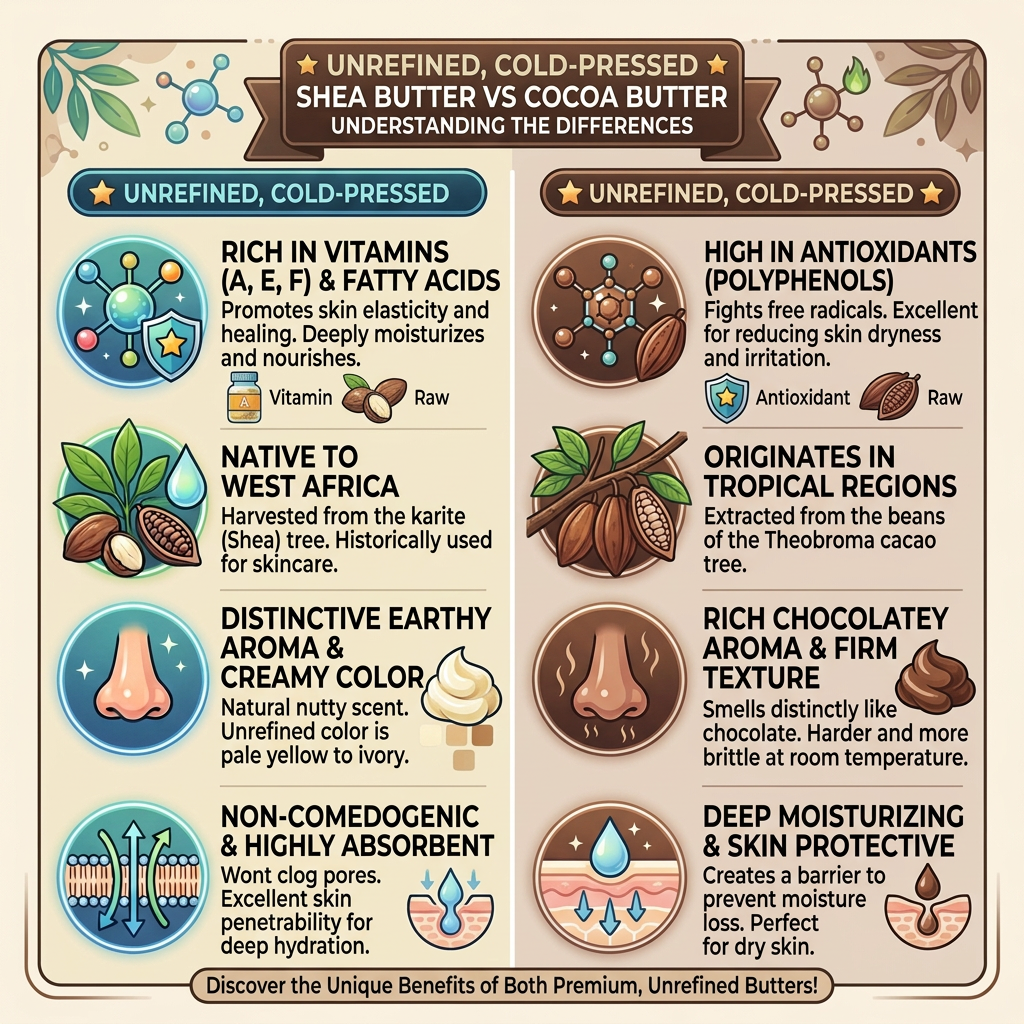
Shea butter and cocoa butter are two of the most iconic plant‑based moisturizers in beauty — rich, nourishing and deeply tied to global skincare traditions. But the way they’re extracted dramatically changes their texture, scent, nutrient profile and performance. Let’s break it down.
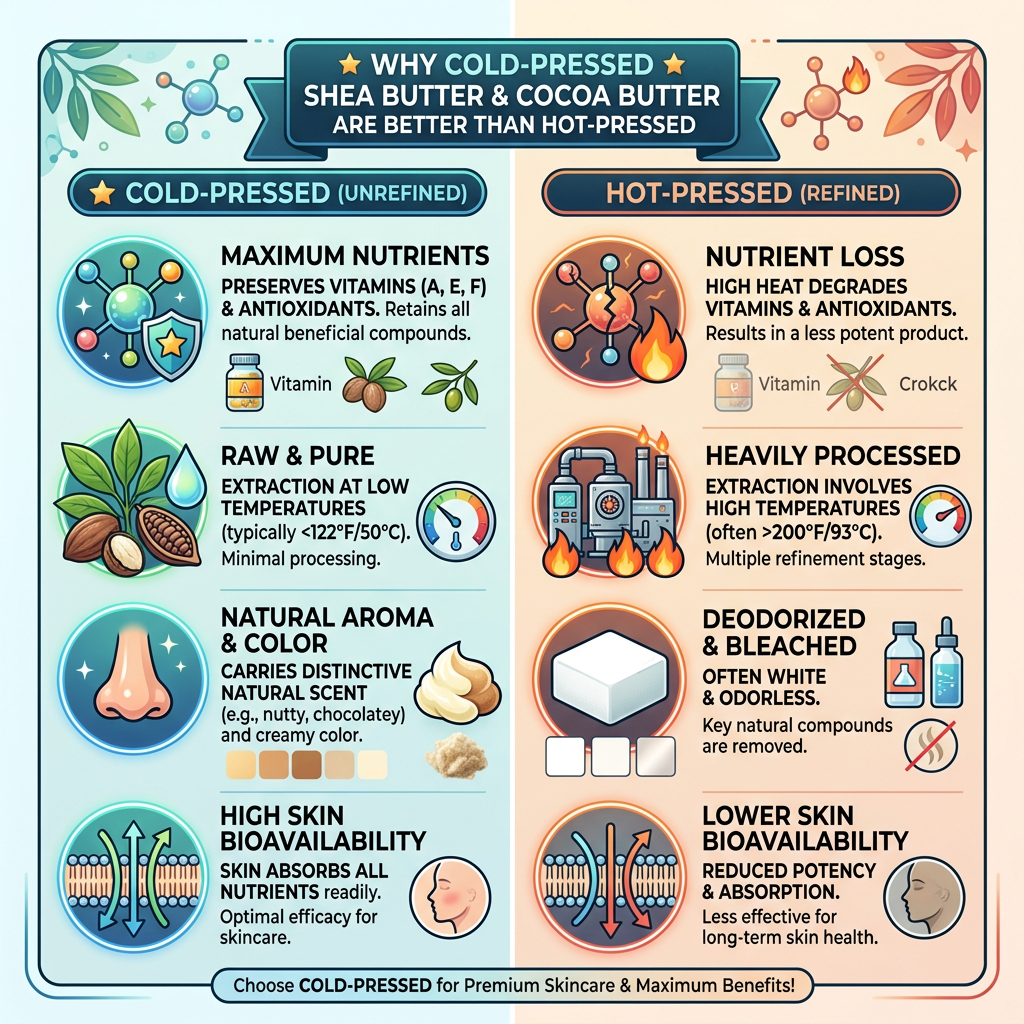
Cold‑pressed shea butter and cocoa butter are considered superior because the extraction method protects their natural nutrients. When these butters are pressed without high heat, they retain their full profile of vitamins, antioxidants, and fatty acids — the very compounds that make them effective for skin repair, moisture retention, and overall radiance.
This infographic compares cold-pressed and hot-pressed shea and cocoa butter for nutrient retention, processing, aroma, and skincare performance.This infographic compares cold-pressed and hot-pressed shea and cocoa butter for nutrient retention, processing, aroma, and skincare performance.
Cold‑pressed shea butter keeps its vitamins A and E, along with essential fatty acids that strengthen the skin barrier and support healing. Its creamy texture melts easily into the skin, delivering deep moisture without feeling waxy. Because it isn’t exposed to high temperatures, it maintains its natural ivory colour and soft, nutty aroma — signs of purity and potency.
Cold‑pressed cocoa butter preserves its polyphenols, which help improve elasticity and firmness. These antioxidants support smoother, more resilient skin, making cold‑pressed cocoa butter ideal for stretch marks, dryness and mature skin. It also retains its natural chocolate scent and melts smoothly with body heat.
This infographic compares cold-pressed and hot-pressed shea and cocoa butter for nutrient retention, processing, aroma, and skincare performance.
Hot‑pressed versions of both butters are extracted with high temperatures that break down vitamins and antioxidants. They often undergo refining, bleaching, or deodorizing, which further reduces their skin‑beneficial compounds. While hot‑pressed butters still moisturize, they lack the reparative, nutrient‑rich qualities that make cold‑pressed formulas stand out.
Takeaway: Cold‑pressed shea and cocoa butter deliver maximum nourishment, better texture and more authentic, unrefined benefits. For readers who value ingredient integrity and visible results, cold‑pressed is the clear choice.
I’m Stacey Hobbs, thanks for reading Face by Stace! Until next time. do you feel fabulous today?
A velvety, enzyme‑rich masque that boosts collagen, brightens tone, and supports gentle cell turnover.
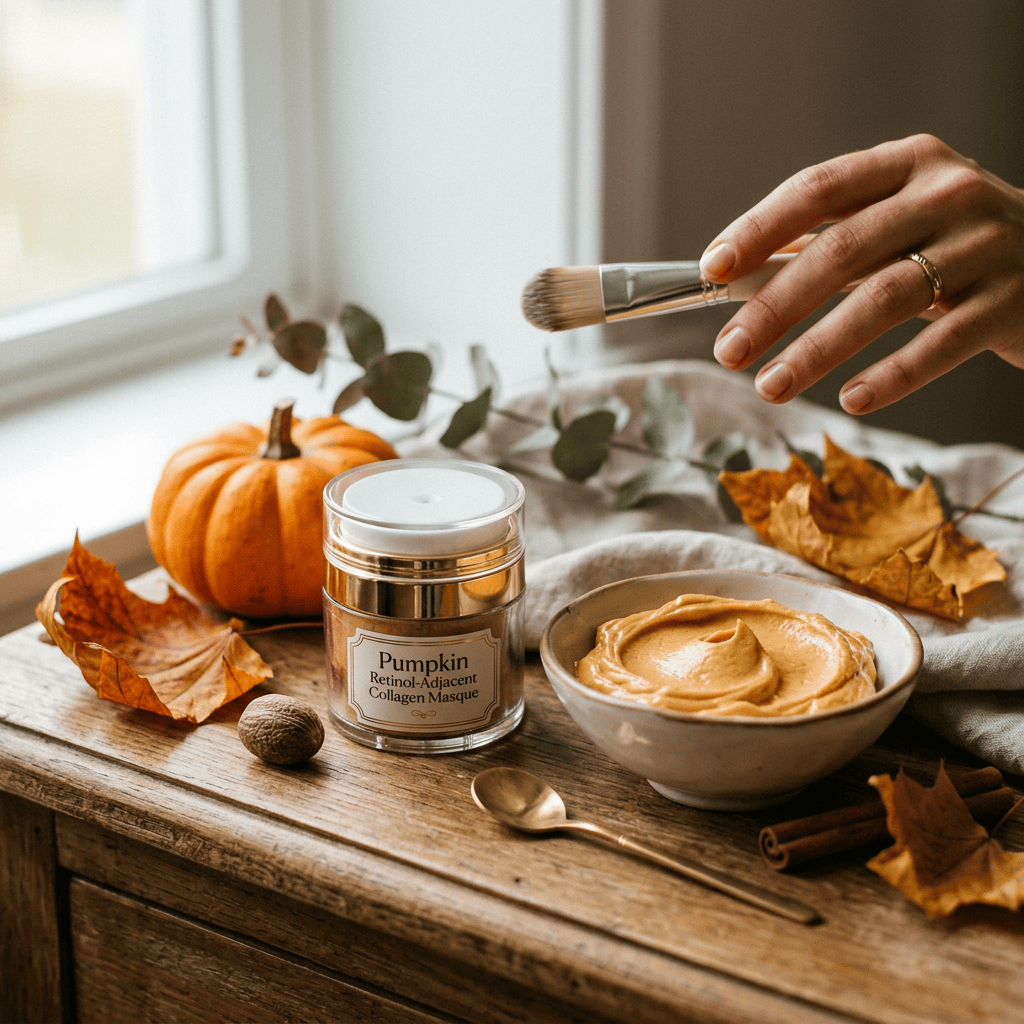
A cozy autumn skincare setup features a pumpkin collagen masque, brush, and seasonal accents.
Description
This masque is plush, creamy, and deeply renewing. Pumpkin’s beta‑carotene converts into vitamin A in the skin, supporting collagen production and cell turnover — a retinol‑adjacent effect without irritation. Its natural enzymes dissolve dead skin cells for a smoother, brighter finish.
Beauty Benefits
Beta‑carotene → vitamin A — stimulates fibroblasts to build collagen .
Fruit enzymes — dissolve protein bonds holding dead cells together for gentle exfoliation .
Vitamin C — brightens and supports collagen synthesis .
Vitamin E — adds moisture retention and antioxidant protection .
Zinc — regulates oil and calms inflammation .
Ingredients
2 tbsp pumpkin purée
1 tbsp Greek yogurt
1 tsp honey
Optional: 1 drop rosehip oil
Instructions
Apply to clean skin for 10–12 minutes. Rinse with warm water.
Storage
Keeps 48 hours refrigerated.
Substitutions
Replace yogurt with aloe for sensitive skin.
Replace honey with glycerin for vegan use.
I’m Stacey Hobbs, thanks for reading Face by Stace! Until next time. do you feel fabulous today?
A refreshing, brightening toner that boosts radiance and supports circulation.
Description
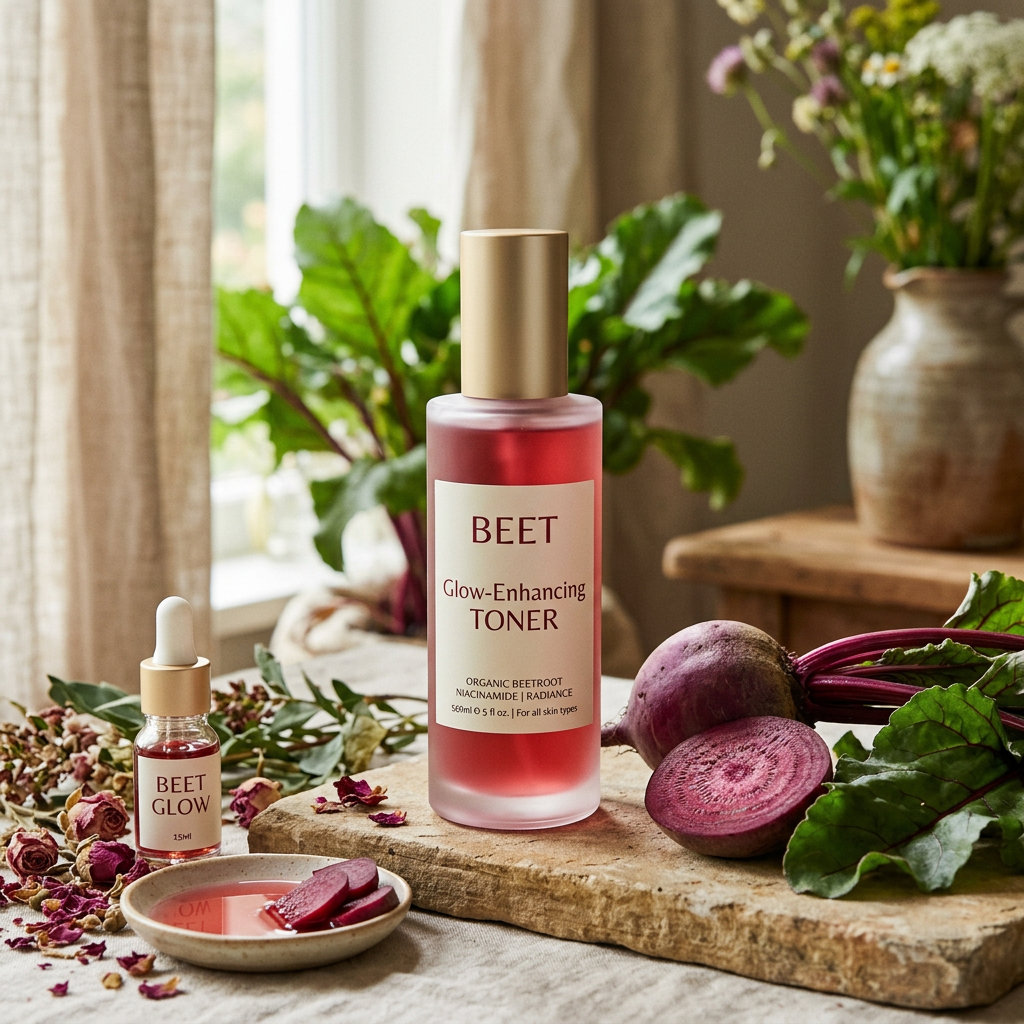
This toner is crisp, rosy, and perfect for dull or uneven skin. Beet water brightens while green tea calms inflammation. Ideal for morning radiance or pre‑makeup glow.
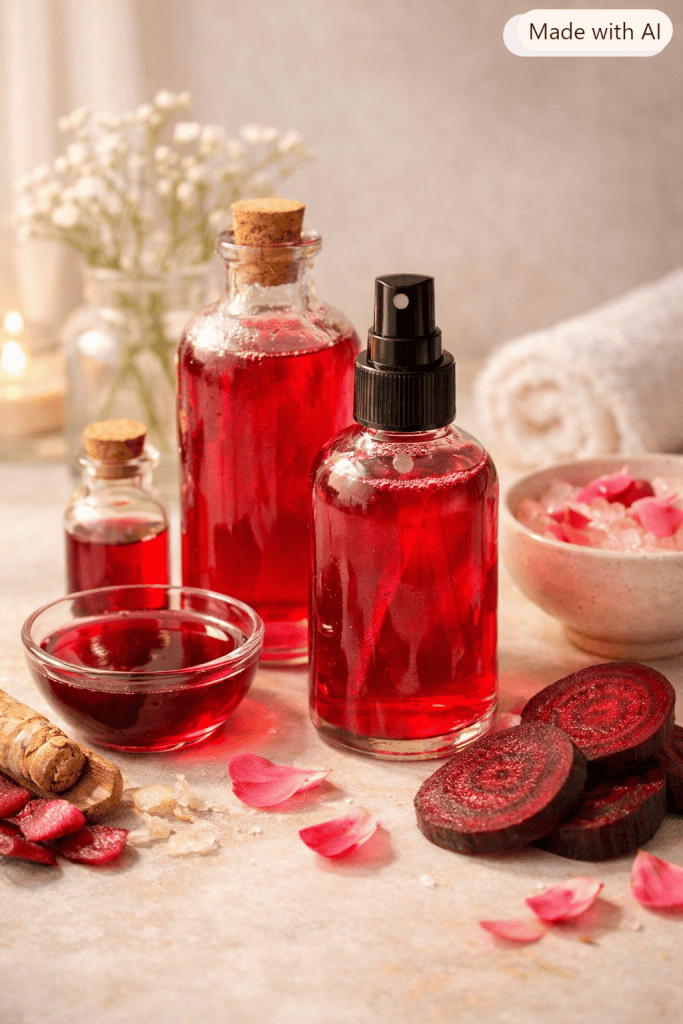
Beetroot toner and serum are styled with fresh beets, greenery, and dried flowers.
Beauty Benefits
Betalains — brighten and protect.
Herbal infusion — boosts microcirculation.
Vitamin C — improves clarity and firmness.
Green tea — reduces inflammation.
Glycerin — hydrates and softens.
Ingredients
¼ cup beet water (simmer sliced beet, strain)
¼ cup green tea
Optional: 1 drop rosewater
1 tsp glycerin
Instructions
Apply with a cotton pad or mist bottle. Use morning or evening.
Storage
Keeps 4 days refrigerated.
Substitutions
Replace green tea with chamomile for sensitive skin.
Replace glycerin with aloe for lighter hydration.
I’m Stacey Hobbs, thanks for reading Face by Stace! Until next time. do you feel fabulous today?
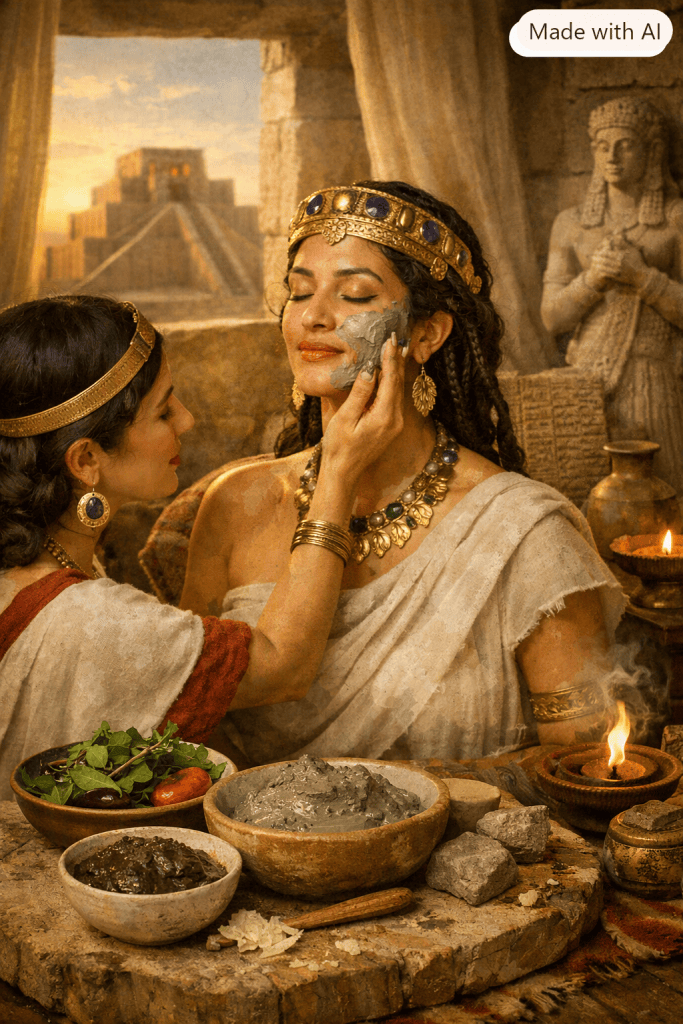
In Mesopotamia and Sumer, beauty and healing were deeply intertwined and clay‑based treatments became one of the earliest recorded skincare rituals. Living in a region shaped by rivers, fertile soil, and mineral‑rich earth, these cultures understood the therapeutic power of clay long before formal medicine emerged. Clay and mud masks were used to cleanse, soothe, and restore the skin, forming a foundation for many modern treatments.
Sumerians and Mesopotamians sourced clay from riverbanks, where fine sediments carried natural minerals like magnesium, calcium, and silica. When mixed with water or oils, this clay created a purifying paste that drew out impurities and calmed irritation. These masks were applied to the face and body to treat inflammation, dryness and environmental stress — practical needs in a climate marked by heat, dust, and intense sun.
Clay also held symbolic meaning. Its connection to the earth aligned with beliefs about renewal, protection, and divine creation. In some texts, clay was associated with healing deities and used in rituals meant to restore balance and vitality. Beauty, health, and spirituality were not separate concepts; they worked together through materials found in the natural world.
These early clay masks reveal a sophisticated understanding of skincare long before scientific terminology existed. Mesopotamia and Sumer recognized that the earth itself could cleanse, calm, and heal — a principle that continues in today’s clay masks, detox treatments, and mineral‑rich skincare.
I’m Stacey Hobbs, thanks for reading Face by Stace! Until next time. do you feel fabulous today?