Depression‑Era Skincare Routines

Skincare during the Great Depression was simple, practical and rooted in household ingredients. With commercial creams often too expensive, women relied on pantry staples to cleanse, moisturize and maintain their skin.

Cleansing usually began with soap and warm water, but many women softened the routine by adding a small amount of olive oil or cold cream alternatives made at home. A mixture of petroleum jelly and a few drops of lemon juice created a gentle cleanser that removed dirt while leaving skin soft.

For exfoliation, women turned to oatmeal, sugar or salt. Ground oatmeal mixed with water became a soothing scrub for sensitive skin while sugar and a splash of warm water created a simple exfoliant that brightened dull complexions.

Moisturizing relied heavily on natural fats. Olive oil, leftover cream or even a thin layer of petroleum jelly were applied at night to lock in hydration. Women also used mashed avocado or banana as nourishing masks when available.

To tighten the skin, egg whites were a popular remedy. Applied as a thin layer, they dried into a firming mask that temporarily smoothed fine lines and gave the face a lifted appearance.

These routines weren’t luxurious but they were effective. Depression‑era skincare reflected a mindset of resourcefulness — proving that beauty doesn’t require abundance, only ingenuity.

I’m Stacey Hobbs, thanks for reading Face by Stace! Until next time.
do you feel fabulous today?
1930s Hair Styling Tools

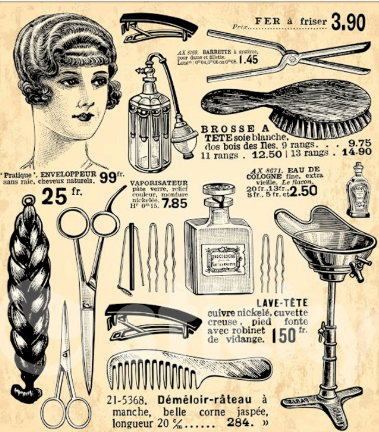
During the 1930s, hair styling was a blend of ingenuity, patience and household creativity. With limited access to salon tools and the lingering effects of the Great Depression, women relied on simple, affordable items to achieve the soft waves and sculpted curls that defined the decade.

One of the most common tools was the rag curler. Women tore old fabric into strips, wrapped damp hair around them and tied the ends into knots. Sleeping in these overnight created gentle, heat‑free curls. Paper curls were another staple — grocery‑bag paper or newspaper was twisted into tight rolls that produced more defined spirals.

For structured waves, women used finger‑waving combs or simply their hands. Setting lotion (often homemade from sugar water) helped hold the iconic S‑shaped waves in place. Bobby pins and metal clips were essential for securing curls during drying, especially for the fashionable “Marcel‑inspired” looks.

Even household items doubled as styling tools. Spoons were used to shape pin curls. Stockings were tied around the head to keep sets smooth overnight. Some women heated metal curling rods on the stove — a risky but effective method for achieving tighter curls.

These tools weren’t glamorous, but they were resourceful. 1930s hair styling proved that beauty didn’t require expensive equipment — just creativity, patience, and a few clever household substitutes.

I’m Stacey Hobbs, thanks for reading Face by Stace! Until next time.
do you feel fabulous today?

Depression‑Era Perfume Substitutes

Perfume was a luxury many women couldn’t afford during the Great Depression, but scent remained an important part of personal beauty. Instead of store‑bought fragrances, women turned to simple, homemade substitutes crafted from kitchen staples, garden herbs and everyday household items.

One of the most popular alternatives was vanilla extract. A tiny dab on the wrists or behind the ears offered a warm, sweet scent that lasted for hours. Women also used lemon or orange peels, rubbing the oils directly onto the skin for a fresh, uplifting fragrance.

Herbs played a major role in Depression‑era perfuming. Lavender, mint and rosemary were steeped in hot water to create lightly scented rinses for hair and skin. Some women tucked dried herbs into handkerchiefs or clothing drawers for a subtle, lingering aroma.

Floral substitutes were equally common. Rosewater, made by simmering rose petals, became a gentle perfume and complexion refresher. Violet leaves, when crushed, released a delicate green‑floral scent that women dabbed onto the neck and wrists.

For a richer fragrance, women mixed cloves, cinnamon or allspice with warm water or oil, creating simple spice‑based perfumes reminiscent of early colognes.

These substitutes weren’t about luxury — they were about resourcefulness. Even in a decade defined by scarcity, women found ways to bring beauty and scent into their daily lives.

I’m Stacey Hobbs, thanks for reading Face by Stace! Until next time.
do you feel fabulous today?
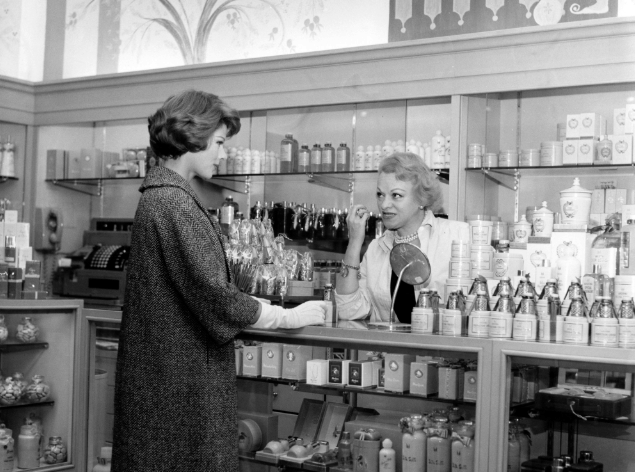
Old Hollywood Beauty During the Depression

Old Hollywood beauty in the 1930s shaped the decade’s aesthetic and offered a glamorous escape from Depression‑era reality. Movie stars became beauty icons, influencing everything from makeup colours to hair styling techniques.

Actresses like Jean Harlow, Carole Lombard, Marlene Dietrich, and Joan Crawford defined the era’s look: thin arched brows, sculpted cheekbones, glossy lips and soft, controlled waves. Their images appeared in magazines, advertisements and newsreels, giving women across North America a visual guide to modern beauty.

Joan Crawford
Jean Harlow

The signature 1930s brow — thin, elongated and highly expressive — became a national trend. Women plucked their brows into dramatic shapes to mimic Hollywood’s emotional, camera‑ready expressions. Lips were painted in deep reds, plums, and berry tones, often with a rounded “cupid’s bow” silhouette inspired by studio makeup artists.

Complexions were kept matte and velvety, achieved through powder and careful blending. Contouring, though subtle, was already in use: actresses used shading to sculpt cheekbones under harsh studio lights.

Hair was equally iconic. Finger waves, pin curls, and controlled S‑shapes framed the face, creating the soft, romantic look associated with early cinema.

Old Hollywood beauty wasn’t just aspirational — it was instructional. Even during the Depression, women found ways to recreate these looks at home, proving that glamour could thrive even in difficult times.

I’m Stacey Hobbs, thanks for reading Face by Stace! Until next time.
do you feel fabulous today?
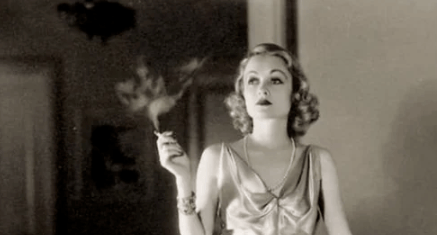
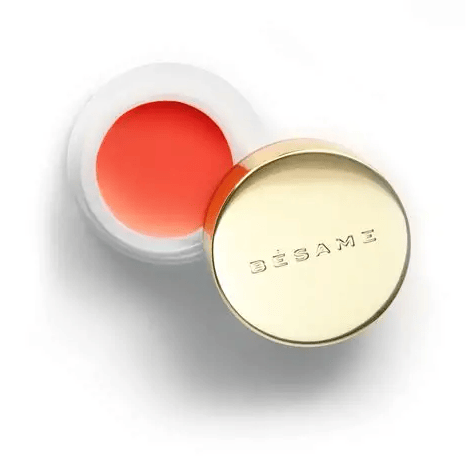
Besame Cosmetics: Apricot Cream Blush

Give your cheeks a healthy, sunlit warmth with a touch of 1930s charm. Apricot rouge was one of the decade’s most flattering shades — a peachy‑orange tint that instantly brightened the complexion and mimicked the natural flush seen in early Technicolour films. Besame’s apricot cream blush captures that same vintage magic in a modern, effortless formula.

The creamy texture blends seamlessly into the skin, melting into a soft, dewy finish that feels fresh rather than powdered or flat. A tiny dab is all you need; the pigment is rich, vibrant and designed to last, giving you that classic “lifted cheek” look without constant touch‑ups.

This shade was beloved in the 1930s for its ability to warm the face, soften features and complement every skin tone. Whether worn lightly for daytime radiance or built up for evening glamour, apricot rouge adds instant vitality — the kind of glow that feels both nostalgic and beautifully current.

If you love vintage beauty with a modern twist, this is the rouge that brings it all together: effortless blendability, long‑lasting colour and a timeless hue straight from the golden age of cinema.

I’m Stacey Hobbs, thanks for reading Face by Stace! Until next time.

do you feel fabulous today?

Face Exam (circa 1940)

In the 1940s, a “face exam” was a common beauty ritual offered in salons, department‑store counters and even home vanity guides. It wasn’t medical — it was a personalized beauty assessment designed to help women understand their facial structure, skin type and the makeup techniques that would enhance their natural features.

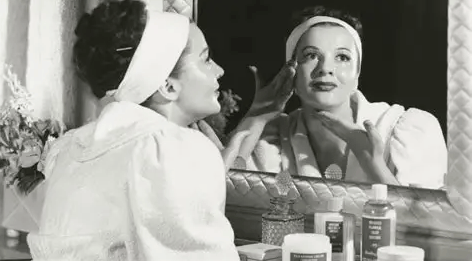
A typical face exam began with skin evaluation. Beauty advisors looked for dryness, oiliness, enlarged pores or fine lines, recommending cold creams, astringents or nourishing lotions based on the skin’s needs. Texture mattered: smoothness was prized and women were encouraged to maintain it through nightly cleansing and regular massage.

Next came facial shape analysis. Advisors studied the jawline, cheekbones, forehead and chin to determine whether a woman had an oval, round, square or heart‑shaped face. This guided recommendations for eyebrow shaping, rouge placement and hairstyle choices. In the 1940s, brows were expressive and carefully arched, so shaping advice was a major part of the exam.

The final step focused on colour harmony. Women were matched with flattering shades of rouge, powder and lipstick based on their complexion and undertones. Apricot, rose, and raspberry were popular choices, each selected to brighten the face under both daylight and evening lighting.

A 1940s face exam wasn’t just about beauty — it was about confidence. It offered women a moment of personal attention, helping them feel polished, modern and ready for the world.

I’m Stacey Hobbs, thanks for reading Face by Stace! Until next time.
do you feel fabulous today?