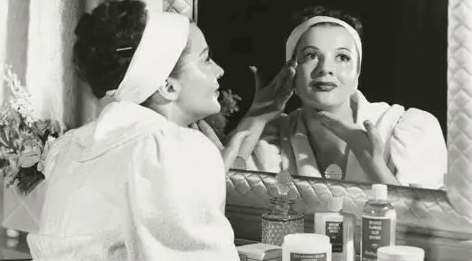
During World War II, skincare became a quiet act of resilience. With rationing, shortages and limited access to luxury cosmetics, women adapted their routines to fit a world focused on survival. Beauty didn’t disappear — it simply became more practical more resourceful and more intentional.
Cleansing was simple and consistent. Most women used basic soap and warm water, often followed by a homemade softening step. A few drops of olive oil, cold cream substitutes or petroleum jelly were massaged into the skin to counteract dryness caused by stress, weather and long workdays. Nightly cleansing became essential, especially for women working in factories where soot and dust were constant companions.
Moisturizing relied heavily on household staples. Olive oil, glycerin and even leftover cooking fats were used sparingly to keep skin supple. Women applied these at night, allowing them to absorb slowly while they slept. For those who could still access commercial creams, formulas were often thinner due to ingredient shortages — but they remained cherished.
Exfoliation was gentle and infrequent. Women used oatmeal, sugar or salt mixed with water to brighten dull skin. These simple scrubs helped maintain a healthy glow without relying on scarce beauty products.
To refresh the complexion, rosewater and witch hazel were popular tonics. They offered a cooling, calming effect and required only minimal ingredients to make at home.
WWII skincare wasn’t glamorous, but it was deeply meaningful. In a world defined by uncertainty, these small rituals offered comfort, normalcy and a moment of personal care.
I’m Stacey Hobbs, thanks for reading Face by Stace! Until next time. do you feel fabulous today?
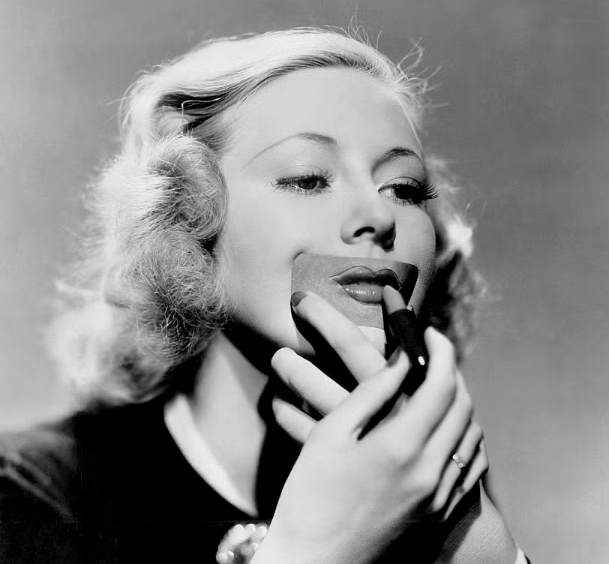
In 1938, beauty innovation took a charmingly practical turn with the arrival of the lipstick stencil — a small, curved template designed to help women achieve the perfect cupid’s bow. At a time when symmetry and precision were hallmarks of glamour, this clever tool promised movie‑star lips without the steady hand of a professional makeup artist.
The stencil was typically made of thin metal or celluloid and shaped to mimic the fashionable 1930s lip silhouette: softly rounded peaks, a defined centre bow, and balanced corners. Women held the stencil against their mouth and applied lipstick directly over it, creating a crisp outline that could then be filled in with color. It was especially helpful for achieving the era’s dramatic evening looks, where deep reds and berry tones demanded flawless application.
Magazines promoted the stencil as a modern beauty aid — ideal for busy women, beginners or anyone seeking a polished finish. It fit neatly into vanity drawers and travel cases, offering a quick way to refine the lips before work, dates or social events.
Though the lipstick stencil eventually faded as makeup formulas improved and application techniques evolved, it remains a delightful example of pre‑war beauty ingenuity. In 1938, it wasn’t just a tool — it was a promise of precision, confidence and a touch of Hollywood glamour at home.
I’m Stacey Hobbs, thanks for reading Face by Stace! Until next time. do you feel fabulous today?
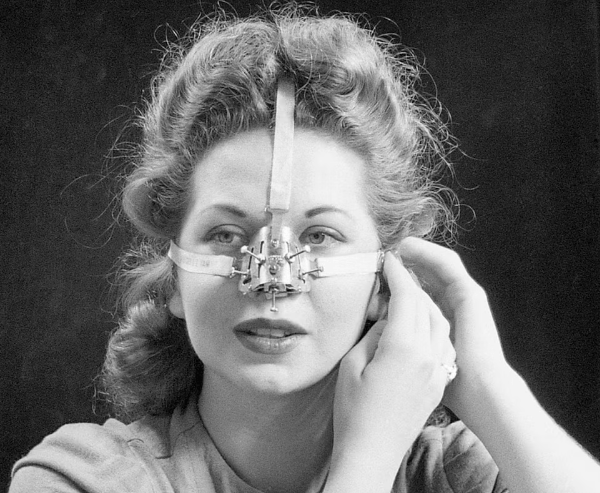
In 1944, long before rhinoplasty became a common cosmetic procedure, beauty seekers turned to mechanical “nose shapers” — small, wearable devices designed to gradually adjust the structure of the nose. These contraptions promised subtle re-shaping without surgery, reflecting the era’s fascination with at‑home beauty innovation and the belief that facial features could be trained into ideal proportions.
The nose shaper typically consisted of a metal or hard‑plastic frame that clipped around the bridge and sides of the nose. Worn for short daily intervals, it applied gentle pressure intended to refine the nasal contour over time. Advertisements claimed it could narrow the bridge, lift the tip or create a more symmetrical profile. These devices were marketed as modern, scientific beauty aids, offering a non‑invasive alternative to surgical correction .
Beauty culture of the 1940s emphasized grooming, symmetry and refinement, and the nose shaper fit neatly into that narrative. Women — and men — used it privately at home, often as part of a broader routine that included brow shaping, cold creams and complexion care. While the results were questionable, the appeal was undeniable: a promise of transformation through discipline rather than drastic intervention.
Today, the nose shaper stands as a fascinating relic of pre‑war beauty ingenuity — a reminder of how far people were willing to go in pursuit of the era’s idealized facial harmony.
I’m Stacey Hobbs, thanks for reading Face by Stace! Until next time. do you feel fabulous today?
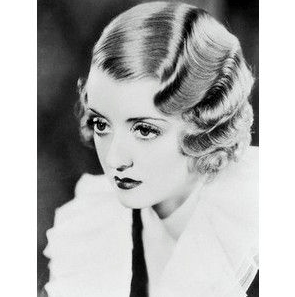
Marcel waves and finger waves defined 1930s glamour but they weren’t the same technique. Both created the decade’s iconic S‑shaped curves, yet each had its own method, texture and cultural moment.
Marcel waves came first, invented in the late 19th century by French hairdresser François Marcel. By the 1920s and early ’30s, the technique was a salon staple. Marcel waves were created using heated metal tongs, clamped rhythmically along the hair to form deep, structured ridges. The result was glossy, sculpted waves with a slightly rigid finish — the kind of polished glamour seen on early Hollywood stars and in formal portraits. Marcel waves required skill, heat and precision, making them a professional service more than a home ritual.
Finger waves, by contrast, were the accessible, at‑home version of the look. Popular throughout the 1930s, they were created without heat: just fingers, a comb and setting lotion. Women shaped the hair into S‑curves by pushing and pinching sections into place, securing them with clips until dry. Finger waves were softer, more fluid and slightly more natural than Marcel waves. They became the everyday wave — achievable in bedrooms, dormitories and beauty parlors without special tools.
In essence, Marcel waves were structured, heated, and professional, while finger waves were soft, cool‑set and accessible. Together, they defined the decade’s romantic, sculpted hairstyles and remain two of the most iconic techniques in vintage beauty history.
I’m Stacey Hobbs, thanks for reading Face by Stace! Until next time. do you feel fabulous today?
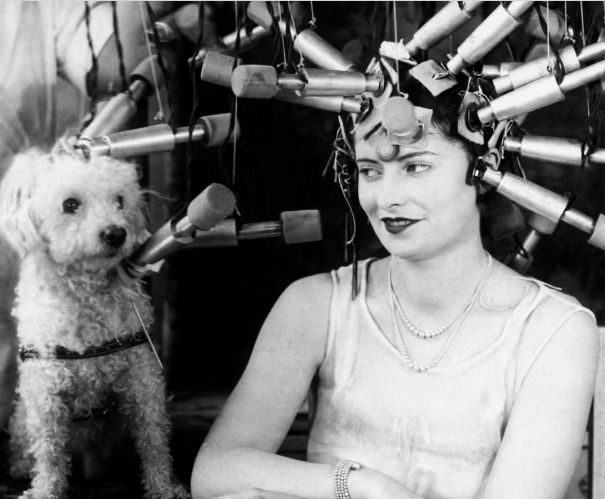
The 1920 hair curler was a fascinating piece of early beauty technology — part practical tool, part theatrical contraption. In an era when women were embracing shorter bobs, soft waves and the new freedom of post‑Edwardian style, devices like this promised salon‑quality curls at home. The photograph from 1920 shows a Manhattan socialite using an elaborate curling apparatus to shape her hair into fashionable waves.
These early curlers were often bulky, mechanical and slightly intimidating. Many relied on heated metal components or clamping mechanisms to create uniform bends in the hair. Unlike the later, streamlined curling irons of the 1930s and 1940s, the 1920 versions looked more like industrial equipment than beauty tools. Yet they were considered modern — a sign that technology was beginning to merge with personal grooming.
Women used these curlers to achieve the soft, controlled waves that defined the decade’s aesthetic. Paired with finger waves, marcel techniques and setting lotions, the curler helped create the sculpted styles seen in silent films and early fashion photography.
Though the device appears cumbersome today, it represents a moment when beauty innovation was bold, experimental and full of promise. The 1920 hair curler wasn’t just a tool — it was part of the cultural shift toward accessible glamour, giving everyday women the ability to craft the new, modern silhouette of the Jazz Age.
I’m Stacey Hobbs, thanks for reading Face by Stace! Until next time. do you feel fabulous today?
There are ingredients that feel steady the moment they touch the tongue, and blueberries have always been one of them. Cool, deep‑toned, quietly sweet, and full of strength, blueberries carry a kind of calm energy — the opposite of fiery heat or sun‑kissed softness. They don’t announce themselves; they endure. Long before they became a modern wellness staple, blueberries were woven into northern food traditions as symbols of longevity, resilience, and the kind of inner vitality that shows on the skin.
Blueberries trace their origins to Indigenous communities across North America, where they were cherished not only as food but as medicine, dye, and preservation. They were dried for winter sustenance, brewed into teas for healing, and used in ceremonial practices. Their deep blue colour — rare in nature — was seen as protective, grounding, and spiritually significant.
As European settlers arrived, blueberries became central to early North American cooking: folded into breads, simmered into preserves, baked into rustic cakes and used to sweeten porridges. Their natural acidity and sweetness made them ideal for simple frontier desserts. By the 20th century, blueberries entered the world of modern nutrition, celebrated for their antioxidant power and their role in supporting long‑term health.
Today, blueberries remain one of the most studied and respected fruits in wellness culture — a symbol of longevity, calm strength and quiet radiance. Their appeal endures because of their dual identity: a culinary ingredient that brings comfort and balance and a beauty ingredient that protects, strengthens and supports glow from within.
Blueberry Beauty & Health Benefits
Antioxidant Protection Blueberries are rich in anthocyanins — the deep blue pigments that help defend skin from environmental stress and support collagen longevity.
Brightening & Even Tone Vitamin C helps illuminate the complexion and support firmness.
Anti‑Inflammatory Support Their natural compounds help calm redness, soothe irritation and support balanced skin.
Gut‑Skin Harmony Blueberries support digestion, blood sugar balance and overall metabolic health — internal pathways that directly influence radiance.
Hydration & Softness Their natural sugars and water content help plump the skin and maintain moisture.
Blueberries remind us that beauty doesn’t always come from intensity or sweetness — sometimes it comes from quiet strength, deep nourishment and the kind of protection that keeps the skin glowing over time.
This series will explore blueberries through both food and beauty, revealing how calmness can be nourishing, balancing, and longevity‑enhancing.
Blueberry Scones (Preppy Kitchen–Inspired)
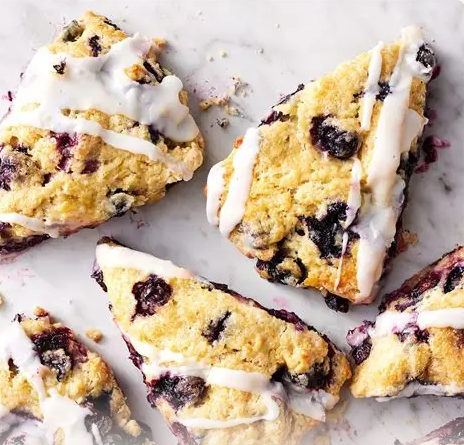
Preppy Kitchen’s baking style is polished, pretty, and presentation‑forward — and blueberry scones fit that vibe perfectly. They’re golden, tender and studded with deep‑blue berries, ideal for brunch, hosting or a soft‑luxury breakfast.
Prep 15 min Cook 20–22 min Serves 8
Blueberry Scones Recipe Lemon Blueberry Scones Mom On Timeout
Preheat oven Heat oven to 400°F (200°C). Line a baking sheet with parchment.
Mix dry ingredients Whisk flour, sugar, baking powder, salt and optional lemon zest.
Cut in butter Add cold butter cubes and cut in using fingers or a pastry cutter until the mixture resembles coarse crumbs.
Add blueberries Gently fold in fresh blueberries.
Combine wet ingredients Whisk cream, egg and vanilla together.
Form dough Pour wet mixture into dry and fold gently until a shaggy dough forms. Do not overmix.
Shape Turn dough onto a floured surface, pat into a 1-inch thick circle and cut into 8 wedges.
Bake Transfer wedges to the baking sheet, brush tops with cream and bake 20–22 minutes until golden.
Finish Cool slightly and drizzle with vanilla glaze if desired.
History
Scones originated in Scotland in the early 1500s, evolving from simple oat cakes cooked over fire. As tea culture expanded across Britain, scones became a hallmark of afternoon tea — elegant, warm and meant to be shared. Blueberries, native to North America, entered scone recipes much later, blending British tradition with northern fruit heritage. Their deep colour and subtle sweetness make them a natural fit for modern, polished baking styles like Preppy Kitchen.
Beauty & Health Benefits
Blueberries are one of the most powerful beauty foods:
Anti‑inflammatory compounds → calm redness + support even tone
Hydration → plumpness + softness
Cream and butter add:
Healthy fats → skin barrier nourishment
Satiation → stable energy for gut‑skin harmony
Throughout this series, blueberries have shown their versatility — slipping easily between rustic comfort and polished elegance, between nourishment and beauty. Each recipe has revealed a different facet of their personality: wholesome, refined, cooling or deeply soothing. And each one has reinforced the idea that radiance is never one‑dimensional. It’s flavour, it’s history, it’s ritual and it’s the quiet way small choices accumulate into something luminous.
Blueberries remind us that glow doesn’t always come from intensity or sweetness. Sometimes it comes from protection, from steadiness, from the deep‑blue strength of an ingredient that has endured for generations. Their beauty is subtle, lasting and quietly powerful — the kind of radiance that stays with you.
I’m Stacey Hobbs, thanks for reading Face by Stace! Until next time. do you feel fabulous today?