Hairdryer (circa 1930)

The 1930 hairdryer was a marvel of early beauty technology — bulky, dramatic and un-mistakably modern for its time. Long before sleek handheld dryers became a household staple, women relied on large, hooded machines like the one pictured in the 1930 photograph, where blow‑drying was described as “much more of an involved process.”

These early dryers were often made of heavy metal and powered by motors that produced significant heat and noise. Instead of directing airflow with a nozzle, the user sat beneath a dome‑shaped hood that circulated warm air around the head. The experience was part grooming ritual, part industrial spectacle — a moment of stillness as technology worked to speed up the drying process.

Beauty salons embraced these machines as symbols of modern efficiency. They allowed stylists to set waves, curls and structured styles more quickly, especially when paired with marcel techniques or finger‑wave setting lotions. At home, portable versions existed but they were far less convenient than today’s lightweight tools.

Despite their size and intensity, 1930s hairdryers represented a turning point: the merging of electrical innovation with everyday beauty. They made hairstyling faster, more controlled and more accessible, laying the groundwork for the streamlined dryers that would follow in the decades ahead.

Hairdryer, 1930/Imagno//Getty Images

The 1930 hairdryer wasn’t just a device — it was a promise of modern glamour, bringing the future of beauty into salons and homes one warm gust at a time.

I’m Stacey Hobbs, thanks for reading Face by Stace! Until next time.
do you feel fabulous today?

Claire McCardell: The Lady Who Put American Fashion on the Map

Claire McCardell didn’t just design clothes — she re-shaped the identity of American fashion. In an era dominated by Paris couture, McCardell introduced a new aesthetic: practical, modern and distinctly American. Her work in the 1930s, ’40s, and ’50s proved that style could be intelligent, functional and beautifully un-fussy.

McCardell championed fabrics that were previously considered “ordinary,” like denim, gingham, calico, and wool jersey. She believed luxury came from freedom of movement, not embellishment. Her designs celebrated women’s real lives — commuting, working, traveling, raising families — without sacrificing elegance.

Her signature innovations became icons: the Monastic dress, tied to the body rather than fitted; the Popover dress, a wrap style that moved effortlessly from kitchen to cocktail hour; and her pioneering use of bias cuts, pockets, metal closures and ballet flats. McCardell’s clothes were smart, architectural and radical.

She also helped define American sportswear — a term that, thanks to her, came to mean separates that mixed, matched and adapted to a woman’s day. Her philosophy was simple: fashion should empower, not restrict.

By the 1950s, Claire McCardell had done what few designers achieved — she created a national style identity. She proved that American fashion didn’t need to imitate Paris; it could lead with originality, practicality and confidence.

Claire McCardell/Courtesy from theageofgrace.com

Her legacy remains the foundation of modern American design: wearable, thoughtful and free.

I’m Stacey Hobbs, thanks for reading Face by Stace! Until next time.
do you feel fabulous today?

Rubber Face Mask (1930)

In 1930, beauty innovation often looked more like science fiction than skincare — and the rubber face mask is one of the decade’s most striking examples. According to period accounts, the mask contained heating coils designed to “melt away” fine lines and wrinkles, promising smoother, younger‑looking skin through controlled warmth .

These masks were molded from thick rubber and fitted tightly over the face, creating a sealed environment where heat could be applied evenly. The idea was simple: warmth would stimulate circulation, soften the skin, and reduce the appearance of aging. In practice, the experience was intense — hot, heavy and far from comfortable. Yet women embraced it as part of the era’s fascination with “scientific beauty,” a movement that blended technology with personal grooming.

The rubber mask fit neatly into the 1930s beauty landscape, where electrical devices, heated tools, and mechanical treatments were becoming increasingly popular. From hooded hairdryers to contouring machines, the decade celebrated innovation, even when the results were questionable.

Though it seems dramatic today, the rubber face mask represents a moment when beauty culture was bold, experimental, and optimistic. It reflects a generation willing to try anything in pursuit of smooth skin and cinematic glamour — a reminder that the quest for youth has always inspired some truly un-forgettable inventions.

I’m Stacey Hobbs, thanks for Face by Stace! Until next time.
do you feel fabulous today?

Chest Developer (1909)

The 1909 chest developer is one of the most fascinating examples of early “scientific beauty” — a device that blended fitness, vanity and mechanical innovation. In the vintage photograph, a young woman sits at her vanity demonstrating a vibrating chest developer, a tool marketed as a way to firm muscles and prevent sagging. Advertisements of the era claimed that subtle vibrations could tone the upper body and enhance the bustline, promising results without strenuous exercise. 

These devices were part of a broader cultural moment when beauty and health were becoming intertwined. Women were encouraged to use mechanical tools to maintain youthfulness, improve posture and sculpt their figures. The chest developer fit neatly into this landscape — a domestic gadget that promised salon‑level results from the comfort of home.

Constructed with metal components and powered by early vibration technology, the device looked more like a medical instrument than a beauty tool. Yet it reflected the optimism of the era: the belief that modern machinery could refine the body just as it refined industry.

Today, the chest developer feels both quaint and bold — a reminder that the pursuit of beauty has always inspired inventive, sometimes eccentric solutions. It captures a moment when women embraced new technologies to shape their appearance, blending self‑care with the thrill of modern progress.

I’m Stacey Hobbs, thanks for reading Face by Stace! Until next time.
do you feel fabulous today?

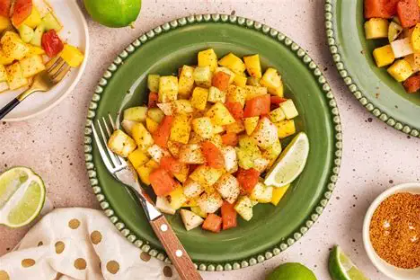
Pear & Tajín Fruit Salad

A bright, spicy‑sweet Mexican fruit salad where pear adds floral freshness and Tajín brings citrusy heat.

This bright, refreshing fruit salad pairs pear’s floral sweetness with the citrusy heat of Tajín, creating a vibrant balance of sweet, spicy, and tangy. Lime juice sharpens the flavors, while mango, pineapple, or other tropical fruits add juicy contrast. It’s a modern, beauty‑forward take on Mexican street‑style fruit cups — crisp, hydrating and full of glow‑boosting ingredients.

Prep 10 min Cook 0 min Serves 4

Ingredients

2 ripe pears, diced
1 cup mango, diced
1 cup pineapple, diced
1 cup watermelon or cantaloupe, cubed
1–2 tsp Tajín seasoning
1 lime, juiced
1 tbsp honey (optional)
Pinch sea salt

Instructions

  1. Prep the fruit
    Dice pears, mango, pineapple, and watermelon into bite‑sized pieces.
  2. Season
    Add Tajín, lime juice, and a pinch of sea salt. Toss gently to coat.
  3. Sweeten (optional)
    Drizzle with honey if you prefer a sweeter balance.
  4. Chill
    Refrigerate 10–15 minutes to let flavors meld.
  5. Serve
    Plate cold and finish with an extra sprinkle of Tajín.
Best Mexican Fruit Salad Recipe With Tajín Seasoning - Hungry Whisk
Best Mexican Fruit Salad Recipe With Tajín Seasoning – Hungry Whisk/hungrywhisk.com

Beauty Benefits

  • Pear hydrates and plumps skin
  • Lime boosts collagen through vitamin C
  • Tajín’s chili increases circulation for natural glow
  • Mango + pineapple add enzymes for gentle exfoliation

Health Benefits

  • High‑fiber fruit blend supports digestion
  • Lime aids immunity
  • Chili + citrus help metabolic balance

Substitutions

  • Tajín → chili powder + lime zest
  • Mango → papaya
  • Pineapple → orange segments
  • Honey → agave

Storage

  • Best enjoyed fresh
  • Refrigerate up to 24 hours
  • Add Tajín right before serving to keep fruit crisp

Tajín, a beloved Mexican seasoning made from chili, lime and sea salt has been used for decades to elevate fresh fruit sold by street vendors (fruteros) across Mexico. Traditionally sprinkled over mango, jícama, watermelon and pineapple, Tajín transforms simple fruit into a bold, refreshing snack. Your pear variation fits naturally within this tradition: pears are grown throughout northern Mexico and often appear in home‑style fruit salads. By combining Tajín’s iconic tangy heat with pear’s gentle sweetness this recipe becomes a contemporary twist on a classic Mexican fruit preparation — familiar, yet uniquely elegant.

Why not transform this recipe into eating real food?

Enjoy Pear & Tajín Fruit Salad!
I’m Stacey Hobbs, thanks for reading Face by Stace! Until next time.
do you feel fabulous today?
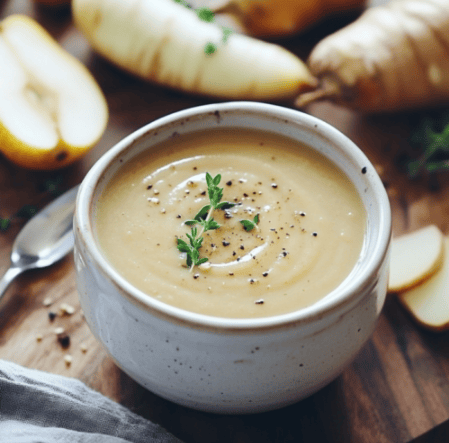
Pear & Ginger Immune‑Boosting Soup (TCM)

A Traditional Chinese Medicine–inspired warming soup that supports lung health, immunity and circulation.

This soothing TCM‑inspired soup blends pear’s natural hydration with ginger’s warming, immune‑boosting properties. The broth is light, aromatic, and gently sweet, designed to support lung health, circulation and overall vitality.

Prep 10 min Cook 25 min Serves 2–3

29 Delicious Fall Soup Recipes to Keep You Warm and Cozy
29 Delicious Fall Soup Recipes to Keep You Warm and Cozy/mymoneycottage.com

Ingredients

2 ripe pears, sliced
1 tbsp fresh ginger, thinly sliced
3 cups water or light vegetable broth
1 tbsp honey (optional) (if you have access to real organic honey from farmers it is truly the best)
1 cinnamon stick
1 pinch sea salt
1–2 dried red dates (optional, TCM traditional)
1 tsp goji berries (optional)

Instructions

  1. Prepare aromatics
    Slice pears and ginger. Rinse red dates and goji berries if using.
  2. Simmer base
    Bring water or broth to a gentle simmer with ginger and cinnamon.
  3. Add pears
    Add pear slices and cook 15–20 minutes until soft and fragrant.
  4. Sweeten
    Stir in honey if desired. Taste and adjust seasoning.
  5. Serve
    Ladle into bowls and enjoy warm for maximum immune‑supportive benefits.
Squash, Pear and Ginger Soup - Salt and Serenity
Squash, Pear and Ginger Soup – Salt and Serenity/www.saltandserenity.com

Beauty Benefits

  • Pear hydrates skin internally
  • Ginger boosts circulation for natural glow
  • Goji berries support collagen and brightness
  • Warm broth reduces inflammation and supports gut–skin harmony

Health Benefits

  • Ginger supports immunity and digestion
  • Pear provides fiber + hydration
  • Cinnamon stabilizes blood sugar
  • Red dates support energy and blood nourishment (TCM)

Substitutions

  • Pear → apple or Asian pear
  • Honey → maple syrup
  • Cinnamon → star anise
  • Vegetable broth → water for a lighter TCM version

Storage

  • Refrigerate up to 2 days
  • Reheat gently (without boiling)
  • Add fresh pear slices when serving for best texture

History

In Traditional Chinese Medicine, pear is used to nourish the lungs, soothe dryness and support respiratory health. Ginger has been used for thousands of years to warm the body, improve circulation and strengthen immunity. Soups combining fruit and warming herbs are common in TCM during seasonal transitions especially autumn and winter.

Enjoy Pear & Ginger Immune‑Boosting Soup (TCM)!
I’m Stacey Hobbs, thanks for reading Face by Stace! Until next time.
do you feel fabulous today?