A century of glamour, rebellion and identity — written in a single line above the eye.
Brows are never just brows. They are mood, era, identity, rebellion, femininity and sometimes even politics. Across the 20th century, the brow line became one of beauty history’s most expressive symbols — shifting with culture, cinema, fashion and the women who defined each decade.
1920s — The Silent Film Brow
Clara Bow. Louise Brooks. The flapper era.
Brows were thin, rounded and dramatically penciled downward at the tail — creating a look of perpetual emotion. This was the decade of expression, where brows served as visual punctuation for silent film actresses who had to communicate without words.
Key traits:
thin and curved
downward tilt
penciled for drama
highly expressive
1930s — The Razor-Line Brow
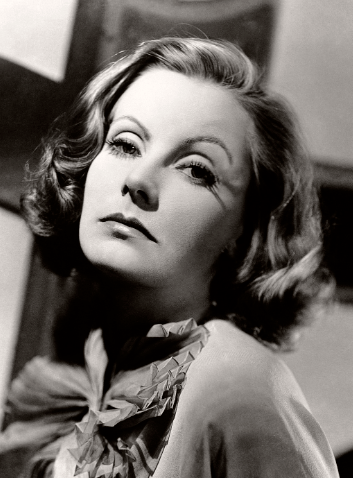
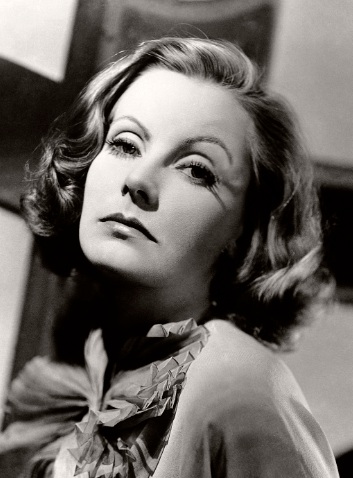
Marlene Dietrich. Greta Garbo.
Brows became architectural — erased, typically shaved away entirely, then re-drawn as a single, elegant line. This was glamour as control, not softness.
Key traits:
ultra-thin
elongated
high placement
precise pencil work
1940s — The Sculpted Natural Brow
War years brought practicality. Brows softened, thickened slightly and followed the natural shape — but remained groomed and defined. Hollywood stars like Lauren Bacall and Gene Tierneywore brows that looked strong yet feminine.
Key traits:
fuller but neat
softly arched
natural shape enhanced
powder + pencil combination
1950s — The Iconic Arch
Audrey Hepburn. Elizabeth Taylor. Sophia Loren.
Brows became bold, structured and un-mistakably feminine. The arch was everything — lifted, sculpted and dramatic.
Key traits:
thick
high arch
strong definition
glamorous and polished
1960s — The Mod Brow
Twiggy. Jean Shrimpton.
Brows thinned again, becoming straighter and more youthful. The focus shifted to lashes so brows stayed minimal to balance the eye.
Key traits:
thin
straight
soft definition
paired with heavy lashes
1970s — The Natural Brow
The bohemian and disco era. Brows followed their natural shape with minimal grooming — a reaction against the strict glamour of previous decades.
Key traits:
natural thickness
minimal shaping
soft, earthy look
1980s — The Power Brow
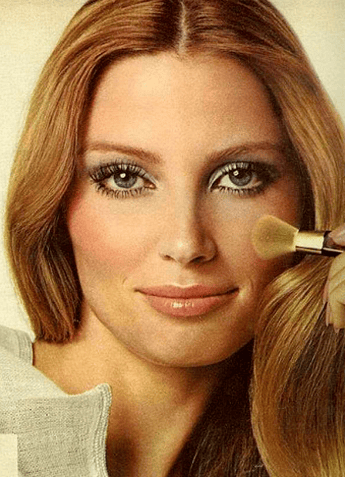
Brooke Shields. Cindy Crawford.
Bold, thick and un-apologetic. Brows became symbols of strength, athleticism and confidence — mirroring the decade’s fashion and cultural energy.
Key traits:
thick
strong arch
brushed-up texture
maximalist
1990s — The Minimalist Brow
Kate Moss. Drew Barrymore.
Brows thinned again — not as extreme as the 1930s, but soft, narrow and understated. The look was grunge, effortless and slightly undone.
Key traits:
thin to medium
soft arch
minimal grooming
“barely there” aesthetic
Across seventy years, brows moved from theatrical curves to razor-thin lines, from sculpted arches to natural bohemian softness and finally into the minimalist cool of the 1990s. Each decade left its mark — not just on beauty but on identity itself. Brows tell the story of women, culture, cinema, rebellion and glamour. And like all beauty history, they remind us that style is never superficial — it’s a reflection of the world around us.
I’m Stacey Hobbs, thanks for reading Face by Stace! Until next time. do you feel fabulous today?
One of the strangest beauty devices of the early 20th century — and a symbol of how far women were willing to go for charm.
In the 1920s and 1930s, dimples were considered the height of feminine charm. They signaled youth, sweetness, flirtation and a kind of effortless beauty that Hollywood adored. But not everyone was born with them — and early beauty inventors saw an opportunity.
What It Was
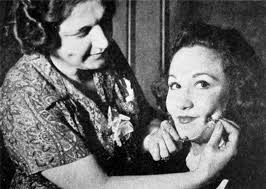
The Dimple Maker was a small metal or rubber contraption designed to “create” dimples by physically pressing into the cheeks. It looked like a tiny clamp or hinged clip, often padded with felt or rubber to avoid bruising.
Women were instructed to wear it:
at home
while reading
while sleeping
sometimes for hours at a time
The idea was simple — and slightly absurd: apply pressure long enough and the face will form a permanent indentation.
How It Worked (or… didn’t)
The device used constant pressure to pinch the cheek muscle and skin. Manufacturers claimed that:
the muscle would “train” itself
the indentation would become permanent
the wearer would develop natural‑looking dimples
In reality:
it caused discomfort
temporary redness
occasional bruising
and absolutely no permanent dimples
But in the 1920s–1930s, beauty innovation was often more about hopethan science.
Why Women Bought It
The Dimple Maker thrived because:
Hollywood stars like Shirley Templeand Loretta Young made dimples iconic
magazines promoted “charming facial features”
beauty culture was shifting toward youthfulness
women were encouraged to modify their faces at home
It was marketed as:
safe
easy
affordable
a shortcut to Hollywood charm
And in an era obsessed with novelty beauty gadgets, it fit right in.
Cultural Meaning
The Dimple Maker wasn’t just a strange device — it was a symbol of the early 20th century’s beauty mindset:
beauty could be engineered
the face was malleable
home devices could “fix” features
Hollywood set the standard
It represents a moment when women were told that even their smallest facial details could — and should — be improved.
The Dimple Maker may seem bizarre today, but it captures the spirit of early beauty innovation: hopeful, experimental, and deeply influenced by Hollywood glamour. It reminds us that the pursuit of beauty has always been shaped by culture — and that some trends, no matter how strange, tell us more about the era than the device itself.
I’m Stacey Hobbs, thanks for reading Face by Stace! Until next time. do you feel fabulous today?
Precision, provocation and the sculpted glamour of Hollywood’s most disciplined icon.
Marlene Dietrich’s vanity table was a study in control — a curated landscape where every object served her pursuit of sharp, deliberate beauty. Unlike the soft, shadow‑born mystique of Garbo, Dietrich engineered her face like a performance instrument. Her vanity reflected that same theatrical precision.
The Skin: Polished, Porcelain and Camera‑Ready
Dietrich treated her skin as a long‑term investment. Her vanity held:
rich European cold creams for nightly cleansing
hydrating lotions to maintain elasticity under studio lights
fine powders to create her signature porcelain finish
Her complexion wasn’t meant to glow — it was meant to hold shape under hard lighting.
The Brows: The 1920s–30s Signature Line
Dietrich’s brows were iconic. On her vanity you’d find:
tweezers for total brow removal
fine brow pencils to redraw a thin, high, dramatic arch
setting powder to keep the line crisp on film
Her brows were not expressive — they were architectural.
The Eyes: Drama Through Structure
Dietrich’s gaze was engineered with:
dark grease‑pencil liner, smoked outward
charcoal and taupe shadows to deepen her naturally hooded eyes
minimal lower lash work to keep the gaze heavy and seductive
Her eye makeup didn’t soften her — it sharpened her.
The Lips: Sculpted and Commanding
Dietrich’s mouth was part of her persona. Her vanity held:
strong lip pencils for precise shaping
deep reds and berries
matte finishes that photographed as authority, not sweetness
Her lips were never coy — they were declarative.
The Hair Tools: Discipline and Shine
Her vanity included:
setting lotions for marcel waves
combs and pins for sculpted styles
shine brushes to maintain her sleek, controlled finish
Dietrich’s hair was never accidental — it was engineered.
Fragrance: European Sophistication
Her perfumes were bold, adult and continental — scents chosen to match her cultivated persona of worldly glamour.
The Philosophy: Glamour as Command
Dietrich’s vanity wasn’t about softness or mystery. It was about precision, discipline and the power of deliberate beauty. Where Garbo whispered, Dietrich declared.
In the end, Marlene Dietrich’s vanity table reveals the truth of her glamour: it wasn’t accidental, intuitive or whimsical. It was crafted — line by line, shadow by shadow, wave by wave — by a woman who understood that beauty could be a form of command. Her tools weren’t merely cosmetics; they were instruments of identity. And in her hands, they built a legacy of elegance that still feels modern, sharp and utterly un-forgettable.
I’m Stacey Hobbs, thanks for reading Face by Stace! Until next time. do you feel fabulous today?
There are ingredients that feel timeless the moment they touch the tongue, and apples have always been one of them. Crisp, fragrant, quietly sweet, and deeply familiar, apples carry a kind of everyday elegance — the kind that doesn’t need to announce itself. They’re woven into childhood memories, seasonal rituals, and the first cool days of Autumn. Apples arrive with steadiness, comfort and a sense of home.
Apples have one of the richest histories of any fruit. Their origins trace back thousands of years to the mountains of Central Asia, where wild apple forests still grow. As trade routes expanded, apples traveled through Persia, the Mediterranean, and Europe, becoming symbols of abundance, knowledge, and domestic life. European settlers later brought apple seeds and saplings to North America, where Indigenous communities already cultivated native crabapples. Orchards became central to early colonial life — providing fruit, cider, vinegar and winter sustenance.
By the 19th century, apples were deeply rooted in Canadian and American food culture. They appeared in pies, crisps, cakes, preserves, and simple frontier desserts. Today, apples remain one of the most beloved autumn ingredients, celebrated for their versatility, comfort and quiet beauty.
Their appeal endures because of their dual identity: a fruit that nourishes the body and supports beauty from within.
Beauty & Health Benefits
Vitamin C — Brightness & Collagen Support Apples are rich in vitamin C, which helps brighten the complexion, support collagen production, and promote a more even skin tone.
Malic Acid (AHA) — Gentle Exfoliation This natural fruit acid smooths texture, softens fine lines and encourages a healthy glow without harshness.
Quercetin — Antioxidant Protection A powerful anti‑inflammatory compound that helps defend the skin from environmental stress and supports long‑term radiance.
Hydration & Natural Sugars — Softness & Plumpness Apples help maintain moisture levels in the skin, giving it a fresh, dewy look.
Fibre — Gut‑Skin Harmony A healthy gut directly influences clear, balanced skin. Apples support digestion, blood sugar stability and overall wellness.
Series Overview
This series will explore apples through both food and beauty, revealing how comfort can be nourishing, how history can be grounding, and how everyday ingredients can create lasting radiance. From rustic crumbles to elegant French desserts, from AHA facials to soothing masks, apples offer a world of glow‑supportive rituals and cozy autumn flavours.
This is the season of warmth, steadiness, and nourishment — and apples are the perfect ingredient to lead the way.
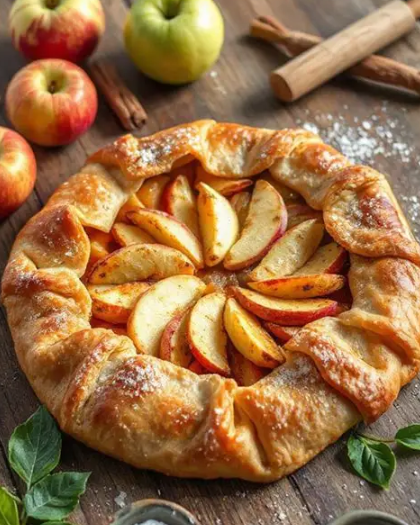
Apple Galette (Fraîche Living–Inspired)
Rustic, elegant, soft‑luxury
Rustic Apple Galette With Buttery Flaky Crust/arkerecipes.com
Prep 20 min Cook 40 min Serves 6
Ingredients
1 store‑bought or homemade pie crust
3–4 medium apples, thinly sliced
3 tbsp granulated sugar
1 tbsp brown sugar
1 tsp lemon juice
1 tsp vanilla extract
1 tsp cinnamon
1 egg (for egg wash)
1 tbsp coarse sugar (optional, for sprinkling)
Instructions
Prepare the crust Roll out your pie crust into a rough circle on parchment paper.
Slice the apples Thinly slice apples and toss with sugars, lemon juice, vanilla, and cinnamon.
Assemble Arrange apples in the center of the crust, leaving a 2-inch border. Fold edges over the apples.
Brush & sprinkle Brush crust with egg wash and sprinkle coarse sugar on top.
Bake Bake at 375°F (190°C) for 35–40 minutes until golden and bubbling.
Cool & serve Let cool slightly. Serve warm with ice cream or crème fraîche.
Galettes are one of France’s most charming rustic desserts — free‑form, un-fussy and deeply tied to countryside baking. Unlike formal tarts, galettes were historically made by home cooks using whatever fruit was abundant. As apples became central to Canadian orchard culture, the French galette naturally merged with local Autumn traditions, becoming a cozy, elegant staple.
Fraîche Living’s style mirrors this perfectly: approachable, warm and rooted in seasonal comfort.
Beauty & Health Benefits
This recipe is glow‑supportive thanks to:
Apples
Vitamin C → brightness + collagen support
Malic acid → gentle exfoliation
Quercetin → antioxidant protection
Hydration → plumpness + softness
Cinnamon
Anti‑inflammatory
Circulation‑boosting
Supports natural glow
Lemon
Brightening
Digestive support → gut‑skin harmony
This dessert is indulgent but still aligned with your “beauty through nourishment” philosophy.
Storage Notes
Room Temperature
Keeps for 1 day loosely covered.
Best eaten the same day — the crust softens as it sits.
Refrigerator
Stores well for 3 days in an airtight container.
Reheat at 300°F (150°C) for 10 minutes to revive crispness.
Freezer
Unbaked galette:
Assemble fully, freeze on a baking sheet until solid, then wrap.
Keeps up to 2 months.
Bake from frozen, adding 5–10 minutes to the cook time.
Baked galette:
Freeze slices for 1 month.
Reheat at 325°F (165°C) until warm.
Make‑Ahead Tips
Dough can be made 48 hours ahead and refrigerated.
Sliced apples can be tossed with lemon and stored for 4 hours.
Full galette can be assembled 24 hours ahead and chilled until baking.
In conclusion, Apples have always carried a kind of quiet wisdom — a steadiness that feels grounding, familiar, and deeply seasonal. Through this series, they’ve revealed themselves not just as an autumn ingredient, but as a symbol of comfort, resilience, and everyday beauty. Their glow doesn’t shout; it builds slowly, the way fall itself arrives — crisp mornings, warm kitchens, and small rituals that make life feel softer.
Historically, apples have been companions to human life for thousands of years. From the wild forests of Central Asia to European orchards and early Canadian homesteads, they’ve been cultivated, preserved, celebrated, and woven into the rhythms of domestic life. They fed families through long winters, flavoured celebrations and became the backbone of countless regional traditions. That lineage gives apples a kind of emotional weight — a sense of continuity that makes every crumble, tart or pie feel like part of something older and enduring.
In beauty, apples remind us that radiance often comes from gentleness. Their vitamin C brightens, their malic acid smooths, their quercetin protects and their natural hydration softens. They support the skin the same way they support the season: quietly, steadily, and with a kind of natural generosity. Apple beauty rituals feel like autumn self‑care — grounding, restorative, and rooted in nourishment rather than intensity.
Across this series, apples have shown their versatility: rustic, elegant, cozy, refined, nostalgic, and glow‑forward. Each recipe has revealed a different facet of their personality — warm crumble comfort, polished French desserts, wellness‑driven breakfasts, and antioxidant‑rich beauty treatments. Together, they paint a portrait of an ingredient that is both humble and extraordinary.
Apples remind us that beauty doesn’t always come from novelty or extravagance. Sometimes it comes from heritage, from nourishment, from the familiar sweetness of something that has been with us for generations. Their radiance is the kind that lasts — steady, comforting, and quietly powerful.
This series closes with the same feeling apples evoke: warmth, home, and the soft beginning of autumn.
I’m Stacey Hobbs, thanks for reading Face by Stace! Until next time. do you feel fabulous today?
Diana Vreeland didn’t edit magazines — she edited culture.
She transformed fashion from something women wore into something women experienced, lived and breathed. Her work at Harper’s Bazaar and later Vogue didn’t simply showcase clothing; it created worlds. She made fashion cinematic, emotional and imaginative — a place where women could escape, reinvent and dream.
Vreeland understood that fashion was not about garments but about fantasy. She pushed photographers, models and designers into surreal, theatrical spaces: jeweled camels, underwater couture, red rooms, mirrored worlds. She believed that fashion should make you feel something — awe, curiosity, possibility.
Her famous memos were not instructions; they were invitations. “Make it look like the north wind.” “Let’s show a girl in a pink bathroom with pink soap.” “Give me the girl who has the most perfect neck in the world.”
She didn’t ask for outfits. She asked for experiences.
At Vogue, she turned the magazine into a stage. Every issue felt like a performance — bold, saturated, alive. She championed individuality, eccentricity and the idea that beauty was not perfection but character. She made fashion feel like an adventure.
Even after her editorial reign, Vreeland re-shaped the fashion world again at the Metropolitan Museum of Art’s Costume Institute. She curated exhibitions like films — dramatic lighting, theatrical staging, immersive storytelling. She didn’t display clothing; she directed it.
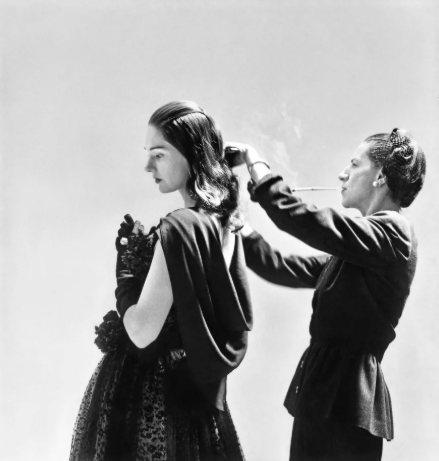
Dianne Vreeland, “Harpers Bazaar” 1946
Diana Vreeland’s legacy is simple: Fashion is not what you wear. Fashion is what you feel.
And she made sure the world felt it.
I’m Stacey Hobbs, thanks for reading Face by Stace! Until next time. do you feel fabulous today?