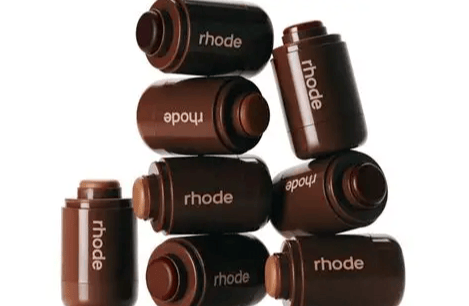
What’s New: Rhode Pocket Bronzer

Rhode’s Pocket Bronzer is the brand’s take on effortless warmth — a long‑wearing cream bronzer that melts into the skin for natural, sun-kissed dimension. It’s hydrating, blendable and designed to be foolproof, giving you that soft Rhode glow without streaks or harsh edges. The finish is skin‑first: creamy, diffused and sculpted.

This bronzer is ideal for those of whom love minimal makeup with maximum payoff. It works beautifully over Glazing Milk and blends seamlessly. Whether you want subtle warmth or a more defined contour, Pocket Bronzer builds smoothly without patchiness.

Cruelty-Free • Vegan • Gluten-Free
Dermatologist-Tested

Texture & Finish

  • Cream formula that melts into the skin
  • Buildable warmth from sheer to sculpted
  • Hydrating, long‑wearing and non‑greasy
  • Leaves a soft, natural bronze — never muddy, never orange

How to Use

  • Swipe onto cheekbones, temples and jawline
  • Blend with fingers for a natural finish or a brush for more definition
  • Layer over foundation or wear on bare skin
  • Pair with Highlight Milk for a radiant, dimensional glow

For more information, please visit: pocket bronze – shade | rhode skin

I’m Stacey Hobbs, thanks for reading Face by Stace! Until next time.

do you feel fabulous today? 

World War II: The Beauty Shortages That Changed Makeup Forever

When World War II erupted in 1939, beauty became part of the home-front morale effort. Allied governments officially classified cosmetics — especially lipstick — as wartime essentials, believing that polished appearances strengthened public spirit during hardship.

Material rationing reshaped the industry. Metal shortages forced brands like Elizabeth Arden and Helena Rubinstein to abandon metal lipstick tubes and switch to plastic or cardboard. Oil and fat rationingdisrupted cold cream production, leading women to stretch their supplies or make homemade versions using beeswax, olive oil or petroleum jelly. Perfume production slowed dramatically due to alcohol rationing, making fragrance a rare luxury.

Despite scarcity, beauty culture flourished. Women were encouraged to “stay neat to boost morale,” linking personal grooming to patriotism. Makeup became a symbol of resilience — a small act of defiance against fear and uncertainty.

The innovations born from necessity transformed the post-war beauty landscape. Synthetic materials, stabilized pigments and new manufacturing techniques developed during the war laid the foundation for the cosmetic boom of the late 1940s and 1950s. Wartime problem-solving didn’t just preserve beauty culture — it reinvented it.

I’m Stacey Hobbs, thanks for reading Face by Stace! Until next time.
do you feel fabulous today?

Max Factor’s Pan‑Cake Makeup: The Technicolour Revolution That Changed Beauty Forever

When three-strip Technicolour arrived in Hollywood in the mid‑1930s, it exposed a major problem: traditional greasepaint makeup looked terrible on colour film. Under the intense lighting required for Technicolour, actors appeared chalky, blue‑tinted or un-naturally red. The industry needed a breakthrough — and Max Factor delivered it.

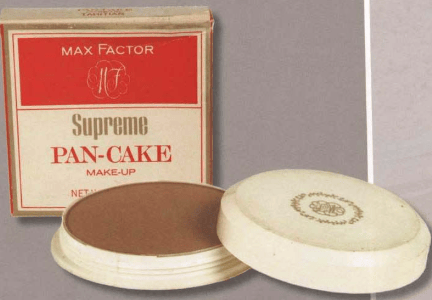
In 1935, Factor developed a new formula known as the T‑D Series, which he refined into Pan‑Cake Makeup. This innovative product offered full coverage, a matte finish and a smooth, even texture that photographed flawlessly under Technicolour’s demanding conditions. It was the first makeup designed specifically for colour film, solving the lighting and colour distortion issues that plagued early productions.

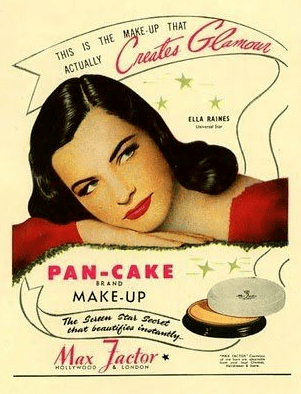
Pan‑Cake quickly became a sensation on set. Actresses adored the flawless, velvety look it created and began stealing the cakes from studio makeup rooms to use in their personal lives. At first, Max Factor resisted selling it to the public, insisting he only produced enough for film studios. But demand was overwhelming.

In 1938, Pan‑Cake Makeup was officially released to consumers — and it became the fastest‑selling single cosmetic item in beauty history up to that point. Women embraced its transformative finish and its iconic formula became synonymous with Hollywood glamour.

Pan‑Cake’s legacy is profound. It introduced the concept of “cake makeup,” influenced foundation formulas for decades and bridged the gap between professional film cosmetics and everyday beauty. It remains one of the most influential products ever created, marking the moment when Hollywood’s perfection became accessible to the public.

I’m Stacey Hobbs, thanks for reading Face by Stace! Until next time.
do you feel fabulous today?

Olive Oil in Old Hollywood Haircare

In the Golden Age of Hollywood, beauty was more of a discipline, one may say, it was an art form shaped by routine, restraint and the women of Golden Age Hollywood, who understood their hair incredibly well. Among the era’s most enduring secrets was a simple, luminous ingredient found right in your very own kitchen: olive oil.

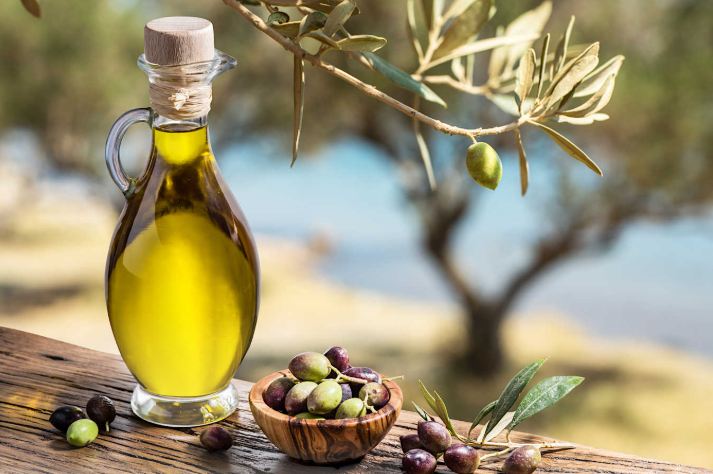
Long before serums and bond‑repair treatments, actresses relied on olive oil to soften the relentless effects of hot lights, constant styling and the daily demands of set life. Hair endured everything—Marcel waves, pin curls, lacquered setting lotions and the un-forgiving heat of early irons. Split ends were inevitable and olive oil became the discreet remedy woven into their nighttime routines.

The ritual was elegant in its simplicity. A teaspoon warmed between the palms, smoothed through the ends only—never the roots which needed to remain light for the sculpted silhouettes of the era. The oil was combed gently through the last inches of the hair, then wrapped in silk to encourage absorption. Some left it on for an hour; others slept in it, letting the treatment work while they memorized lines or rested between filming days.

Olive oil didn’t repair split ends—nothing truly does—but it masked them beautifully. Its natural fatty acids coated the hair, lending softness, sheen and the illusion of uniformity. In a decade defined by precision waves and immaculate glamour, that illusion mattered.

Old Hollywood’s relationship with beauty was always intentional. Olive oil was not a trend; it was a quiet luxury—an intimate, nightly act of care that kept their iconic hair camera‑ready.

I’m Stacey Hobbs, thanks for reading Face by Stace! Until next time.
do you feel fabulous today?

Cake Makeup: From Max Factor to Ben Nye — The Hollywood Invention That Became a Global Staple

Cake makeup is one of the most influential innovations in beauty history — a product born in the glare of Hollywood studio lights and later refined for stage, screen and professional artistry. Its story begins in the 1930s with Max Factor, the man who engineered modern makeup and continues into the late 1960s with Ben Nye, whose theatrical expertise transformed cake formulas into industry essentials.

Max Factor: The Original Innovator (1930s)

By the mid‑1930s, Hollywood faced a crisis. The arrival of three‑strip Technicolour exposed every flaw in traditional greasepaint. Under intense lighting, actors appeared chalky, blue‑tinted or un-naturally red. Max Factor — already the architect of screen beauty — recognized that colour film demanded a new kind of makeup.

In 1935, he developed the T‑D Series, a groundbreaking formula refined into Pan‑Cake Makeup. This was the first true “cake makeup”: a solid, water‑activated foundation that delivered full coverage, a matte finish and a smooth, even texture that photographed flawlessly. It solved Technicolour’s harsh lighting problems and instantly became the standard for film production.

Actresses adored it. They stole Pan‑Cake from studio makeup rooms to wear off‑camera, sparking a consumer frenzy. Factor initially resisted selling it publicly but demand was overwhelming. In 1938, Pan‑Cake launched commercially becoming the fastest‑selling cosmetic item in beauty history up to that point. It marked the moment Hollywood glamour became accessible to regular women.

Ben Nye: The Theatrical Master (1967 onward)

While the 1960s popularized graphic, precise eye looks, Ben Nye Sr. — a legendary 20th Century Fox makeup director — did not yet have a consumer brand. He spent the 1930s–1960s working directly on film productions using studio products like Max Factor and Maybelline.

Only in 1967, after retiring from film, did he establish the Ben Nye Makeup Company. His commercial Cake Eye Liner and cake foundations were inspired by the original Max Factor concept but engineered for theatre, film schools, editorial artists and professional performers. These products became staples in the 1970s and 1980s as the brand expanded into colleges, theatres and independent dealers.

The Legacy of Cake Makeup

Cake makeup remains one of the most enduring formulas in beauty history. Max Factor invented it to solve a cinematic problem; Ben Nye perfected it for performance artistry. Together, their innovations shaped the foundations, eyeliners and water‑activated pigments used by generations of makeup artists.

It is a product that began under the heat of Technicolour lights and continues to define professional beauty nearly a century later.

I’m Stacey Hobbs, thanks for reading Face by Stace! Until next time.
do you feel fabulous today?
Pear & Walnut Autumn Salad (French Bistro Style): Pardon Your French Inspired

Pear & Walnut Autumn Salad 
(French Bistro Style)

Light, elegant, bistro‑classic — perfect for a French countryside lunch.
Soft French countryside elegance.
Rustic French bistro elegance with seasonal glow

Prep 15 min
Cook 0 min
Serves 2

10-Minute Divine Pear Walnut Salad That Wow Every Bite/recipeslia.com
Irresistible Zesty Pear Walnut Salad Recipe for Freshness/www.recipesbylily.com
Deliciously Fresh Sugar-Free Pear and Walnut Salad Delight – Sugar Free Delish/sugarfreedelish.com

Note: Best enjoyed immediately for peak freshness and texture.

Ingredients

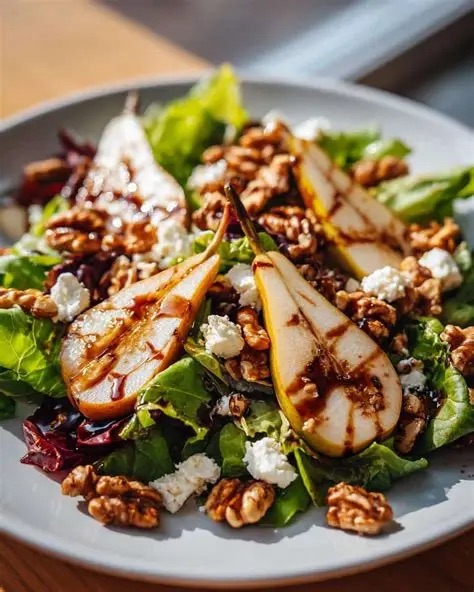
  • 2 ripe pears, thinly sliced
  • 4 cups mixed greens (frisée, arugula, or mâche)
  • ½ cup toasted walnuts
  • ⅓ cup crumbled goat cheese or feta
  • 2 tbsp olive oil
  • 1 tbsp white wine vinegar or lemon juice
  • 1 tsp Dijon mustard
  • 1 tsp honey
  • Pinch of sea salt
  • Freshly cracked pepper

Instructions

  1. Whisk olive oil, vinegar, Dijon, honey, salt and pepper into a light vinaigrette.
  2. Arrange greens in a shallow bowl or platter.
  3. Layer pear slices over the greens.
  4. Sprinkle toasted walnuts and goat cheese.
  5. Drizzle with vinaigrette just before serving.

Sources: recipesbylily.comrecipesbylily.com. Irresistible Zesty Pear Walnut Salad Recipe for Freshness

Pardon Your French Influence

This salad embodies Audrey’s rustic French countryside aesthetic:

  • Simple, honest ingredients — nothing fussy, everything purposeful
  • Bistro‑classic composition — pears, walnuts, greens, cheese
  • Seasonal elegance — a dish that feels feminine, fresh and quietly luxurious
  • French market sensibility — crisp fruit, toasted nuts, a vinaigrette with restraint

It’s the kind of salad you’d enjoy at a small café in Lyon or tucked into a linen‑draped table in Normandy.

Beauty Benefits

  • Pear’s natural humectants hydrate the skin internally.
  • Walnuts provide omega‑3s → stronger moisture barrier + glow.
  • Leafy greens support detoxification → clearer complexion.
  • Goat cheese offers skin‑supportive minerals like calcium + zinc.
  • Honey adds antioxidants that protect collagen.

Health Benefits

  • High fibre supports digestion and stable energy.
  • Walnuts improve brain + heart health.
  • Olive oil provides healthy fats for hormone balance.
  • Leafy greens offer iron, folate and antioxidants.
  • Pears support hydration and gut health.

Historical Context (French Edition)

French bistro salads have roots in regional market culture, where cooks relied on seasonal produce and simple dressings. Pears, cultivated in France since the Middle Ages, were prized for their elegance and versatility. Walnuts, abundant in regions like Grenoble, were a staple in rustic countryside cooking.

This salad reflects that heritage: fresh, unfussy and deeply tied to French terroir.

Storage

  • Best enjoyed immediately.
  • If storing, keep dressing separate and refrigerate up to 24 hours.
  • Pears oxidize quickly — a squeeze of lemon helps prevent browning.

Substitutions (Pardon Your French Style)

  • Swap goat cheese for fromage blanc or Comté shavings.
  • Replace walnuts with hazelnuts for a Normandy twist.
  • Use champagne vinegar for a more delicate vinaigrette.
  • Add fresh tarragon for a classic French herbal note.

There are so many delicious pear recipes and we have only just begun. Oh you just wait. There will plenty more! Which pear recipe will you be making? As for myself? Decisions, decisions, decisions lol. All of them!! Enjoy this Pear & Walnut Autumn Salad (French Bistro Style)!

I’m Stacey Hobbs, thanks for reading Face by Stace! Until next time.
do you feel fabulous today?