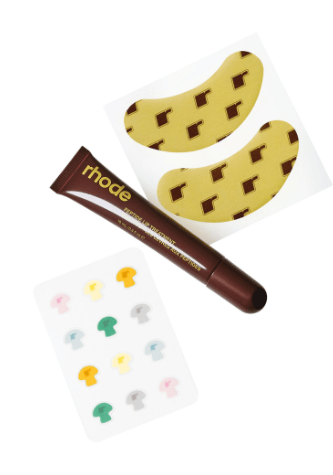
Are you ready to discuss acne patches called spots as in Rhode Spots? Infused with hydrocolloid shields designed to calm, flatten and protect blemishes They’re shaped like jellybeans, colourful and intentionally fun, turning a breakout into something you don’t have to hide.
The hydrocolloid material helps draw out impurities, reduce inflammation and create a clean, sealed environment for faster healing. They’re perfect for overnight use or daytime wear when you want to keep a blemish covered without makeup.
Sweatproof • Waterproof Cruelty-Free • Vegan • Gluten-Free Dermatologist-Tested • Non-Comedogenic Suitable for all skin types. Fragrance-free.
Texture & Performance
Soft, flexible hydrocolloid
Clings securely without tugging
Turns opaque as it absorbs fluid
Helps reduce redness and swelling
Cute jellybean shapes that make the process feel lighter
How to Use
Apply to clean, dry skin
Press gently for 5–10 seconds
Leave on for 6–12 hours
Replace as needed until the blemish calms
Wear overnight or during the day under minimal makeup
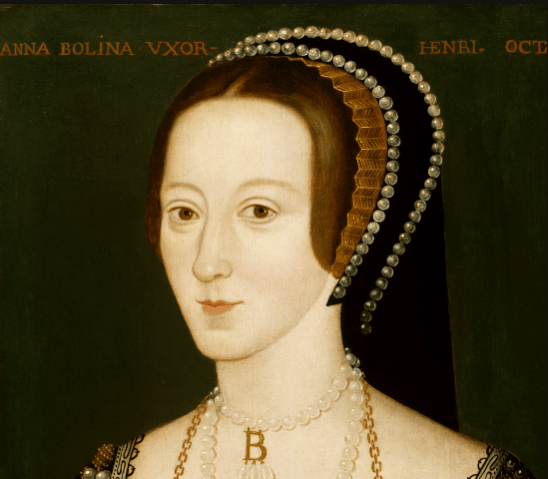
When it came to beauty in the Tudor dynasty, it was more about symbolicism, being strategic and deeply tied to status. Cosmetics were used sparingly but when used, every ingredient carried meaning. Anne Boleyn knew this, after all she lived in a world where appearance communicated lineage, virtue and political alignment and the products women used were shaped by these expectations.
The Ingredients That Defined the Era
Tudor cosmetics were simple but potent. Women relied on:
Rosewater and herbal distillationsfor cleansing and fragrance
Egg whites and ground alabasterto create a smooth, reflective finish
Beeswax salves infused with lavender or marjoram for moisture
Soot‑based kohl to deepen lashes and brows
Plant‑based rouges made from cochineal or crushed berries
These ingredients were chosen not only for effect but for symbolism: purity, refinement and restraint.
The Symbolism of Pale Skin
A pale complexion was the ultimate marker of nobility. It signaled that a woman lived indoors, protected from labour and sun. Heavy whitening agents existed ceruse, lead‑based pastes but Anne’s French‑influenced aesthetic leaned toward natural luminosity, not chalky whiteness. Her clear skin became part of her political identity: modern, continental and subtly rebellious against English tradition.
Cosmetics as Court Currency
In Henry VIII’s court, beauty was a form of diplomacy. A polished appearance could secure alliances, soften rivalries and influence perception. Women used fragrance, grooming and subtle cosmetics to communicate:
loyalty
wealth
education
continental sophistication
Anne’s French training made her stand out. Her grooming was refined, elegant and quietly luxurious — a stark contrast to the heavier English styles. This difference became part of her mystique, shaping how courtiers interpreted her presence.
The Politics of Presentation
Every detail mattered: the sheen of her hair, the clarity of her skin, the precision of her brows. In a court obsessed with symbolism, Anne’s beauty rituals were not vanity but instead they were strategy. She understood that appearance could open doors long before words were spoken.
I’m Stacey Hobbs, thanks for reading Face by Stace! Until next time. do you feel fabulous today?
Hi folks! I wanted take a brief break and break something down for you all, considering that I have been asked a lot lately about the school I had attended. The school I had attended was initially called Yorkville School of Makeup and Esthetics. Before it became George Brown School of Makeup and Esthetics, Yorkville School of Makeup and Esthetics operated in the heart of Toronto’s high-fashion and luxury district. During this era, it was the definition of an industry-focused boutique academy. It was built purely around hands-on, practical execution real-world salon/editorial standards and direct immersion into Toronto’s beauty elite.
I had enrolled into one of the top two makeup artistry schools in Toronto, recognized in the industry, founded by a lovely gentleman who is an established makeup artist, I had the pleasure of meeting and conversed with on several ocassions. All of my professors/instructors were active, established makeup artists working in the industry. Whether it be television, fashion and editorial, film and so on.
This allowed me to build my portfolio with an established working photographer in fashion and editorial. I also had the pleasure of meeting many respected folks that worked for several makeup companies from Make Up For Ever, Cover FX, Smashbox, MAC if I am not mistaken, I mean this was around 2007, and there were many more brands that came made an appearance. I mean, after all, I took a break as I was getting busy with my makeup career before continuing and finishing with my education. I have had two exams; practical and written.
Upon studying makeup history, I had not only learned the obvious but also the social, political and economical culture of each decade, along with the eras, in regards to how each makeup look was formulated. For example, the flapper look is a political statement; it is political. I have studies the inventions and innovations of each decade. Another example, despite the television having been around for years, it was at the 1939 New York World Fair that introduced the television to the world. I have learned all about studios, for example how studios used to edit studio images of the icons. Along with studying decades, I have studied films, icons of the decade that had impacted the decade, such as Elizabeth Taylor’s Cleopatra’s cat eye to mainstream which became “the look” and introduce the cat eye for the first-time, John Travolta’s Saturday Night Fever where he and the film introduced and brought disco and disco fashion mainstream.
I have learned colour theory dating all the way back to Isaac Newton. I have had to study black and white photographs to determine which colour was used, so I would break out my colour wheel.
As you can see my education was in depth. With all of this knowledge I am happy to share it with you all, along with my experience of working on set in television, fashion and editorial and all of it, based on the products I have used.
Okay, let’s shift to Real FX which differs from Special FX. Often times people compile them into one. There is a differentiation. Real FX is what I am trained in and one of the elements I learned in my film class. I can age someone up to twenty years maximum, to age someone by thirty years is a stretch for me, I can do it however depending on how old the actual person they may need to visit Special FX. Special FX can age someone from let’s say a twenty-year-old to and eighty-year-old, Ben Nye has done this for film, several of times. Real FX is creating bruising, bullet wounds, blood, black eyes, etc. Ben Nye’s bruise wheel is commonly used and used a lot. It is fantastic, so is the cake liner, the corrective colour concealer wheel, blood, latex and so on, there are many more products that are phenomenal. These are just a few examples. I have learned how to read scripts specifically as a head makeup artist.
I do know airbrushing and I know how to create the airbrushing look without having to rely on airbrushing, so in other words, I know which products, tools and technique to use to create the same effect without relying on the actual airbrush technique.
This is the gist of what I am trained in. Obviously, I am trained in television and fashion and editorial having worked in this medium, specifically television which was my first assignment ever in makeup artistry, while I was still technically a student.
I am thoroughly and in depth trained in skincare. I am trained in professional hairstyling from a licensed hair stylist, which in Canada is legally accepted and required to obtain a certification in makeup artistry. My technical title is makeup stylist.
All in all, I’m a traditional, technically trained visual artist, similar to a painter except my canvas is face and body. That is what my certification of makeup artistry entails.
Over a decade later, I had gained an education in marketing and management, after having being offered positions to work as a copywriter and marketer. I had enrolled at University of Toronto. This is where I had gained an education in marketing and management. Oh, and copywriting. As for brand management, it was required to obtain course material at Harvard Business School, which also allowed me to attend lectures and seminars to which I did.
I’m Stacey Hobbs, thanks for reading Face by Stace! Until next time. do you feel fabulous today?
There are classics and then there are the classic books that became the backbone of Old Hollywood’s Golden Age. I love reading the novels afterwatching their iconic film adaptations, because it feels like peeling back the glamour to see the original blueprint. Stories like Double Indemnity, The Thin Man, and The Maltese Falcon began as sharp, stylish pieces of literature long before they became beloved films. Revisiting the books adds a new dimension: you see the characters as they were first imagined, the dialogue before it was immortalized, and the mood before Hollywood dressed it in satin, smoke, and studio lighting.
Rebecca— Daphne du Maurier (1938)
A gothic psychological novel about identity, jealousy and the haunting presence of the past. The un-named narrator enters Manderley as a new bride, only to find herself overshadowed by the spectral perfection of Rebecca — the first Mrs. de Winter. Du Maurier blends romance with dread, crafting a story where atmosphere becomes a character and memory becomes a weapon.
Genre: Gothic fiction, psychological suspense Reputation: Universally acclaimed; considered one of the greatest gothic novels of the 20th century.
Film Adaptation:Rebecca (1940)
Director: Alfred Hitchcock
Stars: Joan Fontaine, Laurence Olivier
Notes: Hitchcock’s first American film; won the Academy Award for Best Picture.
The Postman Always Rings Twice— James M. Cain (1934)
A lean, brutal noir about desire, betrayal and the consequences of impulsive passion. Cain’s prose is stripped to the bone, capturing the dangerous chemistry between drifter Frank Chambers and the restless Cora. Their affair spirals into violence, exposing the raw, animalistic side of human nature.
Genre: Hardboiled noir, crime fiction Reputation: A noir classic; influential, gritty, still widely studied
Film Adaptation:The Postman Always Rings Twice (1946)
Director: Tay Garnett
Stars: Lana Turner, John Garfield
Notes: One of the most iconic femme‑fatale performances in noir history.
Jamaica Inn— Daphne du Maurier (1936)
Set on the windswept moors of Cornwall, this novel follows Mary Yellan as she uncovers the criminal underbelly of the inn run by her sinister uncle. It’s a story of smuggling, secrecy, and moral ambiguity — a gothic adventure steeped in fog, fear, and du Maurier’s signature tension.
Genre: Gothic adventure, crime Reputation: Dark, atmospheric; not as famous as Rebecca but still highly regarded.
Film Adaptation:Jamaica Inn(1939)
Director: Alfred Hitchcock
Stars: Charles Laughton, Maureen O’Hara
Notes: Hitchcock’s final British film before moving to Hollywood.
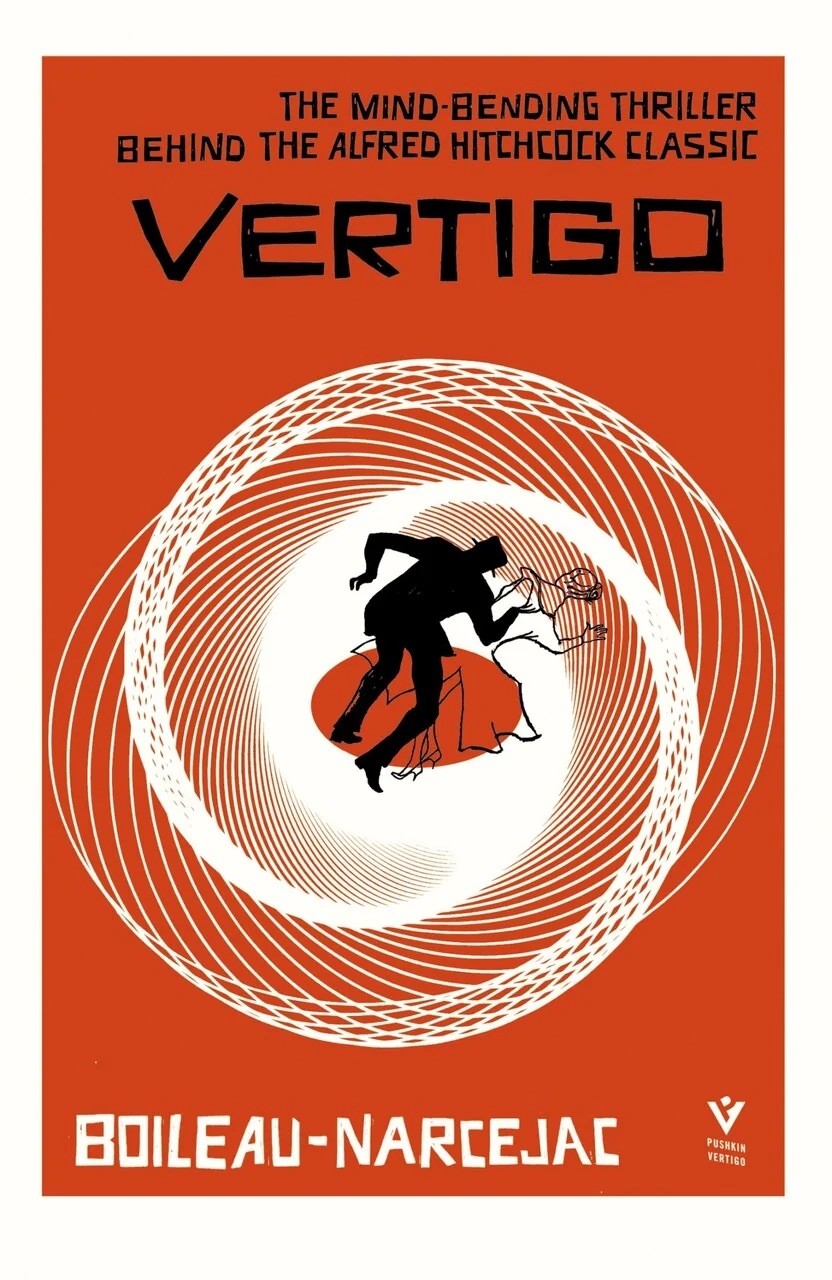
D’entre les morts(The Living and the Dead) — Boileau-Narcejac (1954)
The novel behind Vertigo, it’s a psychological thriller about obsession, identity, and the collapse of reality. A man becomes fixated on a woman who seems to be slipping between life and death, pulling him into a spiral where love becomes delusion and memory becomes a trap.
Genre: Psychological thriller Reputation: Critically respected; the film adaptation is considered one of the greatest films ever made.
Vertigo— based onD’entre les morts(1954) by Boileau-Narcejac
Film Adaptation:Vertigo (1958)
Director: Alfred Hitchcock
Stars: James Stewart, Kim Novak
Notes: Considered one of the greatest films ever made; psychological noir at its peak.
In a Lonely Place— Dorothy B. Hughes (1947)
A chilling noir told from the perspective of a man whose charm masks a predatory darkness. Hughes’ novel is sharper and more sinister than its film adaptation — a study of misogyny, violence, and the terrifying banality of evil. It’s one of the most psychologically sophisticated noirs of its era.
Genre: Noir, psychological crime Reputation: A masterpiece of psychological noir; the novel is darker and more complex than the film.
Film Adaptation:In a Lonely Place(1950)
Director: Nicholas Ray
Stars: Humphrey Bogart, Gloria Grahame
Notes: A darker, more tragic interpretation than the novel; essential noir.
For Whom the Bell Tolls— Ernest Hemingway (1940)
A sweeping wartime novel set during the Spanish Civil War, following American dynamiter Robert Jordan. Hemingway blends political conflict with intimate human connection, exploring courage, sacrifice, and the fragility of love in the face of brutality. It’s one of his most emotionally resonant works.
Genre: Literary fiction, war novel Reputation: One of Hemingway’s most celebrated works; Pulitzer finalist.
Film Adaptation:For Whom the Bell Tolls (1943)
Director: Sam Wood
Stars: Gary Cooper, Ingrid Bergman
Notes: Bergman’s performance helped cement her Hollywood ascent.
The Maltese Falcon— Dashiell Hammett (1930)
A hardboiled detective classic that defined the genre. Sam Spade navigates a labyrinth of lies, greed, and double‑crosses as he hunts for a legendary jewel-encrusted falcon. Hammett’s clipped dialogue and moral ambiguity shaped the entire future of noir storytelling.
Genre: Hardboiled detective fiction Reputation: Foundational to American noir; widely considered essential reading.
Film Adaptation:The Maltese Falcon (1941)
Director: John Huston
Stars: Humphrey Bogart, Mary Astor
Notes: The blueprint for American film noir; Huston’s directorial debut.
To Have and Have Not— Ernest Hemingway (1937)
A gritty tale of economic desperation in Key West, following fishing boat captain Harry Morgan as he’s pushed into smuggling. Hemingway explores class tension, survival, and the moral compromises people make when cornered. The novel is darker and more political than its glamorous film adaptation.
Genre: Literary fiction, social realism Reputation: Mixed reviews; admired for its grit but not Hemingway’s strongest.
Film Adaptation:To Have and Have Not (1944)
Director: Howard Hawks
Stars: Humphrey Bogart, Lauren Bacall
Notes: Famous for launching Bogart’s & Bacall’s legendary on‑screen and off‑screen chemistry.
The Thin Man— Dashiell Hammett (1934)
A witty, urbane detective novel featuring retired sleuth Nick Charles and his glamorous wife Nora. It’s equal parts mystery and sparkling banter — a portrait of 1930s sophistication, cocktail culture, and effortless marital chemistry. Hammett’s final novel, and one of his most charming.
Genre: Detective fiction, comedy‑mystery Reputation: Beloved for its wit and charm; lighter than Hammett’s other works.
Film Adaptation:The Thin Man(1934)
Director: W. S. Van Dyke
Stars: William Powell, Myrna Loy
Notes: Sparked a beloved franchise; witty, urbane and foundational to detective comedy. The first and one of the best cinema franchises of all-time.
Dark Passage
David Goodis’s Dark Passage is a moody, psychologically charged noir about Vincent Parry, a man wrongfully convicted of murdering his wife who escapes San Quentin and undergoes an illicit surgical transformation to hide his identity while hunting for the truth. Goodis blends paranoia, longing, and urban dread into a story where San Francisco becomes a maze of shadows, betrayals, and fragile hope. The 1947 film adaptation starring Humphrey Bogart and Lauren Bacall famously uses extended first‑person camera work to mirror Parry’s disorientation, turning the novel’s internal tension into one of the most stylistically daring Golden Age noirs.
Book:Dark Passage (1946) — David Goodis A noir novel about a man wrongly accused of murder who undergoes drastic measures to clear his name. Goodis writes with melancholy, grit, and emotional depth.
Film:Dark Passage (1947) Starring Humphrey Bogart & Lauren Bacall Famous for its first-person camera technique; moody, stylish, and quintessentially noir.
The Big Sleep
Raymond Chandler’s The Big Sleep is the quintessential hard‑boiled noir, introducing private detective Philip Marlowe as he navigates the decadent, dangerous underworld of Los Angeles while investigating a wealthy family’s tangled secrets. The novel’s labyrinthine plot — full of blackmail, corruption, hidden desires and moral ambiguity — is less about solving a mystery and more about descending into a city where everyone has something to hide. Chandler’s clipped, razor‑sharp prose and smoky atmosphere shaped the entire noir genre and the 1946 film adaptation starring Humphrey Bogart and Lauren Bacall transformed Marlowe into one of Hollywood’s most iconic detectives.
Book:The Big Sleep (1939) — Raymond Chandler A labyrinthine detective novel introducing Philip Marlowe. Chandler’s prose is sharp, cynical, and poetic — the gold standard of noir.
Film:The Big Sleep (1946) Starring Bogart & Bacall Iconic chemistry, razor-sharp dialogue, and famously complex plotting.
Legacy: The novel introduced Philip Marlowe, Chandler’s iconic private detective and helped define the entire noir genre with its morally tangled plot, smoky atmosphere, and razor‑sharp dialogue.
Grand Hotel
Vicki Baum’s Grand Hotel is a glamorous, multi‑threaded ensemble drama set inside Berlin’s most luxurious hotel, where strangers’ lives briefly intersect in ways that expose both the glitter and the grit of interwar Europe. The novel follows a fading ballerina, a charming but desperate baron, a ruthless industrialist, a stenographer dreaming of a better life and a dying accountant determined to taste beauty before the end — each character carrying private longings into a shared public space. Baum’s sharp psychological insight and cinematic pacing made the story irresistible to Hollywood, inspiring the 1932 MGM classic starring Greta Garbo and Joan Crawford, which cemented the “multiple lives crossing in one glamorous location” structure as a Golden Age staple.
Book:Menschen im Hotel (1929) — Vicki Baum A novel weaving together the lives of strangers in a luxury hotel — glamour, tragedy, and human connection.
Film:Grand Hotel (1932) Starring Greta Garbo & Joan Crawford A prestige ensemble film; lush, elegant, and emotionally rich.
Legacy: The film popularized the “multiple storylines intersecting in one glamorous location” structure that later became a Hollywood staple.
To Catch a Thief
David Dodge’s To Catch a Thief is a breezy, sun‑drenched suspense novel set along the French Riviera, where retired jewel thief John Robie must clear his name after a new wave of burglaries mimics his old signature. The story blends glamour, danger, and flirtation as Robie navigates wealthy vacationers, suspicious police, and one particularly sharp‑eyed heiress who may be his undoing. Hitchcock’s 1955 adaptation, starring Cary Grant and Grace Kelly, transforms Dodge’s crisp thriller into a lush, Technicolour fantasy of Riviera elegance and romantic intrigue.
Original form: A novel Author: David Dodge Publication: 1952 Genre: Suspense / romantic thriller Film adaptation: 1955 Alfred Hitchcock film starring Cary Grant and Grace Kelly Legacy: The film’s Riviera glamour and Grant–Kelly chemistry made it one of Hitchcock’s most visually iconic works.
Breakfast at Tiffany’s
Truman Capote’s Breakfast at Tiffany’s is a shimmering novella about Holly Golightly, a New York socialite whose charm, contradictions, and fragile bravado make her one of literature’s most unforgettable creations. Told through the eyes of her neighbor, the story captures the melancholy beneath Holly’s glittering facade, a woman reinventing herself in a city that rewards beauty and punishes vulnerability. Blake Edwards’ 1961 film adaptation, starring Audrey Hepburn, softened Capote’s darker edges but immortalized Holly as a cultural icon of mid‑century glamour.
I’m Stacey Hobbs, thanks for reading Face by Stace! Until next time. do you feel fabulous today?
Warm hosting energy — a dessert that feels special but effortless
It’s the kind of recipe you’d serve at a cozy dinner party, styled in soft neutrals, linen napkins and a warm candle glow.
Beauty Benefits
Pear’s natural humectants deeply hydrate the skin
Warm spices boost circulation – natural radiance
Honey provides antioxidants and supports collagen
Gentle fruit acids refine texture from within
Health Benefits
High water content supports hydration
Soluble fiber nourishes gut health
Ginger aids digestion and reduces inflammation
Cinnamon helps stabilize blood sugar
Historical Context
Pears have been used in beauty and culinary rituals for over 3,000 years. In French and early European kitchens, poached pears were considered a refined dessert — elegant, feminine and celebratory. This recipe echoes that heritage while keeping the modern Preppy Kitchen polish.
Storage
Refrigerate pears in their syrup for up to 3 days
Syrup can be drizzled over yogurt, oats or ice cream
Substitutions (Preppy Kitchen Style)
Maple syrup instead of honey for a deeper sweetness
Cardamom instead of cinnamon for a delicate, perfumed flavour
Chamomile tea as the poaching liquid for calming benefits
Lemon zest for brightness and balance
There are so many delicious pear recipes and we have only just begun. Oh you just wait. There will plenty more! Which pear recipe will you be making? As for myself? Decisions, decisions, decisions lol. All of them!! Enjoy this Preppy Kitchen–Inspired: Vanilla & Honey Poached Pears!
I’m Stacey Hobbs, thanks for reading Face by Stace! Until next time. do you feel fabulous today?
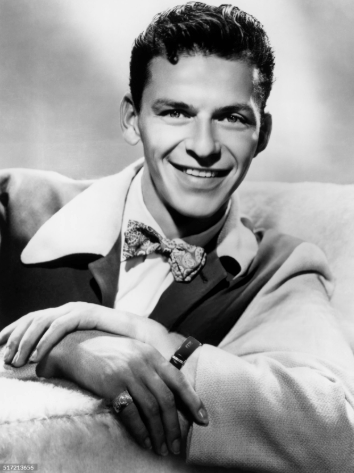
Frank Sinatra’s vanity table was a blend of precision, polish and rebellion — the grooming ritual of a man who understood the power of image. In the 1940s, when “The Voice” became the first modern pop idol, his appearance mattered as much as his sound. His fans didn’t just listen to him; they watched him. And Sinatra knew it.
His complexion was kept smooth and camera-ready through a disciplined routine of cleansing and moisturizing. Sinatra favoured lightweight creams that softened the skin without shine, allowing studio lights to catch the angles of his face without harshness. His grooming was understated but intentional — the kind of refinement that suggested confidence rather than vanity.
Hair was central to Sinatra’s signature look. His dark, glossy waves were maintained with pomade that offered hold without stiffness. The style was classic: a clean part, sculpted sides and a subtle lift at the front. It was youthful, modern and instantly recognizable — part of the magnetism that sent bobby‑soxers into hysteria.
Fragrance played a subtle role in his presence. Sinatra gravitated toward crisp, masculine colognes with citrus and herbal notes — scents that felt fresh, elegant and quietly commanding. His vanity table often held a single bottle, chosen with intention.
Shaving tools were essential: a classic razor, a brush and aftershave that left a clean, refined finish. His grooming ritual was not elaborate; it was disciplined. Everything had a purpose.
Frank Sinatra’s vanity table reflected the duality of his persona — the polished gentleman and the modern rebel. It wasn’t about perfection. It was about presence.
I’m Stacey Hobbs, thanks for reading Face by Stace! Until next time. do you feel fabulous today?