Cornstarch as Dry Shampoo: Women Used During WWII

During the Second World War, beauty routines were shaped by rationing, resourcefulness and a determination to maintain a sense of normalcy. Shampoo ingredients were diverted to the war effort, hot water wasn’t always guaranteed and hairstyles were designed to last for days as opposed to hours. Victory rolls, pin curls and sculpted waves needed staying power, instead of daily washing.

So women turned to a simple, inexpensive pantry staple that quietly became a wartime essential. In this case this would be cornstarch as dry shampoo and for darker hair such as brunettes, cocoa powder was added to the cornstarch.

It was practical, fast and surprisingly effective. A small act of beauty that helped women feel polished during an era defined by sacrifice.

Why Cornstarch Became a Wartime Staple

WWII rationing touched nearly every corner of life and beauty was no exception. Magazines and home‑front guides encouraged women to “make do and mend,” offering tips for maintaining their appearance with limited resources.

Cornstarch fit perfectly into this moment by absorbed oil at the roots, refreshed hair between scarce washes, preserved curls and set styles and inexpensive and widely available.

A light dusting at the scalp, a minute to absorb and a quick brush‑through suddenly hair looked clean, lifted and ready for another day of factory work, volunteer shifts or evenings at the dance hall.

The Cocoa‑Tint Trick for Dark Hair

Blonde women could use cornstarch straight from the box but brunettes faced a familiar problem, that problem is that plain cornstarch left a pale, powdery cast.

Wartime beauty guides offered a clever solution: mix a pinch of un-sweetened cocoa powder into the cornstarch to create a tinted dry shampoo that blended seamlessly into darker hair.

Some women even added a touch of cinnamon to warm the tone for auburn shades. It was resourceful, customizable and completely in the spirit of the era.

Hollywood Used It Too

While women on the home front used cornstarch out of necessity, Hollywood used it out of practicality.

Studio stylists relied on powders including cornstarch to keep actresses’ hair matte and perfectly styled under hot lights. Washing and re‑setting hair took hours, so powdering the roots became a quiet industry standard.

  • Veronica Lake’s peek‑a‑boo waves were kept smooth and shine‑free with root powdering.
  • Rita Hayworth’s glossy red waves were refreshed with powder between takes.
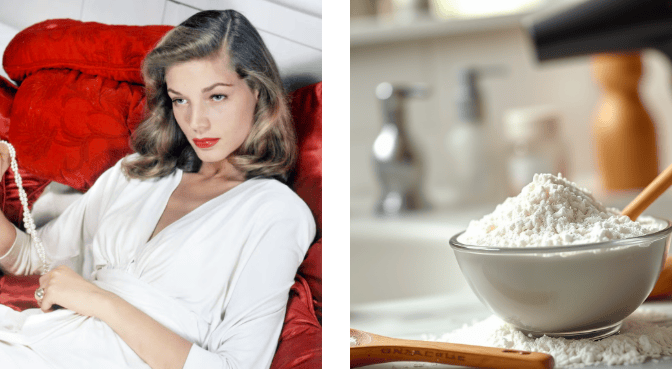
  • Lauren Bacall’s sculpted S‑waves were maintained with tinted powder to avoid a chalky cast.

The same trick that kept factory workers’ hair fresh also kept Hollywood’s leading ladies camera‑ready.

How to Re‑Create the WWII Method

  1. Add 1–2 teaspoons of cornstarch to a small bowl.
  2. For dark hair, mix in a pinch of cocoa powder until the shade matches your roots.
  3. Apply with a powder puff, make-up brush or cotton ball.
  4. Let it sit for one minute to absorb oil.
  5. Brush through with a soft or boar‑bristle brush.
  6. Smooth and style as desired.

Simple, nostalgic and still incredibly effective.

A Wartime Hack That Still Works Today

Cornstarch as dry shampoo is one of those rare beauty tricks that survived long after the war ended. It’s budget‑friendly, gentle and rooted in a moment when women used creativity to maintain a sense of femininity and glamour.

I’m Stacey Hobbs, thanks for reading. Until next time!
do you feel fabulous today?
Givenchy Before Hepburn: His Early Career (1945–1952): This is the Story of Givenchy Before the Legend

Before founding his own couture house in 1952, Hubert de Givenchy trained under Jacques Fath, Robert Piguet, and Elsa Schiaparelli. His years at Schiaparelli’s Place Vendome atelier shaped his eye for elegance and taught him the art of refined simplicity. Unlike many of his contemporaries, he never worked under Christian Dior, a detail that set him apart from the dominant post‑war couture lineage. That independence helped define the modern, architectural purity that became the signature of the House of Givenchy.

How a young couturier shaped his vision long before Audrey Hepburn stepped into his atelier.
Before Audrey Hepburn, before Sabrina, before the black dress in Breakfast at Tiffany’s, Hubert de Givenchy was a young designer quietly absorbing the lessons that would define his future house. His early career often over-shadowed by his later fame which reveals how a seventeen‑year‑old apprentice became one of the most influential couturiers of the 20th century.

This is the story of Givenchy before the legend.

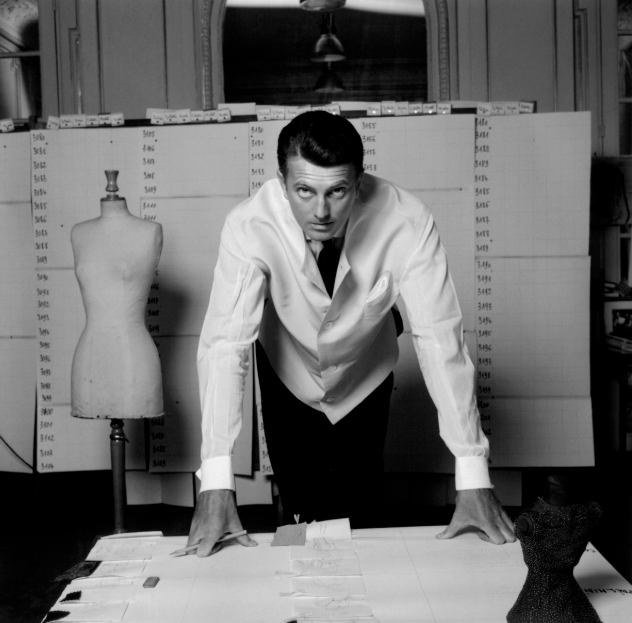
Hubert de Givenchy/Another Magazine

1945: 
The Apprenticeship Begins: 
Jacques Fath

Givenchy entered the world of couture at just seventeen, joining the atelier of Jacques Fath, one of Paris’ most glamorous post‑war designers. Fath’s world was fast, modern and exuberant, a sharp contrast to the austerity of wartime fashion.

From Fath, Givenchy learned the importance of youthfulness, the power of clean, elongated lines and how to design for a modern, active woman.

It was his first glimpse of the elegance he would later refine.

1946: 
A Brief but Formative Season with Robert Piguet

After Fath, Givenchy moved to Robert Piguet, known for impeccable taste and quiet sophistication. Piguet’s atelier was disciplined, restrained and deeply focused on silhouette.

Here, Givenchy absorbed the value of simplicity, the beauty of proportion and the art of letting fabric speak.

This balance of glamour (Fath) and purity (Piguet) would become the foundation of his style.

1947–1951: 
Schiaparelli and the Place Vendôme Years

In 1947, Givenchy joined Elsa Schiaparelli, the most imaginative couturier of her era. Working in her Place Vendôme boutique, he designed for the “Schiaparelli Boutique” line, which was youthful, playful and accessible.

From Schiaparelli, he learned boldness without excess, the elegance of clarity and how to blend whimsy with refinement.

Her surrealism didn’t become his aesthetic but her fearlessness shaped his confidence.

This period in Givenchy’s career is crucial. Givenchy never worked for Christian Dior, making him one of the few major post‑war couturiers outside the Dior/Balmain/Lelong lineage. That independence would define him.

1952: 
A House of His Own

At just twenty-four, Givenchy opened his own couture house which was a remarkable feat in a Paris dominated by giants. His debut “Separates” collection introduced crisp blouses, light skirts and inter-changeable pieces that felt fresh, modern and effortless.

It was a quiet revolution. And it set the stage for the moment that would change everything.

One year later, Audrey Hepburn walked into his atelier.

Why This Era Matters

Givenchy’s early years explain the purity and restraint that became his signature. Long before Hepburn, he was already forming the vocabulary of modern elegance:

  • clean lines
  • architectural silhouettes
  • youthful ease
  • refined simplicity

Givenchy’s rise was gradual that was shaped by the designers that came before him.

I’m Stacey Hobbs, thanks for reading. Until next time!
do you feel fabulous today?

Lauren Bacall’s Powder‑Perfect Hair on Set From Hair Stylists at Warner Bros., 1940s (Pre-dates Dry Shampoo)

Few actresses embodied 1940s glamour the way Lauren Bacall did, the heavy‑lidded gaze, the sculpted S‑waves, the cool, effortless poise that became her signature. But behind the scenes, her hair was anything but effortless. Bacall’s brushed‑out waves were meticulously crafted with pin curls, setting lotion and careful brushing, then lacquered into place so they would hold for hours under studio lights. Washing and re-styling simply wasn’t an option.

To keep her hair camera‑ready through long shooting days, studio stylists relied on powders including cornstarch to keep her roots matte and her wave pattern intact. A light dusting absorbed oil without disturbing the sculpted shape, preserving the smooth, glossy finish that defined her look. And because Bacall’s hair was naturally darker, stylists often mixed in a touch of un-sweetened cocoa powder to avoid the chalky cast that plain cornstarch could leave behind.

It was a simple trick but an essential one, a quiet piece of beauty ingenuity that kept Bacall’s iconic waves flawless through re-takes, lighting changes and the relentless pace of studio production.

The Studio System Behind the Look

Bacall’s hair wasn’t maintained by a single personal stylist. It was the work of Warner Bros.’ in‑house hair department which followed standardized powdering and maintenance practices used across Hollywood throughout the 1930s and 1940s.

Powdering wasn’t glamorous but it was essential. Under hot Technicolor lights, even the most perfectly set hair could turn shiny within minutes. Cornstarch kept the roots matte, the waves crisp and the illusion of effortless glamour intact.

Bacall’s hair has become one of the most recognizable silhouettes of 1940s cinema, however the secret behind its perfection was technique, discipline and a pantry staple that regular women of the 1940s had come to rely on, it became a wartime beauty dependency.

These practices are documented in:

  • studio training manuals
  • cosmetology textbooks from the era
  • interviews with stylists who worked on set
  • wig‑maintenance guides (which used the same powders)
makeup-101.com

I’m Stacey Hobbs, thanks for reading. Until next time!
do you feel fabulous today?
5 Surprising Ways Women Used Lipstick in the 1940s

During World War II, lipstick was much more than make-up, lipstick served many purposes during this period of time. With rationing, shortages and strict limits on cosmetics, women got creative! Women also became incredibly resourceful. A single tube of lipstick often had to do the work of an entire beauty bag, if you can believe it?

Below are five clever and surprising ways women used lipstick in the 1940s.

1. To Create a “Stocking Shine” on Bare Legs

With nylon stockings becoming more and more scarce, women tinted their legs with leg makeup or gravy browning then used a dab of red lipstick mixed with cold cream to add a silky and sheen down the shins. It made bare legs look polished, smooth and subtly glamorous under ration‑era skirts.

2. As a Cheek Tint (Long Before Cream Blush)

Powder rouge (blush) was expensive and often un-available so women dabbed a tiny bit of lipstick onto their cheeks and blended it out with fingertips. It created a warm, healthy flush that lasted all day. The original monochromatic make-up look.

3. To Refresh Faded Nail Polish

When nail polish chipped or ran out, women used lipstick to tint the nails for evenings out. A quick swipe of red gave the illusion of polish especially under dim lighting in dance halls and canteens.

4. To Brighten Tired Eyes

Women sometimes used a tiny dot of lipstick blended high on the cheekbone to draw attention away from under‑eye circles and fatigue. It lifted the face visually this is a subtle trick picked up by Hollywood make-up artists of the 1940s.

5. To Boost Morale — Literally

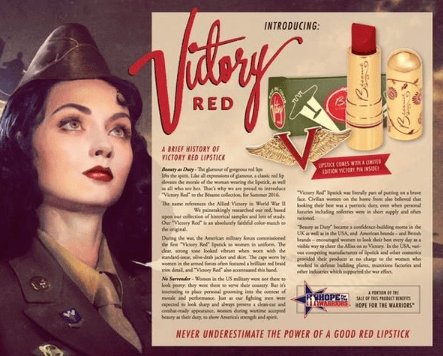
The government in both countries: United States and Canada, encouraged women to wear lipstick as a symbol of strength and femininity during wartime. Lipstick transformed from being a signification of beauty to signify patriotism. A swipe of red the specific shade which was preferred was Victory Red, was considered a small act of resilience, confidence and national pride.

Why These Hacks Matter

Lipstick in the 1940s transformed itself from beauty to much more of a representation. Lipstick became a tool of creativity, a symbol of defiance, a morale booster and a beauty essential that women stretched as far as possible. Creativity and resourcefulness were two things that women had to rely on throughout this era of wartime.

In a decade defined by scarcity, women proved that glamour could survive anything even rationing.

I’m Stacey Hobbs, thanks for reading. Until next time!
do you feel fabulous today?

Top 7 Givenchy Looks Worn by Audrey Hepburn

Audrey Hepburn defined what it means to wear couture. Audrey and Hubert de Givenchy created a visual language of elegance that still shapes fashion today. These ten looks capture the essence of their partnership, modern, sculptural and impossibly chic.

1. The Black Breakfast at Tiffany’sDress (1961)

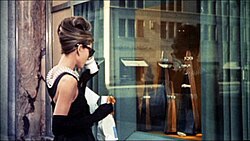
The most famous little black dress in cinema history. A column of pure simplicity, paired with opera gloves and pearls, it became the global symbol of timeless elegance and the definitive expression of the Givenchy–Hepburn aesthetic. Every aspect of the scene from Breakfast at Tiffany’s, including the dress all of which resemble French culture from the tiara, pearls, enjoying croissant and cafe au lait, opera gloves and French twist.

2. The White Floral Oscar Dress (1954)

Worn when Audrey won Best Actress for Roman Holiday, this delicate Givenchy gown which was cinched waist, floral embroidery, clean lines remains one of the most iconic Oscar looks of all time.

3. The Sabrina Bateau‑Neck Cocktail Dress (1954)

Humphrey Bogart and Audrey Hepburn/Sabrina

The moment the world fell in love with Audrey’s silhouette. Minimal, sculpted and impossibly modern, this dress introduced the signature neckline that would follow her for decades.

4. The Funny Face Red Gown (1957)

A sweeping, architectural masterpiece worn in the Louvre dance sequence. It’s drama without excess which is a perfect combination of movement, colour and couture.

5. The Sabrina White Ball Gown with Black Embroidery (1954)

Romantic yet structured, this gown captured the essence of Paris couture and marked Audrey’s transformation from chauffeur’s daughter to Parisian sophisticate.

6. The Black Lace How to Steal a Million Masked‑Ball Dress (1966)

Audrey Hepburn in How to Steal a Million (1966)/ar.inspired.com

Audrey Hepburn’s whisper‑soft lace gown paired with a lace mask, a mysterious, feminine, and yet it’s incredibly chic. One of the most elegant evening looks ever put on film and Audrey Hepburn pulls off this elegant evening attire ever so well.

7. The Charade Tangerine Coat (1963)

Cary Grant and Audrey Hepburn in Charade (1963)/imdb

A bold, sculptural coat in vivid orange Hepburn pulls of, what colour can she not pull off? She can wear any colour that’s for certain. This coat in Charade, is a reminder that Audrey and Givenchy embraced colour with the same confidence as black. It’s one of her most photographed street‑style moments quite frankly.

Each of these outfits represents more than fashion. These outfits are a representation of fashion, which is essentially much more as such. They are the visual language of a partnership built on trust, intuition and shared love of fashion, experimentation, and clarity. As Audrey wore Givenchy; she became the embodiment of his vision.

Together, they created a style that still feels fresh, modern and utterly timeless. True classic designs that still have us discussing today and wearing today in some sort of capacity today. 

I’m Stacey Hobbs, thanks for reding. Until next time!
do you feel fabulous today?
The Soap‑and‑Matchstick Brow Trick Used in WWII

With cosmetics rationed and luxury items scarce, women turned to whatever they had at home and one of the most surprising innovations of the decade was the soap‑and‑matchstick brow trick.

Long before brow gels, pencils, and pomades, women used a simple bar of soap to lift and shape their brows. But wartime resourcefulness added a twist: they rubbed a burnt matchstick into the soap to tint it, creating a homemade brow pomade that offered both hold and colour.

The process was quick, clever and remarkably effective:

  • A match was struck, blown out and allowed to cool.
  • The charred tip was rubbed lightly across a cake of soap.
  • The mixture created a tinted paste.
  • Brows were brushed upward for lift, then shaped into a soft arch.

The result was a brow that looked groomed, defined and subtly darkened. It was a look inspired by Hollywood starlets but achievable with pantry‑level tools.

What makes this trick so fascinating is how modern it feels. Today’s “soap brows” dominate today’s world yet the technique traces back to women who had to make glamour out of scarcity. The soap‑and‑matchstick brow wasn’t just a beauty hack; it was a quiet act of creativity in a decade defined by rationing and restraint.

It’s proof that even in the most challenging times, women found ways to feel polished, expressive and beautifully themselves.

I’m Stacey Hobbs, thanks for reading. Until next time!
do you feel fabulous today?