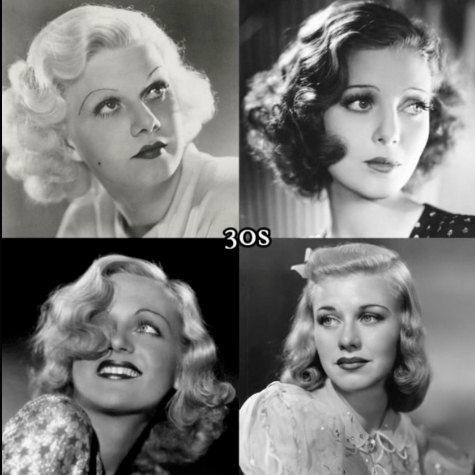
25 Beauty Secrets Women in the 1930s Actually Used

Depression‑era ingenuity meets Hollywood glamour.

The 1930s were a decade of contrast, from economic hardship on one side, and the compelling escapism of Hollywood on the other. Women blended practicality with glamour, creating beauty rituals that were resourceful, clever and what would become surprisingly modern. Check out the beauty secrets women relied on that shaped the iconic look of the era.

1. Cold Cream for Everything

Cold cream was the universal beauty staple. Women used it to cleanse, moisturize, remove makeup, soften cuticles and even tame brows. It was affordable, accessible and endlessly versatile. Pond’s Cold Cream was the go-to brand of the decade.

2. Powder‑Only Complexions

Liquid foundation wasn’t widely used yet. Women relied on loose or cake powderto create the velvety, matte, porcelain complexion that defined the decade.

3. Homemade Brow Darkening

The thin, dramatic 1930s brow required creativity. Women used:

  • burnt matchsticks
  • cocoa powder
  • soot mixed with petroleum jelly

The goal was a long, arched, pencil‑thin brow inspired by Marlene Dietrich and Greta Garbo.

Read the full post on Burnt Cork: Burnt Cork: The Popular Wartime Make-up Hack (for Brows and Mascara) – It’s Life with Stacey Hobbs

4. The “Spit Curl” Trend

“Spit Curl”/Pinterest

Tiny curls pressed onto the forehead using water, pomade or even literal salvia. It was a Hollywood‑inspired detail that added softness to the face.

Read more on the Spit Curl trend: The “Spit Curl” 1930s Trend – It’s Life with Stacey Hobbs

5. Vaseline for Glossy Eyelids

A dab of petroleum jelly created the soft, luminous sheen seen in studio portraits. It was the 1930s version of “glossy eye make-up.”

6. Soap‑Set Brows

Before brow gels existed, women used a damp bar of soap to sculpt their brows into the ultra‑thin shapes of the era.

Read more: The Soap‑and‑Matchstick Brow Trick – It’s Life with Stacey Hobbs

7. Lemon Juice for Brightening

Lemon juice was used to fade freckles, lighten discoloration, and brighten the complexion — a DIY brightening treatment long before vitamin C serums.

8. Beet Juice & Berry Stains as Rouge

Women created their own cheek and lip tints using beet juice, crushed berries or tinted petroleum jelly. Rouge was essential for a healthy, youthful look.

9. Finger Waves Set with Sugar Water

Sugar water acted as a homemade setting lotion, helping sculpt the iconic S‑shaped finger waves that defined 1930s hair.

10. Cold Water Rinses for Shine

A final rinse with cold water helped seal the hair cuticle, adding shine and helping waves hold their shape.

11. Olive Oil for Split Ends

A few drops massaged into the ends softened dry, brittle hair, especially important during the Depression when salon visits were seldom.

12. Milk Baths for Soft Skin

Inspired by Hollywood starlets, milk baths were believed to soften and brighten the skin.

13. Nail Buffing Instead of Polish

Shiny, bare nails were fashionable and economical. Women used buffing pads to create a natural sheen.

14. Oatmeal & Honey Face Masks

Homemade masks using oatmeal, honey, bananas or egg whites were popular for tightening and brightening the skin.

15. Talcum Powder as Dry Shampoo

A dusting of talc absorbed oil between washes, acting as the original dry shampoo.

16. Rosewater as Toner

Rosewater refreshed the skin, tightened pores and added a delicate scent.

17. Sleeping with Hair Nets

To preserve finger waves and curls overnight, women slept with nets or scarves.

18. Petroleum Jelly as Highlighter

Tapped onto cheekbones for a soft, dewy glow, decades before highlighter ever came into existence. 

19. Homemade Perfume Sachets

Dried flowers and herbs tucked into lingerie drawers kept clothing lightly scented.

20. Brushing Hair 100 Strokes

Believed to distribute natural oils and create shine, this is a ritual that was passed down from mothers to daughters.

21. Egg‑White “Face Lift” Masks

Applied before special events to tighten the skin and create a temporary lifting effect.

22. Cold Spoon De-puffing

Women chilled spoons and pressed them under their eyes to reduce morning puffiness.

23. Lipstick as Blush

A practical Depression‑era trick; one product with two uses.

24. Vinegar Hair Rinses

Used to remove buildup and add shine, especially after using homemade setting lotions.

25. Olive Oil or Cold Cream for Cuticles

Massaged nightly to soften and protect nails.

I’m Stacey Hobbs, thanks for reading. Until next time!
do you feel fabulous today?
The 1930s Nighttime Beauty Routine

The quiet, disciplined ritual that kept women glowing through the decade.

In the 1930s, beauty was about ritual as much as it was about glamour. Nights were when women restored their skin, set their hair and prepared themselves for the following day. With limited products and tight budgets, they relied on resourcefulness, consistency and a few beloved staples. The nighttime routine was a blend of practicality and pampering, shaped by Depression‑era realities and Hollywood dreams.

1. Cold Cream: The Universal Cleanser

Every nighttime routine began with cold cream. Women massaged it into the skin to dissolve makeup, dirt, and the day’s dust, then wiped it away with a warm cloth.

Cold cream was versatile, it was a cleanser. a moisturizer, a make-up remover, a softening treatment and protective barrier. 

Cold cream left the skin dewy, nourished and ready for bed.

2. Rosewater or Witch Hazel Toning

After cleansing, women refreshed the skin with rosewater or witch hazel. These tonics tightened pores, soothed irritation and added a delicate scent.

This step was simple but essential.

3. Night Cream or Petroleum Jelly for Moisture

Moisturizing at night was considered crucial during this decade. Women would use thick night creams, petroleum jelly, olive oil or homemade mixtures of lanolin and beeswax. 

These rich formulas sealed in moisture and softened the complexion overnight.

4. Brow and Lash Conditioning

Before bed, many women applied a tiny amount of Vaseline to their brows (to keep them sleek and groomed) and to their lashes (to condition and encourage growth).

This was the 1930s version of a lash serum.

5. Hair Setting: The Most Important Nighttime Ritual

Every evening women set their hair for the next day. This was the heart of the nighttime routine.

Women would set their hair for such hairstyles as pin curls, rag curls, finger waves and sugar-water setting lotion. 

After setting, they covered their hair with a hair net, a silk scarf or a cotton wrap.

Sleeping carefully preserved the curls and waves that defined the decade.

6. Hand and Nail Care

Hands were a point of pride. Women massaged their hands with cold cream, olive oil or petroleum jelly.

into their hands and cuticles before bed, often wearing cotton gloves overnight for extra softness.

7. A Touch of Perfume Powder

Some women dusted themselves with perfumed talcum powder before slipping into bed. It kept the skin soft and lightly scented, this was a small luxury in a decade of restraint.

8. Beauty Sleep Was Taken Seriously

The 1930s popularized the idea of “beauty sleep.” Women believed rest was essential for bright eyes, smooth skin and a fresh complexion. 

Magazines encouraged early bedtimes and open windows for fresh air in support of the concept of beauty sleep.

Why the Nighttime Routine Mattered

The 1930s night-time beauty served multiple purposes from beauty to discipline, self-care during hardship, Hollywood-inspired glamour, resourcefulness and the desire to wake-up looking polished. 

Even in the Great Depression, women found ways to maintain elegance.

The Legacy of the 1930s Nighttime Routine

Today’s multi‑step skin-care routines, overnight hair methods and “self‑care nights” all stem from the 1930s. The products have changed but the intention remains the same: to end the day with care, and begin the next with confidence.

I’m Stacey Hobbs, thanks for reading. Until next time!
do you feel fabulous today?
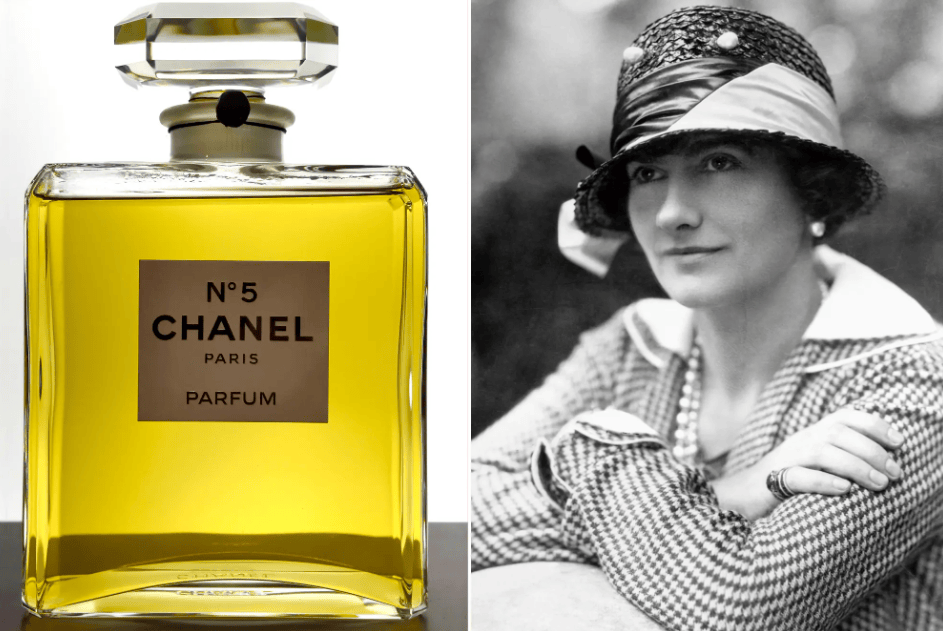
Chanel No. 5: The Modern Scent That Changed Everything

Ah, the ever so classic pardon, Chanel No. 5. The fragrance Marilyn Monroe famously stated, she wears every night going to bed. 

When Chanel No. 5 debuted in 1921, this fragrance make an entrance, it rewrote how fragrances were to be made. At a time when women’s perfumes fell into two narrow categories which were single‑flower “respectable” scents or heavy, musky fragrances associated with the demi‑monde, Coco Chanel wanted something radically different. She wanted a perfume that captured the new woman she was dressing.

She turned to perfumer Ernest Beaux, whose innovative techniques and Russian‑French background made him unlike anyone working in Paris. In 1920, he presented her with a series of numbered vials. Chanel chose the fifth vial, a decision shaped by instinct, artistry and her lifelong superstition around the number five. 

The result was a scent that felt like nothing else in the world. Brand-new to the world.

A Fragrance Ahead of Its Time

Beaux’s formula broke every rule. Instead of a single flower, he created a complex, abstract composition built on aldehydes — synthetic molecules that added a clean, airy, almost celestial brightness. Their un-usually high concentration gave No. 5 its un-mistakable lift, a quality that set it apart from the naturalistic florals of the era.

Legend has it that the aldehydes were overdosed by accident a “lucky mistake” that became the backbone of the world’s most famous perfume.

Chanel wanted a scent that wasn’t going to fall into any category but her own category. She wanted to develop a scent that was unique and modern. 

A Name That Broke the Rules

At a time when perfumes were called things like Nuit d’Amour or Jardin de Rêves, Chanel chose a number — stark, minimal, and shockingly modern. It was a radical act of branding that didn’t require poetry, romance, metaphor. Just No. 5.— Chanel’s lucky number. 

The simplicity was the point. It felt clean. It felt new. It felt un-mistakably Chanel.

A Bottle as Modern as the Scent

Chanel rejected the ornate crystal flacons popularized by Lalique and Baccarat. She wanted something “pure transparency… an invisible bottle.” The final design, which is inspired by the beveled lines of possibly a whiskey decanter, became as iconic as the fragrance itself.

Minimalism became luxury.

The Launch of a New Era

When No. 5 was introduced, some had thought or assumed it was just a perfume, however it was the beginning of a new chapter in perfumery. It symbolized the liberated spirit of the 1920s, the rise of the modern woman and Chanel’s belief that elegance could be distilled into something abstract, clean and un-forgettable.

By 1937, Chanel herself became the face of the fragrance in Harper’s Bazaar, cementing No. 5 as both a personal signature and a cultural icon.

A Century of Influence

Over the decades, Chanel No. 5 has remained a benchmark of luxury branding. Its marketing evolution, decade by decade, reflects shifting cultural ideals while preserving the fragrance’s core identity, which so happens to be timeless femininity, modern elegance and emotional resonance.

Few creations in beauty have endured with such power.

Why Chanel No. 5 Still Matters

Chanel No. 5 is more than a perfume. It is:

  • a symbol of modern womanhood
  • a triumph of innovation
  • a revolution in scent composition
  • a masterpiece of branding and design
  • a cultural artifact that has shaped a century of beauty

It remains the rare creation that feels both historic and eternally new — a fragrance that didn’t just define an era but continues to define what elegance means.

I’m Stacey Hobbs, thanks for reading. Until next time!
do you feel fabulous today?

The Baby Swoop Hairstyle of the 1930s

The delicate, face‑framing curl that never really went out of style.

Long before modern edge gels and precision brushes, women in the 1930s were already perfecting the art of the baby swoop. A baby swoop hairstyle is a soft, sculpted curl laid flat against the forehead or temple. It was a close cousin to the spit curl, but with a slightly more elongated, elegant shape. Where the spit curl spiraled, the baby swoop glided.

fashiongonerogue.com

What Was the Baby Swoop?

A baby swoop was a thin, curved lock of hair smoothed onto the skin in a graceful arc. It followed the natural hairline, softening the face and adding a touch of glamour to otherwise structured hairstyles like finger waves and sculpted bobs.

Think of it as the 1930s version of today’s “laid edges” — subtle, feminine and meticulously styled.

How Women Created the Look

The technique was simple, resourceful and very Depression‑era:

  1. Pull a tiny section of hair from the hairline.
  2. Wet it with spit/salvia, water or a dab of pomade.
  3. Use a finger or the end of a comb to guide it into a smooth curve. Typically, the first three fingers on the hand works best, as opposed to a comb. Typically, a comb is never used, especially if the intent is to re-create or create the historical version of the baby swoop hairstyle of the 1930s. Gel or pomade is used as well, to create the look today. 
  4. Press it flat until it set — or secure with a pin until dry.

Some women used sugar water or soap for extra hold, especially for special occasions or studio portraits. Sugar, by extension sugar water makes sense since it is sticky. 

Why the Baby Swoop Was So Popular

The swoop became a beauty staple because it was:

Flattering
softened sharp 1930s hairstyles.

Affordable
salon visit was not required.

Hollywood‑inspired
as seen on stars like Josephine Baker and Jean Harlow.

Youthful
gave the face a delicate, romantic frame

The baby swoop was a tiny detail that made a big difference.

The Hollywood Influence

Studio make-up artists loved the baby swoop because it photographed beautifully. Under harsh lights and early film cameras, the swoop added dimension and softness, balancing the dramatic brows and sculpted cheekbones of the era.

This popular hairstyle of the 1930s became a signature detail in publicity portraits — a whisper of glamour that every woman could re-create at home.

The Legacy of the Baby Swoop

Today’s edge styling that consist of swoops, curls, waves is a direct descendant of this 1930s technique. The tools have changed but the intention hasn’t. The intention being to frame the face with softness, artistry and with a touch of personality.

The baby swoop proves that even the smallest beauty rituals can popularize an era. Define an era. 

Pinterest

I’m Stacey Hobbs, thanks for reading. Until next time!
do you feel fabulous today?

Why Women in the 1930s Put Vaseline on Their Eyelids (and create the popular make-up look)

The Depression‑era trick that created Hollywood’s soft, luminous gaze.

In the 1930s, women didn’t have shimmering eyeshadows or glossy lid balms. What they did have was a humble, inexpensive staple found in nearly every vanity drawer. Enter the ever so versatile Vaseline. A tiny dab smoothed across the eyelids created the soft, dewy sheen seen in studio portraits. This is a look that felt dreamy, romantic and un-mistakably cinematic.

Vaseline was the perfect Depression‑era beauty trick because petroleum jelly was:

  • Affordable: a single tin lasted months.
  • Accessible: sold in every drugstore.
  • Multipurpose: used for lips, lashes, brows, and skin.
  • Photogenic: caught the light beautifully in black‑and‑white film.

That glossy finish softened the eyes, making them appear larger and more expressive, which was the definition of 1930s glamour.

How Women Applied Vaseline on the Eyelids

This glossy eyelids technique was rather quite simple and intuitive. 

  1. Scoop a tiny amount with a fingertip.
  2. Warm it between the fingers.
  3. Tap lightly across the eyelid.
  4. Blend until the sheen looked soft, not greasy.

Some women layered it over a hint eye-shadow to create a subtle, smoky glow. However, the popular eye-shadow colours of the 1930s women had worn were pinks, greens, blues and purples.

The Hollywood Influence

Studio make-up artists used Vaseline constantly, for more than just shine, since Vaseline was quite versatile of a tool/product. 

  • smooth eyelids
  • catch the studio lights
  • create a youthful, dewy look
  • soften harsh shadows in early film lighting

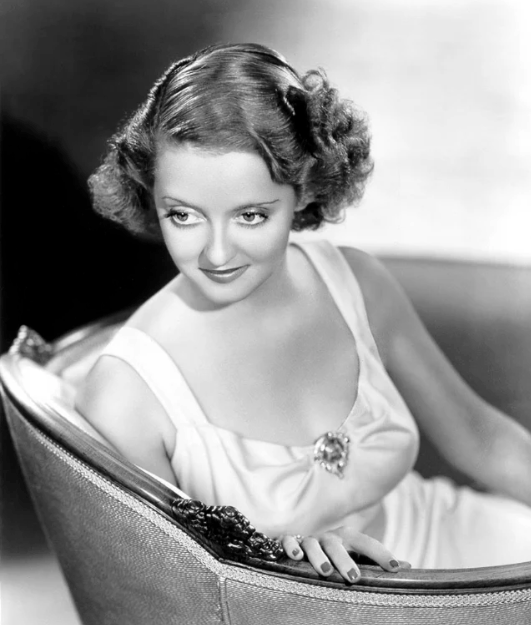
Actresses, such as Jean Harlow, Marlene Dietrich, and Bette Davis often appeared with that signature glossy lids.

The Look’s Legacy

Today’s glossy‑lid trend — seen on runways, red carpets, and editorial shoots — is a direct descendant of this 1930s trick. Modern products may be more sophisticated, but the effect is the same: a luminous, soft‑focus eye that feels timeless.

Bette Davis in her signature glossy eyelids/1930s

I’m Stacey Hobbs, thanks for reading. Until next time!
do you feel fabulous today?

Finger Waves: The Hairstyle That Defined the 1930s

The sculpted, S‑shaped wave that became the decade’s signature glamour.

If there is one hairstyle that instantly evokes the 1930s, it’s the finger wave — those glossy, sculpted, S‑shaped ripples that hugged the head like liquid satin. Born in the late 1920s and perfected in the 1930s, finger waves became the ultimate symbol of Hollywood elegance and the Depression‑era.

They were dramatic. They were precise. And finger waves defined glamour. 

What Made Finger Waves So Iconic?

Finger waves were more than a hairstyle, finger waves were a statement. The look captured the decade’s obsession with sculpted beauty, high-shine glamour, Hollywood fantasy and precision and control. 

The waves framed the face beautifully, softening the sharp brows and sculpted cheekbones that defined 1930s make-up.

How Women Created Finger Waves

The technique to create finger waves was both simple and skillful. It really is a true art form and it takes an immense amount of finger and hand strength. 

  1. Start with damp hair.
  2. Apply setting lotion (often homemade with sugar water or today, gel will suffice).
  3. Use the fingers and a comb to push the hair into alternating S‑shaped curves.
  4. Clip each ridge with metal wave clips.
  5. Allow the hair to dry completely before removing the clips.

This is historically accurate form of creating finger waves (I was taught this technique in school by a licensed hairstylist, I used gel as opposed to sugar water, but if if authenticity to the decade matters opt for sugar water). The result: glossy, structured waves that looked like they were carved from silk.

Why Finger Waves Became the Decade’s Signature Look

Finger waves were popular because they were:

  • Affordable: no salon required.
  • Versatile: worked on short bobs and longer hair.
  • Photogenic: perfect for black‑and‑white film.
  • Elegant: instantly elevated any look.
  • Hollywood‑approved: worn by stars like Jean Harlow, Bette Davis, and Claudette Colbert.

They were the perfect blend of practicality and glamour, exactly what women needed during the Depression.

Hollywood’s Influence

Studio stylists perfected the finger wave, using them to create dramatic silhouettes; soft, face‑framing shapes; high‑shine textures that caught studio lights; and a polished, feminine aesthetic.

The look became synonymous with screen sirens and women everywhere copied it at home.

The Cultural Meaning Behind the Waves

Finger waves reflected the mood of the 1930s:

  • An Escape: a touch of Hollywood glamour in hard times.
  • Precision: beauty as discipline and artistry.
  • Femininity: soft curves against structured fashion.
  • Resourcefulness: it was a salon‑worthy look created with simple tools.

They were a small luxury in a decade that needed beauty more than ever.

The Legacy of Finger Waves

Finger waves never really truly disappeared. The technique may have revised, re-shaped, they have resurfaced in:

  • the 1960s (mod glamour).
  • the 1990s (supermodel era).
  • the 2010s–2020s (red carpets, editorial shoots and natural‑hair artistry).

Today, they remain a symbol of vintage elegance, a timeless reminder of the artistry of early 20th‑century beauty.

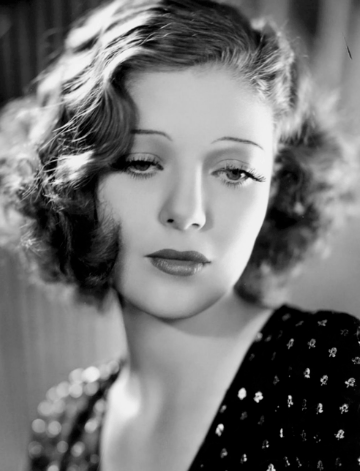
Loretta Young, photographed by Elmer Fryer,1932/Pinterest
Claudette Colbert, 1920s

I’m Stacey Hobbs, thanks for reading. Until next time!
do you feel fabulous today?