By 1960, Yves Saint Laurent had become both the jewel that this fashion house needed and a bit of a burden of the House of Dior. He was still impossibly young, delicate, introverted and carrying the weight of a legacy on his shoulders that would have crushed men twice his age. For three years he had kept Dior alive, season after season but the pressure was relentless. Every collection was a test. Every review was a referendum. Every whisper in the salons of Paris asked the same question:
Could the boy truly replace his mentor?
Then the world outside fashion intervened.
France was deep in the Algerian War, and the government was drafting young men into military service. Yves Saint Laurent was a shy, sensitive and already fraying under the demands of couture had received his notice. Dior executives, already uneasy about his fragility and his increasingly modern, youth‑driven designs did nothing to shield him.
He was sent to a military barracks. He lasted twenty days.
The bullying was immediate. The environment brutal. The anxiety overwhelming. YSL suffered a severe mental collapse and was admitted to the military hospital at Val‑de‑Grâce, where he was treated with heavy sedatives and electroshock therapy, as this was what was procedure in 1960, unlike today it no longer is, the kind of “cure” that left scars far deeper than the illness.
And while he was hospitalized, House of Dior’s executives made its move.
Without warning, without consultation, without compassion, the house announced that Yves Saint Laurent had been replaced by Marc Bohan. This young gentleman who had saved French couture was dismissed. He was erased from the house he had kept afloat, alive as the first creative director of the House of Dior, after Christian Dior’s passing away in 1957, and having attended his funeral.
When YSL learned of his firing, he was devastated. When he recovered, he was furious.
He sued Dior (executives) for breach of contract and won. This scandal rippled through Paris. The fashion world whispered. The press circled. But beneath the drama was a truth that would define the rest of his life:
House of Dior had broken him. But it had also freed him.
Because the firing wasn’t the end of Yves Saint Laurent. It was the beginning of the legend.
Within months, he would rise again — not as Dior’s successor, but this time as the founder of a house that would go down in history as the fashion house that would change fashion forever.
I’m Stacey Hobbs, thanks for reading. Until next time! do you feel fabulous today?
When Yves Saint Laurent emerged from the military hospital in 1960, being sedated, shaken and still recovering from the electroshock treatments forced on him during his brief conscription (this was the procedure in 1960, unlike today). He expected to return to the House of Dior, the place he had served, saved and shaped since the age of nineteen, when Dior had hired him and to be his protege, mentoring YSL to be heir of House of Dior,
Instead, YSL learned he had been replaced.
Yves Saint Laurent advocated for himself with a lawsuit he filed against this fashion house. A lawsuit that changed fashion history, a lawsuit no-one expected, anticipated ever saw coming.
Dismissed quietly. Erased administratively. Discarded by the very house he had kept alive.
And Yves Saint Laurent did something no young designer had ever done to a couture institution:
He sued them.
The case was explosive. Afterall a twenty-four‑year‑old challenging the most powerful fashion house in France? Unthinkable. But YSL and Pierre Bergé were not interested in politeness. No, they were not. They were interested in justice and in reclaiming the dignity Dior had stripped away.
The lawsuit revealed everything Dior hoped to keep hidden:
that YSL had been fired while hospitalized
that the house had breached his contract
that they had replaced him without cause
that they had abandoned the prodigy Christian Dior himself had chosen
The court sided with Yves Saint Laurent.
He won damages, a symbolic victory, which was more than a financial one, but the real triumph was what the ruling represented:
A young designer asserting his autonomy against a system that treated creative talent as disposable.
This lawsuit didn’t just end YSL’s relationship with Dior. It liberated him.
It gave him the legal and emotional foundation to build something of his own — a house where he would never again be silenced, dismissed or controlled.
Yves Saint Laurent was going to do things his way.
And within a year, he would unveil the first collection of the House of YSL, beginning a new chapter that would redefine fashion for the rest of the century.
The lawsuit was the spark.
The moment Yves Saint Laurent stopped being Dior’s protégé to became a force powerful enough to challenge the system itself.
I’m Stacey Hobbs, thanks for reading. Until next time! do you feel fabulous today?
Printemps et Ete (Spring & Summer) 1968, Yves Saint Laurent
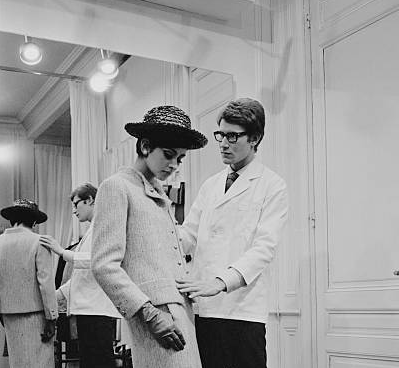
When Yves Saint Laurent walked out of the House of Dior in 1960, he was leaving the institution that had shaped him, broken him and ultimately betrayed him. At the age of twenty-four-years-old, he was fragile from hospitalization, furious from the firing and carrying a brilliance too large to be contained by anyone else’s vision.
And then came the moment that changed everything.
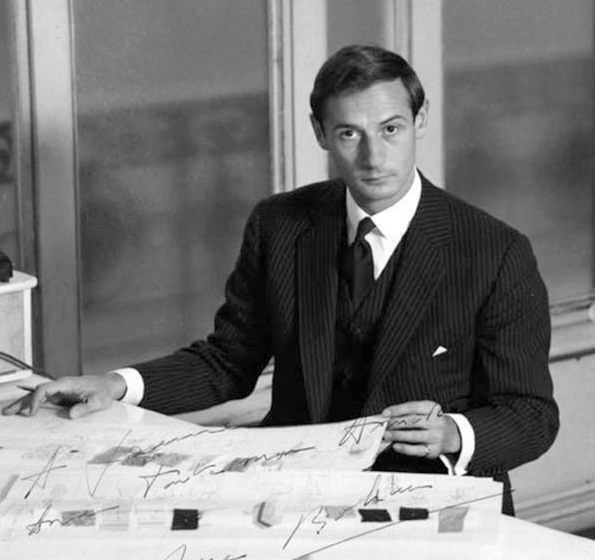
Pierre Bergé was a sharp, strategic and fiercely protective. He looked at YSL and saw not a wounded designer, but instead a future empire. Together, they made a decision that would alter the course of fashion history:
If Dior no longer wanted Yves Saint Laurent, Yves Saint Laurent would build a house of his own.
In 1961, the House of YSL was born.
The debut collection arrived like a shockwave. Gone were the constraints of Dior’s heritage. In their place was a new vocabulary of modernity. Clean lines. Sharp tailoring. A woman who moved through the world with confidence.
Then came the revolutions.
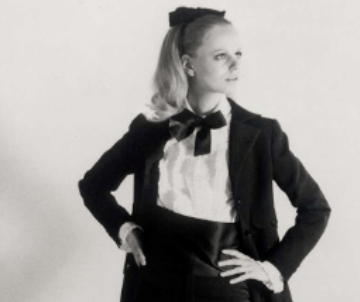
The Mondrian dress. Le Smoking. The safari jacket. The sheer blouse. The tuxedo for women.
Le Smoking Tuxedo for Women, circa 1968
Yves Saint Laurent How Le Smoking Changed Fashion, circa 1968
YSL was designing a new kind of woman — powerful, sensual, intellectual, free.
Paris had never seen anything like it.
Within a few years, the young man Dior once called “the future” had become the present. His house was a cultural force, shaping fashion, in addition to identity. He brought art into couture, youth culture into luxury and overall tailoring. He styled with ready‑to‑wear. He made fashion personal and profoundly modern.
The firing that nearly destroyed him had become the catalyst for his greatness.
Yves Saint Laurent didn’t just survive Dior. He surpassed it.
I’m Stacey Hobbs, thanks for reading. Until next time! do you feel fabulous today?
When the House of Dior dismissed Yves Saint Laurent in 1960, the fashion world braced for chaos. Dior had just fired the prodigy Christian Dior himself had chosen. The press was circling. Clients were nervous. Couture felt fragile. The house needed stability, not spectacle.
Enter Marc Bohan, the designer who would become Dior’s longest‑serving creative director and yet the least loudly remembered.
Bohan was not a disruptor unlike his predecessors.
Where YSL brought youth and rebellion, Bohan brought calm. Where Dior had been dramatic, Bohan was discreet. He understood that the house didn’t need another revolution — it needed reassurance. And so he delivered collections that were elegant, refined and impeccably crafted, restoring confidence in a brand shaken by scandal.
His style was quiet, but his impact was not.
Bohan guided Dior through the 1960s, 70s, and 80s, with decades of cultural upheaval, shifting silhouettes and changing ideals of femininity. He adapted without ever losing the house’s identity. His Slim Look of 1961 offered a modern, elongated silhouette that felt fresh without rejecting Dior’s heritage. His work appealed to aristocrats, actresses and women who valued timelessness over trend.
He wasn’t chasing headlines. He was building longevity.
Under Bohan, Dior became a house of consistency — a rare thing in an era defined by youthquakes, miniskirts and radical experimentation. He kept couture alive when many believed it was dying. He protected the atelier. He preserved the codes. He ensured that Dior remained Dior.
And because of that, the house was still standing strong, respected and financially stable, when until the next great disruptor would arrive on the doorstep so to speak of the House of Dior, hello John Galliano.
Bohan may not have been the firebrand or the visionary. But he was the anchor.
The designer who carried Dior through three decades with grace, discipline and brilliance. The man who followed the storm and kept the house intact for the storms still to come.
I’m Stacey Hobbs, thanks for reading. Until next time! do you feel fabulous today?
When Christian Dior unveiled his debut collection in 1947, which is now the iconic New Look, he introduced a whole new world. A vision of post‑war femininity built on abundance, romance and a return to beauty after years of austerity. And at the heart of that world was a fragrance, he would call Miss Dior. Lovely isn’t it?
Miss Dior had represented much more than just a perfume, a fragrance, it represented the expression of Dior’s revolution. Miss Dior was the scent of the New Look.
A Perfume Born From a Sister’s Courage
Miss Dior was named after Christian Dior’s beloved younger sister, Catherine Dior, who just so happens to be a member of the French Resistance who survived deportation to Ravensbrück. Catherine returned to France in 1945, fragile but unbroken and her strength became a quiet anchor in Dior’s life.
When Dior was searching for a name for his first fragrance, his muse Mitzah Bricard exclaimed, “Ah, here’s Miss Dior!” as Catherine walked into the room. The name stuck instantly.
Miss Dior became a tribute not glamour, but to resilience, femininity and the re-birth of beauty after darkness.
The Scent of the New Look
Perfumer Paul Vacher crafted Miss Dior as a bold, elegant and modern scent. It opened with bright galbanum and gardenia, softened into jasmine and rose and settled into oakmoss and patchouli. It was crisp, feminine, and sophisticated, the olfactory equivalent of Dior’s bar jacket, which was structured, romantic and impeccably tailored.
Where wartime perfumes had been heavy or utilitarian, Miss Dior felt like fresh air.
A Bottle Inspired by Couture
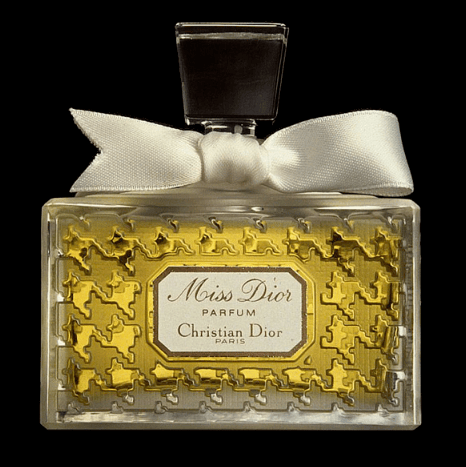
Miss Dior by Christian Dior, 1947
Dior believed perfume should be dressed like a woman. The original Miss Dior bottle reflected his vision. The Miss Dior bottle was a clean, houndstooth‑etched base inspired by Dior’s tailoring and a silver bow tied like a finishing touch on a couture gown
It was a perfume that looked as elegant as it smelled.
The Fragrance of a New Era
Miss Dior launched the same night as the New Look, completing Dior’s vision of a woman re-born. A declaration that beauty, softness, and luxury had returned after years of rationing and fear.
Why Miss Dior Endures
More than seventy‑five years later, Miss Dior remains one of the most iconic fragrances ever created. It endures because it represents:
the re-birth of Parisian couture
the heart of the Dior story
Catherine Dior’s courage
Christian Dior’s romantic vision
the optimism of 1947
Miss Dior is not just a perfume. It is the scent of a moment when the world re-discovered beauty and fashion for that matter.
I’m Stacey Hobbs, thanks for reading. Until next time! do you feel fabulous today?
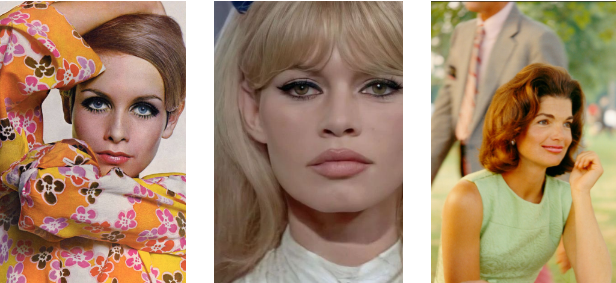
The 1960s were a decade of revolution in fashion, in culture and especially in beauty. It was the era of Twiggy lashes, Brigitte Bardot eyeliner, Jackie Kennedy polish, and the rise of youth culture. But behind the iconic looks were real beauty tricks women used every day were clever, some questionable, all of which were un-forgettable.
Check out the 25 beauty secrets women actually used in the 1960s, some were extremely popular tricks, while others were not quite as popular but were still used.
1. White eyeliner to make eyes look bigger
Women lined their waterlines with stark white pencil to mimic the wide‑eyed mod look.
2. Vaseline as highlighter
Before highlighter existed, women dabbed Vaseline on cheekbones for a glossy glow.
3. Sleeping in rollers every night
Beauty sleep may have meant no sleep, women wore hard plastic rollers to bed for volume.
4. Teasing hair until it defied gravity
Backcombing was essential for bouffants, beehives, and Bardot volume.
5. Hairspray as the final step and the first
Women sprayed each layer of hair as they styled it. You may have heard of helmet hair? It was real.
6. Using baby powder as dry shampoo
An elevation to previous decades, baby powder became the new “it” product to be used as dry shampoo. A lifesaver between washes especially for teased hair that couldn’t get wet.
7. Drawing lower lashes with eyeliner
Inspired by Twiggy, women literally drew lashes under their eyes. If they weren’t applying false lashes on the bottom lash line as well as the top lash line. When Twiggy came onto the scene, she was the one to emulate.
8. Frosted lipstick in pale pinks and nudes
With the baby doll eyes trend exploding, the only natural thing that makes sense it to pair this bold eye look with 60s nude lips. As lips in the 1960s were icy, pastel and matte. Revlon’s “Pink Lightning” was iconic. Talk about the Mod era!
9. Blue eyeshadow for every occasion
From sky blue to turquoise, it was the decade’s most universal shade.
10. Liquid eyeliner flicks inspired by Brigitte Bardot
Women practiced their cat‑eye wings in the mirror like it was an Olympic sport. All thanks to Elizabeth Taylor’s Cleopatra (1963) film that had exploded globally, except Ms. Taylor opted for khol pencil as opposed to liquid liner, simply because she didn’t like liquid liner; she hated it. Catch the full breakdown of Elizabeth Taylor’s Cleopatra’s cat eye look here!
11. Sleeping with hair wrapped in toilet paper
By now, are you really surprised by women’s cleverness? To preserve a salon set, women wrapped curls in tissue overnight.
12. Using beer as a hair rinse
This hair rinse had become popular again as it was in the 1940s, the only difference is that this time around, skip the olive oil and lemon juice and go straight for the beer for a hair rinse. The proteins added shine and volume or so magazines promised.
13. Cold cream for everything
Cold cream remains as popular as it has ever been in previous decades. Using cold cream, such as Pond’s, specifically had remained the popular choice of brand. Make-up remover, moisturizer, cleanser — it’s a miracle in one jar!
14. Setting lotion before rollers
A sticky liquid combed through hair to help curls last for days.
15. False lashes for daytime
No longer were false lashes only to be worn at night, women wore full strips to the office, the grocery store, practically everywhere.
16. Lipstick as blush
A quick swipe on the cheeks blended into a rosy flush.
17. Sleeping on satin pillowcases
To protect teased hair and prevent frizz.
18. Using eyebrow pencils to create a straight, mod brow
The 60s brow was flat, soft and youthful, the exact opposite of the 50s arch.
19. Homemade face masks with egg whites
For instant tightening before a date or party.
20. Lemon juice to lighten hair
Sun‑activated highlights, talk about the the original homemade balayage.
21. Pressing lashes between a spoon to curl them
Before lash curlers were common, women resorted to improvisation.
22. Using foundation several shades lighter
To create the pale, doll‑like complexion from actual dolls of the 60s, acting as inspiration in all aspects of the make-up design of the Mod 19´60s, which so happened to be popularized by Mod models.
23. Spraying perfume in hair, not on skin
Spray perfume on skin? That is so last decade! Scent lasted longer on teased, sprayed hair, after all.
24. Using sugar water as brow gel
A sticky but effective way to keep brows in place, since brow gel had not yet been invented.
25. Sleeping in full make-up
Before we knew that sleeping in full make-up caused dehydrated skin, immensely, amongst other skin issues, Sleeping in full make-up in the 1960s, when this knowledge and not yet reached the women of this decade, many women slept in their make-up to preserve their eyeliner and lashes.
The 1960s were the first decade where beauty became youth‑driven, experimental and accessible. Women weren’t just following rules, oh no, they were creating them. These tricks did not only serve as trends; they were part of a cultural shift toward self‑expression.
And many of those trends included but not limited to cat‑eye liner; dry shampoo (even though dry shampoo technically got its start in the 1940s wartime as practical option, it was in the 1960s when dry shampoo had elevated and exploded on to the scene; and glossy skin — all of which have been revised and sustained today. How many of you have used or still use any of these popular beauty trends today?
I’m Stacey Hobbs, thanks for reading. Until next time! do you feel fabulous today?