Ricardo Inspired: Cranberry Walnut Rustic Loaf

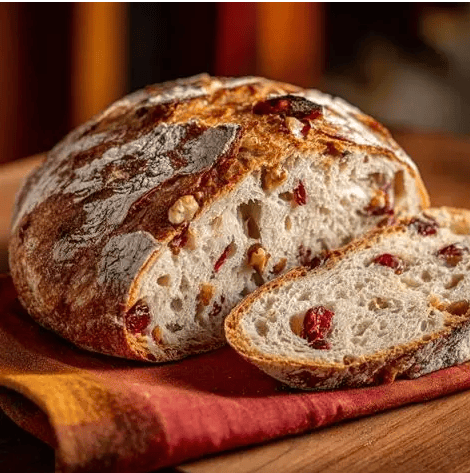
A cozy, countryside‑style rustic loaf inspired by Ricardo’s warm, approachable Canadian cooking. This bread combines tart cranberries, earthy walnuts and a hearty dough that bakes into a golden, crackly crust with a soft, chewy interior. It’s the kind of loaf you’d slice thickly for autumn breakfasts, serve with soups or pair with cheese for a simple, elegant table. Comforting, seasonal and beautifully textured which is a true rustic bake.

Prep 20 min Cook 40–45 min Serves 1 rustic loaf

Cranberry Walnut Bread: Rustic & Chewy
Cranberry Walnut Bread: Rustic & Chewy/easyrecipeschef.com

Ingredients

3 cups all‑purpose flour
1 cup warm water
1 tbsp olive oil
2 tsp instant yeast
1 tsp salt
1 cup fresh or dried cranberries
1 cup walnuts, roughly chopped
1 tbsp honey (optional, Ricardo‑style warmth)

Instructions

  1. Mix the Dough
    In a large bowl, combine flour, yeast, and salt. Add warm water, olive oil, and honey. Stir until a shaggy dough forms.
  2. Add Cranberries & Walnuts
    Fold in cranberries and walnuts until evenly distributed throughout the dough.
  3. First Rise
    Cover the bowl and let dough rise for 1–1.5 hours, until doubled in size.
  4. Shape the Loaf
    Turn dough onto a floured surface. Shape into a rustic round loaf. Place on parchment.
  5. Second Rise
    Let rise 30–40 minutes while the oven preheats to 425°F (220°C).
  6. Bake
    Score the top, then bake 40–45 minutes until golden and hollow‑sounding when tapped.
  7. Cool
    Cool on a rack at least 30 minutes before slicing.

Storage

  • Room temperature: 2–3 days, wrapped in a clean kitchen towel
  • Refrigerator: Not recommended, it can dry out
  • Freezer: Up to 2 months (slice before freezing for easy use)
  • Reheat: Warm in a 300°F oven for 8–10 minutes to refresh texture
  • Make‑ahead tip: Toast slices for breakfast or serve warm with butter or cheese

Substitutions

  • Flour: Swap half for whole wheat or spelt
  • Walnuts: Pecans, almonds or hazelnuts
  • Cranberries: Raisins, dried cherries or chopped apricots
  • Sweetener: Add 1–2 tbsp honey or maple syrup for a softer crumb
  • Texture boosters: Add oats, seeds or a touch of olive oil
  • Flavour boosters: Orange zest, cinnamon, nutmeg or vanilla

Health Benefits

  • High fibre from whole grains, cranberries and walnuts supports digestion.
  • Heart‑healthy fats from walnuts promote cardiovascular wellness.
  • Cranberry phytonutrients support immune and urinary tract health.
  • Naturally energizing thanks to complex carbohydrates.
  • Lower sugar than commercial fruit breads.

Beauty Benefits

  • Vitamin C from cranberries supports collagen production and natural skin brightness.
  • Walnuts provide omega‑3 fatty acids that nourish the skin barrier for softness and glow.
  • Whole grains offer minerals that support healthy hair, nails and skin vitality.
  • Slow‑release carbs help maintain balanced energy which supports overall radiance.
  • Antioxidants help protect skin from dullness and environmental stressors.

History + Cultural Context

Rustic loaves are a staple in Canadian and French‑Canadian home baking which are simple, hearty breads meant to be shared at the table. Ricardo’s cooking often celebrates this tradition: approachable, family‑friendly recipes rooted in comfort and seasonality. Cranberries and walnuts are classic Canadian ingredients. It’s a fusion of countryside baking and autumn flavours, perfectly aligned with Ricardo’s warm culinary style.

I’m Stacey Hobbs, thanks for reading Face by Stace! Until next time.
do you feel fabulous today?
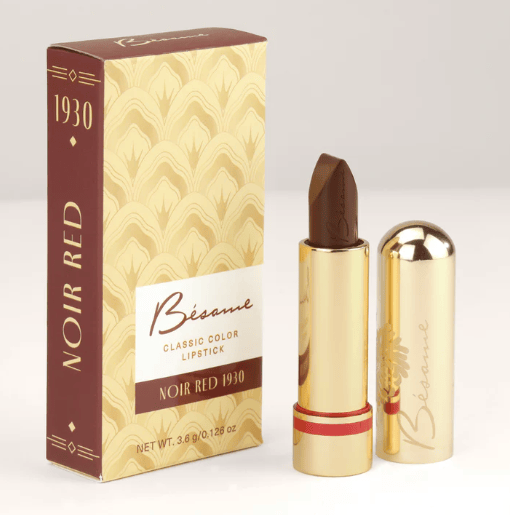
Best-Seller Besame Noir Red Lipstick

Inspired by the spirited nightlife of the 1930s, Noir Red, 1930 channels the era’s was a glamorous decade, a deep red or a cool red hue was the colour of the 1930s. Cool colours accompany a blue undertone, unlike true red which typically has a perfect balance of orange undertone and blue undertone. Orange undertone colours are warm and some colours lean on the bright side. Blue undertone colours typically are cool colours the opposite of bright, as in cool colours are not designed to be seen, in other words. Returning to this deep plum‑boysenberry red mirrors the shades worn in smoky jazz clubs and glittering hotel lounges where every glance carried meaning. The semi‑matte formula offers dramatic payoff in a single stroke while squalene and Vitamin E keep lips soft through every conversation, confession, and dance. For anyone who delights in standing apart from the crowd, Noir Red 1930 is ready to play its part.

Price: $52

For more information, please visit: besamecosmetics.com

I’m Stacey Hobbs, thanks for reading Face by Stace! Until next time.
do you feel fabulous today?

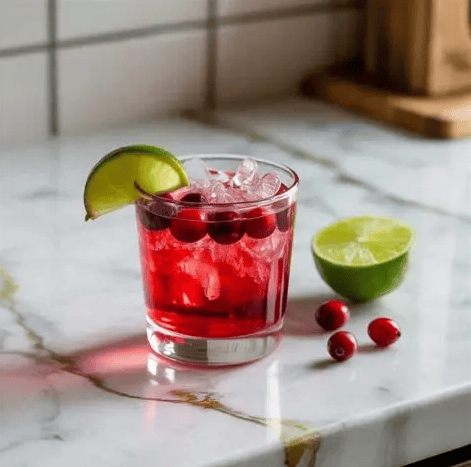
Brazilian Inspired: Cranberry Caipirinha Mocktail

A bright, ruby‑red, alcohol‑free twist on Brazil’s national cocktail. This cranberry caipirinha mocktail blends tart cranberries with lime, a touch of sugar and sparkling water for a refreshing, tropical‑meets‑autumn drink. It’s vibrant, citrusy, lightly sweet and perfect for brunch, cozy evenings or festive entertaining. All the joy of a caipirinha with a wellness‑forward twist.

Prep 5 minutes Cook 0 minutes Serves 2 mocktails

Cranberry Caipirinha Cocktail Recipe - Thirsty Tales
Cranberry Caipirinha Cocktail Recipe – Thirsty Tales/thirstytales.com

Ingredients

½ cup fresh or frozen cranberries
2 tbsp sugar
1 tbsp lime juice
1 tbsp water
1 whole lime, quartered
1–2 tsp extra sugar (to taste)
Ice as needed
1 cup sparkling water
Garnish extra cranberries + lime wheels

Instructions

  1. Make the Cranberry Base
    Heat cranberries, sugar, lime juice, and water in a small saucepan for 3–4 minutes until cranberries burst and mixture becomes jammy. Mash lightly and cool.
  2. Muddle the Lime
    Add lime quarters and sugar to a glass. Muddle well to release lime oils and juice.
  3. Build the Mocktail
    Add ice, spoon in 1–2 tbsp of cranberry base, and top with sparkling water. Stir gently to combine.
  4. Serve
    Garnish with cranberries and lime wheels. Enjoy immediately.

Beauty Benefits

  • Vitamin C from cranberries + lime supports collagen and brightens the complexion.
  • Hydration‑forward drink helps maintain skin plumpness and glow.
  • Antioxidants help protect skin from environmental stressors.
  • Low‑sugar option compared to bottled cocktails.
  • Cranberry phytonutrients may support clarity and radiance.

Health Benefits

  • Immune‑supporting antioxidants from cranberries.
  • Hydrating and electrolyte‑friendly thanks to lime + sparkling water.
  • Naturally alcohol‑free, supporting liver and skin health.
  • Digestive support from citrus and fresh fruit.
  • Lower‑sugar than traditional caipirinhas.

Storage

  • Cranberry base: 5–7 days refrigerated
  • Mocktail: Best made fresh
  • Make‑ahead tip: Prep cranberry base + lime wedges in advance for quick assembly

Substitutions

  • Sweetener: Honey, maple syrup, or agave
  • Sparkling water: Club soda or flavored sparkling water
  • Fruit: Sour cherries, raspberries, or hibiscus
  • Add‑ins: Mint, basil, or a splash of cranberry juice
  • Citrus: Lemon or orange instead of lime

History + Cultural Context

The caipirinha is Brazil’s national cocktail, traditionally made with cachaça, lime and sugar. This mocktail version keeps the iconic muddled‑lime technique while introducing cranberries, a North‑American fruit with the tartness of Brazilian fruits like acerola and pitanga.

I’m Stacey Hobbs, thanks for reading Face by Stace! Until next time.
do you feel fabulous today?
Epilogue: The Legacy That Outlived the Scandal

Even after the scandal, Galliano’s fingerprints remained everywhere in fashion and pop-culture. Even after Galliano had stepped off the stage at Dior, his creations didn’t disappear, they became arts. Symbols of an era when couture was allowed to be wild, cinematic, and unapologetically imaginative.

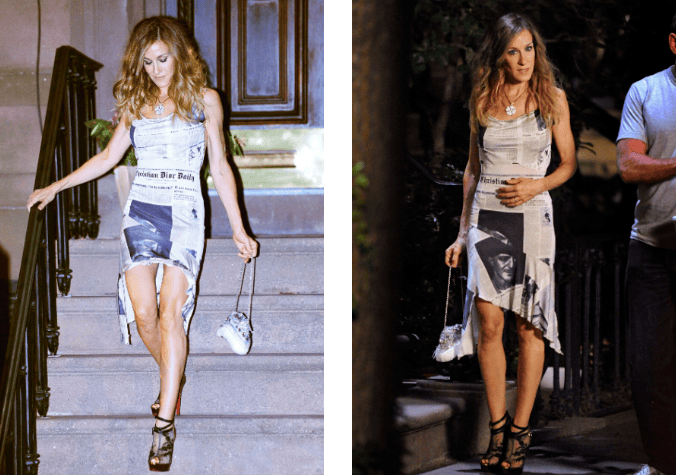
Carrie Bradshaw’s iconic Dior newspaper dressbecame a pop‑culture relic, instantly recognizable even to people who never watched Sex and the City. The Saddle Bag, once a quirky Galliano experiment, returned decades later as one of Dior’s most profitable accessories. His Gazette print, his bias‑cut gowns, his theatrical couture, all of which had lived on.

And the beauty world felt his impact too. Pat McGrath’s work during the Galliano years, which included the painted faces, the sculpted brows, the metallic washes of colour shaped the entire beauty aesthetic of early‑2000s beauty.

Galliano’s fall was dramatic. But his legacy was indelible.

John Galliano left an impression on the House of Dior, upon his departure. He did much more than just design clothes. He created moments. The kind of moments that outlast scandal, outlast seasons and outlast the man himself.

I’m Stacey Hobbs, thanks for reading. Until next time!
do you feel fabulous today?

Raf Simons: The Return to Purity (Part Eight)

After the storm of Galliano, with the drama, the spectacle, the scandal, Dior had realized it needed something it hadn’t needed in decades, this was silence. Not emptiness. Not absence. But clarity.

This is where Raf Simons enters the picture. The Belgian minimalist whose work resulted in whispers as opposed to loudness, he did not need to shout to be heard. He let his designs do the talking for him. Where Galliano created worlds, Simons created space. And in 2012, when Dior appointed him as creative director, the fashion world held its breath.

Could a minimalist revive a house built on extravagance?

Simons answered this question with a single collection. His debut. 

The Fall 2012 Haute Couture show was a revelation. No theatrics. No narrative. No characters. Just purity.

He stripped Dior back to its roots with the Bar jacket, the New Look silhouette, the architectural waist, the sculpted hips. But he reimagined them with modern restraint — clean lines, sharp tailoring and a palette that felt like fresh air after years of maximalism.

The show took place in rooms filled floor‑to‑ceiling with flowers — roses, orchids, delphiniums — a nod to Christian Dior’s love of gardens. But the clothes were the opposite of Galliano’s florals. They were precise. Controlled. Almost monastic in their discipline.

Simons wasn’t trying to out‑Galliano Galliano. He was restoring Dior’s heartbeat, the roots of House of Dior to what Christian Dior had built.

His tenure brought:

  • minimalist couture that felt shockingly modern
  • pocketed ball gowns that blended ease with elegance
  • clean tailoring that redefined the Bar jacket for a new generation
  • un-expected colour blocking that felt architectural, not theatrical
  • a return to Dior’s original codes — purity, structure and quiet luxury

Simons understood something essential, that comprehension was, Dior didn’t need another showman. It needed a curator.

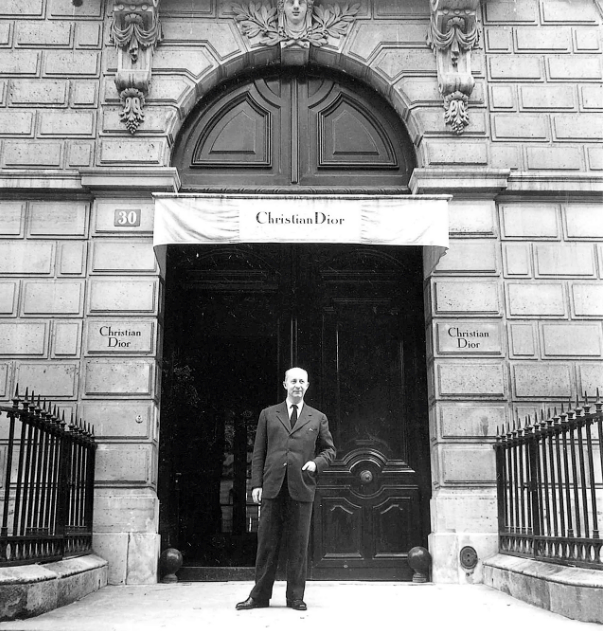
And for three years, that’s exactly what he was, a designer who treated the house with reverence, precision and by bringing to restore the House of Dior to its roots to what Christian Dior had created, when he had opened his fashion house in 1946, only to debut his first collection the New Look along with his first fragrance Miss Dior, both of which had been premiered during his first runway show in 1947. 

His departure in 2015 was as quiet as his arrival. No scandal. No spectacle. Just a simple statement. Simmons needed more time to live, think and create.

But his impact was profound.

Raf Simons didn’t just steady Dior after a crisis. 
He re‑centered it. 
He reminded the world that purity can be powerful and that sometimes, the most radical thing a designer can do is to deliver simplicity.

I’m Stacey Hobbs, thanks for reading. Until next time!
do you feel fabulous today?

The Dior Lineage: A House Built on Reinvention (Part Nine)

From the moment Christian Dior unveiled the New Look in 1947, the house that bore his name became something larger than fashion. It became reflection of the world, re-shaping culture and reinventing itself with every era. Dior has never been a static house. It has always been a living one, defined not by continuity but by transformation.

Each creative director didn’t just design clothes. They re-wrote the identity of Dior for their time.

Christian Dior gave women hope after the war with silhouettes that celebrated beauty, femininity, structure and re-birth. 
Yves Saint Laurent brought youth, modernity and the first true shock to couture. 
Marc Bohan offered stability, refinement and a quiet form of elegance for nearly three decades. 
Gianfranco Ferré introduced architectural rigor and Italian precision. 
John Galliano exploded the house into spectacle by turning couture into cinema and fantasy. 
Raf Simons stripped it back to purity, discipline and modern minimalism. 
Maria Grazia Chiuri infused it with feminism, intellect and the voices of women.

Each era was different. 
Each era was necessary.
One may even go so far as to say no fashion house has a lineage like Dior. The House of Dior truly has a unique lineage. 

Because Dior’s power has never come from sameness. 
Dior’s power has come from reinvention.

Dior is a house that thrives on contrast whether it be: 

  • structure vs. softness
  • fantasy vs. restraint
  • spectacle vs. purity
  • tradition vs. revolution
  • masculinity in tailoring vs. femininity in silhouette

Every designer who entered its doors brought a new vision with a new way of seeing the Dior woman to design.

And yet, through all the transformations, one thread remained constant:

Dior is a house built on emotion.

Dior is a couture salon with that will either bring the storm of a gasp with its disruption or the quietness, either way, Dior knows how to get the audience on their feet, to pay attention, with all of its shock that it has brought to the French fashion world, to the fashion world. One thing is for certain when a new designer steps into the House of Dior, the audience is watching, the audience is anticipating the designers first collection, the audience of the fashion world is determining what this particular fashion house will bring to the stage. Dior is a wave of static, storm to a quiet form of simplicity and elegance. One thing has been certain through all of its era is this, from the moment Christian Dior had opened his fashion house in 1946, his fashion house, House of Dior is not dull, boring or mundane. Not by a long shot!

Reinvention isn’t a disruption at Dior has become tradition since the curator of House of Dior had opened his fashion house.

From Dior to YSL, from Bohan to Galliano, from Simons to Chiuri, each chapter didn’t replace the last, it only expanded Dior. 

This is the lineage of Dior:
A house that survives by evolving. A house that evolves by daring. A house that dares by believing in beauty in all its forms, in all its eras, in all its contradictions.

Dior is reinvention.
Always has been.
Always will be.

I’m Stacey Hobbs, thanks for reading. Until next time!
do you feel fabulous today?