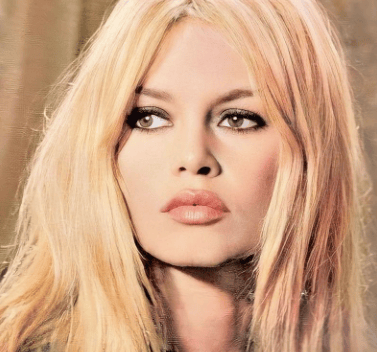
Brigitte Bardot was just as known for her messy-chic hairstyle, that kind of hairstyle whether either it looked like one has gotten home from a night out or waking up with the hair in this style, bedhead hairstyle. Low-maintenance un-polished hairstyle.
1. Cold cream as a hair smoother
Are we surprised at this point that cold-cream is on the list? Cold cream specifically Pond’s Cold Cream was used for everything since its invention in the early 20th century. Bardot used cold cream not just on her face but also to rub her tiny amount in the palms of her hands to smooth it over the ends of her hair to add shine and separation. Miracle in a jar is what Pond’s Cold Cream is! I’ve got a feeling we will see more of Pond’s Cold Cream in our futures.
2. Backcombing + brushing out
Bardot’s volume came from a passionate amount of teasing. She would top it off by brushing the top layer to smooth and to retain its softness.
3. Dry shampoo before it was cool
As popular in the 1960s, baby powder was the choice to use as dry shampoo. 1940s wartime may have birthed dry shampoo by using talcum but it was the ladies of the 1960s that gave dry shampoo life. Brigitte Bardot was no exception. She used baby powder at the roots for lift and texture.
4. Minimal washing
Bardot relied on and preferred her natural oils for softness and that un-done texture.
Enjoy re-creating Brigitte Bardot’s Messy-Chic Hairstyle & her hair secrets!
I’m Stacey Hobbs, thanks for reading. Until next time! do you feel fabulous today?
The Mod Beauty Trick That Defined a Decade Everyone was wearing spider lashes Twiggy named “The Face of 1966”
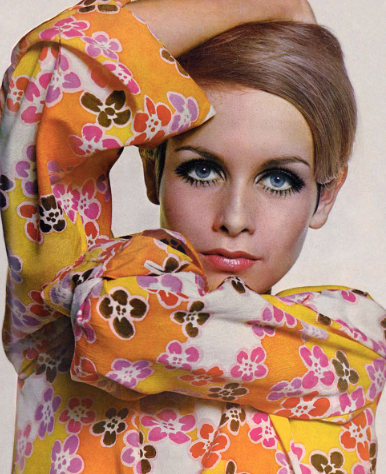
If Brigitte Bardot gave the 1960s smudged cat eye to Elizabeth Taylor’s Cleopatra’s cat eye, then Twiggy brought something else to the table to amplify the entire look. After all, 1960s was a decade that was all about eye make-up statements. When thinking of the 1960s make-up trends bold eye make-up will always come to mind, from the beginning of the decade to the end of the decade. Including but not limited to baby doll eyes of the Mod era and spider lashes. Twiggy’s wide, doll‑like eyes that she would paint on the lower lashes along with thick, spiky upper lashes became the most recognizable look of the decade or perhaps one of the most common. Cat eyes stayed, baby doll eye including spider lashes remained in the 1960s unless dressing in costume in later decades. Twiggy’s look however, a look she didn’t invent, only popularized as some tend to believe because baby doll eyes and spider lashes are ever so attached to Twiggy, she must have invented this look, despite the fact that she had not. The look however was playful, rebellious some may say, graphic and like with all eye make-up of the 1960s, like with the cat eye, this look was just as equally bold. Twiggy made the look her own when she opted to paint on her own lashes.
Interested in Twiggy’s Spider Lashes? Check out the steps below to re-create the popular 1960s make-up trend!
1. The Base: A Clean and Matte
Always begin with a base to conceal imperfections as Twiggy had done. She opted for a matte finish, instead of a glowing or dewy finish. By going with a matte finish, all eyes would be on her eyes and the make-up. A dewy finish or a glowing finish would take away from the baby doll eyes and the spider lashes effect. Don’t skip the eyelids, the eyelids for this look (and really any look) are just as important as under the eyes and the whole face. Eyelids are often forgotten. Apply foundation or concealer or both and follow-up with powder. Typically pressed powder but any powder will do with it’s setting powder, pressed powder is what I use to conceal veins and to smooth out imperfections so you are working with a clean base.
Twiggy’s make-up artist would use a light-weight foundation, pressed powder and a pale matte eyeshadow in colours in baby blue – this was Twiggy’s most significant and often her favourite choice of colour. She would go for pale pinks as in baby pinks as well. More on this below in another section.
Returning to this section, however, one other thing about a matte finish, it made the lashes and the overall eye look pop with contrast.
The mod look was all about the eyes, it was the real vocal point so everything else stayed soft and simple as it should.
2. The Upper Lashes: Thick, Spiky and Dramatic
Twiggy’s upper lashes were never clumpy. Her lashes were designed to deliver the illusion of fullness not separated.
To achieve the fullness of the lashes, Twiggy used multiple coats of mascara, applied straight up and with the wand pressed into the roots for density.
Then came the signature move, Twiggy would pinch her lashes into spikes using tweezers which was inspired by a baby doll. This would become a defining aspect of her entire look.
This created the iconic “spider leg” effect, which was bold and instantly recognizable.
3. Painted‑On Lower Lashes
Twiggy painted on her lower lashes, as she didn’t rely solely on mascara when curating her spider lashes by using liquid liner when she drew her lower lashes on. Twiggy didn’t rely on mascara alone.
Twiggy’s technique:
Start at the lower lash line
Draw short, straight strokes downward
Space them evenly
Keep them slightly longer toward the outer corner
Add a tiny flick at the end for drama
Do you believe this was the moment make-up stepped into the world of art, becoming art? Or perhaps was it the cat-eye? Specifically Cleopatra’s cat eye from the Elizabeth Taylor’s Cleopatra or simply the last Pharoah of Ancient Egypt Cleopatra herself?
4. The Crease Line: Twiggy’s Graphic Eye Lift
Twiggy often added a cut crease to her look. A cut crease is a sharp, drawn‑on line above the natural crease. Today, make-up artists will use either a gel liner or cake liner when creating this look. Below is my version of the look. I went with pale pink eye shadow, gel liner (not liquid liner) false lashes on the top and bottom of the lash line.
This line lifted the eye, added dimension, made the lashes look even larger for Twiggy, but Twiggy had beautifully round, large eyes, like with Bette Davis, and emphasized the doll-like shape.
She used a soft brown or grey pencil that wasn’t harsh. In fact, when beginning to create the crease, it often advised to begin with a pencil usually in a lighter shade or soft shade of brown so when using gel liner or cake liner, let’s say, you can easily draw the line over top of the brown line on the crease to know the placement. Practicing this technique enough times, the soft brown or light shade of brown will no longer be needed.
This crease line became a defining feature of 1960s mod make-up.
5. Brows: Thin and Straight
Twiggy’s brows were lightly filled, kept thin and brushed straight across.
This preserved her wide‑eyed, innocent expression — the perfect frame for her dramatic lashes.
6. Lips: Pale and Soft
With such bold eyes, Twiggy kept her lips understated as everyone had done when pairing nude lips with bold eye make-up.
Twiggy’s signature eye shadow colour of choice was baby blue. She would wear pale pinks as well. Other options Twiggy ocassionally opted for are metallic eyeshadow hues and glittery shades.
Matte nude lipstick was and still is often the choice to pair with bold eye make-up looks. The reason in the 1960s remains the same today. Nude lips compliment the boldness of the eye make-up. It isn’t over powering. Otherwise the eyes don’t know what it wants to look at. By not pairing nude lips with bold eye make-up, it takes away from the hard work that was put into curating the eye make-up such as the baby doll eyes, spider lashes look.
7. The Overall Effect: Doll‑Like, Daring and Decades Ahead
Twiggy’s spider lashes created perhaps a cultural moment. Spider lashes may have captured the spirit of Swinging London with its youthful, experimental and fearless vibe.
Twiggy’s look said:
Makeup doesn’t have to be natural. It can be graphic. It can be playful. It can be art.
And more than fifty years later, her lashes still inspires.
Twiggy’s spider lashes remain one of the most iconic beauty signatures of the 1960s.
I’m Stacey Hobbs, thanks for reading. Until next time! do you feel fabulous today?
The decade when Yves Saint Laurent re-wrote the rules of fashion.
libquotes.com
“When it comes to pants, Yves is the best.” — Lauren Bacall
With the smash hit of The Pink Panther,Yves Saint Laurent had already stepped into the world of cinema, designing the costumes that helped define the film’s cool, modern glamour. By 1966, he was no longer Dior’s prodigy no longer the shy guy from Oran, but the designer who would bring fashion into the future. The 1960s were the decade when Yves Saint Laurent became Yves Saint Laurent.
It was a decade of rebellion, sexual liberation and artistic experimentation. Youth culture exploded not for the first time but with a force that re-shaped everything from music to politics to hemlines. Teenagers and young adults became cultural engines, building on earlier waves of fandom that began in the 1940s with the Frank Sinatra phenomenon, when swooning teenage girls became the first modern pop‑culture audience.
By the 1960s, that energy had matured into a global movement. And Yves Saint Laurent didn’t just reflect the decade he shaped it. He understood instinctively that fashion had to evolve with the times and he became the designer who translated the era’s spirit into clothes that are bold, liberated, graphic, classic and timeless, and with modernity.
This is the story of how he transformed the way women dressed, moved and saw themselves.
1. The Rise of Ready‑to‑Wear: Rive Gauche
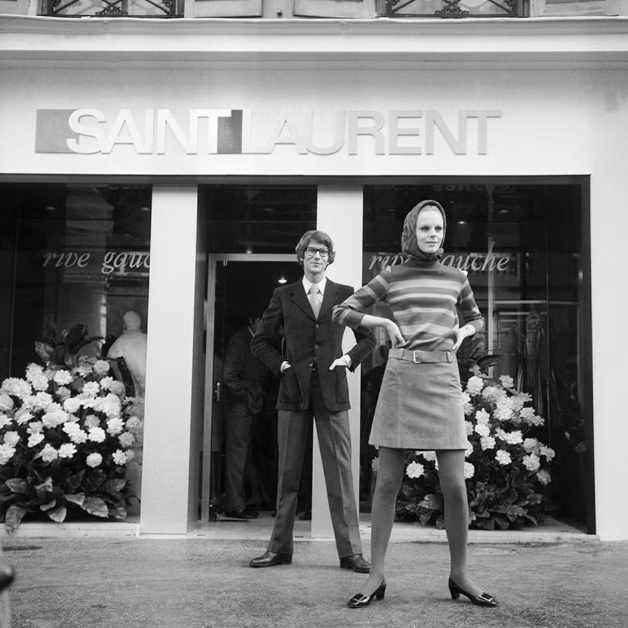
Yves Saint Laurent’s fashion house he opened in the 1960s on Rive Gauche
In the 1940s, Lucien Lelong laid the groundwork for luxury ready‑to‑wear.Two decades later, Yves Saint Laurent didn’t just continue that legacy he popularized it. In 1966, he opened Rive Gauche, the first luxury ready‑to‑wear boutique ever created by a couture designer. It was a radical shift, talk about elevation when Saint Laurent transformed fashion that had once been reserved for the elite was suddenly accessible, democratic, modern and alive on the streets of Paris.
It was revolutionary.
Saint Laurent believed fashion should not be confined to only salons and society women as it traditionally was. Rive Gauche brought high style to the streets, to students, to working women, to anyone who wanted to experience fashion, style.
It was the beginning of contemporary fashion as we know it today.
2. Le Smoking: The Tuxedo for Women
For the first time, a woman could walk into a designer boutique without an appointment, without a fortune, without a title. She could try on clothes, buy something modern and beautifully made and walk out transformed. It was fashion as freedom.
Rive Gauche marked the true beginning of contemporary fashion as we know it today, which is accessible, youthful and alive.
And then came Le Smoking.
Le Smoking was the tuxedo for women. Le Smoking brought a scandal and provocation. It challenged every rule of femininity. It blurred the lines between masculine and feminine. It was elegance sharpened into rebellion.
By this point, Saint Laurent was no stranger to controversy. He had learned from Christian Dior himself how to disrupt, how to reinvent, how to sense the cultural shift before it arrived. But with Le Smoking, he didn’t just follow the decade’s spirit — he defined it.
Le Smoking gave women power, sensuality, authority and androgny.
It was the first time a woman could wear trousers in a formal setting and be considered more elegant.
Le Smoking was more than clothing: it was liberation.
3. The Safari Jacket and The Sheer Blouse
YSL Safari Jacket, circa 1968YSL Safari Jacket, 1968 (Yves Saint Laurent centre)
Yves Saint Laurent’s genius was his ability to take the un-expected and transform it into something iconic, classic, and timeless.
The safari jacket (1968) turned utilitarian menswear into high fashion with structured, sensual and delivered modernity.
The sheer blouse (1966) introduced sensuality without vulgarity. It celebrated the female body with a kind of elegance that felt both daring and refined, a simple form of revolution in transparency.
These pieces became signatures of the decade, copied endlessly, still relevant today.
4. Art, Culture and Revolution
Yves Saint Laurent absorbed the world around him. From Pop Art, beat culture, African and Moroccan influences, ballet and theatre, cinema, and the youth movements that were re-shaping society of this decade. Everything he saw, read, heard, and felt became material. He translated cultural shifts into silhouettes, colours and attitudes.
He wasn’t designing clothes. He was designing the spirit of the era. Ultimately speaking. Saint Laurent was designing classics. He was designing timeless.
5. The Woman He Created
The YSL woman of the 1960s was independent, intellectual, sensual, worldly, modern.
She didn’t wait for permission. She didn’t dress for men. She dressed for herself.
And the world followed suit.
She was the woman Yves Saint Laurent saw before the world was ready for her and then he dressed her into existence. His designs didn’t just clothe her; they would articulate her. They gave shape to her confidence, her freedom, her intellect, her rebellion. She was the embodiment of a decade that refused to be quiet and Saint Laurent gave her the wardrobe she deserved.
I’m Stacey Hobbs, thanks for reading Face by Stace! Until next time.
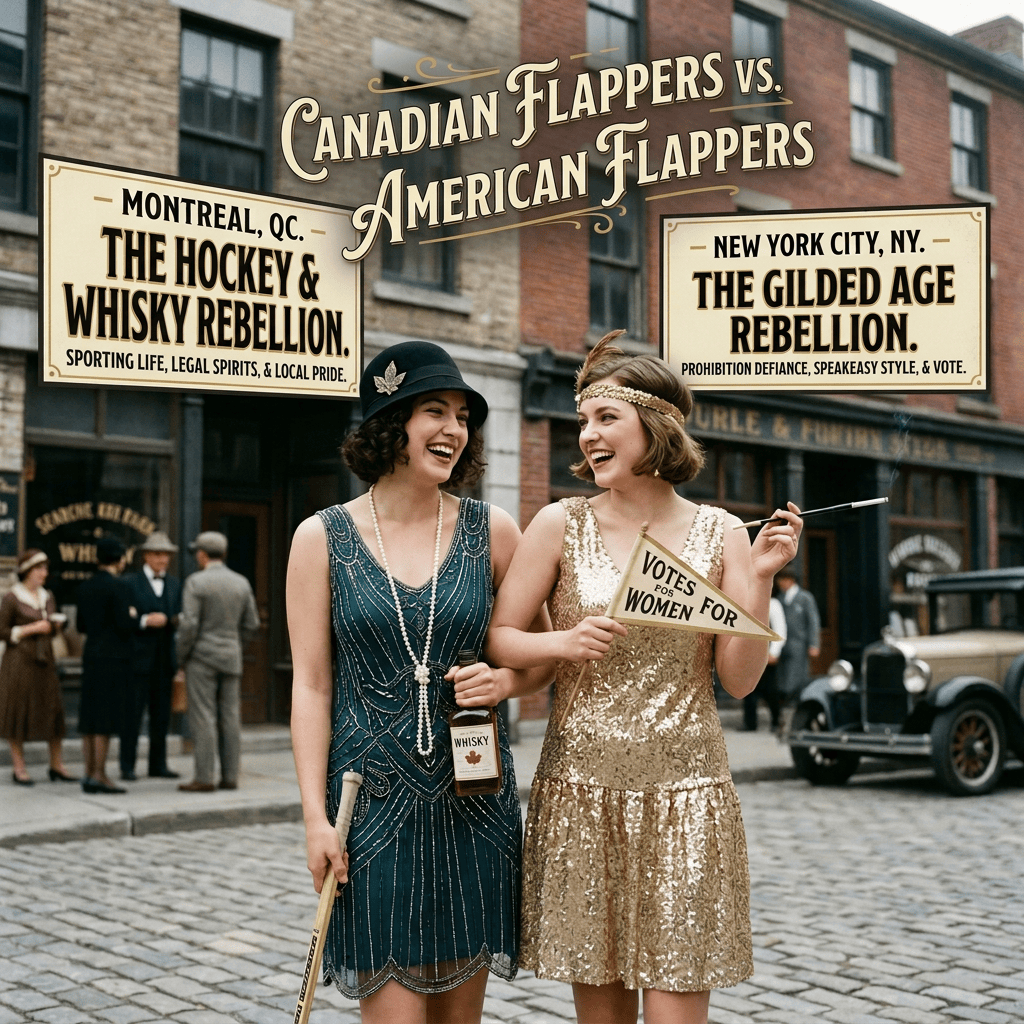
The flapper is one of the most iconic figures of the 1920s. They wore bobbed hair, short skirts, jazz, lipstick, rebellion. But while the American flapper dominates pop‑culture memory, Canada had flappers too. They shared the same spirit of modernity, but their expression was shaped by a different social landscape.
Here’s how the two versions of the flapper diverged and why it actually matters.
The American Flapper: The Rebel of the Jazz Age
The American flapper was bold, loud and unapologetically modern. She was the product of Prohibition, speakeasies and underground nightlife, jazz culture in cities like New York, Chicago, and New Orleans, Hollywood glamour, mass media, and a booming consumer culture.
Her look was more extreme than that of her Canadian counterpart with her shorter hemlines, dramatic make-up, visible nightlife culture, cigarettes and cocktails, Charleston dancing, and a public rejection of Victorian morality.
She was a symbol of rebellion.
The Canadian Flapper: A Softer, Subtler Modernity
Canada had flappers too but the country’s social climate shaped them differently.
Canada in the 1920s was more about conservatism, more influenced by British manners and fashion, less urbanized, not under nationwide Prohibition (only some provinces were under Prohibition, and for shorter periods) and slower to embrace nightlife culture
So the Canadian flapper tended to be more restrained in dress, less tied to nightlife and speakeasy culture, more middle‑class than the American “party girl” stereotype, and influenced by British fashion rather than Hollywood extremes
She still bobbed her hair, wore shorter skirts, danced, smoked and embraced modernity however her rebellion was quieter, more socially cautious, and less sensationalized.
The Key Difference
American flappers were cultural rebels. Canadian flappers were cultural adapters.
Both embraced freedom, youth, and modern womanhood, however the American version was louder, more public, and more tied to nightlife and mass media.
The Canadian version was modern too, just expressed with a softer edge.
The flapper wasn’t about a single woman, the flapper era was all about a movement. And movements look different depending on where they land.
In the U.S., she was a symbol of defiance. In Canada, she was a symbol of transition.
Both changed the way women dressed, behaved and imagined their futures.
Two countries, one decade, one shared desire: to be young, modern and liberated.
I’m Stacey Hobbs, thanks for reading. Until next time! do you feel fabulous today?
Victory Rolls, the hairstyle that was more about patriotism.
Victory Rolls were a 1940s women’s hairstyle that became a symbol of wartime practicality and patriotism, popular from about 1940–1945, named either for the V for Victory and this hairstyle widely spread by Hollywood and working women.
Materials for Lipstick Were Scarce During WWII, the Importance of Victory Red and What Did Lipstick Represent in the War?
During the Second World War, in both America and Canada, lipstick materials were in shortage, leaving women to become creative, since lipstick has sustained a powerful symbol of morale and normalcy on the home front. Upon the conclusion of the war, the “Victory Red” shape was worn by women in celebration, much like the Victory Rolls hairstyle, in celebration of having won the war. Materials shortages and factory conversions changed how lipstick was made and packaged, however women still sought red lips as a small, defiant ritual of femininity and confidence.
What Happened When Nylon Stockings Were Scarce During WWII? Women Got Creative!
During World War II nylon stockings largely disappeared from civilian life, because nylon production was re-directed to military uses (parachutes, ropes, tire reinforcement), prompting rationing, black markets, creative leg-make-up solutions came into play and intense post-war demand that sparked the so‑called, the infamous “nylon riots.”
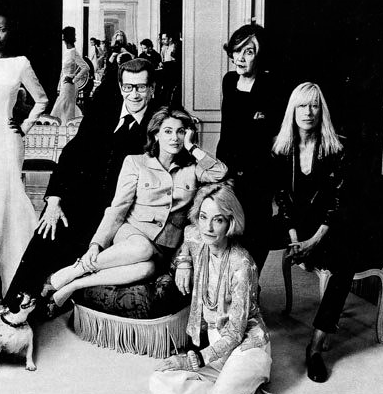
(Betty Catroux, Loulou de la Falaise, Catherine Deneuve)
Yves Saint Laurent had several muses throughout his career, but it was Catherine Deneuve he returned to most often — the cool, luminous embodiment of his refined, cinematic femininity.
Image courtesy of Musee YSL ParisHelmut Newton’s photograph of “Le Smoking” by Yves Saint Laurent
Betty Catroux
Yet another essential muse was Betty Catroux, the nocturnal rebel who became his “twin soul.” With her sharp lines, insouciant attitude, and effortless confidence, she was the physical embodiment of Le Smoking. Where Deneuve represented his polished elegance, Catroux embodied his darker, more subversive side — the woman who lived at night, who blurred gender, who turned tailoring into seduction. Together, they reveal the full spectrum of the YSL woman.
Loulou de la Falaise
Another essential muse was Loulou de la Falaise, the bohemian aristocrat whose creativity seemed to flow effortlessly. Where Betty Catroux embodied YSL’s nocturnal edge, Loulou represented his light. This light being artistic, free‑spirited, and endlessly imaginative. She brought colour, whimsy, and a sense of play to the house. Her instinct for accessories, textiles, and un-expected combinations made her not just a muse but a creative collaborator. Loulou didn’t merely inspire Saint Laurent; she energized him. She was the spark behind his most joyful, eclectic work.
Catherine Deneuve
Catherine Deneuve embodied the cinematic elegance at the heart of Yves Saint Laurent’s vision. With her cool poise, controlled sensuality, and luminous restraint, she became the definitive face of Belle de Jour and, in many ways, the face of Saint Laurent’s ideal woman. She carried his clothes with an almost impossible grace — polished, enigmatic, un-touchable — the kind of beauty that didn’t shout, but radiated. For YSL, she wasn’t simply a muse; she was the muse, the eternal one, the woman who translated his aesthetic into living, breathing cinema.
I’m Stacey Hobbs, thanks for reading. Until next time! do you feel fabulous today?