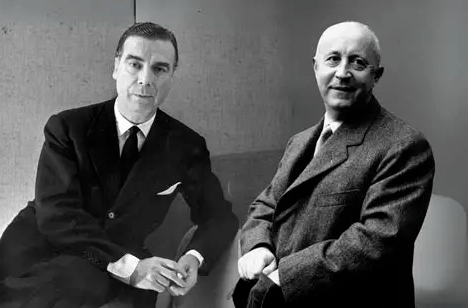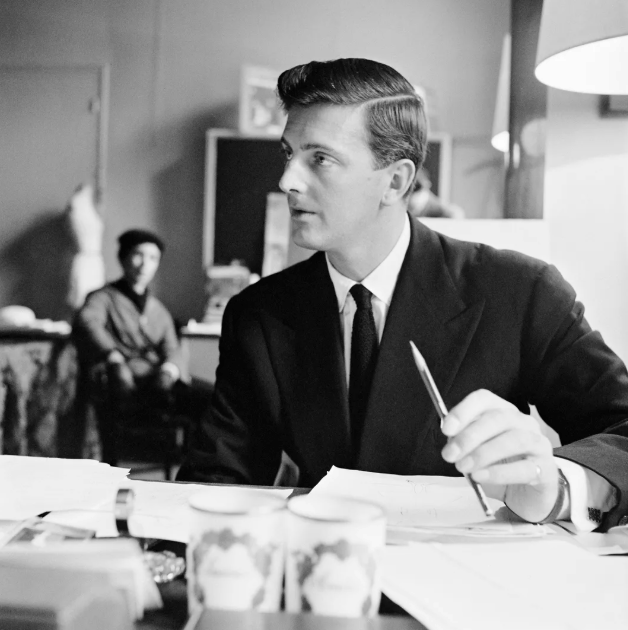
Hubert de Givenchy arrives at Lucien Lelong

The couturier who shaped a generation and the young designer. 

When people talk about the lineage of French couture, they often jump from Chanel to Dior to Givenchy but the thread that connects them is Lucien Lelong. He was a quiet gentleman of modern couture, the man who kept Paris fashion alive during the war, and the mentor whose fashion house became a training ground for the designers who would define the second half of the 20th century.

Among them was Hubert de Givenchy, the young aristocrat with impeccable taste, who stepped into Lucien Lelong’s fashion house, like many greats before him, Givenchy’s arrival at Lelong’s house at a time, when Paris was re-building itself.

Their connection is one of those relationships, often‑overlooked in fashion history.

Lelong: 
The Master of Elegance and Discipline

By the time Givenchy entered the world of haute couture, Lucien Lelong had already became a legend.

Lelong was known for his un-compromising standards; his precision; his ability to run a couture house like a modern business. American style; and his role as President of the Chambre Syndicale, protecting French couture during WWII.

Lelong’s fashion house was a finishing school for talent as it turned out to be with the success of Christian Dior and Pierre Balmain, for example. It would make absolute sense for Hubert de Givenchy to turn to Lucien Lelong. Lelong trained and shaped designers with a rare combination of discipline, refinement and diplomacy.

Dior and Balmain passed through his doors. 
And soon, so would Givenchy.

Givenchy Arrives: 
A Young Designer With a Vision

Hubert de Givenchy joined Lelong’s house in the late 1940s, at a time when Paris was re-building its identity after the war.

Givenchy was tall, elegant and impossibly young, obsessed with clean lines and purity of form, deeply influenced by Balenciaga, and already dreaming of his own maison.

At Lelong, Hubert de Givenchy learned the foundations of haute couture:

  • how to cut with precision
  • how to drape with restraint
  • how to create clothes that moved with grace
  • how to run a house with dignity

Lelong didn’t just teach technique — he taught conduct, taste, and the ethics of couture.

What Lelong Passed On to Givenchy

Givenchy absorbed Lelong’s teachings in ways that shaped his entire career.

1. The Art of Understatement

Lelong believed elegance was quiet. Givenchy would later become the master of refined simplicity — the designer of Audrey Hepburn’s most iconic looks.

2. The Importance of Line and Proportion

Lelong’s “kinetic silhouette,” beauty in motion, which became a hallmark of Givenchy’s fluid, weightless designs.

3. The Discipline of Couture

Lelong ran his house like a military. Givenchy carried that same discipline into his own maison, known for its serenity and order.

4. Respect for the Craft

Lelong taught that couture was a responsibility not a vanity project. Givenchy upheld that belief throughout his life.

A Bridge Between Eras

Lelong represented the last great generation of pre‑war couture, this constituted refined, structured, aristocratic.

Givenchy represented the new post‑war elegance of modernism, youthful, effortless.

Their time together created a bridge between:

  • the old world and the new
  • the 1930s and the 1950s
  • the era of grand maisons and the era of modern icons

Without Lelong, the landscape that allowed Givenchy to flourish might not have existed.

Lelong’s and Givenchy’s relationship is a reminder that couture is a lineage of knowledge, taste and philosophy from one generation to the next.

I’m Stacey Hobbs, thanks for reading! Until next time.
do you feel fabulous today?
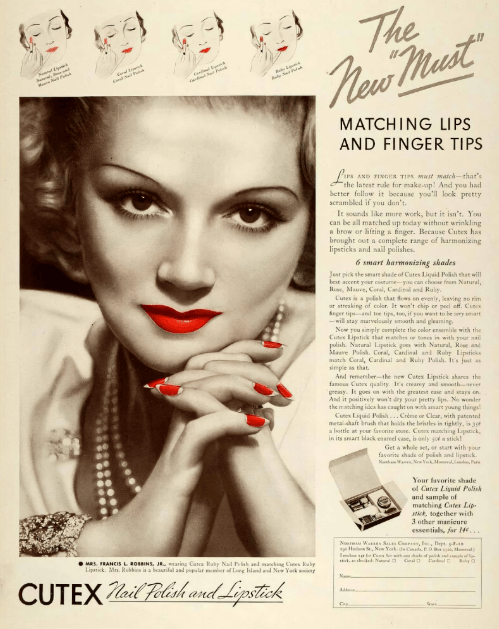
1920s Beauty Ads

Even as women quietly rebelled with rouge, and lipstick, beauty companies had to tread carefully. Makeup was still considered bold, even going so far as to refer make-up as improper, so brands developed a clever vocabulary that let women buy cosmetics without ever admitting they were buying make-up.

Here are some of the most common coded phrases that were used in 1920s ads:

“Youth Cream”

A polite way of saying face makeup. Often a tinted cold cream meant to smooth the complexion and add subtle color.

“Complexion Enhancer”

Translation: foundation or powder. This phrase reassured women they were improving their skin, not “painting” it.

“Natural Tint”

A soft lipstick or rouge, marketed as barely‑there, even when it wasn’t.

“Skin Brightener”

A powder or cream designed to mattify and lighten the complexion. A safe way to sell powder without calling it powder.

“Lip Pomade” or “Lip Salve”

Early lipsticks disguised as skincare. These were often sold in tins or tiny pots to avoid the scandal of a lipstick tube.

“Cheek Glow”

Rouge, but softened for polite society. Ads promised a “healthy bloom,” not a painted cheek.

“Evening Preparation”

A euphemism for bolder makeup intended for nightlife, dancing, or “special occasions.” Everyone knew what that meant.

These phrases weren’t just marketing tricks, they reveal the cultural tension of the decade. Women wanted glamour. Society wanted modesty. So brands created a secret language that let women buy what they wanted while pretending they weren’t breaking any rules.

It was a shared understanding. A quiet rebellion wrapped in polite packaging. It was the decade of bootlegging, one may say.

I’m Stacey Hobbs, thanks for reading! Until next time.
do you feel fabulous today?

Mercury, Arsenic, Belladonna, Vermilion in Makeup, Oh My!

Other Toxic Beauty Ingredients of the 18th Century

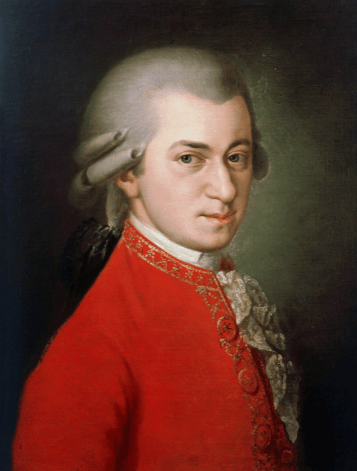
The beauty routines of Mozart’s world were glamorous, theatrical, and let’s be real shockingly poisonous. Lead wasn’t the only wicked ingredient in makeup, perhaps lead in makeup is considered villainous. Gasp! Lead in makeup?! How about these other common go-to just as equally dangerous, villainous, wicked ingredients of the 18th century. Aren’t you glad that we have moved away from the dangers of these ingredients, and have instead opted for healthier, better alternatives? So, one may think and assume. At least we are gaining more educated on ingredients, and are chasing the non-toxic ingredients, while still delivering high-quality results. As of the 18th century, the era’s cosmetic cabinets were filled with ingredients that would make a modern dermatologist faint. Let’s meet the most notorious offenders:

Mercury: The Deadly “Skin Brightener”

In the 18th century there were common ingredients that were found in makeup, mercury was one of them. Mercury was found in skin‑lightening creams and spot treatments, praised for its ability to create a clearer, paler complexion. For a brief moment, it seemed to work, so women had thought. It reduced redness and fading blemishes just enough to feel miraculous. But the illusion came at a devastating cost. Mercury exposure led to trembling, mood swings, kidney damage, and long‑term neurological decline. Still, women continued using it, it wasn’t like there were a whole lot of options, besides this was the go-to choice, and quite frankly did people, and women really know the dangers of mercury plus other ingredients in makeup to be so dangerous? No, they did not. This left women to resort to such ingredients as mercury that delivered brightness , unaware that the very product promising perfection was quietly poisoning them.

Arsenic: The Pale Complexion Poison

Arsenic wafers and “complexion waters” were wildly popular in the 18th century, marketed as a miraculous way to achieve the fashionable ghost‑white glow prized by the aristocracy. Women believed these products would give them an ethereal, delicate beauty, and in a way, they did. Arsenic created extreme paleness, the kind associated with refinement, and prestige. But beneath that porcelain finish lurked a far darker reality: digestive distress, organ damage, and the slow, insidious effects of poisoning. Still, some women continued to ingest tiny amounts, chasing that sickly‑sweet, otherworldly look that society romanticized, even as it would quietly destroyed their health.

Belladonna: The Poison That Made Eyes Beautiful

Belladonna drops were one of the most dangerously seductive beauty ingredients of the 18th century. It was used to dilate the pupils and create that soft, romantic, “doe‑eyed” gaze that society adored. The effect was undeniably enchanting, however the consequences were brutal. Regular use led to blurred vision, pounding headaches, a racing heart, and, over time, permanent eye damage. Still, women continued to use it, willingly risking their sight for a look considered irresistibly beautiful. It was glamour at its most perilous. Talk about beauty literally bought at the cost of vision. Ouch.

Vermilion: The Toxic Rouge

Vermilion, a brilliant red pigment made from mercury sulfide, was one of the most coveted cosmetics of the 18th century. Vermillion was used to tint the lips and cheeks with a vivid, luxurious flush. But beneath its beauty lay a dangerous truth. This striking colour came with a boat full of risks, from skin irritation, mercury exposure, and the slow buildup of cumulative toxicity in the body. Still, women continued to use it, seduced by its rich, dramatic hue. It was the 18th‑century version of the perfect red lip, which was glamorous, bold, and hiding a deadly twist.

Burnt Cloves & Charcoal: The Early Eyeliner

Not as deadly as lead or mercury, but still undeniably harsh, early eye cosmetics often relied on soot, charcoal, and even burnt cloves to darken lashes and brows. These improvised pigments created dramatic definition, but they came with real risks: eye irritation, infections, and painful corneal scratches were common side effects. Still, women embraced the look, willing to endure the sting and danger for the sake of bold, expressive eyes. Beauty in the 18th century was daring, to say the least, and absolutely risky. 

To conclude, in Mozart’s time, beauty was a performance. The powders, creams, and potions were luxurious, seductive… and often lethal. These ingredients weren’t just cosmetics — they were symbols of prestige, vanity, and the dangerous lengths society expected women (and men) to go for the perfect look.

These ingredients are deadly, to say the least, wouldn’t you agree? Aren’t you glad this isn’t something you have to worry about anymore? With these particular ingredients in makeup?

I’m Stacey Hobbs, thanks for reading! Until next time.
do you feel fabulous today?

Part I: Balenciaga & Dior: The Master and the Modern Romantic

Dior called Balenciaga “the master of us all.”

When Christian Dior burst onto the postwar scene in 1947 with the New Look, the fashion world treated him like a revelation — a visionary who revived Paris couture with a single, sweeping silhouette. But behind the acclaim stood a quieter, older figure whose influence Dior never denied: Cristóbal Balenciaga, the man he famously called “the master of us all.”

Their relationship wasn’t a rivalry. It was a conversation between two radically different imaginations. Dior was the modern romantic, sculpting femininity with soft curves, cinched waists, and blooming skirts. Balenciaga was the master, as Dior referred to him as, stripping fashion down to its purest lines, its cleanest geometry, its most disciplined form. Where Dior celebrated decoration, Balenciaga pursued perfection. Where Dior charmed, Balenciaga commanded.

Yet Dior admired him deeply. He studied Balenciaga’s precision, his discipline, his refusal to compromise. And Balenciaga, in turn, respected Dior’s ability to capture emotion, Dior’s ability to make women feel beautiful in a world desperate for beauty after the war.

Their connection forms one of the most fascinating relationships in couture history: 

the romantic and the purist, shaping the same era from opposite ends of the spectrum.

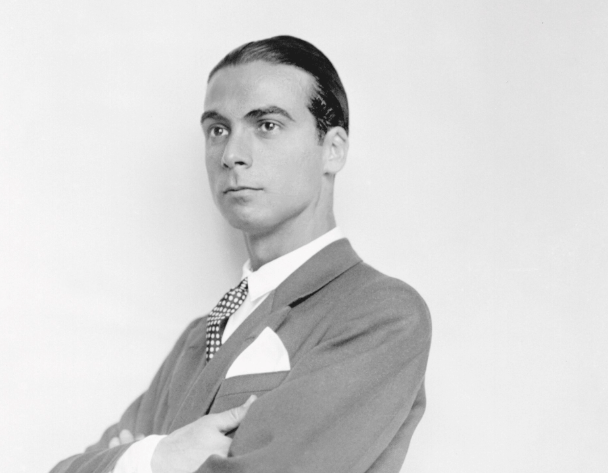
And to understand Balenciaga’s genius — his arrival in Paris, his Spanish roots, his architectural silhouettes, it makes perfect sense to begin here, with the designer who revered him most.

How Dior Praised Balenciaga

Christian Dior never hid his admiration for Cristóbal Balenciaga — in fact, he elevated it to legend. While the fashion press often framed designers as rivals, Dior insisted that Balenciaga stood above them all. He famously referred to him as “the master of us all,” a declaration that instantly positioned Balenciaga as the quiet architect of couture excellence.

Dior admired Balenciaga’s discipline, his purity of line, and his refusal to compromise. He spoke of Balenciaga with a reverence usually reserved for classical composers or sculptors, describing his work as “the essence of couture,” precise, architectural, and untouched by passing trends. To Dior, Balenciaga wasn’t just another designer; he was the standard by which all others should be measured.

This public praise wasn’t flattery. It was Dior’s acknowledgment that while he himself brought romance and revival to postwar fashion, Balenciaga brought mastery. 

Their mutual respect shaped the era. One designer capturing emotion, the other capturing perfection.

Why Balenciaga Respected Dior

While Christian Dior openly revered Balenciaga as “the master,” the admiration was not one‑sided. Balenciaga, a famously private, disciplined, and sparing with praise, had held respect for Dior’s ability to capture the emotional pulse of postwar fashion. Where Balenciaga pursued purity of line and architectural perfection, he recognized that Dior possessed a rare gift: the power to make women feel beautiful again after years of austerity. Balenciaga admired Dior’s romanticism, his softness, and his instinct. Qualities he himself did not chase, but deeply valued in others. He understood that Dior’s New Look wasn’t just a style; it was a cultural reset. And even though their designs diverged, Balenciaga respected Dior’s artistry, his influence, and the sincerity with which he approached couture. In a world of egos and rivalries, their mutual regard stood out. Two masters shaping the same era from different philosophies, yet bound by genuine admiration and support for one and another.

I’m Stacey Hobbs, thanks for reading. Until next time!
do you feel fabulous today?
Part II: Balenciaga Arrives in Paris (1937)

How a Spanish Master Quietly Rewired the Capital of Couture

When Cristóbal Balenciaga arrived in Paris in 1937, he did not come as an unknown hopeful. He came as a fully formed master, meaning a designer already revered in Spain, already dressing aristocrats, already shaping silhouettes with a precision that bordered on architectural. But Paris was different. Paris was the capital of couture, the city where reputations were made or broken. And Balenciaga entered it not with fanfare, but with the confidence of a man who knew exactly what he could do.

He opened his house at 10 Avenue George V, just months after fleeing the Spanish Civil War. Parisian editors and clients approached him cautiously at first — another foreign designer, another outsider. But the moment his first Paris collection walked the runway, everything changed. His clothes were unlike anything the city had seen: sculpted yet fluid, disciplined yet poetic, rooted in Spanish tradition yet modern in their restraint. Paris, a city that prided itself on innovation, suddenly found itself staring at a new kind of genius.

Balenciaga didn’t chase trends; he ignored them. He didn’t decorate for decoration’s sake; he stripped garments down to their purest form. And in a fashion world still recovering from the economic and emotional wounds of the 1930s, his work felt like a revelation — calm, controlled, impeccably constructed.

It was during these early Paris years that Christian Dior first took notice. Dior, still working under Lucien Lelong, watched Balenciaga’s rise with admiration. He saw in him a discipline and mastery that few possessed. When Dior later called Balenciaga “the master of us all,” he was thinking of these formative years — the moment when Balenciaga quietly re-shaped Paris couture simply by being himself.

Balenciaga’s arrival in 1937 wasn’t just the opening of a fashion house. It was the beginning of one that would influence Dior, challenge Chanel, and re-define the what haute couture means.

I’m Stacey Hobbs, thanks for reading. Until next time!
do you feel fabulous today?

My Adidas! Run‑DMC + Adidas: The Partnership That Changed Fashion Forever

How Two MCs, One DJ Turned a Sneaker Into a Global Icon

Got your shell‑toe, no‑lace Adidas? Let’s go!

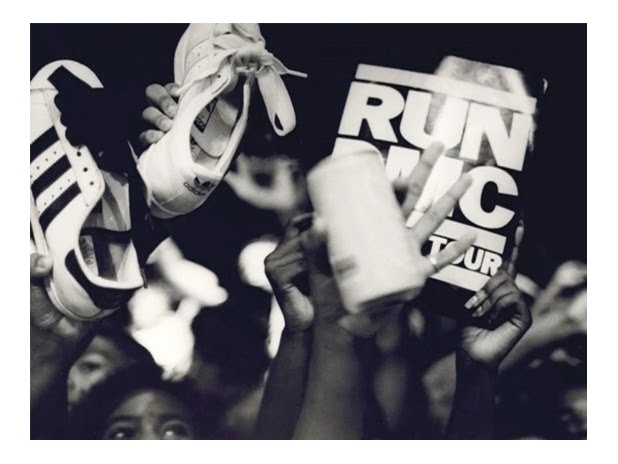
Taken during Run-DMC’s performance of My Adidas, at Madison Square Garden, this is the very moment during the concert, with Adidas executives in the audience, circa 1986

Before luxury houses were chasing streetwear collaborations, before sneakers became status symbols, before hip‑hop was a marketing category, there was Run‑DMC, and there were Adidas Superstars. What began as a personal style choice became one of the most influential fashion partnerships in music history, re-shaping not only hip‑hop fashion, but the entire relationship between artists and brands.

In the early 1980s, Run‑DMC stepped onto stages in Queens wearing something radically different from the sequined, flashy costumes dominating rap at the time: Adidas tracksuits, unlaced Superstars, and Kangol hats. Their look wasn’t styled by a label — it was pulled straight from the streets. The Adidas Superstar, originally a basketball shoe, became their signature choice of shoe they’d sport. The un-laced style came from prison culture, where laces were removed for safety, and Run‑DMC transformed it into a bold, rebellious fashion statement.

They didn’t follow fashion — they became fashion.

Everything changed in 1986 with “My Adidas.” The song wasn’t a paid endorsement, but instead, the song was dedicated to their love of sneaker that represented their identity, their community, and their authenticity. When they performed it at Madison Square Garden, they asked the crowd to hold up their Adidas. Thousands of fans lifted their sneakers into the air. It was a cultural earthquake kind of moment.

Adidas executives were in the audience. 
They had never seen anything like it.

Within weeks, Run‑DMC signed a $1.6 million endorsement deal — the first major partnership between a hip‑hop group and a global sportswear brand. It legitimized hip‑hop as a commercial force and proved that artists could shape fashion from the ground up, not the other way around.

Run‑DMC didn’t just wear Adidas — 
they made Adidas iconic.

The impact was incredibly un-deniable. Run‑DMC made Adidas cool. They turned the Superstar into a global icon, sparked the rise of sneaker culture, and paved the way for every artist‑brand collaboration that followed: Jay‑Z x Reebok, Kanye x Adidas, Rihanna x Puma, Beyoncé x Ivy Park, Travis Scott x Nike.

Their partnership wasn’t about marketing. It was about identity, authenticity, and the power of culture to move markets.

Run‑DMC didn’t just change fashion. 
They changed the business of fashion.

I’m Stacey Hobbs, thanks for reading! Until next time.
do you feel fabulous today?