Chanel’s Critiques of Postwar Couture

The Rebel vs. the Revival

Coco Chanel returned to fashion in 1954with fire in her voice and opinions sharper than her scissors. She had watched postwar couture from the sidelines andshe didn’t like what she saw, especially from Dior and the houses that embraced his voluptuous silhouettes.

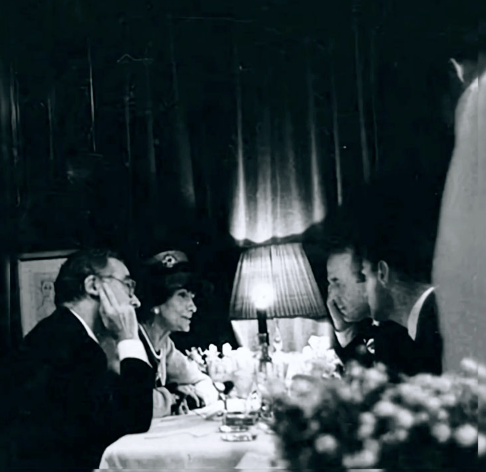
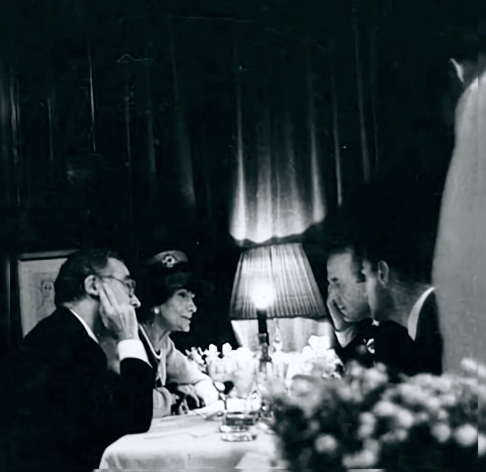
Chanel with Balenciaga at a dinner.

To Chanel, the New Look was a betrayal. She believed women had earned freedom during the war — freedom of movement, freedom from corsets, freedom from excess. Dior’s cinched waists and padded hips felt to her like a regression. She famously declared, “Dior doesn’t dress women. He upholsters them.”

Her critiques extended beyond Dior. She viewed the entire postwar couture revival as overly decorative, overly structured, and out of touch with modern life. Chanel championed simplicity, ease, and practicality. She wanted women to feel un-encumbered, not sculpted.

Her philosophy stood in stark contrast to the architectural rigor of Balenciaga and the romanticism of Dior. Chanel wasn’t interested in silhouettes that transformed the body; she wanted clothes that liberated it. Her critiques weren’t petty; they were ideological. She believed fashion should serve women, instead of it being the other way around.

In the landscape of postwar couture, Chanel was the rebel, the dissenter, the voice insisting that elegance could be simple. Her critiques sharpen the contrast between her vision and the grand, sculptural ambitions of her contemporaries.

Dior vs. Balenciaga vs. Chanel: 
Three Visions of Femininity

The Romantic, the Architect, and the Liberator

Mid‑century couture was not defined by a single vision of femininity, which was shaped by three radically different philosophies embodied by Dior, Balenciaga, and Chanel. Together, they created the tension that made the era so electrifying.

Christian Dior — The Romantic

Dior believed in beauty as emotion. His silhouettes celebrated curves, softness, and a return to opulence after wartime austerity. The New Look was style, however the New Look was much more than style; it was a cultural shift, a sigh of relief, restoring woman to femininity after the war, that woman and the fashion world embraced. Dior’s femininity was lush, blooming, and deeply nostalgic — a romantic dream brought to life in silk and taffeta.

Cristóbal Balenciaga — The Architect

Balenciaga approached femininity as form. He sculpted the body with volume, structure, and purity of line. His designs didn’t follow the body; they re-defined it. His femininity was modern, abstract, and architectural — a vision of womanhood elevated to art. 

Coco Chanel — The Liberator

Chanel rejected both romance and architecture. Her femininity was rooted in freedom. Freedom of movement, freedom from constraint, freedom from artifice. She believed elegance should be effortless. Her vision was pragmatic, modern, and fiercely independent.

Three Visions, One Era

  • Dior made women feel beautiful.
  • Balenciaga made women look sculptural.
  • Chanel made women feel liberated.

Their philosophies collided and co-existed, shaping the Golden Age of couture. To understand any one of them, you must see them in relation to the others — three designers, three visions, one extraordinary moment in fashion history.
Lana Turner’s Satin‑Only Sleep Rule

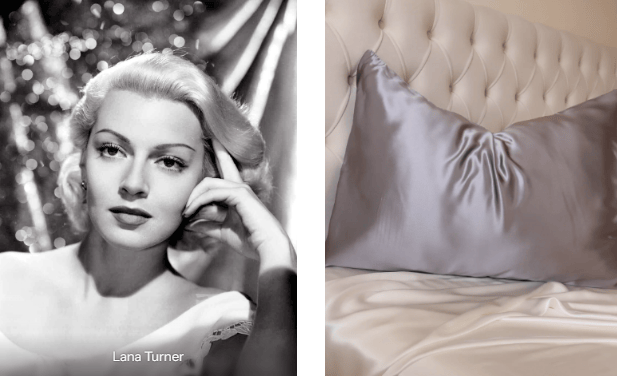
Lana Turner didn’t just wake upglamorous — she actually engineered it. Known for her glossy, sculpted curls and immaculate screen presence, Turner treated sleep as part of her beauty routine, not a break from it. Her most famous rule? She slept exclusively on satin.

Turner believed that satin preserved her curls, protected her hair from breakage, and kept her style intact between shoots. And she wasn’t wrong. Satin’s smooth surface reduces friction, preventing the frizz, tangles, and flattening that cotton pillowcases can cause. For an actress whose hair was part of her signature, satin wasn’t a luxury for Turner; it was a necessity.

But the real secret wasn’t just the pillowcase. Underneath her satin‑smooth sleep setup, Turner wore tight pin curls, secured with metal clips to maintain her iconic shape. These pin curls were the true architecture of her look — a meticulous grid of tiny spirals that created the soft, glamorous waves audiences adored and loved.

The method worked, but it wasn’t without risk. Those metal pins could scratch the scalp, tug at the roots, or break hair if she shifted too much in her sleep. Satin helped reduce the damage, however the routine still required discipline, stillness, and a tolerance for discomfort that only Old Hollywood starlets seemed willing to endure.

Turner’s satin‑only rule became legendary because it embodied the era’s approach to beauty: glamour wasn’t effortless — it was maintained, protected, and preserved, even in the dark, during this time in Golden Age Hollywood.

Today, satin pillowcases and heatless curl sets offer the same benefits without the hazards of metal pins. But the standard remains the same: protect your hair at night, and it will reward you in the morning.

Lana Turner slept for beauty, and it showed.
Lana Turner relied on satin for protection, more than it was ever about luxury.

I’m Stacey Hobbs, thanks for reading! Until next time.
do you feel fabulous today?

Audrey Hepburn’s Lash‑Separation Needle (Tips From Her Makeup Artist)

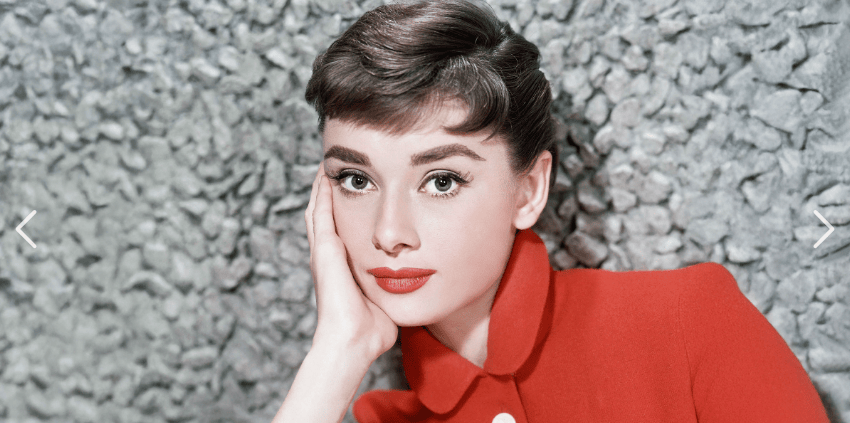
Audrey Hepburn’s lashes were so famously fluttery and defined that they’ve become part of her visual signature, as much as it is recognizable as her brows, her little black dresses, and her posture. But the secret behind those perfectly separated, doll‑like lashes wasn’t a mascara wand.

It was something entirely different; it was a needle!

Hepburn’s longtime makeup artist,Alberto de Rossi, who is the same makeup artist that had created the ever so popular Cleopatra makeup and cat eye on Elizabeth Taylor for the film, he was one of Taylor’s makeup artist’s, as well. He used a fine sewing needle to separate each lash one by one while her mascara was still wet. The process was slow, meticulous and undeniably risky — but the effect was extraordinary. Instead of clumps, Audrey’s lashes looked like delicate individual threads, fanned out with surgical precision.

This wasn’t a gimmick. Audrey’s beauty was built on detail, as opposed to excess. Her makeup was never heavy; it was intentional. Every lash mattered. Every stroke of mascara mattered to constructed her perfect clump-free lashes, which framed her face beautifully.

Of course, this technique is notrecommended today, considering the risk of poking or scratching the eye is far too high. But as a piece of beauty history, it’s a perfect example of Old Hollywood’s devotion to craft. They didn’t rely on filters or digital re-touching (there is an old-school method to “photo-shop” images that didn’t revolve around a digital tool, obviously.) They relied on artistry, patience, and sometimes, in this case, a needle.

Audrey’s doe eyes weren’t an accident. 
They were engineered — one single lash at a time.

I’m Stacey Hobbs, thanks for reading. Until next time!
do you feel fabulous today?

PART III: Balenciaga Before Paris: His Spanish Years

The Roots of Balenciaga

Before Cristóbal Balenciaga re-shaped Paris couture, he was shaped by Spain, its landscapes, its rituals, its aristocracy and its un-compromising traditions of craft. His Spanish years were not a prelude; they were the foundation of everything he would become.

Born in 1895 in the fishing village of Getaria, Balenciaga grew up surrounded by fabric, form, and discipline. His mother was a seamstress for the local nobility and it was in those aristocratic households that he first encountered the elegance and severity of Spanish dress. The boleros, the matador jackets, the black lace mantillas, the religious austerity of Catholic Spain — these motifs would be displayed in his designs through his work for decades.

By his early twenties, he had opened his own salons in San Sebastián, Madrid, and Barcelona. His clientele included Spanish aristocrats and the royal family, women who demanded impeccable construction and absolute discretion. Balenciaga learned to cut, drape and tailor with a precision that bordered on architectural. He didn’t just design clothes — he engineered them.

But Spain was changing. The Spanish Civil War erupted in 1936, forcing Balenciaga to close his salons and flee the country. He left behind success, prestige and his loyal clientele — but he carried with him the essence of Spanish style, the drama, restraint, structure and a reverence for craftsmanship.

When Balenciaga arrived in Paris in 1937, he was not a newcomer. He was a master forged in the ateliers of Spain, bringing with him his vision, along with his designs, unlike anything the French couture world had ever seen. His Spanish years were not lost time; they were the crucible that made him Balenciaga.

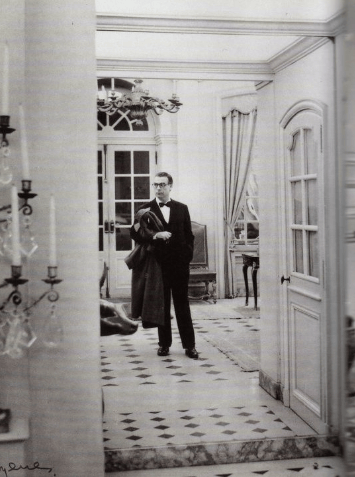
Balenciaga in his fashion house in Paris. 

I’m Stacey Hobbs, thanks for reading! Until next time.
do you feel fabulous today?

Balenciaga vs. Chanel: Two Opposite Definitions and Visions on Fashion

If Christian Dior and Balenciaga were respectful opposites, then Chanel and Balenciaga were something far more elemental, two poles of couture, two visions that differed, but their opposite definitions of their visions defined what fashion could be. 

After two decades of a friendship, Chanel did what Chanel does, she went to the press and spilled Balenciaga’s secrets, one of which was to out him as gay. Balenciaga had his assistant pack up all of Chanel’s gifts that she had given to him in their two decade friendship to send to Chanel, as his response to her. Balenciaga felt betrayed, disappointed and was in utter sadness, despair one may even go so far as to say. That is the closet either of them had gotten to feud publicly. 

Their work on the other hand, stood in such stark contrast that their differences became part of fashion’s mythology. To understand Balenciaga’s genius, and Chanel’s defiance of it, you have to see how radically their visions diverged.

Chanel: The Liberator of Women

Chanel believed fashion should free the body. Her silhouettes were built on ease, movement, and a kind of elegant nonchalance. She rejected structure, padding, corsetry, and anything that felt fussy or ornamental. Her clothes were meant to be lived in — jersey knits, simple lines, clean tailoring, and a philosophy rooted in comfort as luxury.

To Chanel, anything that restricted a woman was an enemy. She once dismissed postwar couture excess as “ridiculous,” and she famously criticized Dior’s New Look for putting women “back in cages.” Her rebellion was personal, ideological, and deeply modern.

Balenciaga: The Master of Couture

Balenciaga, by contrast, believed in discipline, structure, and the sculptural possibilities of fabric. He didn’t liberate the body, instead he re-imagined it. His silhouettes were architectural:

  • the barrel line
  • the balloon jacket
  • the cocoon coat
  • the baby‑doll dress
  • the high‑waisted tunic
  • the envelope dress
  • the bell sleeves

He wasn’t interested in ease; he was interested in purity. Every seam, every fold, every angle was intentional. Where Chanel sought simplicity, Balenciaga sought perfection. Where she stripped fashion down, he built it up with mathematical precision.

Two Philosophies, One Era

Their differences weren’t just on the basis of philosophy, they were on the basis of:

  • Chanel believed fashion should serve the woman.
  • Balenciaga believed fashion should transform her.
  • Chanel rejected artifice.
  • Balenciaga embraced construction as art.
  • Chanel designed for movement.
  • Balenciaga designed for silhouette.
  • Chanel democratized elegance.
  • Balenciaga elevated couture to its purest form.

They were not enemies, however they were never aligned. Chanel saw Balenciaga’s sculptural volumes as unnecessary; Balenciaga saw Chanel’s simplicity as too casual for haute couture. And yet, together, they defined the boundaries of mid‑century fashion — the tension between freedom and form, ease and architecture, rebellion and discipline.

I’m Stacey Hobbs, thanks for reading. Until next time!
do you feel fabulous today?

Jean Harlow’s “The Platinum Blonde”

The dangerous dye routine behind Hollywood’s first blonde bombshell.

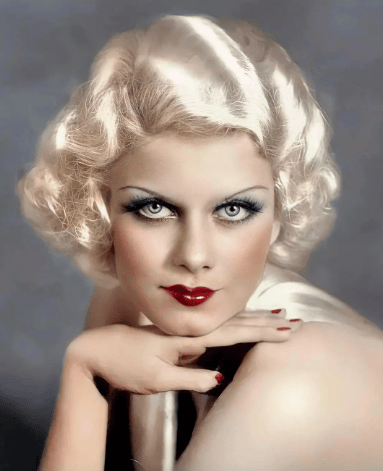
Harlow’s hair became so iconic that the studio trademarked Jean Harlow as “The Platinum Blonde.”

Jean Harlow invented platnium blonde. Before her, no actress had ever appeared on screen with hair that white, that icy, that shockingly luminous. It became her signature, her brand, her myth. But behind the glow was a brutal, dangerous routine that would be unthinkable today.

The Formula That Made History, and Caused Damage

Harlow’s platinum wasn’t created with modern toners or bond‑repair lighteners. Instead, her colourist used a homemade mixture that included:

  • household bleach
  • ammonia
  • Lux soap flakes
  • peroxide

This cocktail, as it appears to be, was applied weekly, sometimes twice a week, to keep her hair that blinding shade of white. The chemicals were so harsh they caused burns, breakage, and scalp irritation (ouch!) and her hair became so fragile she often wore wigs between shoots.

But on camera? It shimmered like nothing Hollywood had ever seen.

Why She Did It

Harlow’s platinum was just a beauty choice — it was a cinematic weapon. Under studio lights, her hair created a halo effect that made her glow on film. Directors loved it. Audiences were hypnotized by it. And MGM knew they had a phenomenon on their hands.

The Price of Perfection

The constant bleaching left Harlow’s hair in rough shape. Her hair was brittle, dry, fragile, and prone to snapping. 

Her scalp endured chemical burns, and stylists had to handle her hair with extreme care. But Harlow was committed to the look — she understood that her platinum shade wasn’t just part of her image. It was her image. When you think of Jean Harlow, one of the images come to mind, or what a person thinks of is her platinum blonde hair. 

The Legacy of Jean Harlow’s Blonde

Jean Harlow

Jean Harlow paved the way for every platinum icon who followed:

  • Marilyn Monroe
  • Jayne Mansfield
  • Madonna
  • Gwen Stefani

But none of them endured the raw, un-regulated chemical torture Harlow did. Modern platinum blondes have bond builders, toners, purple shampoos, and trained colourists. In other words, the technique had been revised and elevated. Harlow had a bowl of bleach and a dream.

Her hair was dangerous. 
Her look was unforgettable. 
Her legacy is eternal.

Jean Harlow didn’t just dye her hair. 
She created a colour that changed Hollywood forever.

I’m Stacey Hobbs, thanks for reading! Until next time.
do you feel fabulous today?