Bootleg Beauty Products: The Secret Cosmetics Women Bought in the 1920s

The 1920s was a decade obsessed with transformation. Women were cutting their hair, shortening their hemlines, and stepping boldly into modern life. But while the flapper aesthetic was exploding in Hollywood and on dance floors, everyday women still lived under the shadow of old‑world expectations. Respectable ladies weren’t supposed to paint their faces, it must be in a subtle manner. Makeup was still tangled up with ideas of impropriety, seduction and scandal.

And that tension created an entire underground beauty culture.

Welcome to the world of bootleg beauty, where cosmetics were purchased under the table so to speak, applied discreetly, and carried with the same rebellious thrill as slipping into a speakeasy. Welcome to the decade of bootlegging, as it appears. 

The Scandal of a Painted Face

To understand why makeup felt illicit, you have to understand the mindset of the era. For generations, cosmetics were associated with actresses, chorus girls, and “fast” women, not wives, mothers, or society girls. A bold lip or a smoky eye could instantly shift how a woman was perceived. It was 

So when a woman bought lipstick in 1923, she wasn’t just buying colour. She was also buying freedom and taking a social risk to obtain it.

Behind the Curtain: How Stores Hid Their Makeup

Walking in to a department store, they knew society wasn’t ready for a woman to purchase cosmetics openly. So, they created a system of discreet access:

  • Rouge tins kept behind velvet curtains
  • Lipsticks stored in locked glass cases
  • Powder compacts sold only upon request
  • Shopgirls trained to hand over items without comment

It wasn’t metaphorical. 
It was real. 
Buying makeup required a whisper, a nod, a moment of courage.
Women loved it.

Mail‑Order Makeup: 
Glamour in a Plain Brown Envelope

For women who wanted privacy, mail‑order beauty became a lifeline. Catalogs offered lipsticks, powders, and creams under vague names like “youth tint,” “youth creams,” or “complexion enhancer.” Packages arrived unmarked, tucked between household goods and sewing notions.

This was the birth of private beauty consumerism. The very idea that a woman could curate her own image without anyone else’s approval.

It was modern. 
It was liberating. 
It was revolutionary.

Cosmetics and Prohibition: Parallel Rebellions

The 1920s was the era of the speakeasy — in America, speakeasies relied on hidden bars, secret passwords, and forbidden cocktails. Bootleg beauty fit right into that cultural mood. Buying a tube of lipstick carried the same rebellious energy as ordering a gin rickey behind a locked door.

Both were technically allowed. 
Both were socially frowned upon. 
Both made women feel daring, modern, and alive.

Cosmetics weren’t illegal — but they felt deliciously illicit.

Hollywood Wanted Glamour. 
Society Wanted Modesty.

Silent‑film stars like Clara Bow, Louise Brooks, and Theda Bara were re-defining beauty with cupid‑bow lips, kohl‑rimmed eyes, and sculpted brows. Women everywhere wanted to copy the look.

But society wasn’t ready for women to wear makeup, never mind the kind of makeup these women were opting for; the flapper look.

So women did what women always do: They found a way.

They bought their makeup discreetly. They applied it in bathrooms, bedrooms, and dressing rooms. They stepped out into the world with a new face, what came with it was a new identity, or at least to how they had thought and felt.

Coded Language: 
How Beauty Brands Hid the Truth

Early beauty companies had to walk a fine line. They wanted to sell makeup, but they didn’t want to scandalize their customers. So they used soft, coded language:

  • “Youth cream”
  • “Complexion enhancer”
  • “Natural tint”
  • “Skin brightener”

Everyone knew what these products really were. But the euphemisms made them socially acceptable, or at the very least deniable.

The Quiet Birth of the Modern Woman

Bootleg beauty wasn’t just about rouge and lipstick. It was about autonomy for women of the 1920s.

Every discreet purchase, every hidden compact, every unmarked package represented a woman choosing her own image, as opposed to the one society assigned her.

In the 1920s, makeup wasn’t merely cosmetic. 
It was political. 
It was personal. 
It was power.

And the women who bought it discreetly, boldly, defiantly, helped shape the modern beauty industry as we know it.

I’m Stacey Hobbs, thanks for reading! Until next time.
do you feel fabulous today?
Lead, You Are a Wicked Ingredient in Makeup!

During the 18th century, women and men of Mozart’s era were already flirting with danger in the name of beauty. Makeup standards were a pale, porcelain complexion, which by the way, wasn’t just fashionable; it was a symbol of prestige, refinement, and aristocratic elegance. And the quickest way to achieve that ghost‑white glow? Lead‑based face paint. Yikes. Brace yourselves, it may get a bit worse. 

Known as ceruse or Venetian ceruse, this deadly mixture of white lead and vinegar created a smooth, opaque finish that hid blemishes, scars, and even smallpox marks. It was the beauty standard of the courts, the salons, and the opera houses, the very world Mozart operated in.

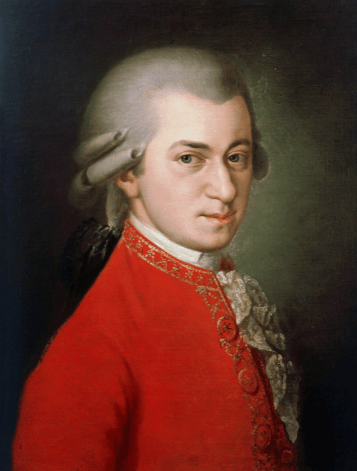
Wolfgang Amadeus Mozart/Wikipedia

But the price of perfection was steep. Lead makeup caused:

  • skin thinning
  • sores and lesions
  • hair loss
  • tooth decay
  • neurological symptoms
  • and, in severe cases, poisoning

Still, people kept using it. The look was too desirable, too culturally ingrained, too tied to class and identity. Powdered wigs, beauty patches, and towering hairstyles completed the look but it all began with that deadly white base.

In Mozart’s time, beauty was theatrical, extravagant, and often toxic. Lead wasn’t just an ingredient. It was a mask, and a silent killer hiding beneath silk gowns and powdered wigs. Not just for Mozart, but being one of the main or common causes of death for men and women of this time. 

Lead was one of the most dangerous beauty ingredients of the early 20th century, and women had no idea. In the 1920s, many face powders, skin “brighteners,” and complexion creams were laced with lead salts that promised a pale, flawless finish. The results looked glamorous in the moment, but the long‑term effects were anything but: irritated skin, breakouts, rashes, and in severe cases, poisoning. Still, women kept using these products because they delivered that coveted matte, porcelain complexion the decade adored. It’s one of the wicked truths of vintage beauty. The look was stunning, but the ingredient danced on the dangerous side. 

I’m Stacey Hobbs, thanks for reading! Until next time.
do you feel fabulous today?

Old Hollywood’s Most Dangerous Beauty Tricks

The glamorous, the risky, and the downright terrifying rituals behind the silver screen.

Old Hollywood beauty wasn’t just lipstick and powder — it was discipline, illusion, and at times…it walked on the dangerous side. Before dermatologists, lasers, and FDA regulations, actresses relied on extreme methods to achieve the flawless faces and iconic silhouettes we still romanticize today. These tricks worked, but they came with risks that would make a modern makeup artist faint.

Here are the most dangerous beauty rituals the stars actually used.

1. Audrey Hepburn’s Lash‑Separation Needle

Audrey’s doe‑eyed lashes required more than mascara, her lashes were engineered. Her makeup artist, Alberto de Rossi, used a fine sewing needle to separate each lash while the mascara was wet. The result was perfection; the risk was a scratched cornea. Old Hollywood had a motto: Beauty is pain, pain is beauty — and precision.

Read more: Audrey Hepburn’s Lash‑Separation Needle (Tips From Her Makeup Artist) – It’s Life with Stacey Hobbs

2. Rita Hayworth’s Acidic Hair Rinse

To maintain her iconic red waves, Rita Hayworth soaked her hair in hot oil, then rinsed it with a mixture of lemon juice and ammonia to restore shine. Effective? Yes. Safe? Absolutely not. The acidity could burn the scalp and strip the hair, but it gave her that luminous, camera‑ready glow.

Read more: Rita Hayworth’s Hair Rinse – It’s Life with Stacey Hobbs

3. Marilyn Monroe’s Petroleum Jelly Glow

Marilyn’s signature radiance came from slathering her face in Vaseline under heavy foundation. It created a soft‑focus effect under studio lights, but it also clogged pores, trapped bacteria, and caused breakouts. Still, the glow was worth it to her.

Read more: Marilyn Monroe Usage of Vaseline as Primer and Highlighter From Her Make-up Artist – It’s Life with Stacey Hobbs

4. Jean Harlow’s Toxic Platinum Hair

Harlow’s white‑blonde hair was legendary and, one may add lethal. Her dye mixture included bleach, ammonia, and Lux flakes, applied weekly. The chemical burns were so severe she often wore wigs between shoots. Her look inspired a generation; her routine would be illegal today.

Read more: Jean Harlow’s Toxic Platinum Hair – It’s Life with Stacey Hobbs

5. Greta Garbo’s Brow Erasure

Garbo shaved off her eyebrows entirely and re-drew them, as many stars did in her era, making this a very common feature, she re-drew them with charcoal and petroleum jelly. The danger wasn’t the shaving, it was the permanent follicle damage. Some actresses of the era lost their brows forever.

6. Carole Lombard’s Light‑Bulb Makeup Test

To mimic harsh studio lighting, Lombard applied her makeup in front of a bare, blazing light bulb. It worked, but it also risked burns and eye strain. She believed if it looked good under that bulb, it would look good anywhere.

Check it out: Carole Lombard’s Light‑Bulb Makeup Test – It’s Life with Stacey Hobbs

7. Gloria Swanson’s Acidic Milk Baths

Swanson bathed in soured milk, rich in lactic acid. While lactic acid is now a beloved skincare ingredient, her version was un-regulated, un-predictable, and at times painful. But it kept her skin luminous on camera.

Check it out: Gloria Swanson’s Sour‑Milk Baths – It’s Life with Stacey Hobbs

8. The Matchstick Eyeliner Trick

When eyeliner wasn’t available, actresses burned a matchstick, blew it out, and used the soot as a soft liner. The risk? Ash, debris, and bacteria near the eye. But the smoky effect was irresistible.

Check it out: The Soap‑and‑Matchstick Brow Trick – It’s Life with Stacey Hobbs

9. Lana Turner’s Satin‑Only Sleep Rule

To preserve her curls, Turner slept exclusively on satin pillowcases. Safe? Yes. But the dangerous part was the tight pin curls she wore underneath — secured with metal pins that could scratch the scalp or break her hair if she moved too much.

Check it out: Lana Turner’s Satin‑Only Sleep Rule – It’s Life with Stacey Hobbs

Old Hollywood beauty wasn’t effortless, it was crafted with discipline, creativity, and sometimes alarming methods. These women didn’t have filters or Photoshop. They had needles, chemicals, and ingenuity.

Their beauty secrets remind us of a truth the studios never admitted, glamour was an art — and at times it walked on the dangerous side.

I’m Stacey Hobbs, thanks for reading! Until next time.
do you feel fabulous today?
Catherine de’ Medici: The Lady Who Brought Beauty (and Fashion) to France

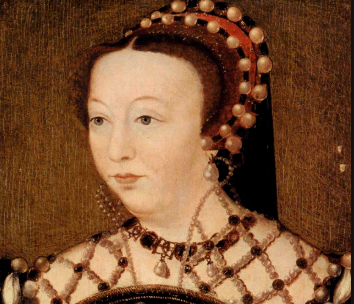
When Catherine de’ Medici arrived in France in 1533 as the new Queen of France, she did not come alone. She brought with her an entire world, a Renaissance beauty culture shaped by Italian science, alchemy, perfumery, and ritual. In doing so, she forever altered the course of French beauty and fashion.

Catherine was not merely a queen; she was a cultural architect. Raised in Florence, surrounded by the Medici dynasty’s obsession with art, fragrance, and innovation, she understood beauty as both an aesthetic and political language. When she crossed the Alps to marry the future King Henry II, she carried with her the tools that would transform France into the global capital of beauty and fashion.

Catherine de’ Medici, Queen of France, 
brought her own perfumer, and changed history

Catherine’s personal perfumer, Renato Bianco, later known as René le Florentin, transformed the French court by introducing alcohol‑based perfumes, refined botanical distillation, scented gloves, herbal waters, and early aromatherapeutic practices. His innovations marked the true birth of French perfumery, laying the foundation for the traditions that would eventually flourish in Grasse, inspire houses like Guerlain, and shape the modern fragrance industry as we know it today.

Medici introduced Italian cosmetics and skincare

Catherine de’ Medici also introduced Italy’s advanced cosmetics and skincare traditions to France. She brought rice powders, complexion waters, early cold creams, herbal tonics, beauty elixirs, and medicinal botanicals into the French court. These innovations became the foundations of French skincare rituals, centuries before the French pharmacy culture rose to prominence.

She shaped the early language of French fashion

Catherine de’ Medici’s influence on French beauty culture cannot be overstated. Though this piece is not strictly about French fashion history, her legacy forms the foundation of it. She introduced structured bodices, corsetry, high collars, elaborate sleeves, jeweled accessories, and refined Italian tailoring techniques—innovations that helped shape the early identity of what would eventually become French haute couture or couture. More importantly, Catherine transformed beauty from performance into ritual. Within her court, beauty became a daily practice, a marker of cultural identity, a form of feminine power, and a subtle instrument of political symbolism. This is the root of the enduring French belief that beauty is not about transformation, but intention.

Catherine’s philosophy of beauty naturally evolved into the earliest forms of French couture. By insisting that beauty be intentional, structured, and ritualized, she laid the groundwork for a culture where clothing became an extension of identity and power. Her introduction of Italian tailoring, architectural silhouettes, and jewelled embellishment created a new visual language at court, one that fused discipline with ornamentation. These choices didn’t just influence fashion; they established the principles of craftsmanship, precision, and aesthetic purpose that later defined French haute couture. In Catherine’s world, beauty was not decoration but design, and that belief became the groundwork for the fashion houses that would emerge centuries later.

Catherine’s court became the template that later French monarchs would refine, expand, and immortalize. Marie de’ Medici inherited Catherine’s belief that beauty was a form of statecraft, using portraiture, jewels, and elaborate dress to project stability and royal authority. A century later, Marie Antoinette transformed these foundations into full spectacle, elevating beauty and fashion into political theatre—powdered hair, towering silhouettes, and pastel palettes that signaled both extravagance and vulnerability. Yet the core philosophy remained Catherine’s: beauty as ritual, identity, and intention. Her influence shaped the French attitude that femininity and luxury are not frivolous, but cultural expressions of refinement, discipline, and power. Through these monarchs, Catherine’s legacy evolved from courtly ritual into the DNA of France itself.

1. How French couture houses later codified Catherine’s principles

Catherine’s philosophy didn’t disappear with her court, it became the preliminaries for the fashion institutions that would define France centuries later. When houses like Worth, Poiret, Chanel, and Dior emerged, they inherited her belief that beauty must be intentional, architectural, and ritualized. The structured bodices she introduced evolved into the corsetry and tailoring that shaped haute couture. Her emphasis on craftsmanship became the foundation of the French atelier tradition, where garments were not merely sewn but engineered. Even the idea that beauty expresses identity, rather than disguises it, became central to French fashion’s ethos. In many ways, Catherine’s court was the first couture house. It was a place where beauty was designed, curated, and elevated into cultural power.

2. How Catherine’s rituals echo in modern French beauty (pharmacies, skincare, minimalism)

Catherine’s beauty rituals live on in modern French culture, especially in the country’s devotion to skincare and pharmacy‑based beauty. The French preference for minimalism, which includes clean skin, subtle fragrance, effortless elegance, all reflects her belief that beauty should enhance rather than transform. The daily rituals she established at court evolved into the modern French approach to beauty: consistent routines, high‑quality ingredients, and an emphasis on prevention over correction. Even the iconic French pharmacy, with its curated shelves of serums, creams, and botanical treatments, echoes Catherine’s Renaissance roots in herbalism and apothecary science. Today’s French woman, with her understated makeup and intentional skincare, is still following Catherine’s philosophy, which is beauty as ritual, as opposed to performance.

3. How her political use of beauty shaped European court culture more broadly

Catherine’s use of beauty as political symbolism re-shaped France, in addition to the courts of Europe. Monarchs and noblewomen across Italy, Spain, Austria, and England adopted her strategies, by using dress, jewels, and ritualized beauty to communicate power, stability, and lineage. Portraiture became a political tool; fashion became diplomacy; and beauty became a language understood across borders. Her influence can be seen in Elizabeth I’s iconic white‑painted visage, in the Habsburgs’ elaborate court dress, and in the Spanish infanta portraits that used silhouette and ornament to signal dynastic strength. Catherine taught Europe that beauty could be weaponized: a controlled, intentional display that reinforced authority and shaped public perception. Her legacy is not just French—it is continental.

Catherine de’ Medici’s Enduring Legacy

Catherine de’ Medici’s legacy is woven into the very fabric of French culture. She did not simply introduce new silhouettes or beauty rituals, she re-shaped France’s understanding of elegance and identity. Her court became the prototype for the refined aesthetic that later monarchs would elevate, from Marie de’ Medici’s regal portraiture to Marie Antoinette’s theatrical extravagance. The principles Catherine established, intentional beauty, disciplined craftsmanship, and ritualized self‑presentation, formed the foundation of French couture centuries before the term existed. When the great fashion houses emerged, they inherited her belief that beauty must be purposeful, architectural, and deeply tied to personal and cultural identity.

Her influence extends far beyond the gilded halls of the Renaissance. Modern French beauty, with its devotion to skincare, pharmacy culture, and effortless minimalism, still echoes Catherine’s philosophy that beauty is a daily ritual rather than a performance. The French approach to luxury; which is quiet, intentional, and rooted in craftsmanship, reflects the values she embedded into court life. Catherine transformed beauty into language, diplomacy, and power. Today, French elegance, from couture ateliers to the shelves of a Parisian pharmacy, carries the imprint of the woman who brought Italy’s Renaissance refinement to France and shaped a beauty philosophy that continues to influence the world.

I’m Stacey Hobbs, thanks for reading. Until next time!
do you feel fabulous today?

Marie Antoinette + Louis XVI: Off with Their Heads!: Beauty (and Fashion) to end the French Monarchy? How the French Revolution Became the New Beginning!

By the late eighteenth century, beauty at Versailles had become more than ritual, it became a spectacle. What Catherine de’ Medici once introduced as intention and identity had evolved into a theatrical performance of power. The court lived inside a world of powdered faces, towering poufs, jewel‑encrusted bodices, and gowns so elaborate they required entire teams of dressers. Beauty was no longer a form of refinement; it was now a public declaration of hierarchy. Every plume, every ribbon, every imported bolt of silk reinforced the idea that the monarchy existed above ordinary life. And in a France struggling with scarcity, that message became dangerous.

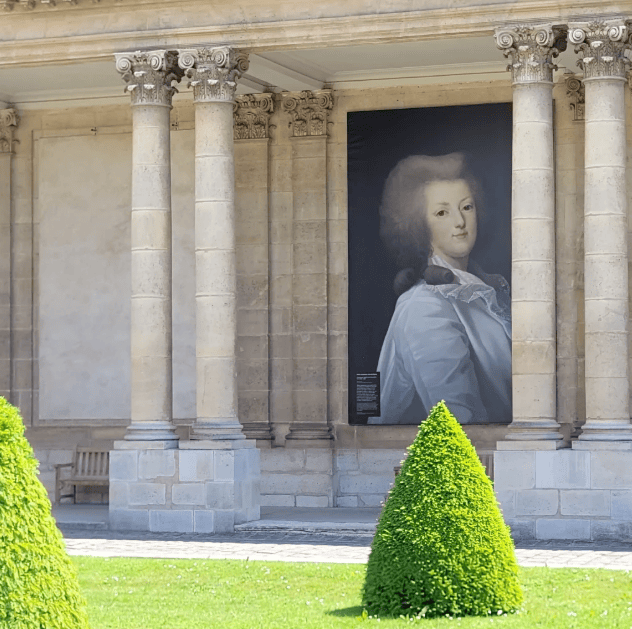
Marie Antoinette, Queen of France, last Monarch of France.

Marie Antoinette’s image became the epicentre of this tension. Her hair, her gowns, her private retreats at the Petit Trianon, all of it fed a growing narrative that beauty had become waste, privilege, and detachment. Pamphlets circulated mocking her hairstyles; caricatures exaggerated her spending; rumours inflated her toilette into a daily spectacle of indulgence. Whether true or not, the optics mattered. In a world where bread was scarce, beauty became political fuel. The queen’s appearance, once meant to project stability and elegance, now symbolized excess and indifference. Versailles had turned beauty into theatre, and the audience — the French people — were no longer applauding.

As revolutionary sentiment grew, beauty itself became a symbol of the monarchy’s downfall. The elaborate silhouettes of Versailles were replaced almost overnight by simplicity. Powdered wigs disappeared. Hair was worn natural. Skin was left bare. Muslin dresses, once considered too plain for court, became political statements. The Revolution toppled a monarchy; it toppled an aesthetic. The guillotine ended more than royal rule. It ended the beauty system that had defined France for over a century.

But in that collapse, something new began. The Revolution cleared the stage for a different kind of beauty. A beauty that is rooted in naturalism, restraint, and democratic identity. Citizens emerged with clean lines, un-adorned fabrics, and a rejection of aristocratic excess. Beauty became a symbol of virtue rather than privilege. Even haircuts carried political meaning; the short, practical styles worn by revolutionaries contrasted sharply with the towering constructions of Versailles. Simplicity became a form of solidarity.

This shift marked a profound turning point in French beauty history. The fall of Versailles did not erase France’s aesthetic identity, instead it reset it. The Revolution created space for new ideas, new rituals, and new philosophies. In the decades that followed, France would re-build its beauty culture from the ground up, embracing influences from antiquity, science, and emerging modernity. The monarchy’s collapse became the foundation for a new beginning that consisted of a beauty philosophy that valued intention over excess, identity over spectacle, and elegance over extravagance.

The Revolution did not end French beauty. It reinvented it.

Welcome to the new world of French beauty! 

I’m Stacey Hobbs, thanks for reading! Until next time.
do you feel fabulous today?
Part V: Balenciaga During the War: Innovation Under Constraint, Constraint as Catalyst

When World War II descended on Paris, couture houses shuttered, fled, or struggled to survive. Fabric was rationed, clients disappeared, and the city’s creative atmosphere dimmed under the Occupation. But inside the quiet walls of 10 Avenue George V, Cristóbal Balenciaga continued to work, not in defiance, but in devotion to craft.

War did not diminish him. Instead, it distilled him.

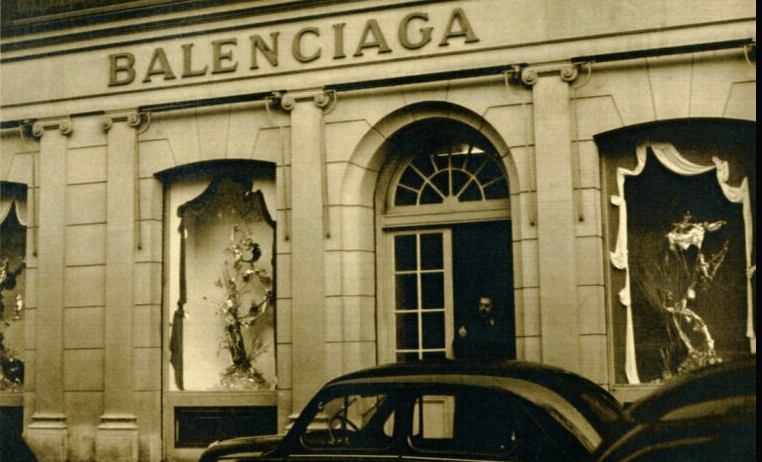
House of Balenciaga, Paris, circa 1937
Wartime fashion, WWII fashion, circa 1943, Surreal flowers, Balenciaga dress

The Discipline of Scarcity

With materials restricted, Balenciaga faced limitations that would have crippled a lesser designer. He refused to see deprivation as defeat. Instead, he treated scarcity as a kind of intellectual sport, a puzzle demanding elegance, discipline, and invention. He began experimenting with stiffened fabrics that could hold sculptural shapes, minimal seams that conserved every precious inch of cloth, razor‑precise cutting that left no waste, and pared‑back silhouettes built on architecture rather than ornament. Where other designers saw lack, Balenciaga saw purity. His wartime creations grew quieter, more monastic, almost ascetic in their restraint — the earliest seeds of the revolutionary volumes he would unveil in the 1950s.

A House That Stayed Open

Unlike many couture houses, Balenciaga’s remained open throughout the occupation. His Spanish nationality gave him a unique position: he was not French, not German, not politically entangled. Clients who stayed in Paris, aristocrats, diplomats’ wives, women with means, continued to come to him.

Inside his salon, the war felt distant. Not absent, but muted.

Balenciaga created a sanctuary of discipline and beauty, a place where the outside world’s chaos could not intrude on the purity of line and form.

Innovation Born From Constraint

Balenciaga’s most important ideas began in the shadows of wartime Paris, where scarcity forced innovation and constraint became a catalyst. In this environment, he developed the semi‑fit suit, a silhouette that skimmed the body without clinging; the barrel line, an early exploration of volume that would evolve into his later cocoon shapes; the raised waistline, which subtly elongated the torso; and the minimalist evening dress, stripped of decoration yet rich in architectural structure. These were not trends or seasonal experiments. They were studies in proportion, volume, and restraint, revolutions born from limitation, and the foundation for the sculptural modernism that would define his legacy.

The Quiet Rivalry With Dior Begins

During the war, Christian Dior was still working under Lucien Lelong, quietly observing the fashion world contract under rationing and fear. From that vantage point, he watched Balenciaga’s wartime collections with awe. Dior later admitted that Balenciaga’s discipline, his ability to innovate with almost nothing, to carve new silhouettes out of scarcity, shaped his own understanding of proportion and line. When Dior launched the New Look in 1947, the world saw it as an explosion of post‑war femininity, a dramatic return to luxury after years of deprivation. Yet even then, Dior called Balenciaga “the master of us all.” That reverence was forged in these years, when both designers learned that constraint could sharpen vision, and that true innovation often begins in the dark.

A Vision That Could Not Be Interrupted

While Paris struggled, Balenciaga refined. While others paused, he studied. While the world was fractured, he had concentrated on building, building a new shape. In the quiet discipline of wartime constraint, he sharpened his eye and stripped his work down to its architectural core. By the time the war ended, Balenciaga was no longer simply a Spanish couturier in Paris; he was the designer other designers feared, and revered. His wartime silhouettes revealed a mind that could innovate under pressure, sculpting new forms from scarcity and silence. Part V marks the moment when constraint becomes catalyst, and Balenciaga’s genius becomes undeniable.

I’m Stacey Hobbs, thanks for reading. Until next time!
do you feel fabulous today?