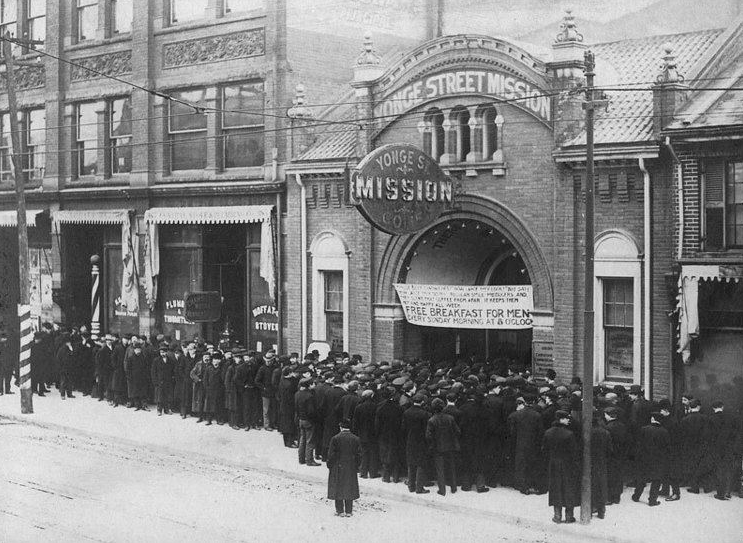
The Great Depression hit both Canada and the United States with devastating force, but the experience was not identical. The two countries entered the crisis differently, suffered differently, and responded differently. When you place these two countries side by side, the contrast reveals how geography, politics, and economic dependency shaped the fate of millions.
Great Depression/Vancouver Public LibraryGreat Depression in Canada/ThoughtCoGreat Depression in Toronto/Alcheteron.comGreat Depression in the U.S./All That’s Interesting
1. The Shock: America’s Collapse vs. Canada’s Contagion
The Depression began in the United States with the 1929 stock market crash — a collapse of speculation, credit, and confidence. America’s economy imploded from within.
Canada’s collapse was external. As a resource‑exporting nation, Canada depended heavily on American and British demand for wheat, lumber, minerals, and manufactured goods. When the U.S. economy fell, Canada’s export markets evaporated. The shock was imported, not self‑generated.
America fell first. Canada fell because America fell.
2. Un-employment: Parallel Suffering, Different Scale
Both countries saw un-employment soar, but Canada’s rate climbed even higher.
United States: roughly 25% un-employment at the peak
Canada: estimates reach 27%–30% in some regions
Canada’s smaller, more export‑dependent economy meant that when global demand collapsed, entire industries, wheat farming, mining, forestry, were wiped out almost overnight.
3. Social Impact: Urban Despair vs. Rural Catastrophe
In the United States, the Depression is remembered through images of breadlines, Hoovervilles, and urban un-employment. Cities bore the brunt of the crisis.
In Canada, the suffering was more rural. Prairie farmers faced drought, dust storms, crop failure, and collapsing wheat prices. The Depression and the Dust Bowl overlapped, creating a double disaster. Rural poverty became national trauma.
America’s Depression was industrial. Canada’s Depression was agricultural.
4. Government Response: The New Deal vs. Reluctant Relief
The United States responded with bold federal intervention. President Franklin D. Roosevelt’s New Deal re-shaped American governance: public works, social programs, banking reform, labour protections, and national relief.
Canada’s response was slower, smaller, and more cautious. Prime Minister R. B. Bennett introduced relief programs and work camps, but nothing on the scale or ambition of the New Deal. Political hesitation, constitutional limits, and provincial‑federal tensions slowed action.
Canada eventually adopted social reforms, un-employment insurance, federal relief coordination, but only after years of pressure and political upheaval.
America reinvented government. Canada improvised government.
5. Political Consequences: Transformation vs. Turbulence
The Depression re-shaped American politics permanently. It cemented the Democratic Party’s dominance, expanded federal power, and redefined the social contract.
Canada’s political landscape fractured:
The rise of new parties (CCF, Social Credit)
Regional alienation
Western anger over federal inaction
A national debate over federal vs. provincial responsibility
The Depression didn’t just hurt Canada economically; it re-shaped its political identity.
6. Recovery: Parallel Climb, Shared Catalyst
Both countries began recovering slowly in the late 1930s, but true economic revival came with World War II. Wartime production, military mobilization, and industrial expansion pulled both nations out of the Depression.
The recovery was not ideological. It was industrial.
I’m Stacey Hobbs, thanks for reading! Until next time. do you feel fabulous today?
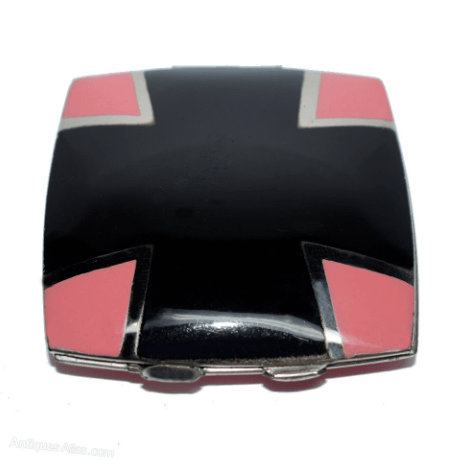
The 1930s vanity was a small universe of feminine ritual, a curated collection of objects that reflected both the austerity of the Depression and the glamour women still craved. A glass dish of cold cream was almost always present, its thick, velvety texture used nightly to remove makeup and impurities, and to restore softness to skin that endured harsh winters and coal‑heated homes. Beside it sat a compact powder tin, often decorated with Art Deco motifs, holding finely milled powder that women used to create the era’s matte, porcelain complexion. A small rouge pot added warmth to cheeks, its creamy formula dabbed on with fingertips rather than brushes. As for lipstick it was usually in shades of rose, raspberry, or deep garnet, which stood upright like a tiny totem of glamour, even in households where money was scarce.
Vintage glass of cold cream, circa 1930sArt deco powder compact, circa 1930sArt deco powder compact, circa 1935Small pot rouge, circa 1930s/etsy.comSmall pot rouge, circa 1930s
Hair items were equally essential, from a boar‑bristle brush, a jar of brilliantine or hair tonic for shine, and metal wave clips used to set the iconic Marcel waves overnight. Many women kept a small bottle of perfume or cologne, often inexpensive drugstore scents like lavender water or rose toilette, though some treasured a single bottle of Coty or Guerlain as a lifelong luxury. On the nightstand, a hand cream or lotion sat ready to soothe dry skin or dehydrated skin, along with a cuticle oil or nail buffer to maintain neat, natural nails — manicures were simple, often with clear polish or the popular “moon manicure” that left the nail’s half‑moon bare.
Guerlian parfum, France, circa 1930Pacquin hand cream, hand balm, circa 1934
A small mirror, sometimes freestanding and sometimes part of the vanity set, reflected the soft glow of a bedside lamp. Jewelry trays held simple pieces, consisting of a string of pearls, a brooch, or a pair of clip‑on earrings, which were removed before sleep. Many women also kept a satin pouch for hairpins, a tin of talcum powder, and a tiny bottle of witch hazel for toning the skin. In both Canada and America, Depression‑era practicality meant that beauty items were cherished, repaired, refilled, and reused; yet the vanity remained a place of glamour, where women preserved a sense of dignity and beauty despite the economic hardships outside their doors.
I’m Stacey Hobbs, thanks for reading! Until next time. do you feel fabulous today?
The Great Depression did not simply change economies; it changed aesthetics. It re-shaped how women dressed, groomed, and expressed identity. In both Canada and the United States, fashion and beauty became mirrors of survival, industries forced to adapt to scarcity, shifting values, and a new emotional landscape. Yet the two countries experienced this transformation differently, shaped by culture, geography, and the realities of daily life.
Courtesy via Fashion History TimelineCourtesy via MountainLifestyle.ca
1. The Mood: From Roaring Glamour to Practical Elegance
The 1920s had been a decade of sparkle, beaded dresses, bobbed hair, lacquered lips, and the optimism of modernity. The Depression extinguished that light. Fashion became sober, restrained, and quietly resourceful.
United States
American fashion shifted from flapper exuberance to a more conservative silhouette. Hemlines dropped. Fabrics simplified. Decoration disappeared. Hollywood became the nation’s escapist fantasy, offering glamour on screen even as women at home mended dresses and repurposed garments.
Canada
Canadian fashion absorbed the same global trends but with a more pragmatic tone. Rural hardship, especially in the Prairies (Alberta, Saskatchewan, and Manitoba), meant clothing was often homemade, repaired, or re-purposed. Urban centres like Toronto and Montreal followed American and European styles, but with fewer resources and slower adoption.
In both countries, fashion became less about novelty and more about endurance.
2. Materials & Making: The Rise of Thrift, Repair, and Ingenuity
The Depression forced women to become designers in their own right — altering, mending, and reinventing garments.
United States
Women shortened old dresses, added collars, or re-cut garments to follow new silhouettes.
Feed sacks became fabric for children’s clothing, manufacturers even printed floral patterns to meet demand.
Department stores survived by offering layaway plans and promoting “investment dressing.”
Canada
Home sewing surged. Rural women relied heavily on patterns from Eaton’s and Simpson’s catalogues.
Clothing was passed down through families, altered repeatedly, and worn until threadbare.
Wool, flannel, and sturdy cotton dominated — fabrics that could withstand harsh winters and hard use.
Thrift became a national aesthetic.
3. Beauty: Affordable Glamour, Emotional Escape
Beauty did not collapse during the Depression; it adapted. Cosmetics offered small luxuries women could still afford, and both countries saw the rise of “budget beauty.”
United States
The American beauty industry innovated aggressively:
Lipstick became a symbol of resilience; inexpensive, uplifting, and widely marketed.
Home permanents and homemade hair treatments grew in popularity.
Beauty became an emotional escape, with glamour in miniature.
Canada
Canada’s beauty industry was smaller but followed American trends:
Drugstores became beauty hubs, offering affordable powders, rouges, and cold creams.
Canadian women embraced practical grooming: neat hair, minimal makeup, and clean lines.
Salons in big-cities offered permanents and finger waves, but women of small-towns relied on home techniques.
Beauty survived because it offered hope — a small, daily act of control.
4. Retail & Industry: Survival Through Adaptation
United States
American fashion houses struggled, but Hollywood kept glamour alive. Costume designers like Adrian and Edith Head shaped national style more than couture. Department stores shifted to:
affordable ready‑to‑wear
installment plans
“value” lines
simplified silhouettes
The Depression democratized fashion, necessity made simplicity chic.
Canada
Canada’s fashion industry was smaller and more vulnerable:
Local dressmakers and tailors became essential.
Eaton’s and Simpson’s catalogues guided national style, offering affordable patterns, and ready‑to‑wear.
Montreal’s garment district grew, producing practical clothing for domestic markets.
Canada’s industry survived through practicality, not glamour.
5. Cultural Meaning: Fashion as Resilience
The Depression changed how women understood clothing and beauty.
United States
Fashion became a negotiation between fantasy and reality. Women admired Hollywood glamour but lived in thrift. The contrast shaped American style for decades — a blend of practicality and aspiration.
Canada
Fashion became a symbol of endurance. Clothing reflected weather, work, and resourcefulness. Canadian style emerged from necessity: modest, durable, quietly elegant.
In both countries, fashion became a source of survival.
I’m Stacey Hobbs, thanks for reading! Until next time. do you feel fabulous today?
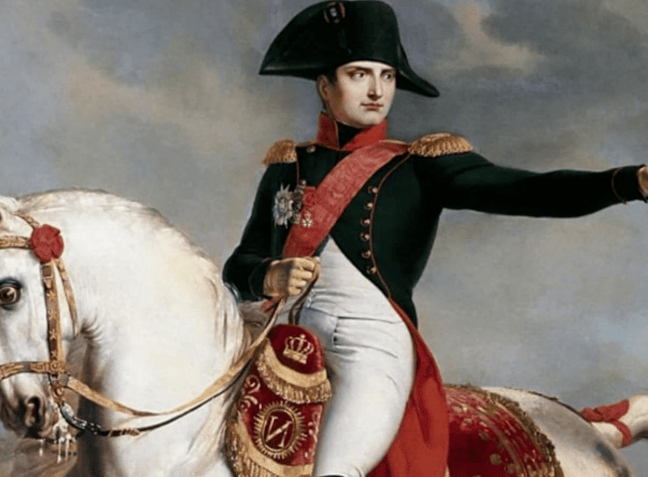
Welcome to the Napoleonic Era in French Beauty History! Have you got your snack, a drink perhaps? Get oh-so comfortable, as we begin the next journey into French Beauty History, by delving into the Napoleon era!
When the French Revolution ended, France entered a strange, suspended moment — a nation exhausted by terror, stripped of monarchy, and un-sure of what beauty meant in a world where extravagance had once been punishable by death. As Napoleon Bonaparte rose to power, French women found themselves quietly reclaiming the rituals they had abandoned. Beauty became a form of recovery, a way to rebuild identity after years of political upheaval. Gone were the towering powdered wigs and jewel‑encrusted faces of the ancient régime; in their place emerged a new aesthetic shaped by restraint, classical influence, and emotional caution.
Women embraced a return to Greek and Roman simplicity, inspired by the neoclassical art Napoleon adored. Hair was parted down the centre and arranged in soft curls that framed the face, a gentle, feminine contrast to the severity of revolutionary years. Complexions remained pale, but not powdered; the matte, natural skin reflected a desire for purity rather than aristocratic excess. Rouge was used sparingly, applied only to revive the cheeks rather than to signal status. Dresses followed the same classical revival: high waists, flowing fabrics, and silhouettes that skimmed the body rather than sculpted it. Beauty became quiet, intellectual, and symbolic of a nation trying to steady itself.
Perfume culture also began its slow return. After years of political suspicion toward luxury, women cautiously re-introduced light floral scents of violets, roses, and orange blossom, scents that felt safe, feminine, and un-controversial. Joséphine de Beauharnais, not yet Empress, but already a cultural force, championed this new softness. Her influence helped shift beauty away from revolutionary austerity and toward a refined, classical elegance that felt modern for its time.
This first phase of Napoleonic beauty is the bridge between the horror of the Revolution and the lush imperial glamour that follows. It marks the moment when French women re-claimed their mirrors, their perfumes, and their sense of self — quietly, deliberately, and with a new understanding of beauty as resilience rather than excess.
I’m Stacey Hobbs, thanks for reading. Until next time! do you feel fabulous today?
World War I didn’t just alter borders and politics, it transformed daily life, gender roles, industry, and consumer culture. And beauty is always the first place where social change becomes visible. The war created a new kind of woman, a new kind of economy, and a new kind of beauty standard.
Courtesy via artofit.orgFashion in WWI, August 1918/Vogue
1. Women Entered the Workforce, and Beauty Followed
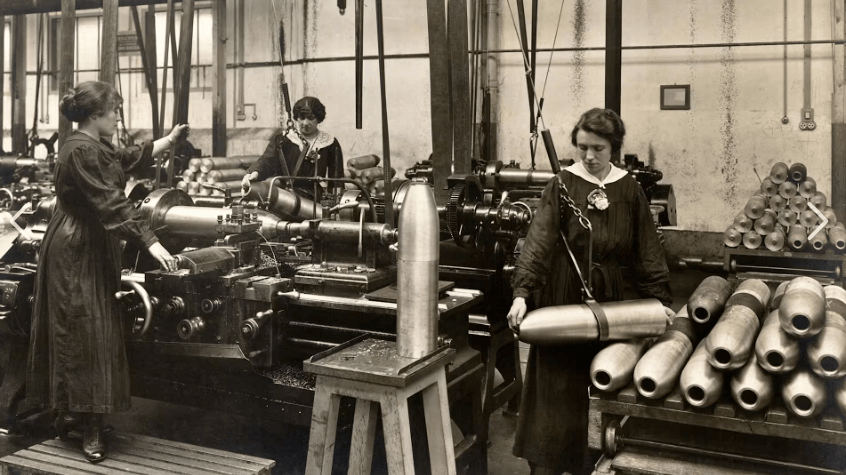
Before WWI, most women in Canada, America, and Europe lived within domestic spheres. The war changed that overnight.
With men overseas, women stepped into:
factories
munitions plants
transportation
agriculture
clerical work
This shift had direct beauty consequences. Work was physical, fast‑paced, and often dangerous, which meant traditional beauty routines — elaborate hair, heavy skirts, restrictive corsetry — were no longer practical. Women needed styles that allowed movement, safety, and efficiency. Hair was pinned up or cut shorter. Clothing became simpler, lighter, and more functional. Makeup, once considered improper, began to appear discreetly as women sought small ways to maintain femininity in industrial environments.
The war didn’t just change where women worked. It changed how they presented themselves, how they saw themselves, and how society saw them. Beauty became less ornamental and more adaptive — a quiet reflection of women’s expanding roles outside the home.
Shorter Hair
Long hair was impractical around machinery. Women began pinning their hair tightly, cutting it shorter, and adopting proto‑bob styles that kept strands away from gears, heat, and hazardous equipment. Factories demanded efficiency and safety, and beauty adapted accordingly. What had once been a symbol of femininity — long, heavy hair arranged in elaborate styles — suddenly became a liability. Women needed hair that allowed them to work quickly, safely, and without constant maintenance.
This was the seed of the 1920s bob — born from necessity, not rebellion. Wartime practicality introduced women to the freedom of shorter hair, and once they experienced its convenience, many never returned to pre‑war styles. By the time the 1920s arrived, the bob was no longer simply a functional cut; it had evolved into a cultural statement. But its origins were rooted in the factories of WWI, where beauty quietly re-shaped itself to meet the demands of a new world.
Minimal Makeup
Factory rules discouraged heavy cosmetics. Women wore light powder, subtle rouge, a touch of petroleum jelly on their lashes, and kept grooming simple and utilitarian. Beauty had to withstand heat, dust, long shifts, and strict regulations. Anything too scented, too shiny, or too elaborate was considered impractical — and in some cases, unsafe. The goal was to look tidy, not decorative, and to maintain a sense of personal dignity within demanding industrial environments.
This was beauty stripped down to its essentials. It became functional, shaped by necessity rather than fashion. These pared‑back routines transformed cultural expectations, where women learned to value practicality, efficiency, and subtlety in their appearance. By the time the post‑war years arrived, this new relationship with beauty — streamlined, modern, and less bound by Victorian ideals — had already begun to influence the aesthetics of the 1920s and beyond.
2. Scarcity Changed What Women Could Buy
Wartime shortages meant fats, oils, alcohol, metals, glass, and key industrial chemicals were re-directed toward military production. These materials were essential for cosmetics — everything from cold creams and lipsticks to powders, soaps, and perfumes relied on ingredients suddenly classified as wartime necessities. Factories that once produced beauty goods shifted to manufacturing munitions, medical supplies, and machinery, leaving women with fewer products and far simpler formulas.
With beauty houses limited by rationing, women adapted. They stretched what they had, re-purposed household items, and embraced a pared‑down routine shaped by scarcity rather than fashion. This period of minimalism didn’t diminish women’s interest in beauty; instead, it transformed it. Wartime shortages pushed beauty culture toward practicality, resourcefulness, and innovation, with changes that would influence post‑war cosmetics and set the stage for the streamlined, modern aesthetics of the 1920s.
Cold Cream + Soap
Wartime shortages meant that key ingredients used in cosmetics — fats, oils, alcohol, metals, glass, and industrial chemicals — were diverted to military production. Beauty houses struggled to source even the most basic materials, and many factories that once produced creams, powders, and perfumes were re-purposed for munitions or medical supplies. With commercial products limited or un-available, women turned to simple, practical alternatives that could be made at home or purchased cheaply.
Women relied on homemade cold creams, basic soaps, and natural oils to maintain their routines. These improvised products were far less luxurious than pre‑war cosmetics, but they offered a sense of normalcy during a period defined by scarcity. Beauty became an exercise in resourcefulness — a pared‑down, utilitarian practice shaped by necessity rather than fashion. This wartime minimalism influenced post‑war aesthetics, laying the groundwork for the streamlined, modern beauty culture that emerged in the 1920s.
Perfume
Alcohol was rationed for medical and military purposes, which meant perfume production slowed dramatically. Many fragrance houses either halted operations or produced only minimal quantities for elite clients. For most women, perfume became a luxury they could no longer access. Instead, they turned to simple floral waters, homemade distillations, or went without scent entirely. Beauty during the war shifted from indulgence to practicality, and fragrance — once a daily ritual — became another reminder of the sacrifices woven into wartime life.
Packaging
Metal shortages meant fewer compacts, fewer lipstick tubes, and a widespread shift toward cardboard and paper packaging. Beauty brands had to re-think how products were stored, sold, and carried, often re-placing metal cases with lightweight, disposable alternatives. The ornate vanity items women once kept on dressing tables — engraved compacts, decorative lipstick holders, mirrored cases — became rare luxuries. In their place came modest, pared‑down designs that reflected the austerity of wartime life.
Beauty became modest, resourceful, and stripped of excess. Women adapted to packaging that was practical rather than glamorous, and this simplicity subtly re-shaped the aesthetics of everyday beauty. The war didn’t eliminate women’s interest in cosmetics; it transformed it, pushing beauty culture toward functionality and frugality — changes that would echo into the post‑war years and influence the streamlined modernity of the 1920s.
3. Fashion Shifted Toward Practicality
Hemlines Rose
Hemlines rose — not for style, but for mobility. Shorter skirts made factory work easier, allowing women to move quickly, climb steps, operate machinery, and navigate crowded industrial floors without the weight and drag of heavy fabric. The long, layered skirts of the pre‑war years were simply incompatible with the demands of wartime labour. As women adapted their clothing to the realities of work, practicality altered fashion. What began as a functional adjustment would later influence post‑war silhouettes, helping usher in the streamlined, modern styles of the 1920s.
Corsets Declined
Steel was needed for ships and weapons, and corset production halted almost overnight. Without the rigid metal supports that had defined women’s undergarments for decades, the silhouette softened. Women adopted simple brassieres, lighter undergarments, and more natural lines that allowed them to work, move, and breathe with far greater ease. What began as a wartime necessity quietly shifted the foundations of women’s fashion.
This was the beginning of modern lingerie. The rigid, constricting shapes of the Victorian and Edwardian eras gave way to comfort, practicality, and a new understanding of the female form. Once women experienced the freedom of lighter undergarments, they didn’t return to the old structures — and the post‑war years would build on this transformation, ushering in the streamlined silhouettes of the 1920s.
Uniform Influence
Military aesthetics entered civilian fashion: structured coats, trench coats, khaki tones, and practical boots became part of everyday wardrobes. These pieces were durable, weather‑resistant, and designed for movement — qualities that aligned perfectly with the demands of wartime life. As women navigated factories, transport work, and volunteer roles, clothing borrowed from military design offered both protection and efficiency.
The war introduced the idea that clothing could be functional and stylish. Utility no longer meant unattractive; instead, it became a new form of modernity. This blending of practicality and aesthetics laid the groundwork for post‑war fashion, where streamlined silhouettes, tailored outerwear, and neutral palettes would continue to shape women’s wardrobes well into the 1920s.
4. The Psychological Impact: Beauty as Morale
Governments encouraged women to maintain grooming as a symbol of national morale. Even small acts of personal care — tidy hair, clean nails, a touch of powder — were framed as contributions to stability and spirit on the home front. Beauty became a re-assurance that life, dignity, and order persisted despite the uncertainty of war.
This is why, even in scarcity, women found ways to:
tint cheeks with beet juice
darken lashes with soot or petroleum jelly
style hair simply, but neatly
Beauty was an emotional resilience.
5. The Birth of the Modern Beauty Industry
WWI accelerated industrialization. Factories that once produced wartime goods later produced powders, lipsticks, mascaras, creams, and perfumes. The machinery, assembly‑line methods, and chemical processes developed for military manufacturing were re-purposed for civilian industries — beauty included. What had once been a small, fragmented sector suddenly had the infrastructure to scale.
Companies like Max Factor, Elizabeth Arden, Coty, and Maybelline expanded rapidly after the war, using wartime manufacturing techniques to create standardized products at mass volume. These brands embraced industrial efficiency, modern packaging, and scientific formulations, positioning beauty as part of a new, modern lifestyle. The post‑war boom didn’t just revive cosmetics; it transformed them into a fully fledged industry — organized, branded, and ready to define the aesthetics of the 1920s.
This is why the 1920s saw an explosion of:
commercial cosmetics
standardized packaging
mass advertising
department store beauty counters
WWI laid the industrial foundation for the beauty boom of the 1920s.
Women proved they could work, manage households, and contribute to national efforts. This changed how society viewed femininity. Strength, competence, and resilience became part of the female image, expanding the definition of what women could be. The war demonstrated that femininity was not fragile or ornamental — it was capable, adaptable, and essential to national stability. As women stepped into roles once reserved for men, the cultural boundaries around gender shifted, laying the groundwork for a more modern understanding of womanhood.
Before WWI
Before WWI, femininity was closely tied to domesticity, delicacy, and modesty. Women were expected to embody gentleness and restraint, with beauty framed as something ornamental rather than functional. Their roles were largely confined to the home, and cultural ideals emphasized softness, passivity, and a carefully maintained appearance that reflected Victorian and Edwardian values. This narrow definition of femininity shaped everything from clothing to grooming — until the war disrupted it.
After WWI
After WWI, femininity came to signify independence, capability, and modernity. Women had stepped into public life — working, organizing, managing households, and contributing directly to national stability — and society could no longer confine femininity to delicacy or domesticity. The female image expanded to include strength, competence, and self‑direction. Beauty and fashion followed suit, embracing streamlined silhouettes, practical routines, and a modern aesthetic that reflected women’s new roles and freedoms.
The House of Lanvin adapted quickly to the post‑war world, embracing the new emphasis on practicality and modern femininity. Jeanne Lanvin’s designs — soft, fluid, and quietly luxurious — aligned perfectly with women’s shifting roles, offering clothing that balanced elegance with ease of movement. Her atelier became one of the first major fashion houses to translate wartime changes into a refined, modern aesthetic, helping shape the look of the emerging “new woman.”
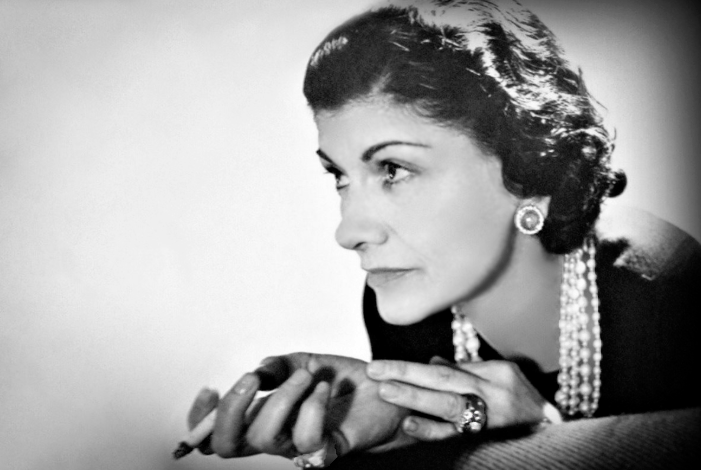
Coco Chanel emerged from the post‑war period with a radically modern vision of femininity. Her designs rejected pre‑war ornamentation in favour of simplicity, comfort, and freedom of movement — ideals shaped directly by wartime practicality. Jersey, once considered a humble fabric, became a symbol of modern elegance under her hand. Chanel’s silhouettes were relaxed, streamlined, and deliberately un-restrictive, reflecting the new reality of women who worked, moved, and lived with greater independence. In redefining luxury as something effortless rather than elaborate, Chanel helped crystallize the aesthetic of the modern woman and set the tone for the decade that followed.
Beauty reflected this shift:
simpler hairstyles
practical clothing
subtle but intentional make-up
a move away from Victorian excess
This emphasis on composure created a bridge to the post‑war years. When peace returned, women carried these habits with them: streamlined routines, lighter cosmetics, shorter hair, practical clothing, and a new understanding of beauty as something modern, efficient, and self‑directed. These wartime shifts didn’t disappear; they evolved, setting the stage for the bold, liberated aesthetics of the Flapper era.
I’m Stacey Hobbs, thanks for reading! Until next time. do you feel fabulous today?
Coco Chanel designed her clothes the way she lived her life: instinctively, physically, and without pretense. While other couturiers sketched elaborate designs on paper, Chanel rejected the idea that fashion could be conceived in two dimensions. She didn’t draw. She didn’t storyboard. She didn’t begin with a silhouette imagined from afar. Chanel designed with her hands, directly on the body, shaping fabric in real time until it matched the clarity she carried in her mind.
Her process was tactile, intimate, and almost improvisational. Chanel began with fabric, not a sketch. She draped it over a mannequin or a fit model, pinning and un-pinning, cutting and re-shaping, adjusting the fall of a sleeve or the curve of a neckline until the garment felt inevitable. She trusted her eye more than any pencil. She trusted movement more than theory. And she trusted the body — its needs, its rhythms, its natural proportions — far more than the decorative traditions of couture.
This approach produced clothes that looked simple, but were anything but simplistic. Chanel’s simplicity was engineered through touch. She refined garments through countless micro‑adjustments: a softened shoulder, a shortened hem, a seam moved half an inch to restore balance. Her fashion house often watched her work in silence, waiting for her to declare a garment “right,” knowing that her approval came not from aesthetic flourish, but instead from the garment’s ability to move with ease. Chanel’s clothes were not built to impress from a distance. They were built to live in.
Designing directly on the body also shaped her philosophy. Chanel believed fashion should liberate women, not restrain them. She refused corsetry, padding, and the rigid structures that dominated early twentieth‑century couture. Instead, she created clothes that followed the body’s natural lines — jersey dresses that skimmed rather than clung; cardigans that moved rather than stiffened; suits that allowed women to walk, work, and breathe. Her garments were born from life, not fantasy. They were designed for women who needed clothing that could keep pace with them.
This method set her apart from her contemporaries. While designers like Poiret and later Dior built theatrical silhouettes from sketches and structured underpinnings, Chanel’s work emerged from instinct and practicality. She didn’t impose shape; she discovered it. She didn’t sculpt women into ideals; she revealed their ease. Her clothes were modern because her process was modern — grounded in reality, movement, and the tactile intelligence of her own hands.
Chanel’s refusal to draw was not a limitation. It was her advantage. By designing directly on the body, she created garments that felt lived‑in from the moment they were made. Her suits, dresses, and knits carry that quality even today: an effortless clarity, a sense of inevitability, a quiet confidence that comes from being shaped by touch rather than theory.
Chanel didn’t sketch fashion. She felt it — and that is why her work still feels alive.
I’m Stacey Hobbs, thanks for reading! Until next time. do you feel fabulous today?