Food + Beauty Recipes: The Jalapeño Series: Eating Bird Food–Inspired Jalapeño Glow Bowl

There are ingredients that feel alive the moment they touch the tongue, and jalapeños have always been one of them. Bright, green, fiery, and unmistakably bold, jalapeños carry a kind of heat that wakes up both food and the senses. Long before they became a modern culinary staple, jalapeños were woven into Indigenous and Mexican food traditions — a symbol of vitality, warmth, and the kind of inner fire that shows on the skin.

Historical Notes
Jalapeños trace back thousands of years to Mesoamerican cultures, where chiles were used not only for cooking but for medicine, ceremony, and preservation. The Aztecs cultivated chiles as essential crops, believing their heat supported strength, stamina, and purification.

In traditional Mexican cooking, jalapeños became a cornerstone of salsas, stews, and healing broths. Their heat was seen as balancing — warming the body, stimulating digestion, and supporting circulation. When Spanish influence blended with Indigenous foodways, jalapeños spread across the Americas, eventually becoming a defining ingredient in Tex‑Mex cuisine.

By the 20th century, jalapeños entered global kitchens, celebrated for their versatility: fresh, pickled, roasted, smoked (as chipotle), or blended into sauces. Today, they remain one of the most recognizable peppers in the world — a symbol of bold flavour, warmth, and culinary personality.

Jalapeños endure because of their dual identity: a food ingredient that awakens flavour, and a beauty ingredient that awakens circulation.

Jalapeño Beauty Benefits

Circulation Boost
Capsaicin — the compound responsible for jalapeño heat — increases blood flow when applied topically. This can create a natural flush, support glow, and enhance nutrient delivery to the skin.

Detox Support
Spicy foods stimulate digestion and lymphatic movement, helping the body process inflammation and eliminate waste — an internal pathway to clearer skin.

Warmth & Revitalization
Jalapeño‑infused oils or balms can provide gentle warmth to tight muscles, stiff joints, or dull skin, making them ideal for invigorating beauty rituals.

Antioxidant Protection
Jalapeños contain vitamin C and carotenoids, which help protect skin from environmental stress and support collagen production.

Inner Wellness
Eating jalapeños can support metabolism, digestion, and circulation — all of which contribute to a brighter, more energized complexion.

Jalapeños remind us that beauty isn’t always soft — sometimes it’s warm, bold, and full of personality.

This series will explore jalapeños through both food and beauty, revealing how heat can be nourishing, balancing, and glow‑enhancing.

Eating Bird Food–Inspired Jalapeño Glow Bowl

Prep 20 min  Cook 20 min  Serves 2

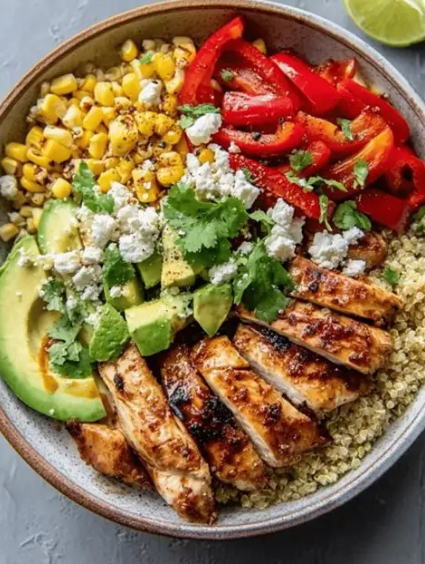
Hot Honey Chicken & Quinoa Bowls with a Grilled Peach, Corn and Jalapeño Salsa/oldspoontales.com

Ingredients

  • 2 cups cooked quinoa
  • 2 grilled chicken breasts, sliced
  • 1 cup corn kernels (fresh or grilled)
  • 1 ripe peach, sliced or grilled
  • 1 jalapeño, finely diced
  • 1 red bell pepper, sliced
  • 1 avocado, sliced
  • 1/4 cup feta cheese, crumbled
  • 2 tbsp fresh cilantro
  • 1 lime, cut into wedges
  • 2 tbsp hot honey
  • 1 tbsp olive oil
  • 1/2 tsp salt
  • 1/4 tsp pepper

Instructions

  1. Prepare the quinoa
    Cook quinoa according to package instructions and fluff with a fork.
  2. Grill the chicken
    Season chicken with salt and pepper, grill until cooked through, then slice.
  3. Make the jalapeño salsa
    Combine corn, diced jalapeño, bell pepper, cilantro, lime juice, salt, and olive oil.
  4. Assemble the bowl
    Add quinoa to each bowl, top with chicken, peach slices, avocado, and jalapeño salsa.
  5. Finish with hot honey
    Drizzle hot honey over the bowl and garnish with feta and extra cilantro.

Source: oldspoontales.com

Jalapeño Beauty Benefits 

Capsaicin (the heat compound)

  • Boosts circulation → natural glow
  • Supports detox pathways
  • Enhances nutrient delivery to the skin

Corn & Peach

  • Antioxidants that brighten complexion
  • Vitamin C for collagen support

Avocado

  • Healthy fats for skin barrier strength
  • Deep internal moisture

Hot Honey

  • Humectant properties
  • Adds warmth that supports digestion → gut‑skin harmony

Beauty and nourishment have always been intertwined and every ingredient tells its own story — from the kitchen to the vanity, from ancient rituals to modern wellness. Whether used to warm the body, brighten the skin, or elevate a simple meal, these ingredients remind us that radiance is never one‑dimensional. It’s flavour, it’s history, it’s ritual, and it’s the quiet way small choices accumulate into something luminous.

Each recipe and beauty ritual in this series is a celebration of that connection — a reminder that caring for yourself can be delicious, sensory, and deeply rooted in tradition. 

In the end, glow is not just something you see. It’s something you cultivate — one ingredient, one ritual, one moment at a time.

I’m Stacey Hobbs, thanks for reading! Until next time.
do you feel fabulous today?
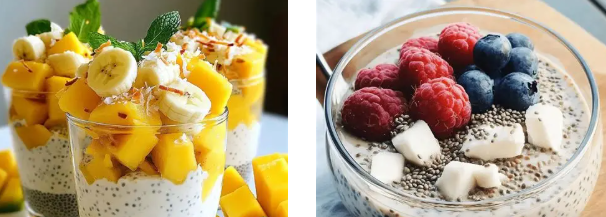
Food and Beauty Recipes: Coconut Series: Tori Wesszer: Inspired Coconut Chia Pudding

There are ingredients that feel sun‑kissed even in the middle of winter, and coconut has always been one of them. Long before it became a modern wellness staple, coconut was woven into beauty rituals across tropical regions, coconuts became a symbol of nourishment, softness, and the kind of natural radiance.

Historical Notes
Coconut has been used in beauty rituals for centuries across South Asia, Polynesia, and the Caribbean. In Ayurvedic tradition, coconut oil was considered a cooling ingredient — used to soothe the skin, calm inflammation, and nourish hair. Polynesian women used coconut oil daily to protect their skin from sun and saltwater, creating the signature glossy glow associated with island beauty. In the 1950s, Hollywood adopted coconut oil as a pre‑beach ritual, linking it to bronzed, glamorous summer skin.

Coconut’s longevity in beauty culture comes from its versatility: food, oil, milk, and scent — all tied to nourishment and softness.

Today, coconut remains one of the most versatile ingredients in the food‑and‑beauty world — a quiet reminder that radiance often comes from simplicity.

Coconut Beauty Benefits

Skin Softening
Coconut oil melts into the skin, leaving it supple, moisturized, and subtly luminous. Its natural fatty acids help reinforce the skin barrier, making it ideal for dry climates or winter months.

Hair Nourishment
Used as a pre‑wash treatment, coconut oil helps reduce protein loss in hair, leaving strands smoother, shinier, and more resilient.

Gentle Exfoliation
Combined with sugar or fine salt, coconut oil becomes a lush, hydrating scrub that polishes the skin without stripping it.

Inner Wellness
Coconut milk and coconut water offer hydration and healthy fats that support skin from within — beauty that begins in the kitchen.

Tori Wesszer: Inspired Coconut Chia Pudding

A soft, soothing, wholesome coconut‑based beauty‑from‑within pudding — perfect for breakfast, snacks or a wellness moment.

Prep 5 min  Cook 0 min  Serves 2

Tropical Coconut Chia Parfait Delicious and Nutritious/recipeinsight.com

Ingredients

  • 1 cup full‑fat coconut milk
  • 3 tbsp chia seeds
  • 1–2 tbsp honey or maple syrup
  • 1/2 tsp vanilla extract
  • Pinch sea salt
  • Optional toppings berries, mango, shredded coconut, mint

Instructions

  1. Mix the base
    In a bowl or jar, whisk coconut milk, chia seeds, honey, vanilla, and sea salt until fully combined.
  2. Rest + thicken
    Let sit for 10 minutes, then stir again to prevent clumping. Refrigerate for at least 2 hours or overnight.
  3. Serve
    Spoon into bowls or jars and top with fresh fruit, shredded coconut, or mint.

Source
Tropical Coconut Chia Parfait Delicious and Nutritious – Recipe Website
Easy Guilt-Free Creamy Coconut Chia Pudding Bowl Recipe

Historical Context
Coconut‑based puddings have roots in South Asian and Pacific Island traditions, where coconut milk was used to create silky desserts long before dairy became common. Chia seeds, meanwhile, trace back to Aztec and Mayan cultures, where they were prized for stamina, hydration and beauty rituals — often consumed before long journeys or ceremonial events.

The modern revival of chia pudding emerged during the 2010s wellness wave, when natural‑foods bloggers embraced it as a nutrient‑dense, minimal‑ingredient breakfast. Coconut milk became the preferred base for its creaminess, healthy fats, and glow‑forward reputation.

Tori Wesszer’s Fraîche Living vibe— gentle, wholesome, nurturing — fits perfectly. Coconut chia pudding feels like a contemporary expression of ancestral beauty foods: simple, soothing, and luxurious.

Beauty Benefits of This Recipe

Coconut Milk

  • Healthy fats strengthen the skin barrier
  • Provides internal moisture for glow
  • Lauric acid offers antimicrobial benefits

Chia Seeds

  • Omega‑3s reduce inflammation
  • Fiber supports gut‑skin harmony
  • Minerals help maintain skin elasticity

Honey

  • Hydrating humectant
  • Antioxidants help reduce dullness

Vanilla

  • Contains polyphenols that help fight oxidative stress

Berries + Mango (Optional)

  • Vitamin C boosts collagen
  • Antioxidants brighten complexion

Coconut has always been more than an ingredient. Across this series, it revealed itself as a global beauty symbol — a thread running through tropical cuisines, ancestral hair rituals, wellness movements and modern clean‑eating culture. Every creator explored illuminated a different facet of coconut’s personality:

  • Jillian Harris brought out its bright, feminine comfort.
  • Love & Lemons highlighted coconut’s citrus‑fresh, plant‑forward elegance.
  • Tori Wesszer leaned into coconut’s gentle, nurturing wellness.
  • The Recipe Critic revealed its bold, crispy, weeknight versatility.
  • Giada De Laurentiis paired coconut with Italian lightness and coastal refinement.
  • Gordon Ramsay showcased coconut’s ability to stand up to heat, spice, and intensity.
  • Ricardo Cuisine grounded coconut in warm, rustic, Québécois‑meets‑global comfort.
  • Pardon Your French connected coconut to nostalgic French provincial baking.

I’m Stacey Hobbs, thanks for reading Face by Stace! Until next time.
do you feel fabulous today?

Part 2: Lanvin in the 1930s: Couture Romance + Bias‑Cut Glamour

The 1930s marked a new chapter for Lanvin — one defined by fluidity, elegance and the rise of bias‑cut glamour. While the 1920s were structured and architectural, the 1930s softened into movement, drape and sensuality.

Jeanne Lanvin embraced the decade’s cinematic allure, creating gowns that shimmered, flowed and captured light like water.

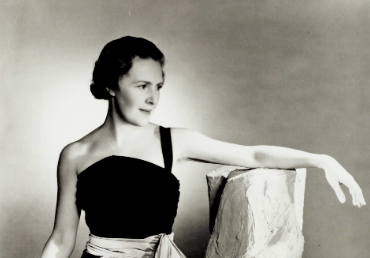
Jeanne Lanvin
Lanvin, 1933

The Bias Cut: Liquid Movement and Modern Seduction

The bias cut — pioneered by Madeleine Vionnet — became a defining technique of the 1930s. Lanvin adopted it with her own signature softness.

Her gowns featured:

  • silk charmeuse and satin
  • velvet draped on the bias
  • fluid lines that hugged the body
  • movement that felt almost musical

Lanvin’s bias‑cut dresses were less about seduction and more about elegance — a kind of refined sensuality that defined the decade.

Couture Romance: Embroidery, Draping and Evening Glamour

The 1930s were Lanvin’s golden era of evening wear.

  • metallic embroidery
  • crystal beadwork
  • velvet gowns with sculptural drape
  • capes, boleros and dramatic sleeves
  • soft pastels and jewel tones

Her designs captured the glamour of the era’s cinema — gowns meant to be seen under chandeliers, photographed in silver light and worn by women who understood the power of quiet drama.

Lanvin’s 1930s Woman: Poised, Modern, Radiant

Lanvin’s clientele expanded globally during this decade.

Her designs were worn by:

  • actresses
  • performers
  • aristocrats
  • women who wanted elegance with movement

The 1930s Lanvin woman was confident, modern and luminous — a reflection of the decade’s sophistication.

Why the 1930s Matter for Lanvin

This era cemented Lanvin’s reputation as a master of drape, a leader in couture eveningwear, a designer who understood movement and a creator of timeless glamour.

The 1930s were the moment Lanvin stepped fully into the realm of cinematic couture — a legacy that still shapes the house today.

I’m Stacey Hobbs, thanks for reading Face by Stace! Until next time.
do you feel fabulous today?
What Happened When Nylon Stockings Were Scarce During WWII? Women Got Creative! Plus, the Birth of Leg Makeup & Sally Henson Leg Makeup

Before we begin, I’ve got a question for you. Have you tried painting the legs to appear like nylon stockings? Including drawing the line at the back of the legs? And I’m not referring to a spray bottle like they have today. It isn’t as easy as it looks I can tell you that much. One mistake and you’ve got to start from scratch.

During World War II nylon stockings largely disappeared from civilian life, because nylon production was re-directed to military uses (parachutes, ropes, tire reinforcement), prompting rationing, black markets, creative leg-make-up solutions came into play and intense post-war demand that sparked the so‑called, the infamous “nylon riots.”

Women making hosiery at Minnesac Mills, Philadelphia. (Photo by Lewis Hine,
1936-1937)/www.smithsonianmag.com

Nylon was invented in the mid‑1930s and introduced to the public as a revolutionary hosiery fibre as early as 1939 and later than 1940; its stretch, durability, and “no‑run” promise made stockings a fashion must‑have almost instantaneously.

During WWII many women simulated stockings by applying a thin, sheer “leg make-up” (often called liquid stockings) and drawing a seam line; recipes ranged from commercial leg make-up to home mixes like tea or gravy browning and the look was widely taught in war-time beauty guides and films. Tea? Gravy browning? Did these ingredients actually hold up as a substitute for stockings? 

Wartime conversion and shortages

Nylon was diverted to war production and civilian hosiery largely halted by early 1942. This shift is the central cause of wartime shortages and later post-war demand. The key date of wartime conversion after Pearl Harbor.

The War Production Board and related agencies managed raw materials; silk imports from Japan had already been curtailed before full nylon conversion.

Nylon’s military uses made it strategically important, so civilian hosiery production was suspended.

When limited civilian shipments resumed in 1945–1946, mass crowds and “nylon riots” erupted in multiple cities as women queued for scarce pairs. Examples in the press include long lines, store scuffles, and police crowd control. These are widely reported in local papers of late 1945.

Lines formed when nylons were finally available again in Autumn 1945 after the end of World War II/German Hosiery Museum

Women improvised with leg make‑up (“paint‑on” stockings) and commercial products such as “Stocking Stick.” Advertisements and how‑to columns from the era promoted these alternatives.

The creative adaption:
Leg Make-up

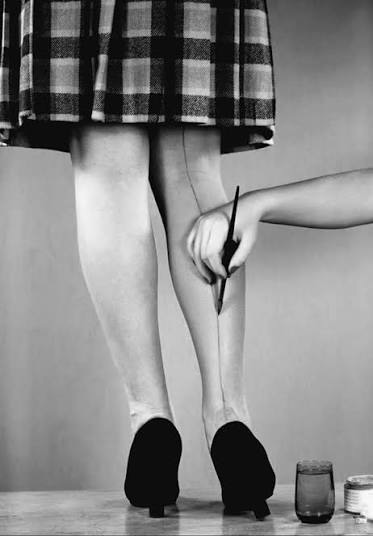
With Nylon Stockings Scarce, Women would Paint their Legs so it Looked like Stockings, 1940s/rarehistoricalphotos.com

Women had to resort to creativity, since leaving the home without nylon stockings was un-heard of. In other words, it was societal un-acceptable, un-civilized to step out in bare legs. What would the people say? This would lead to war-time shortages sparked a massive cosmetic boom.

Women on the home front used “liquid stockings,” which are cosmetic preparations spread thinly over the legs to mimic silk hosiery and often finished the look by drawing a dark seam up the back of the leg with eyeliner pencil to imitate seamed stockings. This practice became common because nylon and silk were diverted to the war effort, creating widespread shortages. There was a war going on, don’t you know? 

Many period sources and modern retrospectives document a range of approaches: commercial leg make-up bars or creams, thin liquid foundations and improvised household mixtures (tea, shoe polish dilutions or gravy browning in Britain) were reported. These methods varied in smell, longevity, and realism.

These home-made recipes were curated for women who couldn’t afford leg make-up or could find leg make-up, what was one to do? Resort to creative alternatives.

A common recipe from back in the day in the 1940s, kitchen staples like cocoa powder, instant coffee or tea, and liquid gravy browning (e.g., Kitchen Bouquet) were mixed with creams or water and smoothed onto the skin.

The hazard that may follow, while it offered a flawless artificial tan, this do-it-yourself method had drawbacks. Primarily with the savoury smell, the threat of running in the rain, oh, and let’s not forget, the risk of being chased by hungry neighbourhood pets. Oh, wait, there are those dogs coming, again. 

Perfecting the Illusion
To ensure the painted legs looked exactly like real stockings, a few extra steps were taken.

The Back Seam
The defining feature of 1940s stockings was the seam running up the back of the leg. Women used black or brown eyebrow pencils to draw a perfectly straight line.

The Heel Details
Many women would also shade the ankle and heel areas with makeup to mimic the reinforced heels of traditional silk or nylon hose.

Historical recipes give the most period-accurate finish but often used non-cosmetic ingredients that could stain clothing or irritate skin.

  • Leg makeup and “painted seams” to simulate stockings.
  • Wearing rayon or cotton hose when available, though these were less durable and less flattering.
  • Conserving and collecting damaged stockings for recycling into military supplies; collection drives were organized.
  • A thriving black market emerged; used or smuggled nylons fetched many times the retail price.

Commercial Brands 
Drugstores sold specialized leg foundations and stocking sticks by brands like Leg Silque, Toots, and LA Jack.

Bare Leg Bars
Department stores even set up “Bare Leg Bars” where women could have the leg makeup professionally applied and the seams perfectly drawn.

These adaptations also influenced fashion (greater acceptance of slacks and different skirt lengths) and everyday grooming practices.

Liquid hosiery being applied to a woman’s legs, Brisbane, 1941

Post-war demand and the Nylon Riots

When small shipments of nylons returned after Japan’s surrender, pent‑up demand exploded. Massive crowds, fights and broken windows—referred to as “nylon riots”— which occurred in multiple U.S. cities between late 1945 and early 1946 as women rushed stores for limited pairs. DuPont eventually scaled production to meet demand, but the immediate aftermath was chaotic.

Today, modern iterations of this vintage WWII staple (such as Sally Hansen Airbrush Legs or Dermablend Leg and Body Make-up) are still utilized to cover imperfections and achieve a flawless, airbrushed look.

I’m Stacey Hobbs, thanks for reading. Until next time!

do you feel fabulous today?

Part 3: Mid‑1960s Mod Beauty + Fashion: The Youth Breaks the Rules

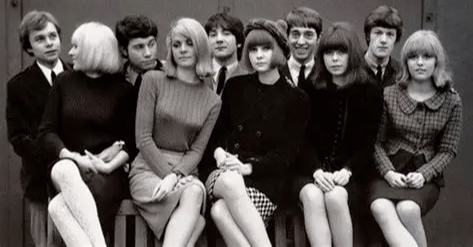
By 1964–1965, the cultural tremor became a full‑force Youthquake. London erupted onto the global stage and beauty and fashion were no longer dictated by couture houses or elite women — they were shaped by teenagers, musicians and the street itself.

This was the Mod era: graphic, bold, architectural and modern. 
The decade didn’t just shift — it snapped.

Beauty: Architectural, Doll‑Like, Iconic

The Mod face was a revolution. It rejected softness and embraced structure.

  • The cut crease — sharp, graphic, un-mistakable
  • Twiggy lashes — painted-on lower lashes, spidery upper lashes
  • White or nude lips — futuristic and stark
  • Pixie cuts — Vidal Sassoon’s geometric rebellion
  • Powdery matte skin — poreless, doll-like, sculpted

Makeup became a visual language of youth. 
It wasn’t about enhancing features — it was about creating a character.

Fashion: The Mod Girl Takes Over

The Mod wardrobe was fast, fun and young.

  • Mini skirts — Mary Quant’s cultural shockwave
  • Go-go boots — playful futurism
  • Shift dresses — clean, modern, liberated
  • Op Art prints — dizzying black-and-white geometry
  • Pop Art fashion — comic-book colours and bold motifs

This was fashion that moved at the speed of youth. It wasn’t precious — it was powerful.

Culture: London Becomes the World’s Style Capital

By 1965, London dethroned Paris.

  • Carnaby Street became the epicentre of global cool
  • Models like Twiggy and Jean Shrimpton became cultural icons
  • Designers embraced youth instead of resisting it
  • Music and fashion fused into one un-stoppable force

The Mod era wasn’t just a trend — it was a cultural takeover.

Youth dictated the market. 
Youth dictated the tone. 
Youth dictated the future.

The world followed.

I’m Stacey Hobbs, thanks for reading Face by Stace! Until next time.
do you feel fabulous today?

Prada Part I: The Intellectual Powerhouse of Italian Fashion

How a Milanese leather shop became the mind of modern fashion

Italian fashion is often associated with sensuality, craftsmanship and the sun‑drenched glamour of the Mediterranean. But Prada is different. Prada is the mind of Italian fashion — the house that made intellect chic, awkwardness desirable and minimalism emotionally charged. Before we talk about the post‑WWII rise of Florence and Milan, we begin here with the brand that refined the global conversation around luxury.

Prada’s story doesn’t begin with spectacle. It begins quietly, in 1913, inside a small leather goods shop in Milan. Mario Prada built a reputation for exquisite craftsmanship, earning the honour of becoming an official supplier to the Italian Royal House. But the Prada we know today — the Prada that changed fashion — emerged decades later under the leadership of Miuccia Prada.

When Miuccia took over in 1978, she didn’t just inherit a brand. She inherited a legacy of Italian artisanship and transformed it into a cultural force. She brought political theory, feminism and avant‑garde thinking into fashion, turning Prada into a house where ideas mattered as much as aesthetics. She made luxury feel cerebral. She made beauty feel complicated. And she made the world pay attention.

Origins: Milan, 1913

  • Founded by Mario Prada as a luxury leather goods shop
  • Specialized in high‑quality bags, trunks and accessories
  • Became official supplier to the Italian Royal House
  • Early identity rooted in craftsmanship and prestige

The Miuccia Prada Revolution (1978–1990s)

  • Miuccia Prada takes over the family business
  • Introduces political theory and feminist thought into design
  • Re-imagines luxury through intellectual minimalism
  • Launches the iconic black nylon backpack (1985)
  • Establishes Prada as a house of ideas, not decoration

Prada’s Aesthetic Identity

  • Known for “ugly chic” — deliberate awkwardness, tension, and anti‑beauty
  • Balances minimalism and maximalism within the same collection
  • Prioritizes conceptual storytellingover trend‑driven glamour
  • Uses materials in un-expected ways (nylon, tech fabrics, industrial finishes)
  • Collaborates with architects and thinkers (Rem Koolhaas, Fondazione Prada)

Prada’s Rivals (Aesthetic, Not Personal)

Prada does not feud like Chanel or Lanvin. Prada’s rivalries are philosophical, not interpersonal.

  • Prada vs. Gucci — minimalism vs. maximalism
  • Prada vs. Versace — intellect vs. sensuality
  • Prada vs. Armani — conceptual vs. classic
  • Prada vs. French couture — ideas vs. tradition

These rivalries are aesthetic conversations, not feuds.

Prada is not just a fashion house — it is a cultural lens. It is the brand that made awkwardness elegant, intelligence desirable, and minimalism emotionally resonant. Lets delve into a deeper story of Italy’s rise: a story of craftsmanship, leather, tailoring and the post‑war cities that shaped a global industry.

Prada is the mind. Florence and Milan are the body. Together, they form the foundation of Italian fashion.

What’s coming in the Prada series:

Prada Part II — The Nylon Revolution

Prada Part III — Ugly Chic and the Power of Anti‑Beauty

Prada Part IV — Prada vs. Gucci: The Aesthetic Rivalry

Italian Fashion Post‑WW2: Florence, Milan, and the Rise of Craftsmanship

I’m Stacey Hobbs, thanks for reading Face by Stace! Until next time.
do you feel fabulous today?