Get Sharon Tate’s Ethereal Glow Girl

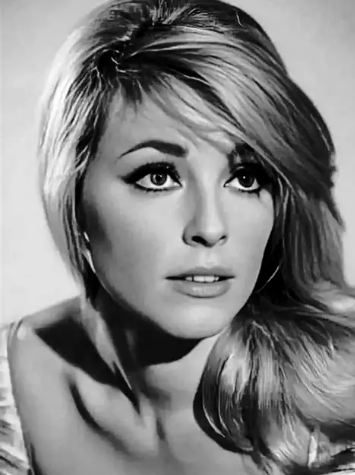
By the late 1960s, Sharon Tate had entered the later part of the decade with a kind of radiance that was couldn’t be missed. The kind of radiance that was a softness that wasn’t manufactured, but illuminated from within. While the decade embraced bold mod lines, graphic eyes and high‑contrast glamour, Sharon embodied a different kind of beauty. Her beauty radiated luminosity, angelic, and magnetic. Tate’s glow wasn’t just a look; it was a mood, a presence, a kind of effortless light that seemed to follow her everywhere she went.

She became the decade’s Ethereal Glow Girl, the woman who made minimalism feel romantic, who proved that softness could be just as iconic as drama, and whose beauty still shapes the “clean girl” aesthetic half a century later.

Sharon’s beauty philosophy was rooted in softness — a glow that felt effortless, almost weightless. Her routine was simple, but every step served that angelic, light‑from‑within effect she became known for.

1. Ice‑water facials. 
She began her mornings with cold‑water splashes to tighten, brighten, and wake the skin — a minimalist ritual that kept her complexion fresh on and off camera.

2. Moisturizer + foundation. 
Sharon mixed a touch of foundation with moisturizer, creating a sheer, luminous finish. It softened every feature and let her natural radiance shine through.

3. Soft, brushed‑out waves. 
Her signature hair came from large roller sets brushed into airy, romantic waves — a dreamy, soft‑focus finish that framed her face without ever overpowering it.

4. Almond oil on the ends. 
To keep her long blonde hair glossy, she smoothed almond oil through the ends, adding slip, shine, and that unmistakable California‑sunlight glow.

I’m Stacey Hobbs, thanks for reading! Until next time.
do you feel fabulous today?
PART IV: Balenciaga in Paris: The Birth of a New Style

1937–1940: When the Master Arrived and Paris Took Notice

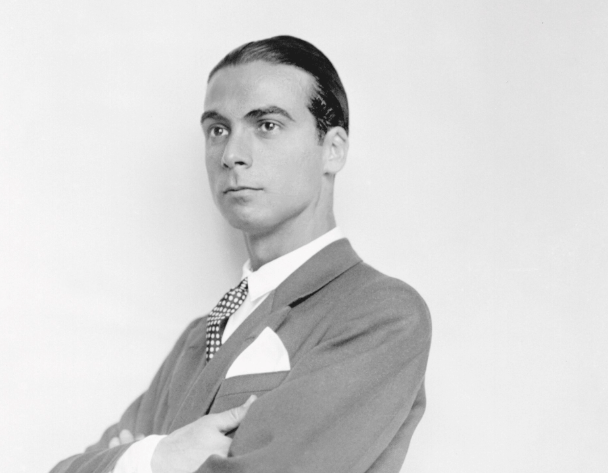
When Cristóbal Balenciaga arrived in Paris in 1937, he was not an un-known talent seeking approval, he was already a master. Spain had shaped him, disciplined him and refined his eye. But Paris would give him something Spain could not; a global stage and a couture audience hungry for something deliciously new.

He opened his house at 10 Avenue George V, a location that would become synonymous with revolution. Paris was still under the spell of Madeleine Vionnet’s bias cuts and the romanticism of Schiaparelli’s surrealism. Into this landscape walked Balenciaga — reserved, meticulous, and armed with a vision that felt both ancient and startlingly modern.

Balenciaga
Balenciaga Haute Couture
Balenciaga Haute Couture/Lifestyle Asia
Balenciaga Haute Couture Printemps/Ete (Spring/Summer) 1947

The First Collections: 
Spanish Shadows in Paris Light

His debut collections were Spanish, and critics saw the lineage instantly: echoes of Velázquez’s Infanta gowns, matador jackets with sharp, sculptural shoulders, black lace mantillas reimagined as veils and capes, and a sense of religious austerity softened into couture elegance. Paris had never encountered anything quite like it. His silhouettes were architectural, his lines pure, his construction almost monastic in its precision. Where other designers draped, Balenciaga sculpted. Where others embellished, he subtracted.

The Balenciaga Woman Emerges

From 1937 to 1940, a new kind of couture client began to emerge — a woman who wanted refinement without fuss, drama without decoration, and elegance without excess. Balenciaga’s woman was confident, modern, sculptural, and quietly commanding. She didn’t need sequins or surrealism. She needed structure, purity, and presence.

War, Disruption, and an Unshakable Vision

As Europe moved toward war, many couture houses faltered. Balenciaga did not. His Spanish years had taught him resilience; his Paris years demanded innovation. Even as materials grew scarce, he continued to refine his silhouettes, experimenting with stiffened fabrics, unexpected volumes, simplified lines, and architectural shaping. These early explorations would become the foundation of his most iconic forms: the balloon jacket, the baby‑doll dress, the semi‑fit suit, and the cocoon coat.

A New Standard for Couture

By 1940, Balenciaga was no longer the newcomer. He had become the designer other designers watched — the one whose work was studied, whispered about, and imitated. Paris understood that something monumental had arrived: a couturier who didn’t follow trends, instead set the trends, as well as re-shape couture.

Part IV marks the moment when Balenciaga stops being a Spanish couturier in Paris… and becomes Balenciaga, the architect of modern fashion.

I’m Stacey Hobbs, thanks for reading! Until next time.
do you feel fabulous today?

Yves Saint Laurent: The Designer Who Made Ready‑to‑Wear Revolutionary

Fashion changed forever. The day Yves Saint Laurent introduced luxury 
ready-to-wear to the world. 

Before Yves Saint Laurent, fashion lived in couture salons, in private fittings, in the world of ladies who could afford to have clothes made just for them. Couture was art, but it was also exclusion: beauty reserved for the few. luxury ready‑to‑wear had existed since the 1940s, when Lucien Lelong first introduced the idea, but it remained a whisper on the margins of couture. YSL turned that whisper into a revolution.

Yves Saint Laurent came along to shake things up, to change fashion, yet again. As per usual, he wouldn’t be YSL if he didn’t.

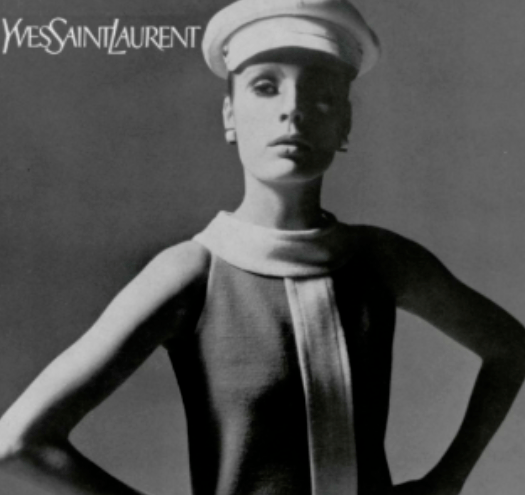
In 1966, Yves Saint Laurent did something no major couturier had dared to do, let alone think of, in this daring decade. He launched Rive Gauche, the first ready‑to‑wear line created by a haute couture designer.

Rive Gauche, Autumne/Hiver (Autumn/Winter) 1966/1967 Collection

It wasn’t just a clothing line. It was a cultural earthquake.

Rive Gauche was young, modern, and democratic. It brought high fashion out of the salons and onto the streets. It made style accessible — not cheap, not diluted, but reachable.

For the first time, women could walk into a boutique and buy a piece of designer clothing without needing an appointment, a fortune, or a social title. Designer clothing was now available for anyone. YSL believed that fashion should be lived in, not locked away. And he designed ready‑to‑wear with the same conviction he brought to couture.

Rive Gauche introduced:

  • Le Smoking — the tuxedo for women
  • Safari jackets
  • Peasant blouses
  • Trench coats
  • Jumpsuits
  • Sharp tailoring
  • Fluid dresses inspired by art and global culture

These weren’t watered‑down versions of couture. Instead, they were statements — bold, modern, and wearable.

YSL didn’t just popularize ready‑to‑wear. He legitimized it.

He made it glamorous. He made it intellectual. He made it powerful.

And he changed the business of fashion forever.

Every designer who came after him — from Armani to Gaultier to Tom Ford — built their empires on the foundation YSL created. Today, ready‑to‑wear is the backbone of every luxury house. It’s where the culture is. It’s where the world meets fashion.

And it all began with a young designer who believed that beauty should belong to everyone.

Yves Saint Laurent didn’t just design clothes. He democratized fashion. He changed how women dress, how they move, how they work, how they live.

Ready‑to‑wear wasn’t a trend.
It was a revolution. 
And YSL was the one who lit the match.

I’m Stacey Hobbs, thanks for reading. Until next time!
do you feel fabulous today?

Gloria Swanson’s Sour‑Milk Baths

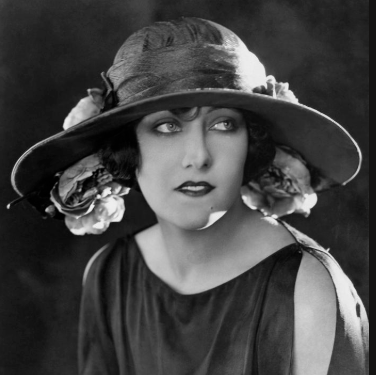
1920s, One of the stars of the Silent Film Era, Gloria Swanson & Her Sour-Milk Baths

Gloria Swanson was one of the earliest beauty obsessives in Hollywood. She was a woman who treated skincare like a sacred ritual long before the industry existed as we know it. While other actresses relied on cold cream and powder, Swanson turned to something far more unusual. She relied on sour‑milk baths.

Yes, literally soured milk.

Swanson believed that bathing in fermented milk kept her skin smooth, bright, and camera‑ready. Suprisingly, she wasn’t wrong. Sour milk contains lactic acid, a natural alpha‑hydroxy acid (AHA) that gently exfoliates the skin. Today, lactic acid is a beloved ingredient in modern skincare. But in Swanson’s era, there were no controlled formulas, no dermatologists, and no safety standards. She was experimenting with raw, un-predictable fermentation — and trusting her face to it.

The ritual was simple but intense. Swanson would soak in a warm bath infused with sour milk, letting the natural acids soften her skin and dissolve dullness. The result was a luminous glow that translated beautifully on black‑and‑white film. Directors loved it. Audiences adored it. And Swanson became known for her flawless complexion as much as her dramatic screen presence.

Of course, the method came with risks. Un-regulated acidity could irritate or burn the skin, and the smell was…memorable. But Swanson was devoted to her craft and she believed the glow was worth the discomfort.

Today, we understand exactly why her ritual worked and we’ve adjusted it perfectly to ensure its safely. Modern lactic‑acid lotions and body treatments offer the same brightening, smoothing benefits without the un-predictability of a bathtub full of sour milk.

Do you dare to try Gloria Swanson’s sour milk bath regime? 

I’m Stacey Hobbs, thanks for reading! Until next time.
do you feel fabulous today?

Carole Lombard’s Light‑Bulb Makeup Test aka “The Light‑Bulb Makeup Test”

Carole Lombard was one of the most talented, sophisticated actresses of the 1930s. Beneath her sophistication and sparkle was a lady who understood lighting, lenses and how makeup behaved under early film stock better than many cinematographers for that matter.

One of her tricks was something studio insiders called “The Light‑Bulb Makeup Test.”

Before stepping onto set, Lombard would take a bare light bulb, hold it close to her face, and study how her makeup reacted to the harsh, direct glow.

Why? Because early film lighting was hot, bright, unforgiving, prone to washing out features and capable of flattening the face entirely. 

If her makeup survived the light‑bulb test, it would survive the set.

Carole Lombard was evaluating under the light bulb for any other imperfections that can be corrected before filming:

  • Shine control: powder had to be matte enough to withstand heat.
  • Contour visibility: cheek definition needed to stay visible under glare.
  • Shadow placement: ensuring her face didn’t look flat on camera.
  • Lip contrast: making sure her mouth didn’t disappear under bright lights.
  • Eye definition: checking whether her liner and lashes held up.

This was Lombard’s version of doing a DIY screen test in seconds.

Why the light bulb test worked

Early Hollywood lighting was brutal. A single bulb mimicked the intensity, the direction, the harshness and the flattening effect…of the giant studio lamps.

If her makeup looked sculpted and alive under a bulb, it would look flawless on film.

Why this trick mattered

Carole Lombard wasn’t just beautiful, although she really was, she was also strategic. She understood cinematography, lighting ratios, how film stock read colour, and how to “build” a face for the camera.

This trick made her one of the most camera‑intelligent actresses of her era.

Modern translation

Today, the closest equivalent to Carole Lombard’s light bulb trick is:

  • checking makeup under your phone’s flashlight
  • testing in harsh bathroom lighting
  • using ring lights to see how contour reads
  • previewing makeup on camera before filming

Carole Lombard was doing this trick almost a century before influencers. 

I’m Stacey Hobbs, thanks for reading! Until next time.
do you feel fabulous today?

Introducing French Beauty History

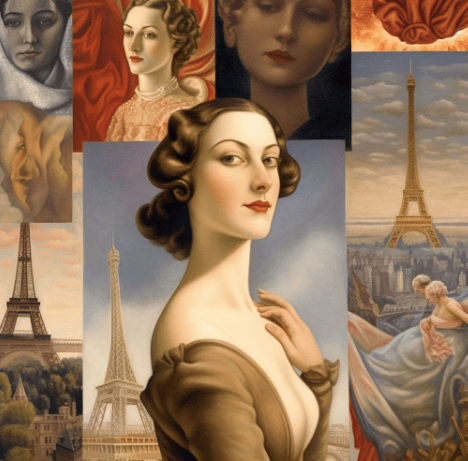
Catherine de’ Medici is one of the single most important figures in the entire history of French beauty and fashion. She is the woman who importsItalian beauty culture into France and sets the foundation for what we now call “French beauty.”

Catherine de’ Medici’s arrival to Paris in 1533 marks the moment when Renaissance cosmetics, perfumery, and skincare rituals crossed the Alps and took root in the French court of Versailles, shaping the standards and heart of beauty that would influence the world for centuries.

French beauty has always existed in a world of its own, a quiet, deliberate universe where elegance is not performed but instead embodied. It is timeless. Unlike the engineered glamour of Old Hollywood or the trend‑driven cycles of modern beauty culture, French beauty is rooted in something older, deeper, and more instinctive, a philosophy of restraint, sensuality, and lived‑in refinement that has shaped global beauty standards for centuries.

To understand French beauty is to understand the women who defined it — from the powdered aristocrats of the 18th century, to the salon‑cultured intellectuals of the 19th, to the actresses, couturiers, and perfumers who turned Paris into the heart of modern form of femininity. It is a lineage built on ritual rather than routine, on texture rather than technique, on the belief that beauty is not created in front of a mirror but cultivated through lifestyle, culture, and intention.

French beauty history is not simply a timeline of products or trends. It is the story of:

  • the birth of perfume in the royal courts
  • the rise of the Parisian salon as a cultural force
  • the invention of the modern skincare routine through French pharmacies
  • the couture houses that shaped the global idea of femininity
  • the effortless, undone aesthetic that became a philosophy, as opposed to it being a look

It is a history of contrasts — powdered excess giving way to minimalist chic, strict beauty rituals evolving into a celebration of natural texture, and centuries of cultural influence distilled into the modern idea of “effortless French beauty.”

This series explores the evolution of French beauty through the rituals, philosophies, and cultural forces that shaped it. Each installment focuses on a different era, from the powdered courts of Versailles to the rise of the French pharmacy, from post‑war minimalism to the modern “effortless” aesthetic. By tracing these shifts, we un/cover how French beauty became one of the most influential and enduring beauty philosophies in the world.

This series will also connect French beauty to broader global beauty cultures, including Italian, English, American, and Canadian beauty. By revealing how each nation’s history, values and aesthetics shaped its approach to femininity.

18th‑Century French Court Beauty

French beauty begins in the gilded world of Versailles, a place where appearance was political currency. Beauty was not personal; it was public performance. Women of the court used:

  • white lead powder for a porcelain complexion.
  • rouge to signal vitality and status.
  • mouches (beauty patches) to communicate flirtation, wit, or allegiance.
  • perfume to mask the realities of court life.

This era established the French belief that beauty is more of a language on its own, symbolic, coded, and deeply tied to culture.

19th‑Century Parisian Salon Culture

After the fall of the monarchy, beauty moved from the palace to the salon, the intellectual heart of Paris. Here, beauty became intertwined with:

  • literature
  • philosophy
  • politics
  • feminine intellect

Women like George Sand (author, pen-name George Sand, born Amantine Lucile Aurore Dupin) and Juliette Récamier shaped a new ideal: beauty as intelligence, conversation, and presence. The salon era birthed the idea that French beauty is not about perfection, instead French beauty is about character.

Early 20th‑Century French Pharmacy

This is where modern French beauty truly begins. French pharmacies introduced dermatologist‑backed skincare, gentle formulations, minimalist routines, and science‑driven beauty.

Brands like Avène, La Roche‑Posay, and Vichy emerged from this era. The pharmacy became a symbol of practical elegance — beauty rooted in care, as opposed cosmetics.

Post‑War French Minimalism

After WWII, French women rejected excess. They embraced natural texture, bare skin, un-done hair or the messy chic hair worn by Brigitte Bardot, simple silhouettes, and a single signature product (a red lip, a fragrance, a cream)

This era birthed the modern French mantra: “Less, but better.”

The History of the French Red Lip

The red lip is not a trend, despite what anyone may think or presume. The red lip is classic, timeless, it is a cultural artifact.

  • In the 18th century, rouge signaled aristocratic vitality.
  • In the 1920s, it became a symbol of liberation.
  • In the 1950s, it embodied cinematic femininity (Deneuve, Bardot).
  • Today, it remains the ultimate French beauty signature: bold, intentional, and timeless.

The red lip is the hue that transforms mood, posture, and presence of a French lady.

The French Woman Archetype

French woman is a cultural construction shaped by centuries of philosophy, fashion, and film. She embodies restraint, sensuality, intelligence, effortlessness, individuality, and a refusal to over‑perform femininity.

She is not “perfect.” She is herself.

French vs. American Beauty Philosophy

French beauty:

  • minimal
  • sensual
  • ritual‑based
  • lifestyle‑driven
  • rooted in culture and philosophy

American beauty:

  • transformative
  • aspirational
  • performance‑driven
  • trend‑oriented
  • rooted in innovation and reinvention

French beauty asks: Who are you?American beauty asks: Who do you want to become?

Both are powerful — just different.

French vs. Canadian Beauty Philosophy

French beauty:

  • historical
  • sensual
  • minimalist
  • culturally codified

Canadian beauty:

  • practical
  • clean
  • natural
  • wellness‑oriented
  • influenced by climate and simplicity

Canadian beauty is gentle, grounded, and quietly confident.

French Beauty Timeline (1920s–1990s)

1920s — Chanel, garçonne hair, red lips, liberation

1930s — sculpted brows, perfume culture, cinema glamour

1940s — wartime minimalism, resourceful beauty

1950s — Bardot, Deneuve, sensual femininity

1960s — Yé‑yé girls, graphic eyes, youth culture

1970s — natural skin, bohemian Paris

1980s — power beauty, bold fragrance

1990s — bare skin, supermodel minimalism

French beauty is not a trend, it is a lineage, as one may referred to French beauty as, where as another person would refer to French beauty is as much of the essence of French culture, French heritage, as Haute Couture, Haute Cuisine, French cuisine, French fashion, and all of the finer things in life to enjoy and the importance of enjoy living life. 

A centuries‑long conversation between queens, perfumers, philosophers, couturiers, actresses, and regular women who shaped a national identity through ritual, restraint, and refinement.

To study French beauty is to study the evolution of femininity itself, from how women expressed power, desire, intellect, and identity through scent, skin, and style.

This series traces that heritage from the courts of Versailles to the pharmacies of Paris, revealing how French beauty became one of the most enduring and influential aesthetics in the world.

I’m Stacey Hobbs, thanks for reading! Until next time.
do you feel fabulous today?