The History of Maybelline: From a Kitchen Experiment to a Global Beauty Giant

Maybelline began not in a laboratory but in a moment of improvisation — a homemade beauty fix that became one of the most influential cosmetics brands in the world.

1915: The Beginning: Mabel’s Lash Mixture

The story begins in Chicago, when Mabel Williams darkened her lashes using Vaseline and coal dust after accidentally singeing them. Her brother, Thomas Lyle Williams, saw potential in her improvised mixture and created a commercial version called Lash‑Brow‑Ine.

He named the brand Maybelline — combining Mabel and Vaseline.

1917: The First Modern Mascara

Maybelline introduced Cake Mascara, often described as the first modern eye cosmetic for everyday use. Women mixed the solid cake with water and applied it with a small brush.

This product made eye makeup accessible to everyday women at a time when cosmetics were just becoming socially acceptable.

1920s: Hollywood Glamour & Mass Popularity

As silent film culture exploded, Maybelline leaned into Hollywood glamour. Ads featured actresses like Phyllis Haver, tying the brand to cinema’s allure.

By the late 1920s, Maybelline was spending over $1 million annually on advertising — a massive investment that transformed it from a mail‑order product into a national beauty staple.

1930s–1950s: Innovation & Expansion

During the Depression, Maybelline introduced a 10‑cent tin version of its mascara to stay affordable.

By the 1940s and 1950s, the brand expanded into eye shadows, brow pencils, and liquid liner and launched Magic Mascara in 1959, one of the first automatic mascaras with a spiral brush.

1960s–1970s: Global Growth & Iconic Products

Maybelline became number one globally in eye cosmetics by the 1960s.

In 1971, the brand launched Great Lash Mascara, the pink‑and‑green tube that remains one of the most recognizable beauty products in history.

The 1970s also saw the introduction of playful lip products like Kissing Sticks and Kissing Koolers.

1980s–1990s: Supermodels & Cultural Dominance

Maybelline expanded into full‑face cosmetics and embraced celebrity spokesmodels such as Lynda Carter.

In the 1990s, the brand introduced one of the most famous beauty slogans of all time:

“Maybe she’s born with it. Maybe it’s Maybelline.”

1996: Acquisition by L’Oréal

Maybelline was acquired by L’Oréal in 1996, moving its headquarters to New York City and beginning its transformation into a global powerhouse.

2000s–2020s — Global Ambassadors & Modern Beauty Culture

The brand embraced international spokesmodels including Gigi Hadid, Jourdan Dunn, Winnie Harlow, ITZY, and many more.

Maybelline continues to evolve with digital beauty culture, influencer partnerships and global campaigns but its core identity remains rooted in accessible glamour.

Why Maybelline Matters in Beauty History

  • It democratized eye makeup for everyday women.
  • It pioneered mass‑market mascara.
  • It shaped beauty advertising through Hollywood partnerships.
  • It created one of the most iconic slogans in beauty culture.
  • It remains a global leader under L’Oréal’s umbrella.

I’m Stacey Hobbs, thanks for reading Face by Stace! Until next time.
do you feel fabulous today?

Health + Beauty Benefits of Strawberries

Strawberries one of the most popular fruits. Strawberries have always felt like nature’s most charming beauty secret — bright, sweet and powerful. Beneath their delicate blush lies a nutrient profile that supports radiance, vitality and overall wellness. They are the kind of fruit that proves beauty truly begins from within.

A Collagen‑Boosting Powerhouse

Strawberries are exceptionally rich in vitamin C — a foundational nutrient for collagen production. Collagen is what keeps skin firm, elastic and luminous. A single cup of strawberries provides more vitamin C than an orange, making them one of the most effective beauty foods for maintaining youthful skin.

Antioxidants for Radiance

Their vibrant red colour comes from anthocyanins, potent antioxidants that help protect the skin from environmental stressors. These compounds neutralize free radicals, reduce dullness and support a natural glow that no highlighter can replicate.

Natural Brightening + Clarity

Strawberries contain gentle fruit acids that help brighten the complexion. They support cell turnover, refine texture and promote clarity — making them an ally for smoother, more even skin.

Hydration + Plumpness

With a high water content, strawberries help hydrate the skin from the inside out. Hydrated skin appears plumper, softer and more youthful.

Hair + Scalp Benefits

The antioxidants and vitamins in strawberries nourish hair follicles, support shine, and help maintain a healthy scalp environment. They pair beautifully with omega‑rich foods for hair strength and elasticity.

Health Benefits That Support Beauty

Beauty is always intertwined with wellness. Strawberries support:

  • heart health
  • immunity
  • blood sugar balance
  • digestion
  • hormonal harmony

When the body is balanced, the skin reflects it.

The Beauty Philosophy

Strawberries are a reminder that beauty rituals begin long before skincare — they begin with nourishment, softness and care. They are a small, everyday luxury that supports the kind of radiance that comes from living well.

I’m Stacey Hobbs, thanks for reading on Face by Stace! Until next time.
do you feel fabulous today?

Ballet Series: Romeo + Juliet, Nijinsky, Giselle and Sleeping Beauty

Ballet has always been one of the world’s most enduring beauty looks had developed from a place where movement becomes emotion, costume becomes character and storytelling becomes visual poetry. It is an art form built on discipline and delicacy, strength and softness, history and imagination. For me, ballet has shaped how I understand elegance: not as perfection, but as the quiet power of intention, posture, and emotional expression.

This series explores four ballets that have defined cultural beauty across centuries — each one offering its own aesthetic vocabulary, emotional landscape, and historical significance. From the tragic romance of Romeo & Juliet, to the avant‑garde psychological intensity of Nijinsky, to the ghostly heartbreak of Giselle, and the classical perfection of Sleeping Beauty, these works reveal how ballet continues to influence fashion, beauty, and storytelling today.

Each ballet in this series is more than performance — it is a study in beauty, identity, and the emotional architecture of movement. Through expanded historical context and beauty‑focused interpretation, this collection invites readers to experience ballet not only as art, but as a cultural mirror reflecting the aesthetics of its era and the timeless elegance that continues to inspire us.

Romeo & Juliet (Prokofiev): Tragic Romance & Renaissance Beauty

A ballet where love and fate collide, Romeo & Juliet blends Shakespearean tragedy with Prokofiev’s sweeping score. Its Renaissance vibe — braided hair, soft fabrics, youthful silhouettes — creates a visual language of innocence, passion and doomed beauty. It is romance expressed through movement and beauty expressed through emotion.

Historical Context

  • Based on Shakespeare’s 1597 play
  • Choreographed by Leonid Lavrovsky
  • Prokofiev’s score is considered one of ballet’s greatest achievements

Beauty + Fashion Influence

  • Renaissance silhouettes: corseted bodices, flowing sleeves, braided hair
  • Juliet’s innocence expressed through soft make-up and pale fabrics
  • Romeo’s youthful masculinity reflected in earthy tones and athletic movement

Romeo & Juliet shaped the visual language of tragic romance — beauty intertwined with fate.

Nijinsky: Modernism, Avant‑Garde Movement, Psychological Beauty

Nijinsky shattered classical ballet conventions introducing angularity, tension and emotional rawness. His work marked the birth of modernism in dance — beauty that confronts rather than comforts. Through bold shapes, psychological depth and avant‑garde choreography, Nijinsky redefined what beauty could be: un-settling, expressive and revolutionary.

Historical Context

  • Early 20th century
  • Ballets Russes era
  • Works include The Rite of Spring and Afternoon of a Faun

Beauty + Fashion Influence

  • Modernist minimalism
  • Sharp lines, geometric shapes
  • Psychological expression through movement rather than costume
  • The birth of “ugly beauty” — beauty that confronts rather than comforts

Nijinsky’s work is the foundation of contemporary ballet aesthetics.

Giselle: Innocence, Heartbreak, Ghostly Elegance

Giselle is the quintessential Romantic ballet — a story of love, betrayal, madness and forgiveness. Its beauty lies in contrast: the pastoral innocence of Act I and the ethereal, ghostly elegance of Act II. White tulle, moonlit palettes and delicate movement create a haunting aesthetic that has shaped ballet’s visual identity for nearly two centuries.

Historical Context

  • Premiered in Paris
  • Choreographed by Jean Coralli and Jules Perrot
  • Music by Adolphe Adam

Beauty + Fashion Influence

  • Act I: pastoral innocence — soft curls, floral crowns, airy dresses
  • Act II: ghostly elegance — white tulle, ethereal makeup, moonlit palettes
  • Giselle’s transformation from girl to spirit shaped the “Romantic ballerina” archetype

Giselle is beauty as emotion — fragile, haunting, un-forgettable.

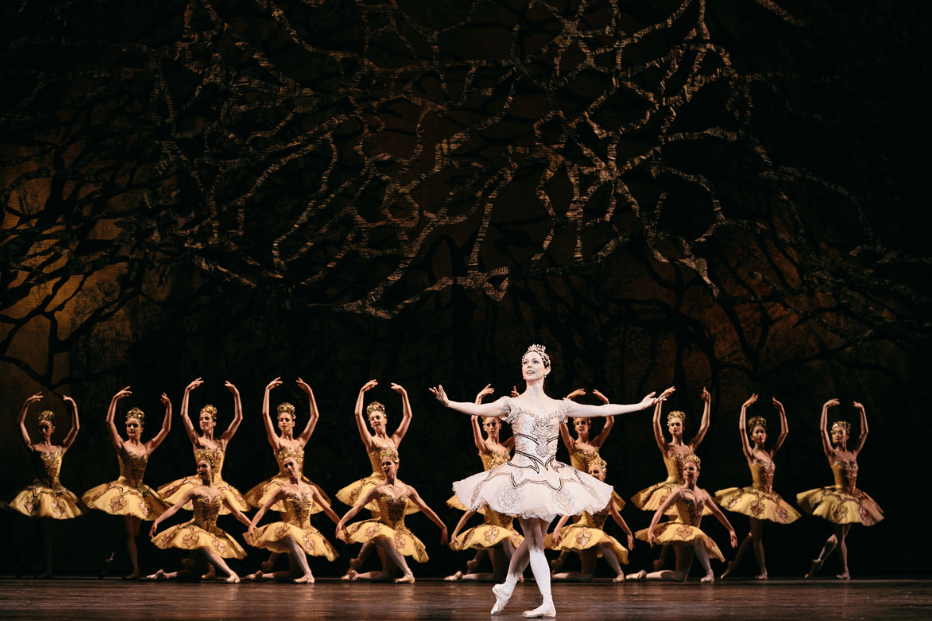
Sleeping Beauty: Classical Perfection & Fairytale Beauty

A pinnacle of classical ballet, Sleeping Beauty is symmetry, precision and fairytale elegance refined to perfection. Aurora’s soft pink palette, the fairies’ pastel costumes and Petipa’s immaculate choreography form a world where beauty is discipline, grace and regal storytelling. It is ballet at its most technically exquisite.

Historical Context

  • Sleeping Beauty was introduced in 1890
  • Choreographed by Petipa
  • Music by Tchaikovsky
  • Considered one of ballet’s greatest technical masterpieces

Beauty + Fashion Influence

  • Aurora’s pink palette → bridal and debutante beauty
  • Fairy costumes → pastel couture and whimsical make-up
  • The Rose Adagio → iconic hair and tiara styling

Sleeping Beauty is beauty as discipline — refined, regal, timeless.

A Series Rooted in Beauty & Culture

Each ballet in this collection reveals a different facet of beauty — romantic, modernist, ghostly, classical — and together they show how ballet continues to influence fashion, makeup, storytelling and cultural aesthetics today. 

I’m Stacey Hobbs, thanks for reading Face by Stace! Until next time.
do you feel fabulous today?
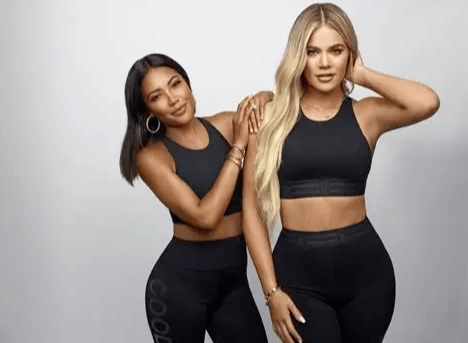
Good American: The Inclusive Denim Revolution

Good American entered the fashion landscape with a clarity of purpose that felt both radical and overdue: luxury denim should serve every body. In an industry long defined by exclusion, narrow sizing and rigid beauty ideals, the brand disrupted the narrative by centering inclusivity, fit diversity and body‑positive glamour. It didn’t simply introduce new jeans — it introduced a new cultural standard.

A New Era of Fit

When Good American launched with a full size range from 00 to 24, it wasn’t a marketing angle. It was a manifesto. For decades, premium denim had quietly communicated who belonged in luxury fashion — and who didn’t. Good American challenged that legacy by designing denim that adapts to the wearer rather than forcing the wearer to adapt to the garment.

Their jeans are engineered with intention: contoured waistbands, strategic stretch and cuts that celebrate shape instead of compressing it. The result is denim that feels supportive, sculpting and empowering — a garment that moves with the body rather than against it.

Inclusivity as Identity

Good American’s campaigns reframed curves as couture. Women of all shapes, sizes, and backgrounds were photographed with the same glamour historically reserved for traditional models. The brand’s imagery communicated a simple truth: beauty is not a single silhouette. Luxury is not a single size. Confidence is not a single body type.

This shift wasn’t performative — it was structural. Good American built inclusivity into its DNA, influencing how other brands approached casting, sizing and representation.

Denim as Empowerment

Denim has always been a cultural symbol — rebellion in the 1950s, youth culture in the 1970s, supermodel glamour in the 1990s. Good American added a new chapter: empowerment. Their jeans became a modern uniform for women who wanted to feel strong, comfortable and seen.

The brand’s messaging emphasized:

  • confidence over conformity
  • comfort over restriction
  • authenticity over aspiration

Good American didn’t ask women to shrink themselves to fit fashion. It expanded fashion to fit women.

Cultural Impact

The ripple effect of Good American’s launch transformed the industry. Brands began expanding size ranges, re-thinking fit and reconsidering who luxury fashion is for. Inclusivity became a competitive standard rather than a niche offering.

Good American helped usher in:

  • body‑neutral marketing
  • diverse casting in luxury campaigns
  • fit‑first design philosophies
  • the normalization of extended sizing
  • the cultural shift toward accessible glamour

It proved that inclusivity is not a trend — it is the future of fashion.

The Beauty Connection

Fashion and beauty are inseparable. When clothing fits well, confidence radiates. When women feel comfortable in their bodies, their beauty becomes expressive rather than performative. Good American’s philosophy aligns with modern beauty culture: authenticity, diversity and self‑expression.

The brand’s impact extends beyond denim — it influences how women see themselves, how they dress and how they define beauty on their own terms.

The Legacy

Good American didn’t just create jeans. It created a movement. A re-definition of luxury. A recalibration of beauty. A cultural shift toward inclusivity that continues to shape modern fashion.

Its legacy is simple and profound: 

Luxury belongs to everyone. Beauty belongs to everyone. Denim belongs to everyone.

I’m Stacey Hobbs, thanks for reading Face by Stace! Until next time.
do you feel fabulous today?

Napoleonic Era: Chapter III —The Decline of Empire: Beauty in Transition (1810–1815): French Beauty History Series

The years between 1810 and 1815 mark one of the most fascinating transitions in French beauty history. As Napoléon’s empire began to fracture, the aesthetics of France shifted — subtly at first, then dramatically. Beauty, fashion and grooming became mirrors of political instability, emotional un-certainty and cultural re‑evaluation.

The Waning Glow of Imperial Grandeur

During the height of Napoléon’s reign, beauty was synonymous with discipline, refinement and luxury. Grooming was a symbol of power — a way to project control in a world shaped by conquest. But as the empire weakened, beauty softened. The rigid elegance of the early empire gave way to a more introspective aesthetic.

Josephine’s Enduring Influence

Even as her marriage to Napoléon dissolved, Josephine remained a beauty icon. Her signature look — soft curls, empire silhouettes, delicate perfumes — continued to influence French women. But her style also began to symbolize nostalgia: a longing for stability in a time of political upheaval.

Perfume as Emotional Armor

Napoléon’s obsession with cologne intensified during the decline. He famously used enormous quantities of Eau de Cologne, believing scent could fortify the spirit. Perfume houses thrived, creating blends that balanced freshness with emotional depth. Fragrance became a coping mechanism — a way to maintain dignity amid uncertainty.

The Rise of Subtlety

As resources tightened and public sentiment shifted, beauty became more understated. Women embraced softer fabrics, muted palettes, simpler hairstyles and naturalistic make-up

This was not a rejection of elegance — it was a recalibration.

Beauty as Resilience

The decline of the empire forced France to reconsider its identity. Beauty became a quiet act of resilience. Grooming rituals persisted even as political structures crumbled. In this period, French beauty transformed from a symbol of power to a symbol of endurance.

The Legacy of Transition

The years 1810–1815 laid the groundwork for modern French beauty:

  • subtle luxury
  • emotional elegance
  • refined simplicity
  • beauty as cultural identity

This chapter marks the moment when French beauty became not just aesthetic — but philosophical.

I’m Stacey Hobbs, thanks for reading for Face by Stace! Until next time.
do you feel fabulous today?

Chanel: The Lady Who Re-wrote the Shape of Modern Life

Coco Chanel did not simply design clothes; she re-designed the way women lived inside them. Her revolution was not theatrical, not architectural not sculptural in the Balenciaga or Dior sense. It was human. It was intimate. It was born from the body itself from movement, from instinct, from the quiet conviction that fashion should serve women rather than restrain them. Chanel’s work emerged from touch not theory. She didn’t sketch her ideas; she shaped them directly on the body, discovering silhouette through drape, comfort and clarity.

To understand Chanel is to understand a designer who rejected the fantasy of couture and replaced it with reality. She stripped away corsets, padding and the rigid structures that defined early twentieth‑century fashion. In their place, she offered jersey that skimmed, knits that breathed, cardigans that moved and suits that allowed women to walk with purpose. Her clothes were not costumes. They were companions. They were built for women who had places to go, decisions to make and lives to lead.

Chanel’s genius lay in her ability to make simplicity feel radical. She refined garments through millimeter‑level adjustments, softening a shoulder here, shortening a hem there, shifting a seam until the garment felt inevitable. Her silhouettes were not imposed; they were revealed. They followed the body’s natural lines, creating a kind of lived‑in elegance that felt modern then and still feels modern now. Chanel’s clothes did not demand attention. They earned it through clarity.

Her philosophy stood in stark contrast to the designers around her. While Dior sculpted women into hourglass fantasies and Balenciaga engineered architectural volumes, Chanel insisted on ease. She believed beauty came from freedom as opposed to structure. Her revolution was not about re-shaping the body — it was about releasing it. And in doing so, she created a new kind of femininity: one defined by autonomy, movement and quiet confidence.

This chapter explores Chanel’s world — her method, her materials, her silhouettes and the cultural shift she ignited. It traces how a woman who refused to draw became one of the most influential designers of the twentieth century. It reveals how her tactile process shaped her aesthetic, how her lived experience shaped her philosophy, and how her clarity continues to define modern fashion.

Chanel didn’t just change clothes. She changed the rhythm of women’s lives. And that is why her work still feels alive. Timeless. Classic. Elegance. All at its finest.

I’m Stacey Hobbs, thanks for reading Face by Stace! Until next time.

do you feel fabulous today?